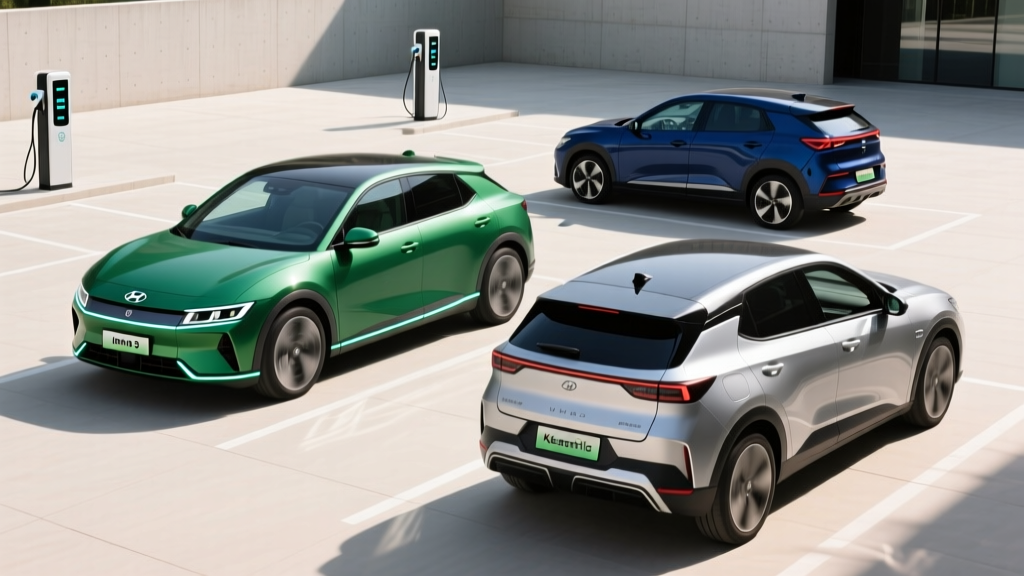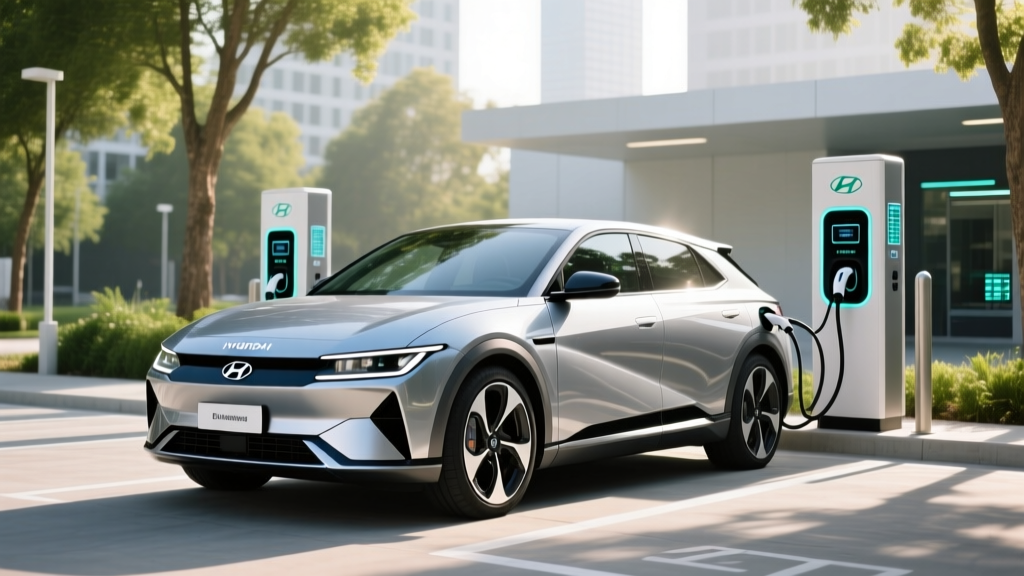
The Hyundai Ioniq 5 remains one of the most compelling electric crossovers on the market in 2026, but the question every buyer asks is whether it still qualifies for the full federal EV tax credit. With the Ioniq 5 now assembled at Hyundai's Metaplant in Ellabell, Georgia, the domestic-production requirement is satisfied — but battery-sourcing rules, MSRP caps, and buyer income limits all determine whether you'll see the full $7,500 at the point of sale. This review covers everything you need to know about the Ioniq 5's tax credit eligibility, real-world range, charging performance, and whether it's the right EV for your garage.
Quick Verdict: Who Should Buy the Ioniq 5?
The Ioniq 5 is best suited for buyers who want a stylish, spacious midsize EV crossover with class-leading DC charging speeds and a comfortable ride. It works well as a daily commuter, a family hauler for two to three kids, and a road-trip vehicle thanks to its 800V architecture. It's less ideal for heavy towing (rated at just 2,300 lbs with the tow package) or buyers who need three rows of seating. If you qualify for the full §30D credit, the Ioniq 5 SE Standard Range drops to an effective price that undercuts most competitors by thousands.
2026 Hyundai Ioniq 5 Specs at a Glance
| Spec | SE Standard Range (RWD) | SEL/Limited (RWD) | SEL/Limited (AWD) |
|---|---|---|---|
| EPA Range | 244 mi | 310 mi | 288 mi |
| Battery (usable) | 58.0 kWh | 77.4 kWh | 77.4 kWh |
| Chemistry | LFP (Lithium Iron Phosphate) | NMC (Nickel Manganese Cobalt) | NMC |
| Drivetrain | RWD | RWD | Dual-Motor AWD |
| Horsepower | 168 hp | 225 hp | 320 hp |
| 0-60 mph | 7.4 sec | 6.2 sec | 4.5 sec |
| Max DC Charge Rate | ~175 kW | ~238 kW | ~238 kW |
| 10-80% DC Time | ~22 min | ~18 min | ~18 min |
| Level 2 Rate | 10.9 kW | 10.9 kW | 10.9 kW |
| MPGe (Combined) | 114 MPGe | 117 MPGe | 103 MPGe |
| Base MSRP | $42,600 | $46,650 | $50,150 |
Sources: EPA / fueleconomy.gov, Hyundai Motor America.
Ioniq 5 Tax Credit: Do You Qualify for $7,500?
The 2026 Hyundai Ioniq 5 is assembled in Georgia, which satisfies the North American final-assembly requirement of IRS §30D. However, qualifying for the full $7,500 federal tax credit depends on three moving targets: your income, the vehicle's MSRP, and the battery's critical-mineral and component sourcing — rules that the IRS updates annually.
- Final Assembly: Must be in North America — Ioniq 5 is built in Ellabell, GA ✓
- MSRP Cap: SUVs/crossovers must be ≤ $80,000 — all Ioniq 5 trims qualify ✓
- Buyer Income Cap: AGI ≤ $150,000 (single) / $225,000 (head of household) / $300,000 (joint)
- Critical Minerals: Must meet escalating percentage thresholds from approved trade partners — Hyundai has been progressively re-sourcing; check the latest IRS eligible-vehicle list
- Battery Components: Must meet escalating domestic/FTA-partner manufacturing thresholds — partial qualification may yield $3,750 instead of $7,500
- Point-of-Sale Transfer: You can transfer the credit to the dealer at purchase for an immediate price reduction
| Trim | MSRP | With Full $7,500 Credit | With Partial $3,750 |
|---|---|---|---|
| SE Standard Range RWD | $42,600 | $35,100 | $38,850 |
| SE RWD (Long Range) | $45,100 | $37,600 | $41,350 |
| SEL RWD | $46,650 | $39,150 | $42,900 |
| SEL AWD | $50,150 | $42,650 | $46,400 |
| Limited AWD | $56,200 | $48,700 | $52,450 |
Critical caveat: Battery-sourcing rules tighten each year under the Inflation Reduction Act. The Ioniq 5's SK On battery cells use a mix of sourced minerals, and the credit amount can shift mid-year when the IRS updates its eligible vehicles list. Always verify the exact credit amount with your dealer and a tax professional before signing.
Real-World Range: What to Actually Expect
EPA Estimate (SEL RWD): 310 miles
Real-World Highway (70-75 mph, moderate temps): ~255-275 miles
Real-World City/Mixed Driving: ~280-300 miles
Cold Weather (below 32°F, highway): ~200-230 miles
The Ioniq 5's heat pump (standard on most trims) helps mitigate winter range loss compared to EVs without one, but expect a 20-30% reduction in freezing conditions at highway speeds. The LFP-equipped Standard Range model suffers similar cold-weather losses proportionally, meaning ~175-195 highway miles in winter.
On a 300-mile road trip test at 72 mph in 65°F weather, the SEL RWD consumed roughly 33 kWh/100mi, translating to about 265 miles of usable range before you'd want to stop. That's competitive with the Tesla Model Y Long Range but falls short of the Model Y's more aerodynamic profile at sustained highway speeds. The AWD variant's extra motor and weight drop efficiency to ~36 kWh/100mi in similar conditions.
Charging Speed: The Ioniq 5's Killer Feature
The Ioniq 5's 800V electrical architecture gives it a genuine advantage at DC fast chargers. Where most competitors in this price range peak at 150-175 kW, the Long Range Ioniq 5 pulls up to ~238 kW at a compatible 350 kW station.
| Charging Level | Power / Rate | Miles Added Per Hour |
|---|---|---|
| Level 1 (120V household) | ~1.4 kW | ~4-5 mi/hr |
| Level 2 (240V, 48A home charger) | 10.9 kW | ~37-40 mi/hr |
| DC Fast (peak, 350 kW station) | ~238 kW | ~650-800 mi/hr (at peak) |
Real-world DC fast charging: The 10-80% sprint takes approximately 18 minutes at a 350 kW Electrify America or similar station — provided the battery is preconditioned (the Ioniq 5 does this automatically when you navigate to a charger). Above 80% SoC, the charge curve tapers sharply; 80-100% adds another 15-20 minutes, so plan your stops around 80%.
The LFP Standard Range model charges somewhat slower — peak around 175 kW — because LFP chemistry has different thermal characteristics. It still manages 10-80% in roughly 22 minutes, which is respectable but not class-leading.
Home charging: At 10.9 kW on a Level 2 home charger (48 amps, hardwired), a full charge from empty takes about 7-8 hours for the Long Range battery. Most owners waking up each morning to a full charge will see this as a non-issue. Budget $500-$1,200 for a quality Level 2 home charger installation (equipment plus electrician), depending on your panel capacity and run length.
Performance, Interior & Standout Tech
The dual-motor AWD Ioniq 5 hits 60 mph in 4.5 seconds — genuinely quick for a family crossover. The RWD models feel more relaxed but adequate, with the Long Range RWD managing 6.2 seconds. The single-motor RWD's 225 hp is plenty for merging and passing; you only need the AWD if you want the thrill or live in snow-belt states.
Interior space: The Ioniq 5's flat floor and long 118.1-inch wheelbase create limousine-like rear legroom — 39.4 inches in the back seat, more than many midsize SUVs. Cargo volume is 27.2 cu ft behind the rear seats and 59.3 cu ft with them folded. The front trunk (frunk) adds 0.85 cu ft on AWD models and 2.0 cu ft on RWD — enough for charging cables but not much more.
Tech highlights:
- Dual 12.3-inch displays with Hyundai's latest infotainment, wireless Apple CarPlay/Android Auto
- Hyundai Digital Key 2 (NFC + UWB phone-as-key)
- Highway Driving Assist 2 (HDA2): Level 2 driver assist with lane-centering, adaptive cruise, and lane-change assist — not self-driving; hands must remain on or near the wheel
- Vehicle-to-Load (V2L): Power laptops, camping gear, or even a small appliance from the EV's battery via an interior or exterior adapter (up to 3.6 kW)
- 800V battery preconditioning for optimized DC fast charging
Notable drawbacks: The Ioniq 5 still lacks a rear wiper (a persistent complaint in rainy climates), the frunk is small, and the infotainment system uses capacitive-touch climate controls that are fiddly while driving. Road noise at highway speed is also more noticeable than in the Tesla Model Y or Kia EV6.
Ioniq 5 vs. Key Competitors
Here's how the Ioniq 5 SEL AWD ($50,150) stacks up against its main rivals:
| Ioniq 5 SEL AWD | Tesla Model Y LR AWD | Kia EV6 GT-Line AWD | Ford Mustang Mach-E Premium AWD | |
|---|---|---|---|---|
| EPA Range | 288 mi | 311 mi | 282 mi | 290 mi |
| 0-60 mph | 4.5 sec | 4.8 sec | 4.5 sec | 5.1 sec |
| Peak DC Charge | ~238 kW | ~250 kW | ~238 kW | ~150 kW |
| 10-80% DC | ~18 min | ~15 min | ~18 min | ~34 min |
| Cargo (rear up) | 27.2 cu ft | 30.2 cu ft | 24.4 cu ft | 29.7 cu ft |
| Federal Credit | Up to $7,500* | $0-7,500* | Up to $7,500* | Up to $7,500* |
| Base MSRP | $50,150 | $48,990 | $52,900 | $48,995 |
*Credit eligibility varies by sourcing rules and buyer income. Verify on IRS.gov.
Key takeaways: The Ioniq 5 and EV6 share a platform and charging hardware, so they're neck-and-neck on DC speed. The Model Y wins on range and Supercharger access, but the Ioniq 5 offers a more comfortable ride, a quieter cabin, and — depending on the current IRS list — may have more reliable tax credit qualification since Hyundai's Georgia production and SK On battery partnership have been relatively stable under §30D rules. The Mach-E trails in charging speed, which matters for road trippers.
Warranty & Long-Term Ownership
Hyundai backs the Ioniq 5 with one of the strongest warranties in the EV space:
- Battery: 10 years / 100,000 miles (capacity retention above 70% of original)
- Powertrain: 10 years / 100,000 miles
- New Vehicle: 5 years / 60,000 miles
- Roadside Assistance: 5 years / unlimited miles
The 10-year battery warranty is a significant advantage over Tesla's 8-year/120,000-mile coverage, particularly for second owners (the warranty is transferable). Hyundai's 70% capacity retention threshold is industry standard; in practice, NMC batteries in the Long Range Ioniq 5 have shown roughly 5-8% degradation over the first 60,000 miles based on owner-reported data, well within warranty limits.
The LFP Standard Range model should see even less degradation over time — LFP chemistry is known for superior cycle life and thermal stability — though it trades energy density for that longevity, hence the lower range figure.
Pros and Cons
- Class-leading 18-minute DC fast charging (800V architecture)
- Spacious cabin with best-in-class rear legroom
- Strong 10-year/100,000-mile battery warranty
- Comfortable ride quality, refined for the segment
- V2L capability for camping and emergencies
- US-assembled (Georgia) — supports §30D credit qualification
- Standard heat pump reduces cold-weather range loss
- No rear wiper — a real issue in rain and snow
- Small frunk (2.0 cu ft RWD, less on AWD)
- Capacitive-touch climate controls are distracting
- Highway range falls notably short of EPA (expect ~255-275 mi)
- Road noise more pronounced than Model Y at 70+ mph
- Towing limited to 2,300 lbs (with tow package)
- Tax credit amount subject to battery-sourcing rule changes
Frequently Asked Questions
Does the 2026 Hyundai Ioniq 5 qualify for the $7,500 federal EV tax credit?
The Ioniq 5 is assembled in Georgia, meeting the North American final-assembly requirement. Whether you receive the full $7,500, a partial $3,750, or nothing depends on your adjusted gross income (≤ $300,000 joint / $150,000 single), the vehicle's MSRP (all trims are under the $80,000 SUV cap), and current IRS battery-sourcing determinations. Check the IRS clean vehicle list for the latest status, and confirm with your dealer before purchase. The credit can be transferred to the dealer at point of sale for an immediate price reduction.
What is the real-world range of the Hyundai Ioniq 5?
The EPA rates the Long Range RWD at 310 miles and the AWD at 288 miles. In real-world highway driving at 70-75 mph in moderate temperatures, expect 255-275 miles from the RWD and 240-260 from the AWD. In freezing weather, knock off another 20-30%. The Standard Range LFP model delivers roughly 195-215 real-world highway miles.
How fast does the Ioniq 5 charge at home and on the road?
At a 350 kW DC fast charger, the Long Range Ioniq 5 peaks at ~238 kW and charges 10-80% in about 18 minutes with battery preconditioning. On a Level 2 home charger (10.9 kW / 48 amps), a full charge takes roughly 7-8 hours. Level 1 (standard outlet) adds about 4-5 miles per hour — only practical for overnight top-ups.
Is the Ioniq 5 worth buying over the Tesla Model Y?
It depends on your priorities. The Model Y offers slightly more range, a more extensive proprietary Supercharger network (though the Ioniq 5 now has NACS compatibility on newer models, opening Tesla Supercharger access), and a larger frunk. The Ioniq 5 counters with a more comfortable ride, a quieter cabin, faster DC charging at non-Tesla stations, V2L capability, and a longer battery warranty. If you value ride comfort and don't road-trip weekly, the Ioniq 5 is a compelling alternative — especially if the full tax credit applies.
What's the difference between the LFP and NMC batteries in the Ioniq 5?
The Standard Range model uses LFP (lithium iron phosphate) chemistry, which offers longer cycle life, better thermal stability, and lower degradation over time — but at the cost of lower energy density (hence 244 vs. 310 miles of range). The Long Range models use NMC (nickel manganese cobalt), which packs more energy into the same space. For daily commuters who charge to 100% regularly, LFP is arguably better since it tolerates full charges without accelerated wear. For road trippers needing maximum range, NMC is the practical choice.
Can the Ioniq 5 use Tesla Superchargers?
Hyundai has been transitioning to the NACS (North American Charging Standard) connector. For 2026, verify whether your specific Ioniq 5 ships with a native NACS port or a CCS port with a NACS adapter. Hyundai provides adapter access for CCS-equipped models, enabling Supercharger use. Always confirm the connector type with your dealer, as it varies by production date.