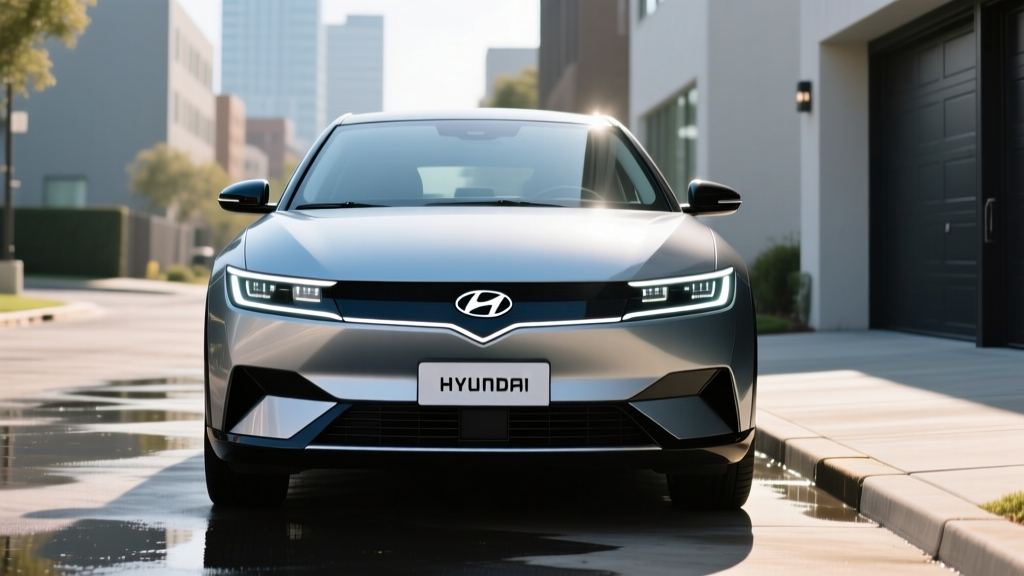
If you've been researching the Hyundai Ioniq 5 and encountered the term Hyundai Ioniq 5 stop sale, you're likely wondering whether this popular electric crossover is still available — and whether it's still a smart buy. Stop-sale orders, typically triggered by safety recalls, can freeze dealer deliveries and complicate the purchase process. Here's what you need to know about the current situation, along with a comprehensive breakdown of the Ioniq 5's real-world specs, pricing, and ownership profile.
What Triggered the Hyundai Ioniq 5 Stop Sale?
A stop sale is a manufacturer directive that prevents dealers from selling affected vehicles until a recall remedy is completed. For the Hyundai Ioniq 5, recent stop-sale actions have been tied to investigations by the National Highway Traffic Safety Administration (NHTSA) into specific component concerns. These can range from software glitches in the battery management system (BMS) to issues with the Integrated Charging Control Unit (ICCU) — a component unique to Hyundai's E-GMP platform that manages the 800V-to-400V DC conversion and 12V auxiliary battery charging.
When a stop sale is in effect:
- New inventory on dealer lots cannot be sold until the recall repair or software update is performed.
- Vehicles in transit from the factory may be held at port or distribution centers.
- Existing owners are typically notified directly and can schedule a free remedy at any Hyundai dealer.
- Certified pre-owned (CPO) units are also frozen until cleared.
The critical question for shoppers is whether the stop sale is a short-term software fix (days to weeks) or a hardware-level concern requiring parts that may take months. Hyundai's recall history with the E-GMP platform suggests most issues have been resolvable via over-the-air (OTA) updates or brief dealer visits, but always verify the specific NHTSA recall number and remedy status before committing to a purchase.
2026 Ioniq 5 Specs: Range, Battery, and Efficiency
| Specification | SE/SEL RWD (Standard Range) | SE/SEL/Limited RWD (Long Range) | SEL/Limited AWD |
|---|---|---|---|
| EPA Range | 245 mi | 303 mi | 260 mi |
| Battery (Usable) | 63.0 kWh | 84.0 kWh | 84.0 kWh |
| Chemistry | NMC (Nickel Manganese Cobalt) | NMC | NMC |
| Horsepower | 168 hp | 225 hp | 320 hp (dual-motor) |
| Torque | 258 lb-ft | 258 lb-ft | 446 lb-ft |
| 0-60 mph | ~7.4 sec | ~7.0 sec | ~4.5 sec |
| MPGe (Combined) | 114 MPGe | 114 MPGe | 101 MPGe |
| Efficiency | 29 kWh/100mi | 29 kWh/100mi | 33 kWh/100mi |
| Drivetrain | RWD | RWD | AWD (dual-motor) |
Real-World Range Reality Check
EPA Sticker: 303 miles (Long Range RWD)
Expect in practice: 250–275 miles at sustained highway speeds (70-80 mph); 270–290 miles in mixed city/suburban driving with regen. In cold weather (below 32°F), anticipate a 20–30% reduction — roughly 210–240 miles — due to battery resistance and cabin heating demand, even with the Ioniq 5's heat pump (standard on Long Range trims).
The Ioniq 5's NMC battery chemistry offers higher energy density than LFP (lithium iron phosphate), giving it a range advantage in a compact footprint. However, NMC cells are more sensitive to sustained high-state-of-charge storage and extreme heat — Hyundai's thermal management system actively conditions the pack, but owners should avoid routinely charging to 100% unless a long trip demands it. Source: fueleconomy.gov.
Charging Speed: 800V Architecture in Action
The Ioniq 5's standout technical feature remains its 800V E-GMP platform, which enables DC fast-charging speeds most competitors in this price bracket simply cannot match. Here's the charging breakdown by level:
| Charge Level | Power | Connector | Speed / Time |
|---|---|---|---|
| Level 1 (120V household) | ~1.4 kW | NACS (Tesla connector, 2025+ models) | ~4–5 mi/hr — emergency use only |
| Level 2 (240V home/public) | 10.9 kW (onboard charger max) | NACS / J1772 (with adapter) | ~35–40 mi/hr; 10–100% in ~8.5 hrs (Long Range) |
| DC Fast Charge (350 kW station) | Peak ~240 kW | NACS / CCS1 (with adapter) | 10–80% in ~18 min (Long Range) |
| DC Fast Charge (150 kW station) | ~150 kW sustained | NACS / CCS1 | 10–80% in ~25 min |
Charge-curve reality: The Ioniq 5 peaks at approximately 240 kW between 10–55% state of charge, then tapers progressively. From 55–80%, expect an average of ~130–150 kW. Above 80%, charging slows dramatically to protect cell health — plan to unplug at 80% on road trips for optimal time efficiency. This taper behavior is standard for NMC chemistries and is managed by the vehicle's BMS.
For 2025 and newer model years, Hyundai adopted the NACS (North American Charging Standard) port natively, granting access to Tesla Supercharger stations without an adapter. For 2022–2024 models equipped with CCS1, Hyundai provides a NACS adapter, though adapter availability has been uneven — confirm with your dealer.
Pricing, Tax Credits, and Total Cost
| Trim | MSRP (2025/2026) | §30D Federal Credit | Effective Price* |
|---|---|---|---|
| SE Standard Range | $42,600 | Up to $7,500 | ~$35,100 |
| SE Long Range RWD | $46,650 | Up to $7,500 | ~$39,150 |
| SEL Long Range RWD | $49,600 | Up to $7,500 | ~$42,100 |
| Limited AWD | $58,200 | Up to $7,500 | ~$50,700 |
*Effective price assumes full §30D credit eligibility. Your actual credit may be $0, $3,750, or $7,500 depending on battery-sourcing compliance, which changes annually.
Federal tax credit (§30D) eligibility checklist:
- MSRP cap: SUVs/crossovers must be ≤ $80,000 — all Ioniq 5 trims qualify.
- Buyer income cap: Modified AGI ≤ $150,000 (single) / $300,000 (joint) — per IRS §30D guidelines.
- Battery sourcing: A percentage of critical minerals and battery components must be sourced from the U.S. or FTA partners. This threshold increases annually. The Ioniq 5's South Korean-built battery may or may not meet the full $7,500 threshold depending on model year — verify current sourcing compliance before purchase.
- Point-of-sale transfer: As of 2024, buyers can transfer the credit to the dealer at purchase, reducing the out-of-pocket cost immediately rather than waiting for tax filing.
During a stop sale, tax credit eligibility is unaffected — once the recall remedy is completed and the vehicle is cleared for sale, all standard credit rules apply. However, delivery delays may push your purchase into a new calendar year, potentially changing the battery-sourcing thresholds that apply.
Interior, Cargo, and Technology
The Ioniq 5's "Living Space" interior concept delivers genuinely usable room thanks to its flat-floor E-GMP skateboard architecture:
- Cargo volume: 27.2 cu ft behind rear seats; 59.3 cu ft with seats folded
- Frunk (front trunk):strong> 0.85 cu ft (AWD) / 2.0 cu ft (RWD) — enough for charging cables
- Rear legroom: 39.4 inches — among the best in the compact EV SUV segment
- Sliding center console: Moves up to 5.5 inches for flexible cabin configurations
Standout tech features:
- Dual 12.3-inch displays (instrument cluster + infotainment) with wireless Apple CarPlay and Android Auto
- Vehicle-to-Load (V2L): Powers external devices up to 3.6 kW via interior outlet or exterior adapter — run a campsite, power tools, or emergency home appliances
- Highway Driving Assist 2 (HDA2): SAE Level 2 driver assistance with lane-centering, adaptive cruise, and lane-change assist — driver supervision required at all times
- OTA (over-the-air) updates for navigation, BMS calibration, and infotainment
- Digital Side Mirrors (Limited trim, market-dependent): Camera-based mirror replacement reducing drag
Pros, Cons, and the Stop-Sale Factor
Pros
- 800V architecture delivers class-leading DC fast-charge speeds (~18 min, 10–80%)
- Spacious, flat-floor interior with generous rear legroom and V2L capability
- NACS port (2025+) opens Tesla Supercharger network access
- Strong efficiency: 29 kWh/100mi for RWD Long Range
- Competitive pricing before and after tax credits
- 10-year/100,000-mile battery and powertrain warranty
- Retro-modern design stands out in a crowded segment
Cons
- Stop-sale orders create unpredictable purchase timelines
- No front trunk (frunk) space to speak of — especially on AWD
- Rear wiper absent on earlier model years (added for 2025+)
- ICCUs have been a known failure point, with replacement costs of $1,500–$2,500 out of warranty
- Real-world highway range falls 30–50 miles below EPA in cold conditions
- Infotainment can be sluggish compared to Tesla or Rivian interfaces
- Some CCS-to-NACS adapter supply issues for pre-2025 models
Should You Buy the Ioniq 5 During a Stop Sale?
A stop sale doesn't mean the Ioniq 5 is a bad vehicle — it means Hyundai is legally required to resolve a specific defect before delivery. Here's a practical decision framework:
Buy the Ioniq 5 if:
- The stop-sale recall is a software fix (OTA or brief dealer flash) and your dealer confirms a remedy timeline of under 30 days.
- You prioritize fast DC charging and need 800V capability for frequent road trips.
- You need V2L for camping, job sites, or backup power.
- The post-credit price undercuts competitors like the Tesla Model Y, Ford Mustang Mach-E, or Volkswagen ID.4 in your trim target.
Wait or consider alternatives if:
- The recall involves a hardware component (e.g., ICCU or BMS module) with no parts available yet — delays could stretch months.
- You need a vehicle immediately and cannot absorb delivery uncertainty.
- You're looking at a 2022–2023 build with the older CCS port and cannot confirm NACS adapter availability.
Key competitors to cross-shop: The Tesla Model Y Long Range (330 mi EPA, broader Supercharger access, but no V2L), Ford Mustang Mach-E Extended Range (320 mi EPA, BlueCruise hands-free on mapped highways), and the Kia EV6 (mechanical sibling on E-GMP with identical 800V charging but sportier styling and slightly less cargo room).
Warranty Coverage and Long-Term Ownership
Hyundai backs the Ioniq 5 with one of the strongest warranty packages in the EV segment:
- Battery: 10 years / 100,000 miles (capacity retention threshold: 70% of original capacity)
- Powertrain: 10 years / 100,000 miles (motor, reduction gear, inverter)
- New vehicle limited: 5 years / 60,000 miles bumper-to-bumper
- Roadside assistance: 5 years / unlimited miles
The 70% battery capacity retention threshold is industry-standard. In practice, Hyundai's NMC packs with active liquid thermal management have shown degradation curves of approximately 8–12% over the first 100,000 miles based on fleet data from similar E-GMP vehicles — well within warranty tolerance. If a stop-sale recall involves the battery pack or BMS, any remedy performed will reset relevant warranty clocks for those components.
Frequently Asked Questions
What is the real-world range of the Hyundai Ioniq 5?
The Long Range RWD model carries a 303-mile EPA estimate. In real-world highway driving at 70–80 mph, expect 250–275 miles. In cold weather (below freezing), that drops to roughly 210–240 miles even with the heat pump engaged. City driving with regenerative braking yields the best results, often approaching the EPA number.
How fast does the Ioniq 5 charge at home and on the road?
At home on a Level 2 (240V, 48A) charger, the Ioniq 5 accepts up to 10.9 kW, adding roughly 35–40 miles per hour — a full charge takes about 8.5 hours for the Long Range battery. On a 350 kW DC fast charger, it peaks at ~240 kW and reaches 10–80% in approximately 18 minutes. On a more common 150 kW station, expect 10–80% in about 25 minutes.
Does the Hyundai Ioniq 5 qualify for the federal EV tax credit?
It can, but eligibility depends on current IRS §30D rules. The Ioniq 5's MSRP falls well under the $80,000 SUV cap, and buyer income limits apply ($150K single / $300K joint). The critical variable is battery-sourcing compliance — the percentage of critical minerals and components from approved sources changes annually. Verify current eligibility on irs.gov or with your tax professional before assuming the full $7,500 credit.
How long does a stop sale typically last?
It varies significantly. Software-related stop sales (OTA updates or dealer reprogramming) can resolve in days to a few weeks. Hardware-related recalls requiring new parts — such as an ICCU replacement — may take several months depending on supply chain availability. Ask your dealer for the specific NHTSA recall number and remedy status.
Is the Ioniq 5 worth buying versus the Tesla Model Y or Kia EV6?
The Ioniq 5 wins on DC fast-charge speed, V2L capability, and interior versatility. The Model Y leads in range (330 mi), Supercharger network convenience, and software polish. The Kia EV6 is mechanically identical to the Ioniq 5 but offers a sportier design and slightly less cargo space. Your best choice depends on whether you prioritize charging speed (Ioniq 5/EV6), network access (Model Y), or design preference (Ioniq 5 vs. EV6).
Can I still test-drive an Ioniq 5 during a stop sale?
Yes — stop-sale orders prevent delivery and sale, not test drives. Dealers can typically still let you drive the vehicle. However, they cannot hand over keys or complete paperwork until the recall remedy is performed and the vehicle is cleared in Hyundai's dealer system.