Quick Verdict: The Ioniq 5 SEL AWD at a Glance
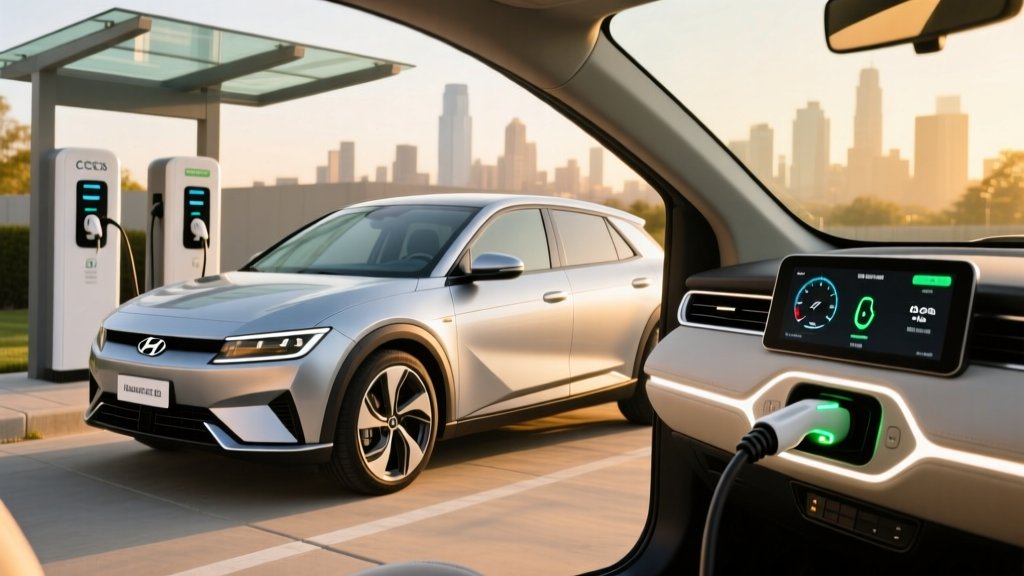
The Hyundai Ioniq 5 SEL AWD remains one of the most balanced electric crossovers on the market in 2026. It pairs an 84 kWh usable NMC battery with a dual-motor all-wheel-drive system producing 320 horsepower, delivers an EPA-estimated 290 miles of range, and charges from 10–80% in roughly 18 minutes on a compatible 350 kW DC fast charger. The SEL trim sits in the middle of the lineup, adding features like leatherette seating, a panoramic sunroof, and Highway Driving Assist 2 over the base SE — without pushing the MSRP past the federal tax credit cap. For buyers who need all-weather traction, fast public charging, and practical cargo space, the Ioniq 5 SEL AWD is a strong default recommendation.
| Spec | Value |
|---|---|
| EPA Range | 290 miles |
| Battery (usable) | 84 kWh, NMC (nickel manganese cobalt) |
| Drivetrain | Dual-motor AWD |
| Horsepower / Torque | 320 hp / 446 lb-ft |
| 0–60 mph | 4.5 seconds |
| Max DC Fast Charge | 238 kW (peak) |
| 10–80% DC Charge Time | ~18 minutes (350 kW charger, preconditioned) |
| Level 2 Charge Rate | 10.9 kW (48A) |
| EPA Efficiency | 110 MPGe combined / 30 kWh/100 mi |
| Cargo Volume (rear seats up / down) | 27.2 / 59.3 cu ft |
| Rear Legroom | 39.4 inches |
| Battery Warranty | 10 years / 100,000 miles |
| Base MSRP (SEL AWD) | $52,600 |
Real-World Range: What the 290-Mile EPA Sticker Actually Means
EPA Estimated Range: 290 miles
Real-World Expectation: ~240–260 miles highway (70–75 mph); ~270–285 miles mixed city/suburban; ~200–230 miles in sub-freezing winter conditions.
The EPA's 290-mile estimate for the Ioniq 5 SEL AWD is based on a blended city/highway test cycle. In practice, your mileage depends heavily on driving style, speed, and temperature.
On a 70 mph highway run in mild weather (65–75°F), expect roughly 240–260 miles before you hit the low-battery warning. The Ioniq 5's boxy shape creates more aerodynamic drag than sleeker rivals like the Tesla Model Y, and that drag penalty compounds at highway speed. Around town, where regenerative braking recovers energy at every stop, you'll see numbers much closer to the EPA sticker — often 270–285 miles.
Cold weather is the bigger variable. In sustained temperatures below 32°F, lithium-ion batteries lose efficiency and the cabin heater draws significant energy. Plan for 200–230 miles of usable range in deep winter. The Ioniq 5's standard heat pump helps mitigate this loss — it's noticeably more efficient than resistive heating — but physics still wins. If your daily commute is 60+ miles round trip in a cold climate, you'll want reliable home Level 2 charging to start each day at 100%.
Charging Speed: DC Fast Charging and Home Level 2
The Ioniq 5's 800-volt electrical architecture is its biggest charging advantage. While most competitors use 400V systems that peak around 150 kW, the Ioniq 5 can accept up to 238 kW on a compatible 350 kW DC fast charger — provided the battery is preconditioned.
| Charge Level | Power (kW) | Connector | Speed / Time |
|---|---|---|---|
| Level 1 (120V household) | ~1.4 kW | J1772 / NACS adapter | ~4 miles per hour |
| Level 2 (240V home) | 10.9 kW (48A) | J1772 (CCS1) or NACS* | ~32 miles per hour; 0–100% in ~9.5 hours |
| DC Fast (350 kW station) | 238 kW (peak) | CCS1 or NACS* | 10–80% in ~18 min; 80–100% adds ~20+ min |
| DC Fast (150 kW station) | ~130–140 kW (sustained) | CCS1 or NACS* | 10–80% in ~25 min |
*Starting with the 2025 model year, Hyundai transitioned the Ioniq 5 to the NACS (Tesla-style) charge port in North America. 2026 models ship with NACS natively and include a CCS1 adapter for legacy networks. Tesla Supercharger access is enabled via the Hyundai Bluelink app and NACS compatibility.
Understanding the Charge Curve
The 238 kW peak rate is not sustained across the entire session. The Ioniq 5's charge curve holds strong from roughly 10–55% State of Charge (SoC), where you'll see 200+ kW. Above 55%, the rate tapers to protect battery health, dropping to ~100 kW around 70% and ~50 kW above 85%. This is why Hyundai quotes 10–80% times — the final 20% is painfully slow on any EV. On road trips, the optimal strategy is to charge to 80% and go. That 18-minute 10–80% session adds roughly 200 miles of range.
For home charging, a 48-amp Level 2 wallbox on a 60-amp circuit delivers the full 10.9 kW, adding about 32 miles per hour. A full overnight charge from 10% takes roughly 9–10 hours. If your electrical panel only supports a 40-amp circuit (32A / 7.7 kW), expect ~23 miles per hour and an ~13-hour full charge. Budget $500–$1,800 for a quality Level 2 charger and professional installation, depending on your panel capacity and run distance.
Performance and Driving Dynamics
The SEL AWD pairs a front and rear permanent-magnet synchronous motor for a combined 320 horsepower and 446 lb-ft of torque. That's good for a 0–60 mph sprint in 4.5 seconds — genuinely quick for a family crossover, and more than enough for confident highway merging and passing.
Three drive modes (Eco, Normal, Sport) adjust throttle response, steering weight, and regen intensity. In Sport, the Ioniq 5 AWD feels eager and planted; in Eco, it's relaxed and efficiency-oriented. The steering is precise but light — this is a comfort-first vehicle, not a sports sedan. Ride quality is composed over most surfaces, thanks to the multi-link rear suspension, though larger 20-inch wheels on the SEL can transmit sharper impacts on broken pavement.
Regenerative braking offers four levels, adjustable via steering-wheel paddles. Level 3 provides near one-pedal driving in city traffic, though it won't bring the car to a complete stop without touching the brake pedal — a minor annoyance if you're used to full one-pedal operation in a Chevrolet Bolt or Nissan Leaf. The i-Pedal mode does enable full stop, but it's a separate toggle rather than the default regen-3 behavior.
Interior, Tech, and Cargo Space
The Ioniq 5's interior is one of its strongest selling points. The SEL trim adds:
- H-Tex leatherette seating surfaces (heated front seats standard)
- Panoramic fixed-glass roof
- Dual 12.3-inch displays (digital cluster + infotainment)
- Wireless Apple CarPlay and Android Auto
- Hyundai Digital Key 2 (NFC/BLE phone-as-key)
- Sliding center console with hidden storage
- Vehicle-to-Load (V2L) — power devices up to 1.9 kW from the charge port or interior outlet
The flat floor (a benefit of the dedicated E-GMP EV platform) and the sliding "Universal Island" center console create an airy, spacious cabin. Rear-seat passengers enjoy 39.4 inches of legroom — more than a Toyota RAV4 and comparable to a midsize sedan. The 60/40 split rear seat reclines, which is a nice touch for long trips.
Cargo volume is 27.2 cubic feet behind the rear seats and 59.3 cu ft with them folded. The front trunk (frunk) on AWD models is small — roughly 0.85 cu ft — essentially a spot for charging cables. That's a weak point versus the Tesla Model Y's more usable frunk, but the rear cargo area is well-shaped and practical.
Driver-Assistance Tech
The SEL AWD comes equipped with Hyundai SmartSense, including:
- Highway Driving Assist 2 (HDA 2): Adaptive cruise + lane-centering on divided highways, with automatic lane-change assist when you tap the turn signal. This is an SAE Level 2 system — you must keep your hands on the wheel and eyes on the road at all times.
- Navigation-Based Smart Cruise Control: Automatically slows for upcoming curves and speed-limit changes.
- Remote Smart Parking Assist: The car can pull in and out of tight spaces while you stand outside with the key fob.
- Blind-Spot View Monitor: Camera feed appears in the instrument cluster when signaling.
ADAS Limitation Notice: HDA 2 is an SAE Level 2 driver-assistance system. It does not make the Ioniq 5 self-driving. The driver must remain fully attentive, maintain steering-wheel contact, and be prepared to take over instantly. It performs well on well-marked divided highways but can struggle with faded lane markings, construction zones, and aggressive cut-ins.
Pricing, Trims, and Federal Tax Credit Eligibility
The 2026 Ioniq 5 is offered in four trims. The SEL AWD occupies the volume sweet spot:
| Trim | Drivetrain | MSRP | Est. After §30D Credit* |
|---|---|---|---|
| SE Standard Range | RWD | $42,600 | $35,100 |
| SE | RWD / AWD | $47,100 / $51,100 | $39,600 / $43,600 |
| SEL | RWD / AWD | $48,600 / $52,600 | $41,100 / $45,100 |
| Limited | RWD / AWD | $54,100 / $58,100 | $46,600 / $50,600 |
*"Est. After §30D Credit" assumes the buyer qualifies for the full $7,500 federal tax credit under IRS §30D rules. Eligibility depends on multiple factors — see checklist below.
Federal EV Tax Credit Eligibility Checklist (§30D)
- MSRP Cap: SUVs/crossovers must have an MSRP at or below $80,000. All Ioniq 5 trims qualify.
- Buyer Income Cap: Modified adjusted gross income (MAGI) must not exceed $150,000 (single), $225,000 (head of household), or $300,000 (joint). Exceed these thresholds and the credit phases out to $0.
- Battery Sourcing: The full $7,500 requires that both critical-mineral and battery-component requirements are met. Hyundai has shifted significant battery production to the U.S. (via the Metaplant in Georgia), and 2026 Ioniq 5 models with U.S.-assembled SK On battery packs are expected to qualify for the full credit. Verify VIN-specific eligibility at fueleconomy.gov before purchasing.
- Point-of-Sale Transfer: As of 2024, buyers can transfer the credit to the dealer at purchase, reducing the sale price by $7,500 upfront rather than waiting for a tax refund. This applies to the Ioniq 5 if the dealer is registered with the IRS Energy Credits portal.
The SEL AWD at $52,600 MSRP (plus ~$1,495 destination) lands at roughly $45,100 after a full point-of-sale credit transfer. That positions it competitively against the Tesla Model Y Long Range AWD (~$48,000 after credit) and the Ford Mustang Mach-E Premium AWD (~$47,500 after credit), while offering more rear-seat space than both.
Ownership Costs: Efficiency, Warranty, and Long-Term Value
The Ioniq 5 SEL AWD's EPA efficiency rating of 110 MPGe combined (30 kWh per 100 miles) is respectable for a dual-motor AWD crossover. At the U.S. average residential electricity rate of ~$0.17/kWh (EIA, 2025 data), charging at home costs roughly $5.10 per 100 miles — compared to about $12–$14 per 100 miles for a 28 MPG gas crossover at $3.50/gallon. Over 15,000 miles per year, that's approximately $1,050–$1,335 in annual fuel savings.
Public DC fast charging is more expensive — typically $0.35–$0.55/kWh on networks like Electrify America or EVgo, pushing the cost to $10.50–$16.50 per 100 miles. If you rely primarily on public charging, the economic advantage over gas narrows significantly. Home charging is where the savings materialize.
Warranty Coverage
Hyundai backs the Ioniq 5 with one of the strongest warranty packages in the EV segment:
- Battery: 10 years / 100,000 miles (capacity retention guaranteed above 70% State of Health)
- Powertrain: 10 years / 100,000 miles
- New Vehicle (bumper-to-bumper): 5 years / 60,000 miles
- Roadside Assistance: 5 years / unlimited miles
- Complimentary Maintenance: 3 years / 36,000 miles
The 70% SoH battery warranty threshold is industry-standard (Tesla uses the same benchmark). Real-world degradation data from early 2022–2024 Ioniq 5 owners suggests NMC packs in this platform lose roughly 5–8% capacity over the first 60,000 miles, with the curve flattening significantly afterward. Barring a defect, most owners should retain 85%+ capacity at 100,000 miles.
Pros and Cons
Pros
- 800V architecture enables class-leading 18-minute 10–80% DC fast charging
- Spacious rear seat (39.4" legroom) and flat floor enhance comfort
- Strong 10-year/100,000-mile battery and powertrain warranty
- V2L capability lets you power devices, tools, or a campsite from the car
- Comfortable ride quality with composed handling for a crossover
- Qualifies for full $7,500 §30D credit (U.S.-built models, income-eligible buyers)
- Standard heat pump reduces cold-weather range loss
Cons
- Highway real-world range (~240–260 mi) falls noticeably short of the 290-mile EPA sticker
- AWD frunk is tiny (0.85 cu ft) — barely fits charging cables
- No rear wiper on early builds; 2025+ models added one, but verify on dealer stock
- Infotainment can lag when running wireless CarPlay/Android Auto simultaneously with navigation
- i-Pedal (full one-pedal driving) requires a separate toggle — not the default regen behavior
- Insurance premiums tend to run 15–25% higher than comparable gas crossovers
Who Should Buy the Ioniq 5 SEL AWD?
Best for: Two-adult households or small families who need a daily-driver EV with all-weather capability, fast road-trip charging, and generous rear-seat space. The SEL trim's feature set (panoramic roof, HDA 2, heated seats, leatherette) hits the value sweet spot. If you can charge at home on Level 2 and your typical daily driving is under 80 miles, this car is nearly effortless to live with.
Consider alternatives if:
- You regularly drive 300+ miles between charges on road trips — the Tesla Model Y Long Range (320+ miles EPA) offers more highway range, though with a firmer ride.
- You need maximum cargo volume — the Kia EV6 (which shares the E-GMP platform) has a slightly larger frunk and a sportier driving feel, though less rear headroom.
- Budget is the primary concern — the Ioniq 5 SE RWD starts ~$5,500 less and still delivers 303 miles EPA, if you can forgo AWD and the SEL's extra features.
Frequently Asked Questions
What is the real-world range of the Ioniq 5 SEL AWD?
The EPA rates it at 290 miles, but real-world highway driving at 70–75 mph typically yields 240–260 miles. In city/suburban driving with regenerative braking, expect 270–285 miles. In sub-freezing winter temperatures, plan for 200–230 miles. The standard heat pump helps, but cold chemistry losses are unavoidable.
How fast does the Ioniq 5 SEL AWD charge?
On a 350 kW DC fast charger with a preconditioned battery, it peaks at 238 kW and charges from 10–80% in approximately 18 minutes. On a 150 kW station, expect 10–80% in about 25 minutes. At home on a 48-amp Level 2 charger (10.9 kW), it adds roughly 32 miles per hour, with a full 0–100% charge taking about 9.5 hours.
Does the 2026 Ioniq 5 qualify for the $7,500 federal EV tax credit?
Most likely, yes — if you meet the income requirements. The 2026 Ioniq 5 is assembled at Hyundai's Metaplant in Georgia, and models with U.S.-sourced SK On battery packs are expected to meet both the critical-mineral and battery-component thresholds under IRS §30D. Your MAGI must be below $150K (single), $225K (head of household), or $300K (joint). The MSRP is well under the $80,000 SUV cap. Always verify your specific VIN at fueleconomy.gov and consult a tax professional before relying on the credit.
How much does the Ioniq 5 SEL AWD cost after incentives?
The SEL AWD starts at $52,600 MSRP plus ~$1,495 destination, totaling roughly $54,095. With the full $7,500 §30D credit applied at point of sale, the effective price drops to approximately $46,595. Some states offer additional rebates (e.g., Colorado's $5,000 state credit, California's CVRP for income-qualified buyers) that can stack on top — check your state's energy office for current programs.
Is the Ioniq 5 SEL AWD worth buying over the Tesla Model Y or Ford Mach-E?
It depends on your priorities. The Ioniq 5 SEL AWD wins on rear-seat comfort, charge speed (800V architecture), warranty length (10 years vs. Tesla's 8), and V2L utility. The Model Y Long Range AWD wins on real-world highway range (~310+ miles), Supercharger network seamlessness, and over-the-air software updates. The Mach-E Premium AWD offers sportier handling but less rear-seat space and slower DC charging (~150 kW peak). If fast public charging and passenger comfort matter most, the Ioniq 5 is the stronger pick. If maximum range and software ecosystem are paramount, the Model Y edges ahead.
What is the battery warranty and expected lifespan?
Hyundai covers the Ioniq 5's battery for 10 years or 100,000 miles, guaranteeing at least 70% State of Health (capacity retention). Real-world data from 2022–2025 Ioniq 5 owners shows typical degradation of 5–8% over the first 60,000 miles, with the rate slowing considerably afterward. With normal use, most packs should retain 85%+ capacity at 100,000 miles. Full battery replacement (if ever needed out of warranty) currently costs $12,000–$18,000 depending on labor, though prices are expected to decline as the supply chain matures.