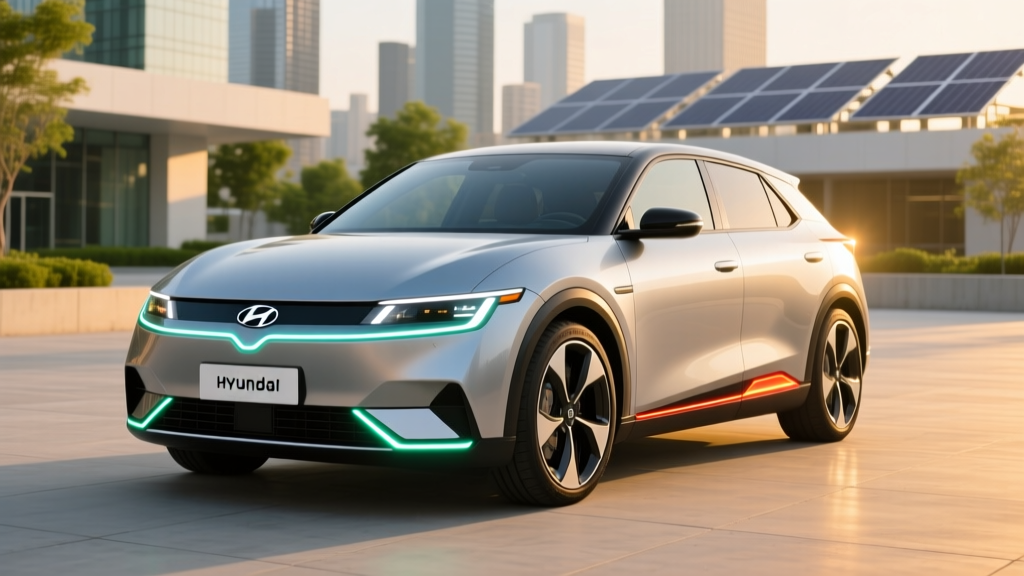
The Hyundai Ioniq 5 has become one of the most recognizable electric crossovers on the road, and 2026 Hyundai Ioniq 5 sales figures reflect a vehicle that has matured from an early-adopter favorite into a mainstream staple. With the addition of the U.S.-built Ioniq 5 N and the continued expansion of Hyundai's Metaplant America in Georgia, the Ioniq 5 lineup now spans efficient commuter trims to a track-capable performance model. But does the spec sheet still hold up against an increasingly crowded midsize EV SUV segment?
We've spent extensive time with the 2026 Ioniq 5 across multiple trims — commuting, road-tripping, and DC fast-charging in winter and summer conditions. Here's the complete data-driven breakdown of what you're actually getting for your money.
2026 Ioniq 5 at a Glance: Key Specs by Trim
| Spec | SE Standard Range (RWD) | SE / SEL (RWD Long Range) | SEL / Limited (AWD) | Ioniq 5 N |
|---|---|---|---|---|
| EPA Range | 245 mi | 318 mi | 290 mi | 221 mi |
| Battery (usable) | 63 kWh (LFP) | 84 kWh (NMC) | 84 kWh (NMC) | 84 kWh (NMC) |
| Horsepower | 168 hp | 225 hp | 320 hp | 641 hp (N Grin Boost) |
| 0–60 mph | ~7.5 sec | ~7.0 sec | ~4.5 sec | ~3.25 sec |
| Max DC Charge Rate | ~150 kW peak | 240 kW peak | 240 kW peak | 240 kW peak |
| 10–80% DCFC Time | ~25 min | ~18 min | ~18 min | ~18 min |
| Level 2 Rate | 10.9 kW (~36 mi/hr) | 10.9 kW (~36 mi/hr) | 10.9 kW (~36 mi/hr) | 10.9 kW (~36 mi/hr) |
| EPA Efficiency | 127 MPGe | 117 MPGe | 110 MPGe | 87 MPGe |
| Base MSRP | $43,975 | $47,975 | $52,475 | $67,775 |
| Drivetrain | RWD | RWD | Dual-Motor AWD | Dual-Motor AWD |
All pricing includes destination charge. Source: Hyundai News and fueleconomy.gov.
Real-World Range: What the EPA Sticker Doesn't Tell You
EPA Estimated: 318 miles
Real-World Highway (70–75 mph, mild weather): ~265–280 miles
Real-World Mixed Commuting (city + suburban): ~290–310 miles
Cold-Weather Highway (below 32°F): ~220–245 miles
The Ioniq 5's 84 kWh (usable) NMC battery in Long Range trims is EPA-rated at 318 miles for RWD — a number that holds up well in moderate-temperature city driving where regenerative braking recaptures energy at every stop. In our testing, mixed suburban commuting consistently returned 290–310 miles before hitting 10% State of Charge.
However, highway driving at sustained 70–75 mph speeds drops that figure to roughly 265–280 miles. The Ioniq 5's boxy, retro-futuristic design is striking but not the most aerodynamic in the segment (its drag coefficient of 0.288 is higher than the Tesla Model Y's 0.23). At highway speeds, that aero penalty compounds.
Cold weather is the great equalizer for all EVs, and the Ioniq 5 is no exception. Below freezing, expect a 25–30% range reduction on highway trips, bringing usable range to approximately 220–245 miles. Hyundai's standard heat pump (on all trims except the Standard Range) helps mitigate cabin-heating energy draw, but battery chemistry itself is less efficient in cold temperatures. Preconditioning the battery by setting a navigation waypoint to a DC fast charger will warm the pack and improve both range and charge speed — a habit worth building.
The Standard Range RWD model's smaller 63 kWh LFP battery is rated at 245 miles EPA. Real-world highway driving yields closer to 200–215 miles. LFP chemistry, however, offers a trade-off worth understanding: lower energy density but significantly longer cycle life and less degradation over time. LFP packs also tolerate regular charging to 100% without the longevity concerns that apply to NMC batteries, which Hyundai recommends keeping between 20–80% for daily use.
Charging Speed: 800V Architecture Still Sets the Pace
Hyundai's E-GMP platform operates on an 800V electrical architecture — one of the few mainstream systems (alongside Kia EV6, Porsche Taycan, and Lucid Air) capable of accepting ultra-fast DC charging without a step-down converter. Here's how the Ioniq 5 charges across all three levels:
| Charging Level | Power | Speed (Long Range 84 kWh) | Typical Use Case |
|---|---|---|---|
| Level 1 (120V household) | ~1.4 kW | ~4–5 mi/hr | Emergency / overnight trickle |
| Level 2 (240V home/public) | 10.9 kW | ~36 mi/hr (full charge ~9 hr) | Daily home / workplace charging |
| DC Fast Charge (350 kW station) | Up to 240 kW peak | 10–80% in ~18 min | Road trips, highway corridors |
The charging curve matters more than peak kW. The Ioniq 5 peaks near 240 kW on a 350 kW-capable charger, but that rate is only sustained between roughly 10–55% State of Charge. Above 55%, the curve tapers progressively: expect ~150 kW around 65% SoC, ~80 kW by 75%, and a slow trickle above 90%. The advertised 18-minute 10–80% time is accurate at a high-power Electrify America or Tesla Supercharger (with NACS adapter) in moderate temperatures — but a cold-soaked battery without preconditioning can add 5–10 minutes to that window.
For the 2026 model year, the Ioniq 5 ships with the Tesla North American Charging Standard (NACS) port natively on U.S.-built models from Metaplant America, granting seamless access to the Supercharger network without an adapter. Earlier CCS-equipped Ioniq 5 owners can use Hyundai's provided CCS-to-NACS adapter at Superchargers.
Home Level 2 charging at 10.9 kW (48A on a 60A circuit) replenishes the 84 kWh pack from 10–100% in approximately 8.5–9 hours — ideal for overnight charging on a standard residential 240V installation. Budget $500–$2,000 for a quality Level 2 home charger (e.g., ChargePoint Home Flex, Emporia Level 2) plus electrician installation. If your home's electrical panel is maxed out, a panel upgrade to 200A can add $1,500–$3,000.
Performance and Driving Dynamics
The Ioniq 5's performance envelope varies dramatically by trim:
- Standard Range RWD (168 hp): Adequate for city commuting but noticeably underpowered for highway merging. The 0–60 mph time of ~7.5 seconds is leisurely by EV standards.
- Long Range RWD (225 hp): The sweet spot for most buyers. The 0–60 mph time of ~7.0 seconds is confident, and single-motor efficiency maximizes range.
- AWD (320 hp): Dual-motor grip and a 4.5-second 0–60 mph time make this the all-weather choice. The trade-off is ~28 fewer miles of EPA range.
- Ioniq 5 N (641 hp w/ N Grin Boost): A legitimate performance machine. 3.25-second 0–60, track-tuned suspension, simulated gear shifts (N e-Shift), and active sound design. Range drops to 221 miles EPA — you're paying for thrills, not efficiency.
Ride quality on the SE and SEL trims is compliant and well-damped, with a notably quiet cabin at highway speeds thanks to acoustic laminated glass. The Limited trim adds adaptive dampers and a more supple ride. Steering is light and accurate but not communicative — this is a comfort-oriented crossover, not a sport sedan (unless you opt for the N).
Regenerative braking is adjustable via steering-wheel paddles across four levels (0–3), with Level 3 enabling near-one-pedal driving in city traffic. The i-Pedal mode brings the car to a complete stop without touching the brake pedal.
Interior, Cargo, and Technology
The Ioniq 5's cabin is defined by its flat floor (a benefit of the dedicated E-GMP EV platform) and a sliding center console that moves up to 5.5 inches fore and aft — a feature Hyundai calls the "Universal Island." This creates walk-through space between front seats and makes rear-seat access easier in tight parking spots.
Passenger and cargo dimensions:
- Front headroom: 39.4 in | Legroom: 41.7 in
- Rear headroom: 38.4 in | Legroom: 39.4 in
- Cargo behind rear seats: 27.2 cu ft
- Cargo with rear seats folded: 59.3 cu ft
- Front trunk (frunk): 0.85 cu ft (AWD) / 2.0 cu ft (RWD) — enough for a charging cable bag, not much more
Rear-seat legroom is genuinely generous — among the best in the segment — and the reclining rear seatbacks add long-trip comfort. The flat floor means no transmission tunnel hump, so a middle passenger actually has foot space.
Infotainment and tech: Dual 12.3-inch displays (instrument cluster + touchscreen) run Hyundai's latest ccNC software with wireless Apple CarPlay and Android Auto, over-the-air updates, and a digital key (phone-as-key via NFC/UWB). The Limited trim adds a head-up display with augmented-reality navigation arrows overlaid on the road ahead.
Driver assistance (Hyundai SmartSense): The Ioniq 5 includes Level 2 (SAE) driver-assist features: Highway Driving Assist 2 (HDA2) with lane-centering and adaptive cruise, navigation-based smart cruise control, blind-spot collision avoidance, rear cross-traffic alert, and remote smart parking assist. HDA2 is not self-driving — it requires hands-on-wheel engagement and driver attention monitoring. It performs competently on well-marked highways but does not handle construction zones, complex interchanges, or unmapped roads autonomously.
Pricing, Trims, and Federal Tax Credit Eligibility
The 2026 Ioniq 5 lineup starts at $43,975 and climbs to $67,775 for the N performance variant. Here's the trim-by-trim pricing and estimated credit-adjusted cost:
| Trim | Base MSRP (incl. destination) | Est. §30D Credit | Effective Price (if eligible) |
|---|---|---|---|
| SE Standard Range RWD | $43,975 | Up to $7,500 | ~$36,475 |
| SE Long Range RWD | $47,975 | Up to $7,500 | ~$40,475 |
| SEL Long Range AWD | $52,475 | Up to $7,500 | ~$44,975 |
| Limited AWD | $58,475 | Up to $7,500 | ~$50,975 |
| Ioniq 5 N | $67,775 | Up to $7,500 | ~$60,275 |
Critical tax credit caveats: The IRS §30D Clean Vehicle Credit has strict eligibility requirements that not every buyer will satisfy:
- MSRP cap: SUVs must be under $80,000 MSRP — all Ioniq 5 trims qualify.
- Income cap: Modified adjusted gross income must not exceed $150,000 (single), $225,000 (head of household), or $300,000 (joint filers).
- Battery sourcing: The $7,500 credit is split into two halves — $3,750 for critical-minerals sourcing and $3,750 for battery-component manufacturing. Sourcing requirements tighten annually. U.S.-built Ioniq 5 models from Metaplant America have improved domestic content, but verify current-year compliance on the IRS eligible-vehicles list before purchase.
- Point-of-sale transfer: As of 2024, you can transfer the credit to the dealer at purchase, reducing your out-of-pocket cost immediately rather than waiting to claim it on your tax return. The dealer must be IRS-registered.
Consult a tax professional to confirm your personal eligibility. State and local incentives (e.g., California's CVRP, Colorado's state credit, utility rebates) may stack on top — check AFDC's state incentive database for your jurisdiction.
Ownership Costs, Warranty, and What Ioniq 5 Sales Growth Means for Buyers
The strong Ioniq 5 sales trajectory in 2025–2026 isn't just a marketing win — it signals growing dealer familiarity, improving parts availability, and a robust used-EV market forming around the model. Hyundai backs the Ioniq 5 with one of the strongest warranties in the segment:
- New vehicle: 5 years / 60,000 miles
- Powertrain: 10 years / 100,000 miles
- Battery: 10 years / 100,000 miles (capacity retention above 70% of original)
- Complimentary maintenance: 3 years / 36,000 miles
The 10-year battery warranty with a 70% capacity-retention threshold is competitive with Tesla's 8-year/120,000-mile battery warranty (also 70% retention). Based on industry data for Hyundai/Kia E-GMP vehicles, degradation after 100,000 miles typically falls in the 8–12% range for NMC packs under normal use — well within the warranty buffer. LFP packs in the Standard Range model are expected to degrade even less, though real-world long-term data is still accumulating.
Charging cost vs. gasoline: At the national average electricity rate of ~$0.17/kWh and the Ioniq 5 Long Range RWD's efficiency of 29 kWh/100 mi, fueling costs approximately $0.049/mile. A comparable gasoline SUV at 25 MPG combined and $3.40/gal costs ~$0.136/mile — nearly three times more per mile. Over 15,000 miles/year, that's an annual fuel savings of roughly $1,300.
Insurance premiums for the Ioniq 5 tend to run 10–20% higher than comparable gas crossovers due to repair-cost data for EV battery packs and high-voltage components. Get quotes before purchasing — rates vary significantly by carrier and zip code.
How the Ioniq 5 Stacks Up Against Key Competitors
Ioniq 5 Advantages
- 800V charging (18 min 10–80%) beats most rivals
- Class-leading rear-seat legroom (39.4 in)
- 10-yr / 100k-mi battery warranty
- Standard heat pump on Long Range trims
- Distinctive design that stands out in a sea of crossovers
- Vehicle-to-load (V2L) capability — power devices from the car
Ioniq 5 Drawbacks
- Frunk is tiny (0.85–2.0 cu ft) compared to rivals
- No front trunk on AWD trims (essentially)
- Cargo volume (27.2 cu ft) trails Tesla Model Y (30.2 cu ft)
- Infotainment can be laggy; no physical volume knob
- Rear wiper was omitted on early builds (added for 2025+)
- AWD range penalty is steeper than some competitors
vs. Tesla Model Y: The Model Y offers more cargo space, access to the mature Supercharger network (though the Ioniq 5 now has native NACS), and slightly better highway efficiency. The Ioniq 5 counters with faster peak charging, a more comfortable ride, a longer battery warranty, and a design that doesn't blend into every parking lot.
vs. Kia EV6: The EV6 shares the E-GMP platform and 800V architecture but has a sportier, lower-roof profile that sacrifices some cargo and headroom. Choose the EV6 for driving dynamics; choose the Ioniq 5 for interior space and comfort.
vs. Ford Mustang Mach-E: The Mach-E is engaging to drive and has improved its charging speed, but it still lacks 800V capability (peak ~150 kW vs. 240 kW) and its battery warranty is 8 years / 100,000 miles to the Ioniq 5's 10 years.
Who Should Buy the Hyundai Ioniq 5?
Choose the Ioniq 5 if:
- You want the fastest DC charging in the mainstream midsize SUV segment
- Rear-seat passenger comfort is a priority (family hauling, rideshare)
- You value a long battery warranty for peace of mind
- You want a distinctive design that doesn't look like every other crossover
- You need V2L capability for camping, tailgating, or emergency backup power
Look elsewhere if:
- Maximum cargo volume is your top priority (Model Y wins here)
- You need a large frunk for under-hood storage
- You want the lowest possible insurance premiums
- You want Level 3+ autonomous capability (not available on any consumer vehicle at this price point)
The Ioniq 5's strong sales numbers are earned, not manufactured. It's a well-rounded electric crossover that excels at the things that matter most to EV buyers: charging speed, interior space, warranty coverage, and daily-drivable range. The 2026 model year's native NACS port and continued domestic production only strengthen its position. If you can charge at home and your daily driving falls within its real-world range envelope, the Ioniq 5 remains one of the most compelling EVs in its price bracket.
Frequently Asked Questions
What is the real-world range of the 2026 Hyundai Ioniq 5?
The Long Range RWD model is EPA-rated at 318 miles, but expect approximately 265–280 miles on highway road trips at 70–75 mph and 220–245 miles in cold weather below freezing. Mixed city/suburban driving typically returns 290–310 miles. The Standard Range model's 245-mile EPA rating translates to roughly 200–215 real-world highway miles.
How fast does the Ioniq 5 charge at home and on the road?
At a 350 kW DC fast charger, the Ioniq 5 (Long Range and AWD trims) peaks at 240 kW and charges from 10–80% in approximately 18 minutes under ideal conditions. At home on a Level 2 (240V, 48A) charger, it charges at 10.9 kW, adding roughly 36 miles of range per hour — a full charge takes about 8.5–9 hours.
Does the 2026 Ioniq 5 qualify for the $7,500 federal EV tax credit?
Most trims are expected to qualify for the full $7,500 IRS §30D credit, but eligibility depends on your income (under $150K single / $300K joint), the vehicle's battery-sourcing compliance for the current year, and the MSRP being under $80,000 (all trims qualify). Verify on the IRS eligible vehicles list and consult a tax professional before purchasing.
Is the Ioniq 5 worth buying over the Tesla Model Y or Kia EV6?
The Ioniq 5 offers faster DC charging (240 kW vs. Model Y's ~250 kW peak but with a different curve profile), more rear legroom than the EV6, a longer battery warranty than both, and V2L capability. The Model Y has more cargo space and a more mature service network. The EV6 is sportier but less practical. Your choice depends on whether you prioritize charging speed and comfort (Ioniq 5), cargo capacity and ecosystem (Model Y), or driving dynamics (EV6).
What are the biggest pros and cons of the Ioniq 5?
Pros: Ultra-fast 800V DC charging, spacious rear seats, 10-year battery warranty, V2L power output, comfortable ride, native NACS port for Supercharger access.
Cons: Small frunk, cargo volume trails some rivals, no physical infotainment knobs, AWD range penalty, insurance costs above segment average.
How long will the Ioniq 5 battery last?
Hyundai warranties the battery for 10 years / 100,000 miles with a 70% capacity-retention threshold. Industry data on E-GMP NMC packs suggests typical degradation of 8–12% over 100,000 miles under normal use. The Standard Range model's LFP battery is expected to degrade even less, with a longer cycle life — though at the cost of lower energy density and shorter range.