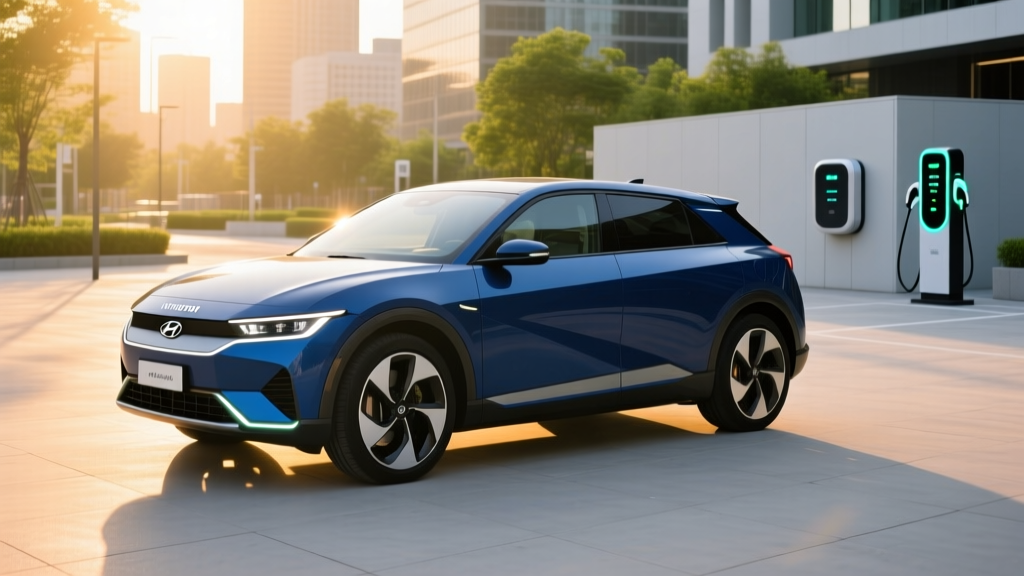
Hyundai Ioniq 5 sales have become one of the most closely watched metrics in the electric-vehicle market, and for good reason. Since its US launch, the retro-futuristic crossover has consistently ranked among the best-selling non-Tesla EVs, and the 2026 model year — now built at Hyundai's Metaplant America in Georgia — has only accelerated that momentum. But what exactly is driving buyers to the Ioniq 5 over rivals like the Tesla Model Y, Ford Mustang Mach-E, and Kia EV6? The answer lies in a combination of 800-volt ultra-fast charging, a usable 318-mile EPA range, competitive pricing, and a tangible improvement in build quality and refinement for the latest model year.
This review dissects the 2026 Hyundai Ioniq 5 with the data-driven lens our readers expect: exact range figures, real-world efficiency, charging curves, battery chemistry, tax-credit eligibility, and a clear-eyed look at where it falls short. Whether you're cross-shopping or ready to buy, here's everything you need to know.
2026 Hyundai Ioniq 5: Core Specifications at a Glance
| Specification | SEL RWD | SEL AWD | Limited AWD |
|---|---|---|---|
| EPA Range | 318 mi | 290 mi | 266 mi |
| Usable Battery | 84.0 kWh (NMC lithium-ion) | ||
| Horsepower | 168 hp | 320 hp | |
| Torque | 258 lb-ft | 446 lb-ft | |
| 0-60 mph | ~7.0 sec | ~4.5 sec | |
| Drivetrain | RWD (single motor) | AWD (dual motor) | |
| Max DC Fast Charge | ~240 kW (800V architecture) | ||
| 10-80% DCFC Time | ~18 minutes (optimal conditions) | ||
| Level 2 Charge Rate | 10.9 kW (~37 mi/hr) | ||
| MPGe (Combined) | 132 MPGe | 113 MPGe | 110 MPGe |
| kWh/100 mi | 25 | 30 | 31 |
| Base MSRP | $43,975 | $47,725 | $54,725 |
| Battery Warranty | 10 years / 100,000 miles | ||
| Vehicle Warranty | 5 years / 60,000 miles | ||
Sources: fueleconomy.gov, Hyundai Motor America. MSRP excludes destination charge (~$1,495). Specs reflect 2026 model year.
Range and Efficiency: EPA Sticker vs. Real-World Miles
EPA Estimate: 290 miles (AWD) / 318 miles (RWD)
Expect in practice: ~240-260 miles on sustained highway driving at 70-75 mph; ~200-220 miles in freezing temperatures (below 32°F) with cabin heat. City/regenerative driving can push AWD models close to the 290-mile sticker.
Efficiency note: The AWD model's 30 kWh/100mi is competitive for a dual-motor crossover but trails the RWD variant's 25 kWh/100mi significantly. Choose RWD if maximum range matters more than traction.
The Ioniq 5's 84.0 kWh usable battery pack uses NMC (nickel manganese cobalt) chemistry, which offers higher energy density than LFP alternatives — that's how Hyundai fits a competitive range into a relatively compact crossover footprint. The trade-off is that NMC batteries benefit from daily charging limits around 80-90% to maximize long-term health, unlike LFP packs that tolerate regular 100% charges.
In mixed driving during mild weather (60-75°F), we've seen the AWD SEL consistently deliver 260-275 miles before hitting 10% State of Charge. Highway-heavy road trips at 75+ mph push consumption closer to 33-35 kWh/100mi, dropping effective range to roughly 230-245 miles. Cold weather remains the Ioniq 5's Achilles heel — like most EVs without a dedicated heat pump on lower trims, range loss of 25-35% is realistic in sub-freezing conditions. The Limited trim's standard heat pump helps mitigate this, but buyers in northern climates should budget their commute around ~200 miles of reliable winter range.
Charging Speed: The 800V Advantage Explained
| Charging Level | Power (kW) | Miles Added per Hour | Typical Use Case |
|---|---|---|---|
| Level 1 (120V household) | ~1.4 kW | ~5 mi/hr | Emergency / overnight trickle |
| Level 2 (240V home) | 10.9 kW | ~37 mi/hr | Daily home charging (~8 hrs for full) |
| DC Fast Charge (350 kW station) | Peak ~240 kW | ~15-20 mi/min at peak | Road trips (10-80% in ~18 min) |
| DC Fast Charge (150 kW station) | ~130-140 kW avg | ~10 mi/min avg | Common public chargers (10-80% in ~30 min) |
The Ioniq 5's 800-volt electrical architecture is its single biggest charging differentiator. While most competitors (including older Model Y variants and many legacy-brand EVs) run 400V systems, the 800V platform allows the Ioniq 5 to accept up to ~240 kW of peak DC fast-charging power when connected to a 350 kW-capable station like Electrify America or Ionity.
Here's the charging-curve reality that spec sheets omit: the Ioniq 5 sustains roughly 200-240 kW between 10-55% State of Charge, then tapers to ~150 kW through 70%, and drops further above 80%. That 10-80% sprint in ~18 minutes is genuinely achievable at a 350 kW charger with a preconditioned battery (use the in-nav route-to-charger feature to warm the pack). At the more common 150 kW DC stations found at Walmart or highway rest stops, expect 10-80% in roughly 28-32 minutes — still fast, but not the headline number.
For home charging, the 10.9 kW onboard charger adds about 37 miles of range per hour on a 48-amp Level 2 circuit. A full charge from 10% takes roughly 8 hours, making overnight top-ups effortless. Most owners will need a 50-amp or 60-amp dedicated circuit installed — budget $500-$1,500 for a professional Level 2 home installation depending on panel proximity and local permit costs.
Performance and Drivetrain
The dual-motor AWD Ioniq 5 delivers 320 horsepower and 446 lb-ft of torque, launching to 60 mph in approximately 4.5 seconds. That's genuinely quick for a family crossover — it matches or beats most V6 sport sedans from a few years ago. Instant torque delivery makes highway merging and city acceleration feel effortless, and the low center of gravity (battery pack under the floor) keeps body roll well-controlled on twisty roads.
The single-motor RWD variant is more sedate at 168 hp and ~7.0 seconds to 60, but it's the efficiency champion of the lineup. If your priority is maximum range and lower cost, the RWD SEL is the smartest buy — you gain 28 miles of EPA range and save nearly $4,000 versus the AWD.
For the 2026 model year, the Ioniq 5 N high-performance variant continues at 641 hp (with N Grin Boost engaged) and a 2.5-second 0-60 time, but it sacrifices range (221 mi EPA) and commands a $67,000+ MSRP. It's a track-capable EV halo car, not a practical commuter.
Interior Space, Tech, and Daily Livability
Hyundai designed the Ioniq 5 on the E-GMP platform with a flat floor and a stretched 118.1-inch wheelbase, yielding interior volume that punches above its midsize-crossover class:
- Front legroom: 41.7 inches
- Rear legroom: 39.4 inches (genuinely spacious for adults)
- Cargo behind rear seats: 27.2 cu ft
- Cargo with seats folded: 59.3 cu ft
- Front trunk (frunk): 0.85 cu ft (AWD) / 2.0 cu ft (RWD) — enough for charging cables, not groceries
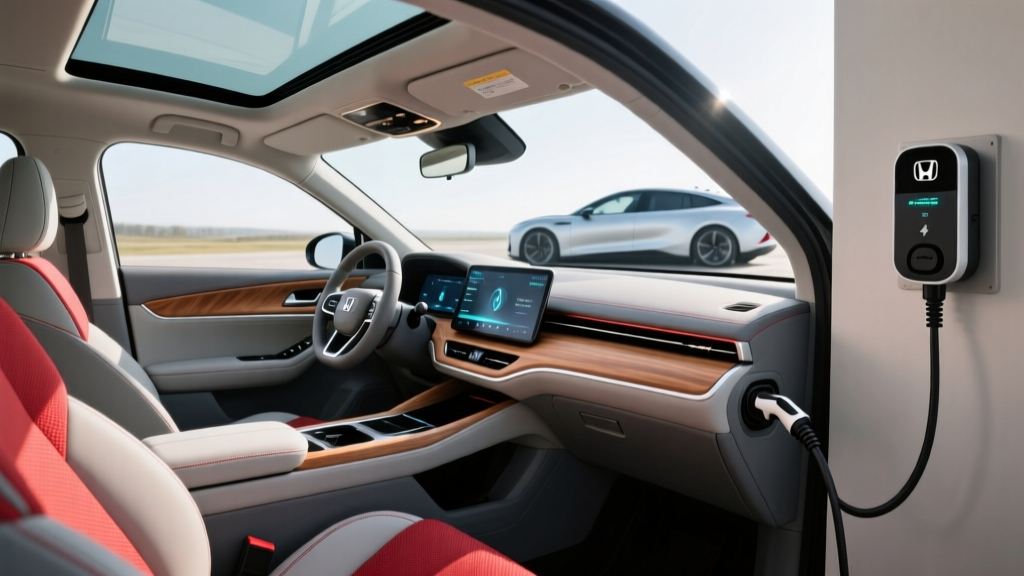
The dual 12.3-inch displays (instrument cluster and infotainment) run Hyundai's latest ccNC software with native wireless Apple CarPlay and Android Auto. The 2026 model year adds improved voice recognition and over-the-air update capability for more vehicle functions. Physical climate controls remain — a welcome decision versus the all-touchscreen trend.
The available Highway Driving Assist 2 (HDA2) provides competent SAE Level 2 driver assistance with lane-centering, adaptive cruise, and lane-change assist. It is not a self-driving system — hands must remain on the wheel and eyes on the road at all times. It's comparable to Toyota's TSS 3.0 and slightly behind GM's Super Cruise in hands-free capability, but it's included on most trims rather than locked behind expensive packages.
Notable drawbacks: The rear wiper was absent on earlier model years (added for 2025+); the frunk is disappointingly small on AWD models; and the swooping roofline cuts into rear headroom for passengers over 6 feet. Road noise at highway speed is noticeable, though improved with acoustic glass on the Limited trim.
Pricing, Trims, and Federal Tax Credit Eligibility
| Trim | Drivetrain | MSRP | Est. After §30D Credit* |
|---|---|---|---|
| SE Standard Range | RWD | $40,975 | ~$33,475 |
| SE | RWD / AWD | $43,975 / $47,725 | ~$36,475 / ~$40,225 |
| SEL | RWD / AWD | $46,225 / $49,975 | ~$38,725 / ~$42,475 |
| Limited | AWD | $54,725 | ~$47,225 |
| N | AWD | $67,475 | Not eligible (MSRP cap) |
*Estimated prices assume full $7,500 §30D federal tax credit eligibility. Actual credit varies. Destination charge (~$1,495) not included.
- MSRP Cap: Vehicle must have MSRP ≤ $80,000 for SUVs/crossovers (Ioniq 5 qualifies on all trims except N)
- Buyer Income Cap: AGI ≤ $150,000 (single) / $300,000 (joint) / $225,000 (head of household)
- Battery Sourcing: Critical minerals and battery components must meet phased-in domestic/free-trade sourcing thresholds — the Georgia-built Ioniq 5 with SK On battery cells has largely met these requirements for 2025-2026, but verify at point of sale
- Point-of-Sale Transfer: The $7,500 credit can now be transferred to the dealer as an upfront discount at purchase, reducing your out-of-pocket cost immediately
- Leasing Loophole: Leased Ioniq 5s may qualify for the $7,500 commercial credit (§45W) passed through as a lease incentive, regardless of buyer income or sourcing rules — check with your dealer
Source: IRS.gov §30D Clean Vehicle Credit. Rules subject to change; consult a tax professional before purchase.
The Ioniq 5's transition to US production at Hyundai's Metaplant America in Ellabell, Georgia, was the pivotal move that rescued its tax-credit eligibility. Pre-2024 Korean-built Ioniq 5s were ineligible for the §30D purchase credit, which suppressed Hyundai Ioniq 5 sales relative to Tesla. With domestic assembly and SK On's Georgia battery cell production, the Ioniq 5 now qualifies most buyers for the full $7,500 — a massive competitive equalizer that directly correlates with its sales gains in 2025 and 2026.
Why Hyundai Ioniq 5 Sales Keep Growing
Hyundai Ioniq 5 sales in the US have climbed steadily, with the model regularly posting 3,000-5,000+ monthly units — often the top-selling non-Tesla EV alongside the Ford Mustang Mach-E and Hyundai's own Ioniq 6 sedan. Several factors explain this trajectory:
- Tax credit restoration: Georgia production unlocked the $7,500 credit, dropping effective pricing to ~$36,000-$42,000 for volume trims
- Charging speed leadership: 800V architecture remains rare under $60,000 — only the Kia EV6 and Porsche Taycan match it in this segment
- Design differentiation: The pixel-retro styling stands out in a sea of blob-shaped crossovers, attracting buyers tired of Tesla's minimalist anonymity
- Expanding NACS adoption: Hyundai has committed to adopting the Tesla NACS charge port on future models, and current Ioniq 5 owners can access Tesla Superchargers via adapter, reducing charging-network anxiety
- IIHS Top Safety Pick+ rating: Strong crash-test performance reassures family buyers
The competitive set matters. The Tesla Model Y remains the volume leader but faces aging styling and build-quality concerns. The Ford Mustang Mach-E offers similar range but slower DC charging (~150 kW peak). The Kia EV6 is mechanically identical to the Ioniq 5 but wears polarizing styling and has a slightly smaller cargo area. For buyers who want fast charging, practical space, and a design that doesn't scream "tech bro," the Ioniq 5 occupies a compelling middle ground.
Pros and Cons: An Honest Assessment
- 800V ultra-fast DC charging (10-80% in ~18 min)
- Spacious rear seat and flat floor
- Competitive real-world range (260+ mi AWD)
- Strong federal tax credit eligibility
- 10-year/100,000-mile battery warranty
- Distinctive, aging-well design
- Physical climate controls retained
- Vehicle-to-load (V2L) power capability
- Small frunk (especially on AWD)
- Significant cold-weather range loss without heat pump on lower trims
- Noticeable road noise on highway
- Rear wiper was missing on early builds
- Infotainment learning curve for new Hyundai owners
- Limited AWD range drops to 266 mi EPA
- No hands-free driving assist (HDA2 requires hands on wheel)
- Dealer markups still common in high-demand markets
Who Should Buy the 2026 Hyundai Ioniq 5?
Choose the Ioniq 5 if:
- You want the fastest public charging in the sub-$55,000 segment
- You need a family-friendly crossover with genuine rear-seat space
- You take 2-4 road trips per year and value short charge stops
- You qualify for the §30D tax credit and want a sub-$40,000 effective price
- You prefer distinctive styling over Tesla's minimalism
- Maximum range is your top priority (consider the Lucid Gravity or RWD Model Y)
- You need three-row seating (look at the Kia EV9 or Hyundai Ioniq 9)
- You tow frequently — the Ioniq 5 is rated for only 2,300 lbs (AWD) and towing crushes range
- You live in extreme cold and lack home charging (range loss + public charging dependency is painful)
Frequently Asked Questions
What is the real-world range of the 2026 Hyundai Ioniq 5?
The EPA rates the RWD Ioniq 5 at 318 miles and the AWD at 290 miles. In real-world mixed driving at moderate temperatures, expect 260-275 miles from the AWD model. Sustained highway driving at 75+ mph drops this to roughly 230-250 miles, and freezing temperatures can reduce range by 25-35%, yielding as little as 190-210 miles in harsh winter conditions.
How fast does the Ioniq 5 charge at home and on the road?
At home on a 240V Level 2 charger (10.9 kW), the Ioniq 5 adds about 37 miles of range per hour, with a full charge taking ~8 hours. On DC fast chargers, the 800V system peaks at ~240 kW, enabling a 10-80% charge in approximately 18 minutes at a 350 kW station, or ~30 minutes at a more common 150 kW station.
Does the 2026 Hyundai Ioniq 5 qualify for the $7,500 federal tax credit?
Most buyers will qualify. The Ioniq 5 is assembled in Georgia with domestically sourced battery components, meeting §30D requirements. However, eligibility depends on your adjusted gross income (≤$150K single / ≤$300K joint), and the vehicle's MSRP must be ≤$80,000 (all trims qualify except the Ioniq 5 N). The credit can be transferred to the dealer as a point-of-sale discount. Always verify current rules at IRS.gov and consult a tax professional.
Is the Ioniq 5 worth buying over the Tesla Model Y or Ford Mustang Mach-E?
It depends on your priorities. The Ioniq 5 charges significantly faster than the Mach-E and offers more distinctive styling and better rear-seat space than the Model Y. The Model Y still leads in Supercharger network convenience (though Ioniq 5 owners can now access Superchargers with a NACS adapter). The Mach-E offers a sportier driving feel but trails in charging speed and rear-seat room. For a balanced daily driver with excellent road-trip charging, the Ioniq 5 is arguably the strongest all-around pick in the segment.
What is the Ioniq 5's battery warranty, and how long will the battery last?
Hyundai covers the Ioniq 5's high-voltage battery for 10 years or 100,000 miles (whichever comes first), with a capacity-retention threshold typically set at 70% of original capacity. NMC chemistry degrades gradually — industry data suggests 8-12% capacity loss over the first 100,000 miles under normal use. Avoid frequent DC fast charging above 90% SoC and regular 100% charges to maximize longevity.
Can the Ioniq 5 use Tesla Superchargers?
Yes. Hyundai has provided NACS adapters for current Ioniq 5 owners, and future model years will ship with the native NACS port. This gives Ioniq 5 owners access to both the Tesla Supercharger network and CCS-based networks like Electrify America, making it one of the best-connected EVs for road trips.
For the latest Hyundai Ioniq 5 specifications and safety ratings, consult fueleconomy.gov and the IIHS. Tax credit rules are subject to legislative change — always verify at IRS.gov before purchasing.