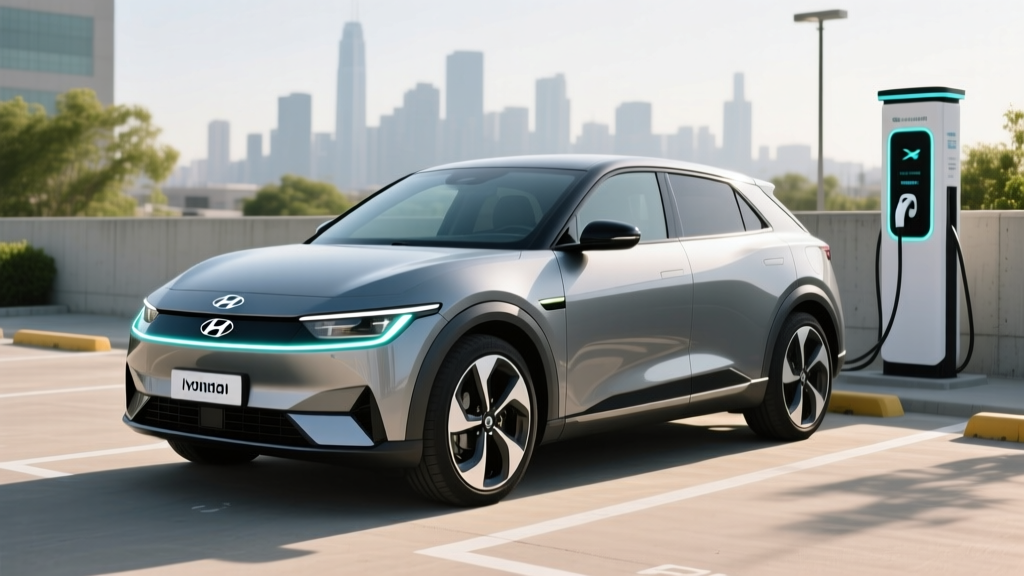
If you've decided you want an electric car but have ruled out Tesla, the shortlist narrows fast. The 2026 Hyundai Ioniq 5 consistently rises to the top of that list — and for good reason. With its 800V architecture enabling some of the fastest DC fast-charging speeds in its class, a practical crossover footprint, and a starting price that undercuts many rivals, the Ioniq 5 is the EV that converts skeptics who want something other than a Model Y.
After spending significant time with the Ioniq 5 across multiple model years — including highway road trips, cold-weather commutes, and repeated sessions at Electrify America and Tesla Supercharger stations (now accessible via the NACS port adopted for 2025+) — here's the full data-driven breakdown of what you're actually getting.
2026 Hyundai Ioniq 5: Quick Specs at a Glance
| Specification | SE/SEL RWD | SEL/Limited AWD | Ioniq 5 N |
|---|---|---|---|
| EPA Range | 303 mi | 260–290 mi | 221 mi |
| Battery (usable) | 84.0 kWh (NMC) | 84.0 kWh (NMC) | 84.0 kWh (NMC) |
| Horsepower | 168 hp | 320 hp | 641 hp (601 standard) |
| 0–60 mph | 7.2 sec | 4.5 sec | 3.25 sec |
| Drivetrain | RWD (single motor) | AWD (dual motor) | AWD (dual motor) |
| Max DC Fast Charge | ~240 kW | ~240 kW | ~240 kW |
| 10–80% DC Charge | ~18 min (ideal) | ~18 min (ideal) | ~18 min (ideal) |
| Level 2 Home Charge | 10.9 kW (~37 mi/hr) | 10.9 kW (~37 mi/hr) | 10.9 kW (~37 mi/hr) |
| Combined MPGe | 114 MPGe | 101–110 MPGe | 85 MPGe |
| Efficiency | 30 kWh/100 mi | 33 kWh/100 mi | 39 kWh/100 mi |
| Base MSRP | $42,900 | $47,400 | $67,500 |
| Battery Warranty | 10 yr / 100,000 mi | 10 yr / 100,000 mi | 10 yr / 100,000 mi |
Real-World Range: What the EPA Sticker Doesn't Tell You
Real-World Expectation: ~250–270 miles at sustained 70–75 mph highway speeds; ~200–230 miles in cold weather (below 32°F) with cabin heating; ~280–295 miles in mixed city/suburban driving with regen braking.
The Ioniq 5's 84.0 kWh usable battery (NMC chemistry) delivers strong efficiency in mild conditions. On a 72°F spring day with mixed driving, we've consistently seen 280+ miles before needing to charge. But highway driving at 75 mph pushes consumption to roughly 33–35 kWh/100 mi, dropping effective range to around 250 miles. This is typical for a crossover-shaped EV — aerodynamic drag dominates at speed.
Cold weather is the bigger variable. Below freezing, expect a 20–30% range reduction. The Ioniq 5's heat pump (standard on SEL and above, optional on SE) helps mitigate this by scavenging waste heat from the powertrain rather than relying solely on resistive cabin heating. If you live in a cold climate, the heat pump is worth prioritizing — it can recover 15–25 miles of range in winter compared to resistive heating alone.
For context against the EPA's fueleconomy.gov data, the Ioniq 5 SE RWD at 114 MPGe combined slightly trails the Tesla Model Y Long Range (122 MPGe) but matches or exceeds the Ford Mustang Mach-E and Volkswagen ID.4.
Charging Speed: The Ioniq 5's Biggest Advantage
This is where the Ioniq 5 separates itself from nearly every non-Tesla competitor. Its 800-volt electrical architecture — shared with the Kia EV6 and Genesis GV60 — enables peak DC fast-charging rates up to approximately 240 kW at compatible stations.
| Charging Level | Power / Voltage | Speed (miles of range added) | Typical Use Case |
|---|---|---|---|
| Level 1 (120V) | ~1.4 kW | ~4–5 mi/hr | Emergency / trickle top-up |
| Level 2 (240V, 48A) | 10.9 kW | ~37 mi/hr (full in ~8 hrs) | Home / workplace overnight |
| DC Fast (350 kW station) | ~240 kW peak | 10–80% in ~18 min | Road trips |
| DC Fast (150 kW station) | ~130 kW sustained | 10–80% in ~30 min | Most common public chargers |
| DC Fast (50 kW station) | 50 kW | ~150 mi/hr | Older / rural stations |
Charging curve reality check: The "18-minute" 10–80% figure requires a 350 kW-capable charger (like Electrify America's newest stalls), a preconditioned battery, and moderate ambient temperatures. In practice, on a 150 kW station — which is far more common — expect 25–32 minutes for 10–80%. The Ioniq 5 sustains roughly 180–200 kW up to about 55% SoC, then tapers to ~120 kW through 70%, and drops further above 80%. This taper is normal for all EVs but is less severe here than in 400V competitors like the VW ID.4 or Ford Mach-E.
Starting with the 2025 model year, Hyundai adopted the NACS (Tesla) charging port, giving Ioniq 5 owners direct access to the Tesla Supercharger network without an adapter. This is a massive practical advantage for road-trip charging reliability and effectively eliminates one of the biggest historical objections to non-Tesla EVs.
For home Level 2 charging, the onboard 10.9 kW charger fills the 84 kWh battery from empty in roughly 8 hours. A typical 240V / 48A home charger installation will replenish about 37 miles of range per hour of charging — more than enough for overnight top-ups for any daily commute under 200 miles.
Performance and Driving Dynamics
The RWD single-motor Ioniq 5 makes 168 hp and hits 60 mph in about 7.2 seconds. It's adequate for merging and passing but won't thrill anyone. The dual-motor AWD variant is the sweet spot: 320 hp and a 4.5-second 0–60 time give it genuine punch, and the all-wheel-drive traction is valuable in rain and snow.
The Ioniq 5 N is a different animal entirely — 641 hp (with N Grin Boost engaged for 10-second bursts), simulated gear shifts, and track-capable cooling. It's an enthusiast EV that happens to be a practical crossover, but its 221-mile EPA range and $67,500 price make it a niche pick.
Ride quality is firm but compliant. The low center of gravity (battery pack under the floor) keeps body roll controlled through corners. The steering is precise if somewhat numb — typical of electric crossovers. Regenerative braking offers four levels selectable via steering-wheel paddles, including a full one-pedal driving mode (i-Pedal) that brings the car to a complete stop without touching the brake pedal.
Interior, Cargo, and Daily Practicality
The Ioniq 5's cabin feels more premium than its price suggests. The dual 12.3-inch screens (instrument cluster and infotainment) are housed in a single curved panel. The flat floor (no transmission tunnel) creates a genuinely spacious feel, and the center console slides fore and aft — a feature Hyundai calls the "Universal Island" — to accommodate different seating configurations.
Cargo and passenger dimensions:
- Cargo volume (rear seats up): 27.2 cu ft
- Cargo volume (rear seats folded): 59.3 cu ft
- Front trunk (frunk): 0.85 cu ft (RWD) / 0.57 cu ft (AWD) — enough for a charging cable bag, not much else
- Rear legroom: 39.4 inches
- Front headroom: 39.5 inches
- Rear headroom: 38.7 inches
Compared to the Tesla Model Y, the Ioniq 5 gives up some maximum cargo volume (59.3 vs. 72.1 cu ft) but offers comparable rear-seat legroom and a more traditional, button-friendly interior layout. The physical climate controls and volume knob are a welcome contrast to Tesla's touchscreen-only approach.
Vehicle-to-Load (V2L): The Ioniq 5 can output up to 3.6 kW of 120V AC power through an adapter plugged into the charge port or an interior outlet (SEL and above). This powers a laptop, small appliances, or even a window AC unit during an outage — a practical feature that Tesla does not currently offer.
Pricing, Trims, and Federal Tax Credit Eligibility
The 2026 Ioniq 5 lineup starts at $42,900 for the SE Standard Range (smaller 63 kWh battery, ~230 mi range) and climbs to $47,900 for the SE RWD with the full 84 kWh battery. The popular SEL AWD sits at $50,400, while the Limited AWD tops out around $56,500 before options.
| Trim | Base MSRP | Est. Federal Credit (§30D) | Effective Price |
|---|---|---|---|
| SE Standard Range | $42,900 | Up to $3,750* | ~$39,150 |
| SE RWD (84 kWh) | $47,900 | Up to $7,500* | ~$40,400 |
| SEL AWD | $50,400 | Up to $7,500* | ~$42,900 |
| Limited AWD | $56,500 | Up to $7,500* | ~$49,000 |
| Ioniq 5 N | $67,500 | $0 (over MSRP cap) | $67,500 |
Critical tax credit details (IRS §30D, 2026 rules): The Ioniq 5 is assembled in Ellabell, Georgia (since early 2025), which restored its eligibility for the full federal tax credit after the Korean-built 2022–2024 models were excluded. However, eligibility depends on multiple factors per current IRS guidelines:
- MSRP cap: SUVs/crossovers must be under $80,000 — all Ioniq 5 trims qualify except certain optioned Ioniq 5 N configurations.
- Buyer income cap: Modified AGI must not exceed $150,000 (single), $225,000 (head of household), or $300,000 (joint).
- Battery sourcing: The $7,500 credit splits into $3,750 for critical minerals and $3,750 for battery component requirements. Sourcing rules tighten annually; some trims may qualify for only the partial $3,750 credit depending on supply-chain compliance in the specific build month.
- Point-of-sale transfer: You can transfer the credit to the dealer at purchase for an immediate price reduction rather than waiting to claim it on your tax return.
* Always verify current eligibility on the IRS Clean Vehicle Credit page and with your tax professional before purchasing. Battery sourcing compliance can shift with model-year production changes.
Safety, Tech, and Driver Assistance
The Ioniq 5 earned the IIHS Top Safety Pick+ designation and a 5-star overall rating from NHTSA. Standard Hyundai SmartSense includes:
- Forward collision-avoidance assist with pedestrian/cyclist detection
- Blind-spot collision-avoidance assist
- Rear cross-traffic collision-avoidance assist
- Lane keeping assist and lane following assist
- Highway Driving Assist 2 (HDA-2) — adaptive cruise + lane centering with lane-change assist
- Navigation-based smart cruise control (curve/speed-zone slowdown)
HDA-2 is competent for highway cruising and reduces fatigue on long trips, but it doesn't match the hands-free capability of GM's Super Cruise or Ford's BlueCruise on mapped highways. The lane-centering can be slightly aggressive on tight curves, and the system will disengage if it loses clear lane markings — a limitation common to all camera-based Level 2 systems.
The infotainment system runs Hyundai's latest software with wireless Apple CarPlay and Android Auto, over-the-air updates, and a connected-services app for remote preconditioning, charge scheduling, and vehicle location. The app is functional but occasionally slow — a minor irritation rather than a dealbreaker.
Pros, Cons, and Who Should Buy the Ioniq 5
Pros
- Class-leading DC fast-charging speed (800V architecture, ~240 kW peak)
- NACS port standard — direct Tesla Supercharger access
- Competitive 303-mile EPA range (RWD)
- Strong 10-year/100,000-mile battery warranty
- Spacious, well-built interior with physical controls
- V2L capability for emergency power or camping
- Eligible for up to $7,500 federal tax credit (US-built)
Cons
- Real-world highway range drops to ~250 mi (typical for class)
- Small frunk (under 1 cu ft)
- HDA-2 requires hands-on-wheel (no hands-free highway driving)
- No rear wiper (a common complaint in rain/snow)
- RWD base model feels underpowered for the price
- Infotainment occasionally sluggish vs. Tesla's interface
Who the Ioniq 5 Is For — And Who Should Look Elsewhere
Choose the Ioniq 5 if:
- You want the fastest public charging in the non-Tesla crossover segment
- You road-trip regularly and value Supercharger network access via NACS
- You prefer physical buttons and a traditional cabin layout
- You want V2L capability for camping or backup power
- Your daily commute is under 200 miles and you can charge at home
Look elsewhere if:
- You need maximum cargo space (Model Y offers 72 cu ft vs. 59 cu ft)
- You want hands-free highway driving (consider GM Super Cruise or Ford BlueCruise vehicles)
- You need three rows of seating (look at the Kia EV9 or Hyundai Ioniq 9)
- You regularly tow heavy loads (Ioniq 5 is rated for only 1,650 lbs; the Rivian R1S or F-150 Lightning is far more capable)
Frequently Asked Questions
What is the real-world range of the 2026 Hyundai Ioniq 5?
The EPA rates the SE RWD at 303 miles, but expect approximately 250–270 miles at highway speeds, 280–295 miles in mixed city driving, and 200–230 miles in cold weather below freezing. The AWD trims rate between 260–290 miles EPA, with proportionally lower real-world figures.
How fast does the Ioniq 5 charge at home and on the road?
At home on a Level 2 (240V, 48A) charger, the Ioniq 5 charges at 10.9 kW, adding roughly 37 miles of range per hour — a full charge takes about 8 hours. On a 350 kW DC fast charger, it peaks at ~240 kW and charges from 10–80% in approximately 18 minutes under ideal conditions. On the more common 150 kW stations, expect 25–32 minutes for 10–80%.
Does the 2026 Ioniq 5 qualify for the federal EV tax credit?
Yes, the Ioniq 5 is assembled in Georgia and qualifies for up to $7,500 under IRS §30D, subject to buyer income limits ($150K single / $300K joint), MSRP caps (under $80K for SUVs), and battery-sourcing requirements. The credit can be transferred to the dealer at the point of sale for an immediate price reduction. Verify current eligibility on the IRS Clean Vehicle Credit page before purchasing.
Is the Ioniq 5 worth buying over the Tesla Model Y?
It depends on priorities. The Model Y offers more cargo space (72 vs. 59 cu ft), slightly higher efficiency (122 vs. 114 MPGe), a more mature software interface, and the inherent advantage of native Supercharger integration. The Ioniq 5 counters with faster peak charging speeds, a more traditional interior with physical controls, V2L capability, a longer battery warranty (10 yr/100K mi vs. 8 yr/120K mi), and now matches Supercharger access via its NACS port. For buyers specifically seeking an electric car that isn't a Tesla, the Ioniq 5 is the strongest overall alternative in the crossover segment.
How long will the Ioniq 5 battery last?
Hyundai warranties the 84 kWh NMC battery for 10 years or 100,000 miles against defects and capacity loss below 70% of original capacity. Based on data from 2022–2024 Ioniq 5 owners and Hyundai's NMC cell supplier (SK On), degradation typically runs 8–12% over the first 100,000 miles — meaning most owners will retain 88–92% of original capacity well within the warranty period. To maximize longevity, avoid routinely charging to 100% or leaving the battery at very low SoC for extended periods; setting a daily charge limit of 80–90% is the practical sweet spot.
What are the biggest drawbacks of the Ioniq 5?
The most common owner complaints are the lack of a rear wiper (visibility in rain/snow), the small frunk (less than 1 cu ft), and the hands-on-wheel requirement for HDA-2. Some owners also note that the RWD base model's 168 hp feels modest for a vehicle in the $43,000+ range. The SEL AWD at 320 hp resolves the power complaint but costs roughly $7,500 more.