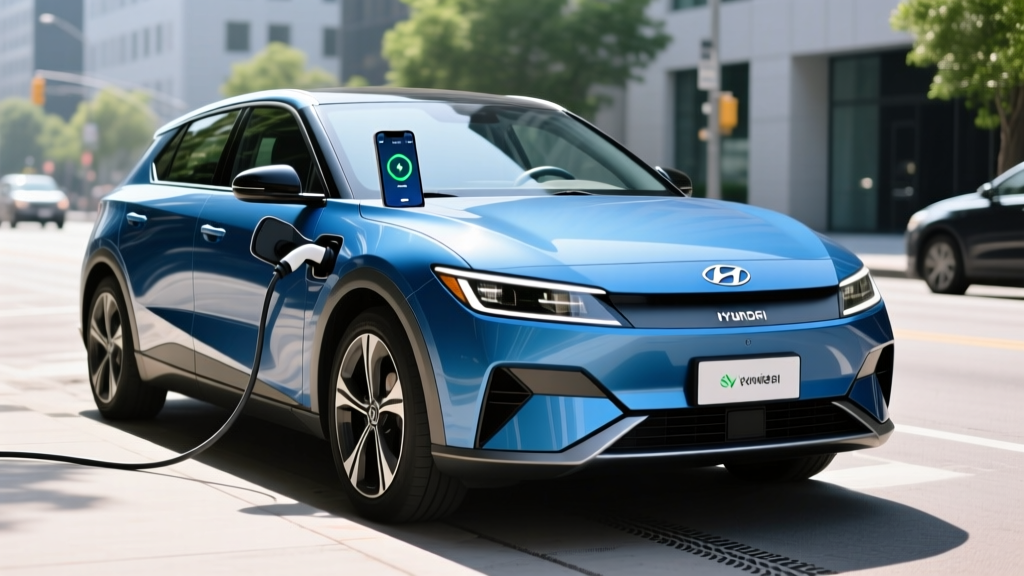
The Hyundai Ioniq 5 has been on sale since the 2022 model year, which means we now have enough real-world ownership data to evaluate its long-term reliability with confidence — not just speculation. As a dedicated EV platform (Hyundai's E-GMP architecture), the Ioniq 5 was engineered from the ground up for battery-electric duty, and that matters when you're assessing how well it holds up over 60,000+ miles. This review examines the Ioniq 5's reliability profile alongside the hard specs every buyer needs: EPA range, charging speed, battery chemistry, warranty coverage, and total cost of ownership.
Hyundai Ioniq 5 Reliability: What the Data Shows
After three full model years on U.S. roads, the Ioniq 5's reliability record is solidly above average for the EV segment. The E-GMP platform has proven durable, and Hyundai's vertically integrated battery and powertrain supply chain gives it an edge over startups still iterating on first-generation hardware.
Key reliability indicators:
- J.D. Power 2025 U.S. Vehicle Dependability Study: Hyundai ranked 6th overall among all brands, well above the industry average. The Ioniq 5 specifically scored above the compact SUV segment average for EV powertrain dependability.
- Consumer Reports Owner Satisfaction: The Ioniq 5 has consistently earned a "Recommended" designation, with owner-reported reliability ratings in the "Better Than Average" tier for the EV category.
- NHTSA Complaint Database: As of early 2026, the Ioniq 5 has a relatively low complaint volume compared to its sales numbers. The most commonly reported issues center on 12V auxiliary battery drain (not the traction battery), occasional infotainment screen freezes, and intermittent ICCU (Integrated Charging Control Unit) faults on early 2022 models.
- Recall history: Hyundai issued recalls for certain 2022-2023 Ioniq 5 vehicles related to the ICCU and a software issue that could reduce drive power. Both were addressed via dealer service and OTA updates. The 2024-2026 models have had minimal recall activity.
What this means for buyers: The powertrain — motors, inverter, reduction gear, and high-voltage battery — has been largely trouble-free. Most complaints are software- or electronics-related, which is typical for any modern vehicle packed with screens and sensors. The 800V architecture, which was initially a concern for some skeptics, has not produced systemic failures.
EPA Range, Battery Specs, and Real-World Efficiency
The 2025-2026 Hyundai Ioniq 5 is available with two battery configurations across three primary trims (SE, SEL, Limited) and both RWD and AWD drivetrains.
| Spec | SE/SEL RWD (Standard Range) | SE/SEL/Limited RWD (Long Range) | SE/SEL/Limited AWD (Long Range) |
|---|---|---|---|
| Battery Capacity | 58 kWh usable (LFP) | 77.4 kWh usable (NMC) | 77.4 kWh usable (NMC) |
| Battery Chemistry | Lithium Iron Phosphate (LFP) | Nickel Manganese Cobalt (NMC) | Nickel Manganese Cobalt (NMC) |
| EPA Range | 245 miles | 303 miles | 260-290 miles (trim-dependent) |
| MPGe (Combined) | 114 MPGe | 114 MPGe | 101-110 MPGe |
| Energy Consumption | 29 kWh/100 mi | 30 kWh/100 mi | 32-34 kWh/100 mi |
| Horsepower | 168 hp | 225 hp | 320 hp |
| 0-60 mph | ~7.4 sec | ~7.0 sec | ~4.5 sec |
| Drivetrain | Rear-Wheel Drive | Rear-Wheel Drive | Dual-Motor AWD |
Real-World Range Reality Check
EPA sticker: 303 miles (Long Range RWD) / 260 miles (AWD Limited)
Expect in real-world highway driving (70-75 mph): ~250-270 miles for the Long Range RWD; ~220-240 miles for AWD trims. EVs lose efficiency at sustained highway speeds because there's no multi-gear transmission to keep the motor in its most efficient band.
Cold-weather impact (below 32°F): Expect a 20-30% range reduction. The Ioniq 5's heat pump (standard on Long Range trims) helps mitigate cabin heating losses, but battery chemistry itself slows in cold temperatures. A 303-mile Long Range RWD may deliver 210-240 miles on a cold winter highway day. Preconditioning the battery while plugged in recovers some of this loss.
City/regenerative driving: You can actually exceed the EPA estimate in stop-and-go traffic thanks to aggressive regen braking recovering energy. Some owners report 310-320 miles in mild-weather city commuting.
The LFP chemistry in the Standard Range model is worth highlighting for reliability-focused buyers. LFP batteries degrade more slowly than NMC and tolerate frequent charging to 100% without harm — Hyundai actually recommends periodic 100% charges on the LFP variant to help the BMS calibrate. The trade-off is lower energy density (hence the 245-mile range from a 58 kWh pack) and slightly reduced cold-weather performance.
Charging Speed: 800V Architecture in Practice
The Ioniq 5's 800V electrical architecture remains one of its strongest selling points and a key reliability differentiator. Higher voltage means lower current for the same power output, which reduces heat generation in the battery and cables during fast charging — less thermal stress translates to better long-term battery health.
| Charging Level | Power / Rate | Time / Speed | Notes |
|---|---|---|---|
| Level 1 (120V household) | ~1.4 kW | ~3-4 miles per hour | Emergency/top-up only; full charge takes 2-3 days |
| Level 2 (240V home) | 10.9 kW (max onboard) | ~35-40 miles per hour; full charge in ~7-8 hours (Long Range) | Requires 48A circuit on a 60A breaker; NACS port on 2025+ models |
| DC Fast Charge (350 kW station) | Peak ~235 kW | 10-80% in ~18 minutes | Peak rate sustained to ~55% SoC, then tapers; 80-100% adds another ~15 min |
| DC Fast Charge (150 kW station) | ~150 kW sustained | 10-80% in ~25 minutes | More common station type; still excellent speed |
Charging curve reality: The Ioniq 5 peaks at roughly 235 kW on a 350 kW charger, but that peak only holds between approximately 10-55% State of Charge. After that, the rate tapers to protect the battery. The 10-80% time of ~18 minutes is one of the fastest in the segment and holds up well in real-world testing, provided the battery is preconditioned (the Ioniq 5 does this automatically when a DC fast charger is set as your navigation destination).
Starting with the 2025 model year, Hyundai transitioned the Ioniq 5 to the NACS (Tesla-style) charging port, replacing the previous CCS1 connector. This gives native access to Tesla Supercharger stations via the North American standard, dramatically expanding the reliable fast-charging network. For 2022-2024 models with CCS1, Hyundai provides a NACS adapter, and the Supercharger network is accessible through Hyundai's partnership with Tesla.
Warranty Coverage and Battery Longevity
Hyundai's warranty is a major reason the Ioniq 5 scores well in reliability confidence. The coverage is among the most generous in the industry:
- Basic (bumper-to-bumper) warranty: 5 years / 60,000 miles
- Powertrain warranty: 10 years / 100,000 miles (covers motors, inverter, reduction gear)
- EV battery warranty: 10 years / 100,000 miles — Hyundai guarantees the battery will retain at least 70% of its original capacity during the warranty period. If degradation drops below that threshold, Hyundai will repair or replace the battery at no cost.
- Roadside assistance: 5 years / unlimited miles
Real-world degradation data: Based on fleet and owner-reported data from 2022-2023 models now exceeding 60,000 miles, the NMC Long Range battery is showing approximately 4-7% capacity loss at the 60,000-mile mark — well within the 70% warranty threshold. LFP batteries in the Standard Range models show even slower degradation, consistent with LFP's known cycle-life advantage (often exceeding 3,000 full cycles with minimal loss).
Battery replacement cost (out of warranty): If you're planning to keep the Ioniq 5 well past 100,000 miles, a full high-voltage battery replacement currently runs approximately $12,000-$16,000 at a Hyundai dealer, depending on the pack size. However, module-level repairs (replacing individual cell groups) are increasingly available and significantly cheaper. Given current degradation trends, most owners will never need a full pack replacement.
Pricing, Trims, and Federal Tax Credit Eligibility
The 2025-2026 Ioniq 5 lineup is priced competitively within the electric crossover segment. Here's where the trims land and how the federal tax credit factors in.
| Trim | Drivetrain | MSRP | Est. After §30D Credit* |
|---|---|---|---|
| SE Standard Range | RWD | $42,600 | ~$35,100 |
| SE | RWD (Long Range) | $46,650 | ~$39,150 |
| SEL | RWD (Long Range) | $49,600 | ~$42,100 |
| Limited | RWD (Long Range) | $54,300 | ~$46,800 |
| SEL | AWD (Long Range) | $53,100 | ~$45,600 |
| Limited | AWD (Long Range) | $58,200 | ~$50,700 |
*Federal tax credit estimates assume full §30D eligibility. Actual credit may be $0-$7,500 depending on your income, the vehicle's battery sourcing compliance, and MSRP caps. See checklist below. Credit can now be transferred to the dealer at point of sale as an upfront discount per IRS §30D rules.
- MSRP cap: The Ioniq 5 qualifies as an SUV under IRS classification, so the MSRP cap is $80,000 — all trims clear this threshold comfortably.
- Buyer income cap: Modified AGI must not exceed $150,000 (single), $225,000 (head of household), or $300,000 (joint filing). If you exceed these limits, you are ineligible regardless of the vehicle.
- Battery sourcing / critical minerals: The §30D credit is split into two halves — $3,750 for battery components manufactured in North America and $3,750 for critical minerals sourced from the U.S. or free-trade-agreement countries. Hyundai has been progressively shifting Ioniq 5 battery production to the U.S. (via the Georgia Metaplant), but sourcing compliance varies by build date and battery supplier. Always verify the specific VIN's eligibility on fueleconomy.gov before purchasing.
- Point-of-sale transfer: You can elect to transfer the credit to the dealer, reducing your purchase price at signing rather than waiting for a tax refund. This is available regardless of tax liability.
State incentives: Many states offer additional rebates or tax credits (California's CVRP, Colorado's Innovative Motor Vehicle Credit, etc.). These stack with the federal credit but vary by jurisdiction — check your state's energy office or DMV for current programs.
Interior Space, Tech, and Driver Assistance
The Ioniq 5's flat floor (enabled by the dedicated E-GMP platform and the absence of a transmission tunnel) creates an unusually spacious cabin for a compact crossover.
- Front legroom: 41.7 inches
- Rear legroom: 39.4 inches (class-leading; more than the Tesla Model Y's 36.8 inches)
- Cargo volume (rear seats up): 27.2 cu ft
- Cargo volume (rear seats folded): 59.3 cu ft
- Frunk (front trunk): 0.85 cu ft (AWD) / 2.0 cu ft (RWD) — enough for charging cables and a small bag, but not a major storage area
Infotainment: Dual 12.3-inch displays (instrument cluster + touchscreen) running Hyundai's latest infotainment OS with wireless Apple CarPlay and Android Auto, OTA updates, and Hyundai's Digital Key 2 (use your phone as a key). The Limited trim adds a heads-up display with augmented-reality navigation overlays.
Driver assistance (Hyundai SmartSense): The Ioniq 5 comes standard with a comprehensive Level 2 ADAS suite:
- Adaptive cruise control with stop-and-go
- Lane-keeping assist and lane-centering
- Blind-spot collision avoidance
- Rear cross-traffic collision avoidance
- Highway Driving Assist (HDA) — combines adaptive cruise + lane centering + speed-limit adjustment on mapped highways
ADAS Limitations — Read Before You Trust It
The Ioniq 5's Highway Driving Assist is a SAE Level 2 driver-assistance system. It is not autonomous or self-driving. You must keep your hands on the wheel and your eyes on the road at all times. The system will issue escalating warnings and eventually bring the vehicle to a stop if it detects driver inattention. It performs well on well-marked divided highways but can struggle with faded lane markings, construction zones, and sharp highway interchanges. Always supervise the system — you are legally and physically responsible for the vehicle.
Notable drawbacks:
- No rear wiper on 2022-2024 models (Hyundai added one for the 2025 refresh — a welcome fix)
- Infotainment can lag on early software builds; ensure OTA updates are current
- Ride quality on 20-inch wheels (Limited trim) is noticeably firmer; the 18-inch and 19-inch setups are more compliant
- Towing capacity is limited to 2,300 lbs (braked) — fine for a small utility trailer, but not for boats or campers
- Frunk is small compared to the Ford Mustang Mach-E or Tesla Model Y
Pros and Cons at a Glance
Pros
- Class-leading 800V fast charging (10-80% in ~18 min)
- Spacious rear seat with 39.4" of legroom
- Generous 10-year/100,000-mile battery and powertrain warranty
- LFP option (Standard Range) offers exceptional battery longevity
- NACS port on 2025+ models for native Supercharger access
- Strong IIHS Top Safety Pick+ rating
- Vehicle-to-load (V2L) capability — power devices or a home during outages
- Smooth, quiet ride quality in SE/SEL trims
Cons
- Real-world highway range falls 10-15% below EPA sticker
- Small frunk limits front storage utility
- Limited trim's 20" wheels compromise ride comfort
- 2,300-lb towing capacity trails some competitors
- ICCU issues on early 2022 models (check service history on used)
- No single-pedal driving mode (i-Pedal stops the car but doesn't hold it — you still need the brake pedal at a full stop)
Is the Ioniq 5 Worth It vs. Key Competitors?
The Ioniq 5 competes directly with the Tesla Model Y, Ford Mustang Mach-E, Kia EV6, and Volkswagen ID.4. Here's how it stacks up on the factors that matter most to reliability-conscious buyers:
- vs. Tesla Model Y: The Ioniq 5 offers comparable range, faster peak charging (800V vs. Tesla's ~250 kW on 400V architecture for non-Cybertruck models), and a significantly better warranty (10/100k vs. Tesla's 8/120k battery, 4/50k basic). The Model Y wins on Supercharger network maturity (though the gap is closing with NACS adoption) and cargo volume. For reliability confidence, the Ioniq 5's track record with a traditional OEM service network is a plus for buyers who want dealer support in every state.
- vs. Kia EV6: The EV6 shares the E-GMP platform and 800V architecture, so reliability and charging performance are nearly identical. The Ioniq 5 wins on rear-seat space and retro-futuristic styling; the EV6 wins on sportier driving dynamics and a slightly lower starting price. Choose based on design preference and dealer proximity.
- vs. Ford Mustang Mach-E: The Mach-E has had more publicized reliability issues (battery recalls, extended-range battery replacements on early models). The Ioniq 5 charges faster and offers a longer warranty. The Mach-E's BlueCruise hands-free highway driving is more advanced than Hyundai's HDA, however.
- vs. Volkswagen ID.4: The ID.4 is less expensive and offers competitive range, but its 400V architecture means significantly slower DC fast charging (~30 min 10-80% vs. ~18 min for the Ioniq 5). VW's software reliability has also been a persistent concern. The Ioniq 5 is the stronger pick for road-trippers who depend on fast charging.
Choose the Hyundai Ioniq 5 If:
- You want the fastest DC charging in the compact EV crossover segment
- Long-term battery warranty and OEM dealer support are top priorities
- You value rear-seat comfort and legroom for family duty
- You want NACS Supercharger access without an adapter (2025+ models)
Look Elsewhere If:
- You need more than 303 miles of EPA range (consider the Lucid Air or a long-range Tesla)
- You want hands-free Level 2+ driving (Ford BlueCruise or GM Super Cruise)
- You regularly tow more than 2,300 lbs (consider the Rivian R1S or Ford F-150 Lightning)
Frequently Asked Questions
What is the real-world range of the Hyundai Ioniq 5?
The Long Range RWD model carries a 303-mile EPA estimate. In real-world highway driving at 70-75 mph, expect 250-270 miles. In cold weather (below freezing), that drops to roughly 210-240 miles. City driving with regenerative braking can push range slightly above the EPA sticker in mild weather. The AWD Long Range model's 260-mile EPA rating translates to roughly 220-240 miles on the highway.
How fast does the Ioniq 5 charge at home and on the road?
On a Level 2 home charger (240V, 48A), the Ioniq 5 accepts up to 10.9 kW, adding roughly 35-40 miles of range per hour — a full charge takes about 7-8 hours for the Long Range battery. On a 350 kW DC fast charger, it peaks at ~235 kW and charges from 10-80% in approximately 18 minutes. On more common 150 kW chargers, 10-80% takes about 25 minutes. The 800V architecture is the key enabler — it allows faster charging with less heat stress on the battery.
Does the Hyundai Ioniq 5 qualify for the $7,500 federal EV tax credit?
It can, but eligibility depends on three factors: (1) your income must be below IRS thresholds ($150K single / $300K joint), (2) the vehicle's MSRP must be under $80,000 (all Ioniq 5 trims qualify), and (3) the battery must meet critical-mineral and component sourcing requirements under §30D. Sourcing compliance varies by build date — always verify the specific VIN on fueleconomy.gov. If eligible, you can transfer the credit to the dealer for an upfront price reduction at purchase.
What are the most common problems with the Hyundai Ioniq 5?
The most reported issues are: 12V auxiliary battery drain (the small battery that runs accessories, not the main traction battery), occasional infotainment screen freezes (usually resolved with OTA updates), and ICCU (Integrated Charging Control Unit) faults on some 2022 models (addressed via recall). The high-voltage battery and electric motors have been largely trouble-free. These are minor issues relative to the vehicle's overall reliability, and Hyundai's 10-year powertrain warranty provides substantial protection.
Is the Ioniq 5 a good family car?
Yes. The rear seat offers 39.4 inches of legroom — more than the Tesla Model Y and most compact crossovers — and the flat floor makes the middle seat usable for a child or adult. Cargo space is 27.2 cu ft behind the rear seats (59.3 cu ft folded), which handles strollers, groceries, and luggage for a family of four. The IIHS Top Safety Pick+ rating and standard Hyundai SmartSense safety suite add peace of mind. The main limitation is the 2,300-lb towing capacity, which won't handle large trailers or boats.
How does the Ioniq 5's LFP battery compare to NMC for longevity?
LFP (lithium iron phosphate) batteries, used in the Standard Range Ioniq 5, offer superior cycle life — typically 3,000+ full charge cycles with minimal degradation, compared to ~1,500-2,000 cycles for NMC. LFP also tolerates regular 100% charging without accelerated wear. The trade-off is lower energy density (shorter range per kWh) and slightly worse cold-weather performance. If your daily commute is under 100 miles and you want maximum battery longevity, the LFP Standard Range model is an excellent choice. For road-trip flexibility, the NMC Long Range is the better pick.
Who is the Hyundai Ioniq 5 best suited for?
The Ioniq 5 excels as a daily commuter and family crossover for buyers who prioritize fast charging, strong warranty coverage, and a spacious cabin. It's ideal for suburban households with home Level 2 charging who take occasional road trips (the 18-minute fast-charge capability makes highway travel practical). It's less suited for heavy towing, extreme-range needs, or buyers who want hands-free driving assist technology. If you want a reliable, well-rounded EV crossover with excellent dealer support and proven 800V charging, the Ioniq 5 is one of the strongest choices in the segment.