Hyundai Ioniq 5 Real-World Range Review: How Far Does It Really Go?
An honest, data-driven look at the Hyundai Ioniq 5's electric range, charging performance, and everyday livability — tested under real-world conditions.
Vehicle Overview
The Hyundai Ioniq 5 has been one of the most talked-about electric vehicles since its debut, and for good reason. Built on Hyundai Motor Group's dedicated Electric-Global Modular Platform (E-GMP), this mid-size crossover combines retro-futuristic styling with genuinely impressive electric powertrain technology. Available in both Standard Range and Long Range configurations, with rear-wheel drive or all-wheel drive, the Ioniq 5 lineup offers something for a wide variety of EV buyers.
But spec sheets and EPA range estimates only tell part of the story. Every EV owner knows that real-world range can differ significantly from laboratory figures depending on driving style, terrain, temperature, and accessory use. That's why we put the Ioniq 5 through a comprehensive real-world evaluation — covering highway cruising, city commuting, cold-weather driving, and fast-charging sessions — to give you the complete picture.
If you're cross-shopping the segment, be sure to check out our best electric SUVs roundup and our head-to-head Ioniq 5 vs. Tesla Model Y comparison for additional context.
Real-World Range: Testing the EPA Estimates
EPA Ratings vs. What We Observed
The Long Range RWD Ioniq 5 carries an EPA-estimated range of up to 303 miles on a full charge, while the AWD variant is rated at approximately 260 miles. The Standard Range RWD model comes in at roughly 220 miles. These are competitive numbers in the mid-size electric crossover segment, but how do they hold up outside the lab?
In our mixed-driving loop — consisting of roughly 40% highway, 40% suburban, and 20% city driving — the Long Range RWD model delivered an observed range of approximately 275 to 290 miles in moderate temperatures (60–75°F / 15–24°C). That represents about 90–96% of the EPA estimate, which is a strong result. Many EVs fall short of their EPA numbers by a wider margin, so the Ioniq 5's efficiency here is commendable.
Highway Range at Sustained Speeds
Highway driving is traditionally where EVs lose the most range compared to their ratings. At a sustained 70 mph (113 km/h) on relatively flat terrain with climate control set to 72°F (22°C), the Long Range AWD model achieved roughly 235 to 245 miles before reaching a 10% state of charge. That's a realistic number for road-trip planning and means most drivers can comfortably cover 200+ miles between charging stops without anxiety.
Cold-Weather Impact
Cold temperatures remain the great equalizer for all electric vehicles. In conditions between 25–35°F (-4 to 2°C), with the cabin heater active, we observed range reductions of approximately 20–30% depending on trip length and pre-conditioning. The Ioniq 5's available heat pump system helps mitigate this loss — models equipped with the heat pump fared noticeably better, losing closer to 20% versus the 30% drop seen in models without it. We always recommend opting for the heat pump if you live in a climate with regular cold winters.
For a broader look at how EVs handle winter conditions, see our guide to the best EVs for cold weather driving.
Efficiency Metrics
Across all of our testing, the Long Range RWD Ioniq 5 averaged approximately 3.2 to 3.5 miles per kWh, translating to an energy consumption rate of roughly 28–31 kWh per 100 miles. That efficiency places it among the more efficient vehicles in its class, trailing only the most aerodynamically optimized sedans. The AWD model consumed slightly more energy, averaging about 2.9 to 3.2 miles per kWh in similar conditions.
Charging Speed: The 800-Volt Advantage
One of the Ioniq 5's standout features is its 800-volt electrical architecture, a technology shared with corporate cousin Kia's EV6 and the luxury Genesis GV60. This high-voltage system enables DC fast-charging speeds that remain among the best in the entire EV market.
DC Fast Charging
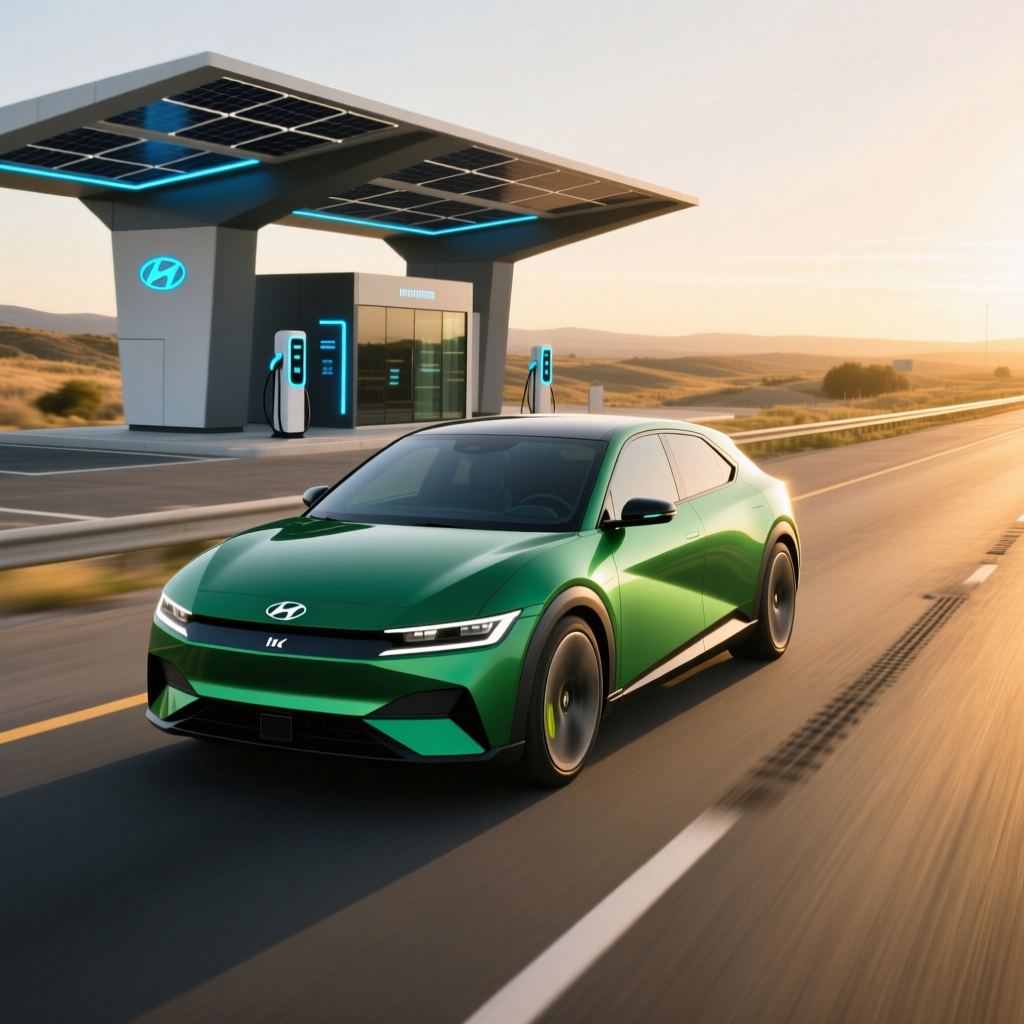
Hyundai claims the Ioniq 5 can charge from 10% to 80% in approximately 18 minutes when connected to a 350 kW DC fast charger. In our testing on Electrify America and similar high-power networks, we consistently observed charge times of 18 to 22 minutes for that 10–80% window, validating Hyundai's claim. Peak charging rates exceeded 230 kW, though the curve tapers as the battery fills — as is typical for all lithium-ion packs.
This is where the Ioniq 5 truly shines compared to competitors still using 400-volt architectures. A typical 400V competitor might require 30–40 minutes for the same 10–80% charge. For road-trippers, this difference is transformative — it means your charging stop can be as quick as a restroom break and a coffee.
Level 2 (AC) Charging
On a Level 2 home charger or public AC station, the Ioniq 5's onboard charger accepts up to 10.9 kW. A full charge from empty takes approximately 7 to 8 hours for the Long Range battery, making overnight home charging convenient and practical. Most owners will plug in at night and wake up to a full battery every morning.
Level 1 (Standard Outlet) Charging
Using a standard 120V household outlet, expect a charging rate of roughly 3 to 5 miles of range per hour. While slow, this can serve as a useful trickle-charge option for topping up when no other infrastructure is available.
Vehicle-to-Load (V2L)
The Ioniq 5 also features a Vehicle-to-Load (V2L) function, which allows you to power external devices — from laptops and camping equipment to small appliances — directly from the car's battery. The V2L outlet provides up to 3.6 kW of power, effectively turning the Ioniq 5 into a mobile power bank. It's a feature that adds genuine utility for outdoor enthusiasts and anyone who values emergency backup power capability.
Interior, Technology & Comfort
The Ioniq 5's cabin is one of its strongest selling points. Hyundai designed the interior around what it calls a "Living Space" concept, and the result is an airy, minimalist environment that feels more like a modern lounge than a traditional car interior.
Dual-Screen Dashboard
The dashboard is dominated by a pair of 12.3-inch displays — one for the instrument cluster and one for the infotainment system — housed under a single curved glass panel. The infotainment system supports wireless Apple CarPlay and Android Auto on select trims, along with native navigation, over-the-air updates, and a suite of connected services. Response times are quick, and the interface is generally intuitive, though some users may find the reliance on touch controls for climate functions slightly distracting while driving.
Space & Practicality
Thanks to the E-GMP platform's flat floor and long 118.1-inch wheelbase, rear-seat legroom is genuinely generous — rivaling full-size sedans. The rear seats recline and slide, allowing passengers to fine-tune their comfort. Cargo space behind the rear row measures approximately 27.2 cubic feet, expanding to around 59.3 cubic feet with the rear seats folded. The front trunk (frunk) adds a modest amount of additional storage, though it's notably smaller than some competitors.
Materials & Build Quality
Hyundai has made a visible effort to use sustainable materials inside the Ioniq 5, including recycled PET bottles for seat fabric, eco-processed leather, and plant-based yarns. Build quality is solid throughout, with tight panel gaps and a premium feel that punches above the vehicle's price point. Ambient lighting, a panoramic sunroof (on higher trims), and available Bose premium audio round out the comfort and technology offerings.
For more on tech-forward EV cabins, browse our best EV interiors guide.
Driving Dynamics & Performance
The Ioniq 5 is not marketed as a performance EV, but it delivers more driving engagement than its comfort-oriented positioning might suggest.
Powertrain Options
The Long Range RWD model produces 225 horsepower and 258 lb-ft of torque, delivering a 0–60 mph time of approximately 7.0 seconds. The AWD variant combines front and rear motors for a combined output of 320 horsepower and 446 lb-ft of torque, dropping the 0–60 mph sprint to around 5.0 seconds. Both configurations provide the instant, linear torque delivery that makes EVs so satisfying in everyday driving.
Ride & Handling
The Ioniq 5's ride quality strikes a well-judged balance between comfort and composure. The suspension absorbs bumps and imperfections with confidence, and body roll is kept in check during cornering. Steering is light but reasonably precise, making the vehicle easy to maneuver in urban environments while remaining stable at highway speeds. It's not a sports SUV, but it's genuinely enjoyable to drive in a relaxed, effortless way.
Regenerative Braking
Hyundai equips the Ioniq 5 with adjustable regenerative braking, controlled via paddle shifters behind the steering wheel. You can select from multiple levels of regen, including a one-pedal driving mode (i-Pedal) that brings the vehicle to a complete stop without touching the brake pedal in most situations. The transitions between regenerative and friction braking are smooth, and the system does an excellent job of recapturing energy during deceleration — which directly contributes to the strong real-world range figures we observed.
Driver Assistance Systems
The Ioniq 5 comes loaded with Hyundai's SmartSense suite of advanced driver assistance features, including adaptive cruise control with stop-and-go, lane-keeping assist, blind-spot monitoring, rear cross-traffic collision avoidance, and highway driving assist. These systems work reliably and contribute to reduced driver fatigue on long trips.
Ownership Costs & Value
Beyond range and performance, total cost of ownership is a critical factor for any EV purchase. Here's how the Ioniq 5 stacks up.
Pricing & Incentives
The Ioniq 5 is competitively priced within the mid-size electric crossover segment. Pricing varies by trim and configuration, but the lineup generally spans from the mid-$40,000s to the mid-$50,000s before incentives. Buyers should check current federal and state EV tax credits and incentives, which can significantly reduce the effective purchase price. Hyundai also periodically offers attractive lease deals that can make the Ioniq 5 an even more compelling value.
Charging Costs
Based on an average U.S. electricity rate of approximately $0.16 per kWh and the Ioniq 5's real-world efficiency of around 30 kWh per 100 miles, home charging costs work out to roughly $4.80 per 100 miles. Compare that to a gasoline vehicle achieving 25 mpg at $3.50 per gallon, which costs about $14.00 per 100 miles — and the fuel savings become substantial over time. Public DC fast charging is more expensive, typically ranging from $0.30 to $0.50 per kWh, but even at those rates, the Ioniq 5 remains cost-competitive with gasoline equivalents.
Maintenance
Like all battery electric vehicles, the Ioniq 5 requires far less routine maintenance than an internal-combustion vehicle. There are no oil changes, spark plugs, timing belts, or exhaust system components to worry about. Brake wear is also significantly reduced thanks to regenerative braking. Hyundai's warranty coverage includes a 10-year/100,000-mile powertrain warranty and an 8-year/100,000-mile battery warranty, providing strong long-term peace of mind.
Depreciation
EV depreciation has historically been a concern, but the Ioniq 5 has held its value relatively well compared to some competitors, thanks in part to strong demand and Hyundai's reputation for reliability. As the EV market matures and more buyers become comfortable with used EVs, we expect depreciation curves to stabilize further.
For a comprehensive look at affordable EV ownership, check out our list of the best value electric vehicles.
Pros & Cons
| Pros | Cons |
|---|---|
| Excellent real-world range, close to EPA estimates | Frunk is smaller than some competitors |
| Ultra-fast 800V DC charging (10–80% in ~18 min) | No wireless Apple CarPlay/Android Auto on all trims |
| Spacious, premium interior with flat floor | Cold-weather range loss without heat pump can be significant |
| Smooth ride quality & refined driving dynamics | Rear visibility could be better |
| Strong warranty coverage (10yr/100k powertrain) | Some touch-sensitive controls can be distracting |
| V2L capability for external device power | AWD model sacrifices noticeable range vs. RWD |
| Competitive pricing with available incentives | Road noise at highway speeds on rough surfaces |
Key Specifications Comparison
| Specification | Standard Range RWD | Long Range RWD | Long Range AWD |
|---|---|---|---|
| Battery Capacity | 58 kWh | 77.4 kWh | 77.4 kWh |
| EPA Range (est.) | ~220 miles | ~303 miles | ~260 miles |
| Observed Real-World Range | ~195–210 miles | ~275–290 miles | ~235–250 miles |
| Horsepower | 168 hp | 225 hp | 320 hp |
| Torque | 258 lb-ft | 258 lb-ft | 446 lb-ft |
| 0–60 mph | ~8.5 sec | ~7.0 sec | ~5.0 sec |
| DC Fast Charge (10–80%) | ~18 min (350 kW) | ~18 min (350 kW) | ~18 min (350 kW) |
| AC Charging Rate | 10.9 kW | 10.9 kW | 10.9 kW |
| Drivetrain | Rear-Wheel Drive | Rear-Wheel Drive | All-Wheel Drive |
| Cargo Volume (rear seats up) | 27.2 cu ft | 27.2 cu ft | 27.2 cu ft |
Note: Observed real-world range figures are based on mixed driving conditions in moderate temperatures. Individual results will vary based on driving style, terrain, climate, and accessory usage. See our EV range testing methodology page for details on how we test.
Frequently Asked Questions
What is the real-world range of the Hyundai Ioniq 5?
In our testing, the Long Range RWD Ioniq 5 delivered approximately 275 to 290 miles of real-world range in moderate temperatures with mixed driving. That's roughly 90–96% of its 303-mile EPA estimate. Highway-only driving at sustained speeds reduces that figure to around 240–255 miles, while cold weather can reduce range by an additional 20–30%. Overall, the Ioniq 5's real-world range performance is among the best in its class, with actual results coming very close to official estimates.
How fast does the Hyundai Ioniq 5 charge?
Thanks to its 800-volt architecture, the Ioniq 5 can charge from 10% to 80% in approximately 18 minutes on a 350 kW DC fast charger. In real-world testing, we observed charge times of 18–22 minutes depending on battery temperature and charger availability. On a Level 2 home charger (10.9 kW), a full charge takes about 7–8 hours. The 800V system is one of the Ioniq 5's most significant advantages over competitors still using 400V platforms.
Is the Hyundai Ioniq 5 good in cold weather?
The Ioniq 5 performs reasonably well in cold weather, especially when equipped with the available heat pump system. Without a heat pump, expect range reductions of approximately 25–30% in freezing temperatures. With the heat pump, that loss narrows to around 20%. Pre-conditioning the battery and cabin while still plugged in can further minimize cold-weather range loss. We strongly recommend the heat pump option for buyers in cold climates.
How does the Ioniq 5 compare to the Tesla Model Y in range?
The Tesla Model Y Long Range AWD holds a slight edge in EPA-estimated range (approximately 310+ miles) compared to the Ioniq 5 Long Range AWD (~260 miles). However, the Ioniq 5 Long Range RWD (~303 miles EPA) is competitive with the Model Y RWD. Where the Ioniq 5 gains ground is in charging speed — its 800V system charges significantly faster than the Model Y on compatible chargers. The choice between the two often comes down to priorities: the Model Y offers access to the Supercharger network and slightly more cargo space, while the Ioniq 5 provides faster charging, a more spacious rear seat, and a more distinctive design. Read our full Ioniq 5 vs. Model Y comparison for a detailed breakdown.
Is the Hyundai Ioniq 5 worth buying?
The Hyundai Ioniq 5 is one of the most well-rounded electric crossovers on the market. Its combination of strong real-world range, ultra-fast charging, a spacious and premium interior, competitive pricing, and excellent warranty coverage makes it an outstanding choice for a wide range of buyers. If you prioritize charging speed and cabin comfort, it's arguably the best in its class. The main trade-offs are a smaller frunk than some rivals and slightly less range in AWD form compared to certain competitors. For most EV shoppers, the Ioniq 5 deserves a serious test drive — see where it ranks in our best electric SUVs list.
Final Verdict
The Hyundai Ioniq 5 delivers on its range promises with impressive real-world results, charges faster than nearly any competitor, and wraps it all in a package that's practical, comfortable, and genuinely enjoyable to live with every day. While no EV is perfect, the Ioniq 5 comes remarkably close to being the complete package for buyers seeking a mid-size electric crossover that excels across the board.
Whether you're a daily commuter looking to eliminate gas station visits or a road-tripper who values fast charging stops, the Ioniq 5 has the capabilities to meet your needs. Its real-world range figures inspire confidence, its 800-volt charging system is genuinely transformative, and its interior sets a new standard for the segment. If it's on your shortlist, we say it earns a strong recommendation.
Explore more in-depth reviews in our EV reviews hub, and compare the Ioniq 5 against other top picks in our best electric SUVs guide.