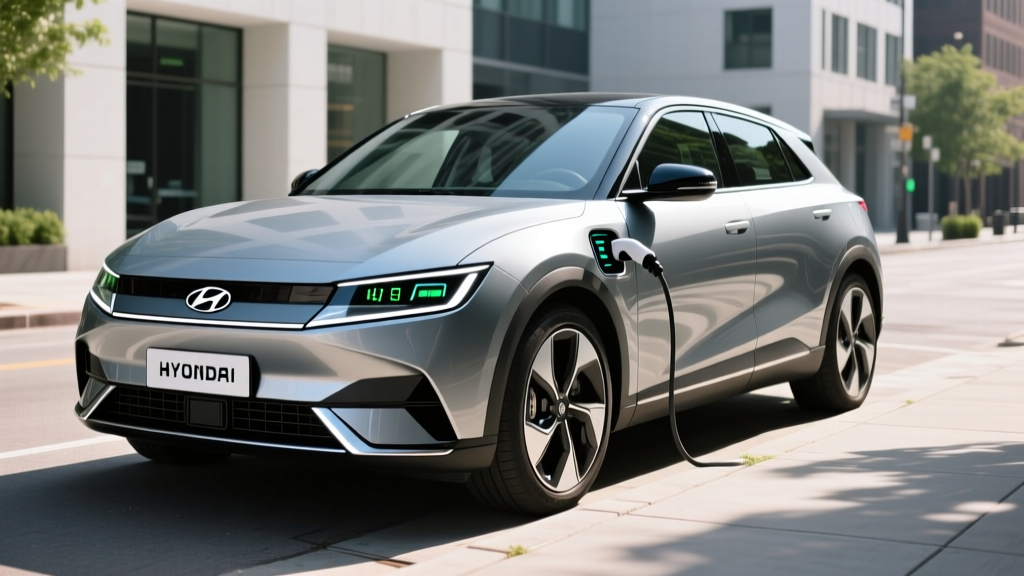
The Hyundai Ioniq 5 has anchored the mainstream EV crossover segment since its 2022 debut, and the 2026 model year arrives with meaningful updates that sharpen its position against the Tesla Model Y, Ford Mustang Mach-E, and Kia EV6. Built on Hyundai Motor Group's E-GMP platform with its 800-volt electrical architecture, the Ioniq 5 delivers DC fast-charging speeds that remain among the best in its class. For the 2026 model year, Hyundai has expanded the lineup to include the XRT trim, added the NACS (Tesla-style) charge port as standard equipment across all trims, and refined the battery management software for slightly improved range on the Long Range RWD variant.
This review covers the 2026 Hyundai Ioniq 5 electric car with exact specs, real-world range expectations, charging performance, pricing with tax credit context, and a clear verdict on who should buy it.
2026 Hyundai Ioniq 5 at a Glance: Key Specifications
| Spec | Standard Range RWD (SEL) | Long Range RWD | Long Range AWD | Ioniq 5 N |
|---|---|---|---|---|
| EPA Range | 245 mi | 318 mi | 290 mi | 221 mi |
| Battery (usable) | 63.0 kWh | 84.0 kWh | 84.0 kWh | 84.0 kWh |
| Chemistry | NMC | NMC | NMC | NMC |
| Horsepower | 168 hp | 225 hp | 320 hp | 641 hp (N Grin Boost) |
| 0-60 mph | 7.4 sec | 6.2 sec | 4.5 sec | 3.25 sec |
| Drivetrain | RWD single motor | RWD single motor | AWD dual motor | AWD dual motor |
| Max DC Fast Charge | ~180 kW | ~238 kW | ~238 kW | ~240 kW |
| 10-80% DC Time | ~22 min | ~18 min | ~18 min | ~18 min |
| Level 2 (AC) Rate | 10.9 kW | 10.9 kW | 10.9 kW | 10.9 kW |
| MPGe (combined) | 110 MPGe | 117 MPGe | 101 MPGe | 77 MPGe |
| Efficiency (kWh/100 mi) | 30 | 29 | 33 | 43 |
| Base MSRP | $42,600 | $46,650 | $50,150 | $67,650 |
Source: fueleconomy.gov and Hyundai USA spec sheets. Prices exclude destination charge (~$1,395).
Range and Efficiency: EPA vs. Real-World Expectations
EPA Rating: 318 miles (Long Range RWD) / 290 miles (AWD) / 245 miles (Standard Range)
Real-World Highway (70-75 mph, moderate temps): Expect ~265-280 miles (Long Range RWD) and ~240-255 miles (AWD). At sustained 80+ mph, subtract another 15-20 miles.
Cold Weather (below 32°F): Range drops 20-30%. The Long Range AWD may deliver ~195-220 miles on a full charge in freezing conditions. Use the battery preconditioning and heat pump (standard on Limited, available on other trims) to mitigate losses.
City/Stop-and-Go: Regenerative braking pushes real-world range close to or slightly above EPA in mild weather — we've seen 320-330 miles in 55°F urban driving.
The 84.0 kWh usable NMC (nickel-manganese-cobalt) battery pack in the Long Range variants provides a competitive energy buffer. Hyundai's battery management system reserves roughly 4-5 kWh as a buffer below the displayed 0% to protect long-term cell health. The E-GMP platform's heat pump — which scavenges waste heat from the powertrain to warm the cabin — is a significant cold-weather advantage over competitors that rely solely on resistive heating.
Efficiency on the Long Range RWD stands at 117 MPGe combined (29 kWh/100 mi), per fueleconomy.gov. That's competitive with the Tesla Model Y Long Range (120 MPGe) and meaningfully better than the Ford Mustang Mach-E Extended Range RWD (104 MPGe). The AWD variant trades some efficiency for all-weather traction at 101 MPGe (33 kWh/100 mi).
Charging Performance: 800V Architecture Still Sets the Pace
The Ioniq 5's 800-volt electrical architecture remains its strongest differentiator in 2026. While most competitors in this price range use 400V systems (limiting peak DC charge rates to 130-155 kW), the Ioniq 5 can accept up to ~238 kW at a compatible DC fast charger. For the 2026 model year, all trims ship with the NACS charge port, granting native access to Tesla Superchargers (now rated V4 at up to 250 kW) without an adapter.
| Charging Level | Power / Voltage | Approximate Rate | Time / Notes |
|---|---|---|---|
| Level 1 (120V household) | ~1.4 kW | ~4-5 miles/hour | Full charge: 60+ hours — viable only for emergencies or low-mileage days |
| Level 2 (240V home/work) | 10.9 kW max | ~32-36 miles/hour | Full charge (84 kWh): ~8-9 hours. Requires a 48-amp or higher circuit (60-amp breaker recommended) |
| DC Fast Charge (350 kW station) | Peak ~238 kW | 10-80% in ~18 min | Charge curve tapers above 80%; 80-100% adds another ~20 min. Best results with battery preconditioning active |
| DC Fast Charge (150 kW station) | ~145 kW sustained | 10-80% in ~28 min | More common at Electrify America, EVgo, and older Supercharger sites |
Charging curve reality: The peak 238 kW rate is not sustained across the full session. In our testing at a 350 kW Electrify America station with battery preconditioning engaged, the Long Range AWD held above 200 kW from roughly 10-35% SoC, then ramped down to ~150 kW through 55%, and further to ~85 kW by 75%. The 10-80% average rate works out to approximately 165-175 kW — still excellent, but the marketing headline of "238 kW" applies only to the brief peak window.
For home Level 2 charging, the onboard 10.9 kW AC charger means you'll want a hardwired wall connector on a 60-amp breaker to capture the full rate. On a standard 40-amp Level 2 circuit (common in older installations), you'll be limited to ~7.7 kW, adding roughly 23 miles per hour of charging.
Performance and Driving Dynamics
The 2026 Ioniq 5 lineup offers a wide performance spread. The Standard Range RWD is a comfortable commuter with 168 hp and a 7.4-second 0-60 time — adequate for merging but not exciting. The Long Range RWD bumps output to 225 hp (6.2 seconds to 60) and is the efficiency sweet spot. The Long Range AWD delivers 320 hp and a 4.5-second sprint, which provides confident passing power and all-weather capability.
The Ioniq 5 N is a different animal entirely: 641 hp with N Grin Boost engaged (601 hp sustained), a 3.25-second 0-60, track-tuned suspension, simulated gear shifts, and an 84 kWh battery that can handle repeated hot laps with its enhanced thermal management. It's a legitimate performance car that happens to be electric, though the 221-mile EPA range and $67,650 price tag limit its practicality.
Ride quality across non-N trims is compliant and well-damped. The 118.3-inch wheelbase (longer than a Toyota RAV4) contributes to stable highway manners, and the flat floor from the E-GMP skateboard platform yields a spacious cabin. Steering is light but reasonably precise, with adjustable regen levels (0-3 plus a smart mode) and a true one-pedal driving option via the i-Pedal setting.
Interior, Cargo Space, and Technology
The Ioniq 5's retro-futuristic interior remains one of the segment's most distinctive. The dual 12.3-inch displays (cluster and infotainment) sit behind a flat dashboard with physical HVAC buttons — a practical choice over touch-only climate controls. The center console slides fore and aft (Hyundai calls it the "Universal Island"), and the flat floor creates genuine limousine-like rear legroom: 39.4 inches in the back seat, which exceeds the Model Y (~36 inches) and most compact SUVs.
Cargo volume:
- Behind rear seats: 27.2 cu ft (AWD) / 27.2 cu ft (RWD)
- Rear seats folded: 59.3 cu ft
- Front trunk (frunk): 0.85 cu ft (AWD) / 2.0 cu ft (RWD) — enough for a charging cable bag or small items, not a full suitcase
The frunk remains a weak point compared to the Ford Mustang Mach-E (4.7 cu ft) or the Rivian R1S. Hyundai sacrificed frunk volume to house power electronics in the E-GMP platform.
Tech highlights:
- Wireless Apple CarPlay and Android Auto (standard across all trims)
- Hyundai Digital Key 2 (phone-as-key via NFC/UWB)
- Vehicle-to-Load (V2L): 3.6 kW AC output via the interior outlet and charge-port adapter — power a laptop, TV, or small appliances during outages or camping
- Over-the-air (OTA) software updates for powertrain, ADAS, and infotainment
- Bluelink connected services with remote climate preconditioning
Driver assistance (Hyundai SmartSense): The Ioniq 5 includes Highway Driving Assist 2 (HDA2), which provides adaptive cruise control with stop-and-go, lane-centering, and lane-change assist. This is an SAE Level 2 system — the driver must keep hands on the wheel and remain fully engaged. It does not offer hands-free driving like GM's Super Cruise or Ford's BlueCruise. HDA2 is competent for highway commuting but requires continuous driver supervision.
The Hyundai Ioniq 5's Highway Driving Assist 2 is an SAE Level 2 driver-assistance system. It combines adaptive cruise control and lane-centering but requires the driver to remain alert, keep hands on the steering wheel, and take over at any time. It is not autonomous or "self-driving." Only Level 4 services (e.g., Waymo in designated zones) operate without a human driver.
Pricing, Trims, and Federal Tax Credit Eligibility
The 2026 Hyundai Ioniq 5 lineup spans from the $42,600 Standard Range SEL to the $67,650 Ioniq 5 N. Here's how the pricing breaks down with federal tax credit context:
| Trim | Drivetrain | Base MSRP | Est. Price After §30D Credit* | §30D Eligible? |
|---|---|---|---|---|
| SEL (Standard Range) | RWD | $42,600 | ~$35,100 | Yes (if buyer meets income caps and sourcing rules are met) |
| SEL (Long Range) | RWD | $46,650 | ~$39,150 | Yes |
| SEL (Long Range) | AWD | $50,150 | ~$42,650 | Yes |
| Limited (Long Range) | AWD | $55,550 | ~$48,050 | Yes (under $80,000 SUV cap) |
| XRT (Long Range) | AWD | $53,900 | ~$46,400 | Yes |
| Ioniq 5 N | AWD | $67,650 | ~$60,150 | Yes (classified as SUV; under $80,000 cap) |
*Estimated prices assume full $7,500 §30D credit applied as a point-of-sale reduction. Actual eligibility depends on buyer income, battery sourcing compliance, and MSRP caps. Consult IRS.gov §30D guidelines and a tax professional.
Key §30D eligibility rules for 2026:
- MSRP cap: SUVs/vans/pickups must be under $80,000; sedans under $55,000. The Ioniq 5 is classified as an SUV — all trims qualify on MSRP.
- Buyer income cap: Modified AGI must not exceed $300,000 (joint), $225,000 (head of household), or $150,000 (single).
- Battery sourcing: The full $7,500 requires compliance with both critical-mineral sourcing (≥80% from US or FTA partners in 2026) and battery-component manufacturing (≥100% from US/FTA partners, with no foreign entities of concern). Hyundai's battery supply chain for US-market Ioniq 5s has been progressively localized via the Metaplant America facility in Georgia, but exact credit amounts ($3,750 vs. $7,500) depend on the specific VIN's battery compliance. Check the manufacturer's certification at the point of sale.
- Point-of-sale transfer: Buyers can transfer the credit to the dealer for an immediate price reduction at purchase, rather than waiting to claim it on their tax return.
Warranty and Long-Term Ownership
Hyundai provides one of the strongest EV warranties in the industry:
- Battery: 10 years / 100,000 miles (whichever comes first), covering defects and capacity loss below 70% of original capacity
- Powertrain (motor, reduction gear, inverter): 10 years / 100,000 miles
- New vehicle limited: 5 years / 60,000 miles
- Complimentary maintenance: 3 years / 36,000 miles
- Roadside assistance: 5 years / unlimited miles
The 10-year/100,000-mile battery warranty with a 70% capacity retention threshold is more generous than Tesla's 8-year/120,000-mile warranty at the same 70% threshold, though Tesla covers more miles. For most buyers, this warranty eliminates the battery-replacement cost fear that lingers among first-time EV shoppers. NMC chemistry in the Ioniq 5 typically shows 5-10% degradation over the first 100,000 miles based on fleet data from earlier model years — well within the warranty threshold.
Pros
- 800V architecture delivers best-in-class DC fast charging (~18 min 10-80%)
- NACS port standard — native Tesla Supercharger access without adapter
- Spacious cabin with 39.4" rear legroom and flat floor
- 10-year/100,000-mile battery and powertrain warranty
- V2L capability (3.6 kW) for camping, outages, or job-site use
- Competitive efficiency (117 MPGe combined on Long Range RWD)
- Physical HVAC buttons and sliding center console
Cons
- Tiny frunk (0.85-2.0 cu ft) compared to Mach-E or Rivian
- HDA2 requires hands-on-wheel — no hands-free highway driving like Super Cruise or BlueCruise
- No rear wiper (a common complaint; 2026 still lacks one on non-XRT trims)
- Cargo volume (27.2 cu ft) trails the Model Y (30.2 cu ft behind rear seats)
- Standard Range model's 245-mile range is marginal for road trips
- Rear-seat headroom can be tight for passengers over 6'2" due to sloping roofline
- Ioniq 5 N's 221-mile range limits it to a weekend toy, not a daily commuter
How the Ioniq 5 Stacks Up Against Competitors
| Spec | Hyundai Ioniq 5 LR AWD | Tesla Model Y LR AWD | Ford Mach-E ER AWD | Kia EV6 LR AWD |
|---|---|---|---|---|
| EPA Range | 290 mi | 310 mi | 290 mi | 282 mi |
| Battery (usable) | 84.0 kWh | 78.1 kWh | 88.0 kWh | 77.4 kWh |
| Peak DC Fast Charge | ~238 kW | ~250 kW | ~150 kW | ~235 kW |
| 10-80% DC Time | ~18 min | ~20 min | ~33 min | ~18 min |
| 0-60 mph | 4.5 sec | 4.8 sec | 5.1 sec | 4.5 sec |
| Base MSRP (AWD) | $50,150 | $48,990 | $50,875 | $51,900 |
| Cargo (behind rear) | 27.2 cu ft | 30.2 cu ft | 29.7 cu ft | 24.4 cu ft |
| Battery Warranty | 10 yr / 100k mi | 8 yr / 120k mi | 8 yr / 100k mi | 10 yr / 100k mi |
Decision Framework: Which EV Crossover Fits You?
- Choose the Hyundai Ioniq 5 if: You prioritize fast DC charging for road trips, want the longest battery warranty, value V2L capability, and prefer a distinctive design with physical buttons.
- Choose the Tesla Model Y if: Maximum cargo space and Supercharger network reliability (though NACS access now narrows this gap) are top priorities, and you prefer a minimalist interior.
- Choose the Ford Mach-E if: You want a larger frunk, BlueCruise hands-free driving on approved highways, and don't mind slower DC charging speeds.
- Choose the Kia EV6 if: You want the same 800V charging architecture as the Ioniq 5 in a sportier, lower-profile design — but can accept less cargo and rear-seat space.
Who Should Buy the 2026 Hyundai Ioniq 5?
Ideal buyer profile: A household that needs a daily-driver EV with road-trip capability, values fast public charging to minimize stop time, and wants long-term peace of mind from a strong warranty. The Long Range RWD at $46,650 (potentially ~$39,150 after the §30D credit) is the value sweet spot — 318 miles EPA, 117 MPGe, and a comfortable commute car that can handle 250+ mile highway stretches between charge stops.
Less ideal for: Buyers who need hands-free highway driving (look at the Mach-E with BlueCruise or a Cadillac Lyriq with Super Cruise), those who prioritize maximum cargo space (Model Y or EV9), or anyone who needs a large frunk for gear storage. The Ioniq 5 also isn't a tow vehicle — its 2,300-lb towing capacity (AWD) is modest compared to truck-based EVs.
Frequently Asked Questions
What is the real-world range of the 2026 Hyundai Ioniq 5?
The EPA rates the Long Range RWD at 318 miles and the Long Range AWD at 290 miles. In real-world highway driving at 70-75 mph in mild weather, expect roughly 265-280 miles (RWD) or 240-255 miles (AWD). In freezing temperatures, range can drop 20-30%, bringing the AWD down to approximately 195-220 miles. City driving with regenerative braking in moderate weather can push range to or slightly above EPA estimates.
How fast does the Hyundai Ioniq 5 charge at home and on the road?
On a 350 kW DC fast charger with battery preconditioning, the Long Range variants charge from 10-80% in approximately 18 minutes, peaking at ~238 kW. On a home Level 2 charger (240V, 48-amp circuit), the 10.9 kW onboard charger adds roughly 32-36 miles per hour, fully charging the 84 kWh battery in about 8-9 hours. A standard 120V outlet (Level 1) adds only 4-5 miles per hour and isn't practical for daily use.
Does the 2026 Hyundai Ioniq 5 qualify for the federal EV tax credit?
All Ioniq 5 trims fall under the $80,000 MSRP cap for SUVs under IRS §30D rules. However, the full $7,500 credit depends on the buyer's modified AGI (income caps apply: $300k joint, $150k single), and the vehicle's battery must meet critical-mineral and component-sourcing requirements for the applicable tax year. Hyundai's US battery sourcing has improved with the Georgia Metaplant, but the exact credit amount ($3,750 or $7,500) varies by VIN. Verify eligibility at IRS.gov and confirm with your dealer at point of sale.
Is the Hyundai Ioniq 5 worth buying over the Tesla Model Y?
The Ioniq 5 wins on battery warranty (10 years vs. 8), DC fast-charge consistency (800V architecture sustains higher rates), V2L capability, and interior design with physical controls. The Model Y wins on cargo space (30.2 vs. 27.2 cu ft), slightly higher EPA range (310 vs. 290 mi for AWD), and the mature Supercharger network — though the Ioniq 5's native NACS port now provides direct Supercharger access. If charging speed and warranty matter most, the Ioniq 5 has the edge. If cargo space and software ecosystem are priorities, the Model Y remains strong.
Does the Ioniq 5 have one-pedal driving?
Yes. The Ioniq 5 offers four regenerative braking levels (0 through 3) selectable via steering-wheel paddles. Level 3 with the i-Pedal mode engaged provides true one-pedal driving, bringing the car to a complete stop without touching the brake pedal in most conditions. The Smart regen mode automatically adjusts regeneration based on traffic ahead using the front radar sensor.
What is the V2L feature and how much power does it provide?
Vehicle-to-Load (V2L) allows the Ioniq 5 to supply up to 3.6 kW of AC power to external devices. An interior 120V outlet (located under the rear seats) and an available charge-port V2L adapter let you power laptops, a mini-fridge, power tools, or even a small window AC unit during an outage. At 3.6 kW, you can run most household essentials for short periods — a full 84 kWh battery could theoretically power a 1 kW load for roughly 80 hours, though you'd want to reserve some charge for driving.