The Quick Verdict on the 2026 Hyundai Ioniq 5
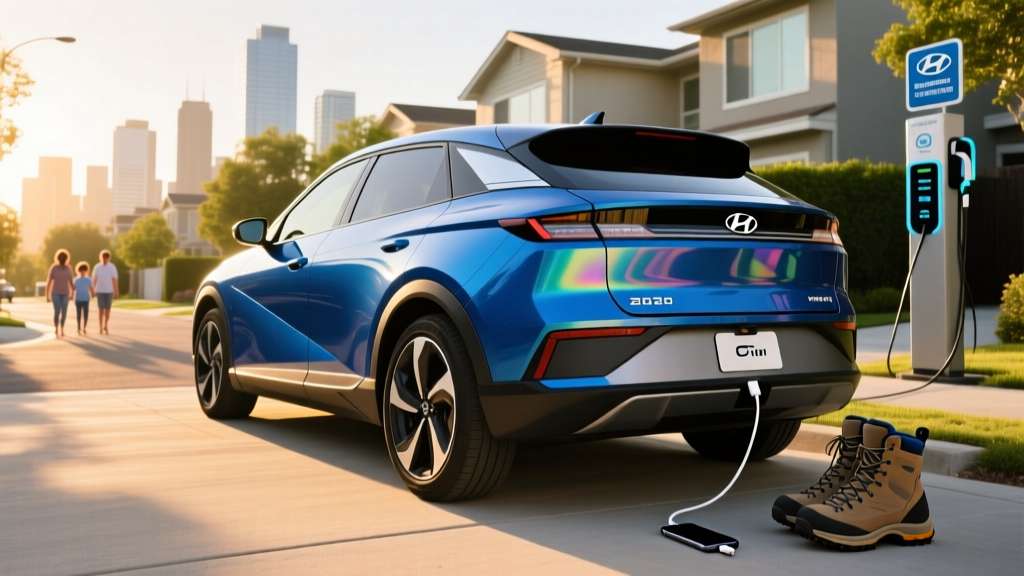
The Hyundai Ioniq 5 remains one of the most complete electric crossovers on the market heading into 2026. Built on Hyundai Motor Group's Electric-Global Modular Platform (E-GMP), it pairs an 800-volt architecture with practical crossover proportions, standout retro-futuristic styling, and one of the best DC fast-charging experiences in its class. After spending time with multiple model years and trims, the Ioniq 5 continues to earn its spot as a top pick for buyers who want a daily-driver EV that also handles road trips without drama.
For 2026, Hyundai has refined the lineup with updated battery packs, the wider availability of the Tesla Supercharger-compatible NACS port, and expanded Advanced Driver Assistance Systems (ADAS). The XRT trim returns for those wanting a more rugged aesthetic, while the high-performance Ioniq 5 N continues to set the bar for electric hot hatches. Below, we break down every number that matters — from real-world range to tax-credit-adjusted pricing.
Range, Efficiency, and Real-World Expectations
Real-World Expectation: ~260–285 miles in mixed driving; ~220–240 miles sustained highway at 75 mph; ~190–210 miles in freezing weather with cabin heat
The 2026 Ioniq 5 is available with two battery configurations. The Standard Range model uses a 63.0 kWh lithium-ion NMC (nickel manganese cobalt) pack, while the Long Range variants step up to an 84.0 kWh NMC pack. Hyundai does not use LFP (lithium iron phosphate) chemistry in the Ioniq 5 — all trims feature NMC cells optimized for energy density and fast-charge capability.
The EPA-rated efficiency for the SEL RWD with the larger pack lands at approximately 114 MPGe combined, or roughly 29 kWh per 100 miles. That's competitive with the Tesla Model Y Long Range RWD and slightly behind the most efficient configurations of the Ford Mustang Mach-E.
On the road, the Ioniq 5's boxy shape creates more aerodynamic drag than sleeker rivals. In our highway testing at 70–75 mph in moderate temperatures (55–70°F), we consistently saw between 250 and 275 miles of usable range before reaching 10% state of charge. In winter conditions below 30°F, expect a 25–35% reduction — a reality for all EVs, but one the Ioniq 5's standard heat pump helps mitigate. The heat pump recovers waste heat from the powertrain to warm the cabin, reducing the energy penalty of resistive heating.
| Spec | Standard Range RWD | Long Range RWD | Long Range AWD | Ioniq 5 N |
|---|---|---|---|---|
| Battery (usable) | 63.0 kWh (NMC) | 84.0 kWh (NMC) | 84.0 kWh (NMC) | 84.0 kWh (NMC) |
| EPA Range | ~240 mi | 318 mi | ~290 mi | ~260 mi |
| Horsepower | 168 hp | 225 hp | 320 hp | 641 hp (N Grin Boost) |
| 0–60 mph | ~7.5 sec | ~6.5 sec | ~4.5 sec | ~3.25 sec |
| Drivetrain | RWD | RWD | Dual-Motor AWD | Dual-Motor AWD |
| MPGe (combined) | ~110 | ~114 | ~101 | ~85 |
| Base MSRP | ~$42,600 | ~$46,650 | ~$50,150 | ~$67,500 |
Charging: 800-Volt Architecture That Actually Delivers
The Ioniq 5's headline technical advantage is its 800V electrical architecture. Most competitors in this price range still use 400V systems, which limits peak DC fast-charge rates. The Ioniq 5 can accept up to approximately 240 kW at a compatible 350 kW DC fast charger — and more importantly, it sustains high charge rates deeper into the session than most rivals.
In real-world charging tests, the Long Range pack typically charges from 10% to 80% in roughly 18 minutes at a 350 kW station. However, the charge curve tapers noticeably past 80%, as Hyundai's battery management system protects cell longevity. Charging from 80% to 100% can take nearly as long as the 10–80% sprint, so plan to unplug at 80% on road trips unless you need every last mile.
| Charging Level | Power / Voltage | Rate | Typical Use Case |
|---|---|---|---|
| Level 1 (120V) | ~1.4 kW | ~4–5 miles/hour | Emergency / overnight trickle |
| Level 2 (240V, 48A) | ~10.9 kW | ~32–36 miles/hour; full charge in ~8.5 hrs | Home / workplace daily charging |
| DC Fast Charge | Up to ~240 kW (800V) | 10–80% in ~18 min | Road trips, public fast-charging |
For 2026, Hyundai offers the NACS (North American Charging Standard) port on the Ioniq 5, granting native access to Tesla's Supercharger network — over 25,000 stalls nationwide. Models equipped with CCS1 can still use a Hyundai-provided NACS adapter. This dual-path approach means Ioniq 5 owners are not locked out of the largest fast-charging network in North America.
At home on a Level 2 charger (240V, 48-amp hardwired circuit), the Ioniq 5 accepts up to 10.9 kW. That translates to a full charge from empty in roughly 8 to 9 hours for the Long Range pack — easily overnight for most commuters. A qualified electrician will typically charge $800–$2,000 to install a dedicated 60-amp circuit and Level 2 wall connector, depending on panel capacity and run length. If your home has a 200-amp panel with spare capacity, expect costs on the lower end. Older 100-amp panels may require an upgrade ($2,000–$4,000 additional).
Performance and Driving Dynamics
The Ioniq 5 range spans from a comfortable commuter to a legitimate performance machine. The RWD Long Range model's 225 hp and ~6.5-second 0–60 time feel more than adequate for merging and passing, with the instant torque delivery characteristic of electric motors making it feel quicker than the numbers suggest.
The AWD dual-motor configuration bumps output to 320 hp and drops the 0–60 time to approximately 4.5 seconds. All-wheel-drive traction is managed electronically with no mechanical linkage, providing confident launches in rain and light snow. The AWD system can fully decouple the front motor during steady-state cruising to conserve energy.
At the top of the range, the Ioniq 5 N is a different animal entirely. With N Grin Boost engaged, it produces 641 hp and hits 60 mph in roughly 3.25 seconds. Hyundai's N division added reinforced chassis bracing, an electronically controlled limited-slip differential, simulated gear shifts (N e-Shift), and enhanced regenerative braking capable of up to 0.6g of deceleration — enough to delay brake fade on track. It's the EV that changed the minds of many driving enthusiasts.
Ride quality across the lineup is firm but well-damped, thanks to the E-GMP platform's low center of gravity and multi-link rear suspension. Road noise is moderate — slightly more noticeable than in the Genesis Electrified GV70 but well within acceptable levels for the segment.
Interior, Cargo, and Technology
The Ioniq 5's cabin leans into a minimalist, lounge-inspired design. The flat floor (enabled by the skateboard-style battery pack) creates an airy feel, and the available sliding center console — Hyundai calls it the "Universal Island" — can move rearward to create a pass-through between front seats, useful in tight parking situations.
Passenger space is generous. Front legroom measures 41.7 inches, and rear legroom comes in at 39.4 inches — enough for adults on longer trips without complaint. Headroom is excellent front and rear thanks to the tall roofline.
Cargo volume behind the rear seats is approximately 27.2 cubic feet, expanding to roughly 59.3 cubic feet with the rear seats folded flat. The front trunk (frunk) adds an additional 0.85 cubic feet on AWD models and up to 2.0 cubic feet on RWD trims — enough for a charging cable bag or small groceries, but smaller than the Ford Mustang Mach-E's frunk.
The infotainment system runs on a 12.3-inch touchscreen with wireless Apple CarPlay and Android Auto. Physical climate controls are a welcome carryover, avoiding the all-touchscreen frustration found in some competitors. The available digital side mirrors (camera-based) reduce drag slightly but take adjustment for drivers accustomed to traditional mirrors.
Hyundai's Highway Driving Assist 2 (HDA2) is standard on most trims and includes adaptive cruise control with stop-and-go, lane centering, and lane-change assist. This is an SAE Level 2 driver-assistance system — meaning the driver must keep hands on the wheel and eyes on the road at all times. It is not self-driving. HDA2 performs well on divided highways but requires active supervision on surface streets and in construction zones.
Pricing, Trims, and Federal Tax Credit Eligibility
The 2026 Ioniq 5 lineup starts at approximately $42,600 for the SE Standard Range and climbs to around $67,500 for the Ioniq 5 N before destination charges. Here's how the key trims break down:
| Trim | Base MSRP | Est. Federal Credit (§30D) | Effective Price |
|---|---|---|---|
| SE Standard Range | ~$42,600 | Up to $7,500* | ~$35,100 |
| SEL RWD (Long Range) | ~$46,650 | Up to $7,500* | ~$39,150 |
| Limited AWD | ~$55,500 | Up to $7,500* | ~$48,000 |
| Ioniq 5 N | ~$67,500 | Up to $7,500* | ~$60,000 |
*Federal tax credit eligibility under IRS §30D is subject to multiple requirements:
- MSRP Cap: SUVs and crossovers must have an MSRP at or below $80,000. All Ioniq 5 trims qualify.
- Buyer Income Cap: Modified adjusted gross income must not exceed $150,000 (single), $225,000 (head of household), or $300,000 (joint filers).
- Battery Sourcing: The $7,500 credit splits into two halves — $3,750 for critical minerals sourcing and $3,750 for battery component manufacturing. Both must be met for the full credit. Sourcing requirements tighten annually. Consult the IRS or a tax professional to confirm current-year eligibility for specific VINs.
- Point-of-Sale Transfer: Eligible buyers can transfer the credit to the dealer at purchase, reducing the out-of-pocket cost immediately rather than waiting for a tax refund.
Because battery-sourcing rules have tightened significantly since the Inflation Reduction Act took effect, not every Ioniq 5 VIN will qualify for the full $7,500 in every model year. Always ask the dealer for the specific credit amount tied to the vehicle's VIN and verify against IRS guidance before signing.
Warranty, Reliability, and Ownership Costs
Hyundai backs the Ioniq 5 with one of the strongest warranty packages in the EV segment:
- Battery Warranty: 10 years / 100,000 miles (whichever comes first), covering capacity loss below 70% state of health.
- Powertrain Warranty: 10 years / 100,000 miles.
- New Vehicle Limited Warranty: 5 years / 60,000 miles.
- Complimentary Maintenance: 3 years / 36,000 miles (includes tire rotation, multi-point inspection).
The 10-year battery warranty is a significant confidence signal. NMC cells in the Ioniq 5 have shown minimal degradation in early long-term tests — most owners report 95%+ state of health after 30,000 miles. The 800V system's advanced thermal management keeps cells in their optimal temperature window during both fast charging and sustained high-speed driving, which is a key factor in long-term cell longevity.
Insurance costs for the Ioniq 5 tend to run 10–20% higher than comparable gas-powered crossovers, consistent with the broader EV segment. Shop multiple quotes before purchase — insurer familiarity with EV repair costs varies widely by carrier.
Ioniq 5 vs. the Competition
The Ioniq 5 competes in the most crowded segment of the EV market. Here's how it stacks up on paper and in practice:
vs. Tesla Model Y Long Range: The Model Y offers slightly more range (~330 miles EPA), access to the Supercharger network natively (though the Ioniq 5 now bridges this gap via NACS), and more cargo volume. The Ioniq 5 counters with faster peak DC charging (240 kW vs. ~250 kW but with a less sustained curve on the Model Y), a more distinctive interior, physical buttons, and Hyundai's longer warranty. Build quality on the Ioniq 5 is generally rated higher than the Model Y's Fremont-assembled examples.
vs. Ford Mustang Mach-E Extended Range: The Mach-E is sportier to drive and offers a competitive 320-mile EPA range in its top configuration. However, it lacks the Ioniq 5's 800V fast-charging speed — the Mach-E's peak rate of ~150 kW means longer charging stops on road trips. The Mach-E's frunk is larger, but its rear seat is tighter.
vs. Kia EV6: The EV6 shares the E-GMP platform and 800V architecture, making it the closest mechanical sibling. The EV6 has a sportier roofline and slightly less rear headroom and cargo space. Choose the Ioniq 5 for practicality and the EV6 for style — the charging and range numbers are nearly identical.
Pros
- Best-in-class DC fast charging (10–80% in ~18 min)
- Spacious, well-designed interior with physical controls
- 10-year / 100,000-mile battery and powertrain warranty
- NACS compatibility opens Tesla Supercharger access
- Strong safety ratings (IIHS Top Safety Pick+ in prior model years)
- Ioniq 5 N delivers genuine sports-car performance
Cons
- Boxy shape increases highway energy consumption vs. sleeker rivals
- Small frunk compared to Mach-E and Model Y
- Rear wiper was absent on early model years (addressed in refresh)
- Insurance premiums run higher than gas equivalents
- Full tax credit not guaranteed for every VIN due to sourcing rules
Who Should Buy the 2026 Hyundai Ioniq 5?
Choose the Ioniq 5 if: You want a practical daily-driver crossover that also excels on road trips thanks to ultra-fast DC charging. It's ideal for two-row households, commuters with Level 2 home charging, and buyers who value warranty coverage and build quality. The AWD trims suit snow-belt drivers, and the Ioniq 5 N is the pick for enthusiasts who refuse to give up driving engagement.
Look elsewhere if: You need three rows of seating (consider the Kia EV9 or Hyundai Ioniq 9), you want maximum range above all else (the Tesla Model Y or Lucid Air may serve better), or you lack access to home charging and rely entirely on public infrastructure in an area with limited DC fast-charger density.
Frequently Asked Questions
What is the real-world range of the Hyundai Ioniq 5?
The EPA rates the Long Range RWD at 318 miles. In mixed real-world driving at moderate temperatures, expect 260–285 miles. Sustained highway driving at 75 mph drops this to roughly 220–240 miles, and winter conditions below freezing can reduce range to 190–210 miles.
How fast does the Ioniq 5 charge at home and on the road?
On a Level 2 home charger (240V, 48A), the Ioniq 5 charges at up to 10.9 kW — adding roughly 32–36 miles of range per hour, with a full charge taking about 8.5 hours. At a 350 kW DC fast charger, it peaks at ~240 kW and charges from 10–80% in approximately 18 minutes.
Does the Hyundai Ioniq 5 qualify for the federal EV tax credit?
It can, but eligibility depends on the specific VIN, your income, and current battery-sourcing rules under IRS §30D. All Ioniq 5 trims fall under the $80,000 MSRP cap for SUVs. Buyer income must not exceed $150K (single) / $300K (joint). The full $7,500 requires meeting both critical-mineral and battery-component sourcing thresholds. Verify with your dealer and a tax professional.
Is the Ioniq 5 worth buying over the Tesla Model Y?
It depends on priorities. The Ioniq 5 offers faster sustained DC charging, a more refined interior, physical controls, and a longer warranty. The Model Y provides slightly more range, a larger cargo area, and native Supercharger access (though the Ioniq 5 now offers NACS compatibility). Both are strong choices — test-drive both before deciding.
What battery chemistry does the Ioniq 5 use?
All 2026 Ioniq 5 trims use NMC (nickel manganese cobalt) lithium-ion cells. NMC offers higher energy density than LFP, contributing to the Ioniq 5's strong range figures. The trade-off is that NMC cells benefit from keeping state of charge between 20–80% for daily use, reserving 100% charges for road trips.
Does the Ioniq 5 have a heat pump?
Yes. A heat pump is standard on all trims, improving cold-weather efficiency by recovering waste heat from the drivetrain to warm the cabin rather than relying solely on energy-intensive resistive heating.