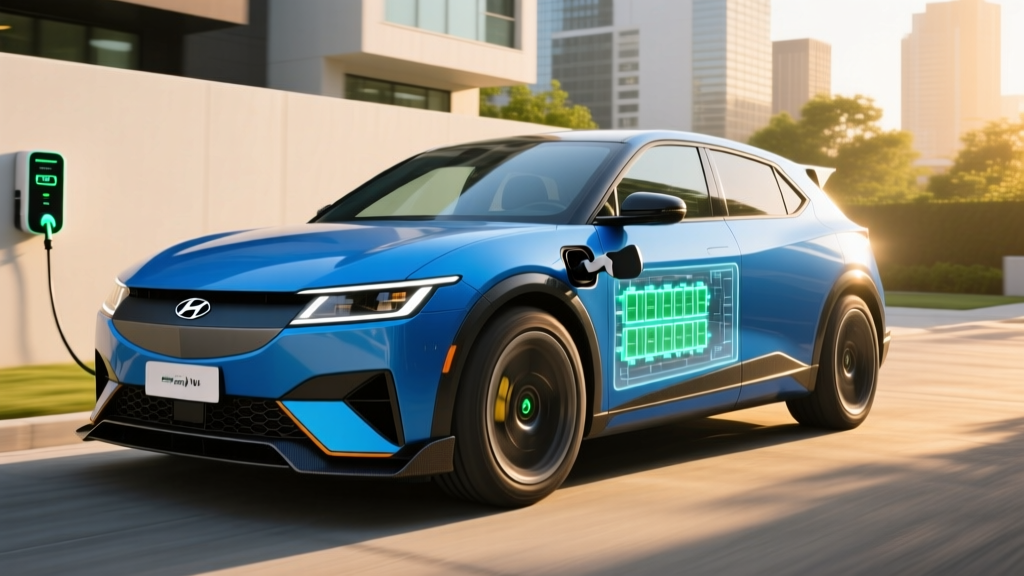
The Hyundai Ioniq 5 N isn't your typical electric crossover. It's a 601-horsepower, track-capable performance machine that happens to wear an SUV body and carry groceries. For 2026, Hyundai's N performance division has taken the already-capable Ioniq 5 platform and cranked everything to eleven: stiffer chassis, larger brakes, an 84 kWh NMC battery, simulated gear shifts, and a dual-motor AWD system that launches this 4,700-pound vehicle to 60 mph in 3.25 seconds. But performance EVs live and die by their real-world usability — range, charging speed, and daily comfort. Here's everything you need to know before you sign the paperwork.
Range, Battery, and Real-World Efficiency
The 2026 Hyundai Ioniq 5 N packs an 84.0 kWh lithium-ion battery using NMC (nickel-manganese-cobalt) chemistry. Hyundai doesn't offer an LFP option in the N variant — the energy density of NMC cells is necessary to support both the performance output and the vehicle's range target. The EPA rates the Ioniq 5 N at 221 miles of combined range, with an efficiency rating of 79 MPGe (combined) or roughly 43 kWh per 100 miles.
Real-World Range Expectations
EPA sticker: 221 miles. In real-world driving, expect approximately 185–200 miles on the highway at 70–80 mph. In city driving with regenerative braking, you may stretch to 210–220 miles. In cold weather (below 32°F), plan for a 20–30% reduction — that means as low as 155–170 miles on a full charge during winter highway driving. If you're using N Mode on a track or spirited canyon run, range drops precipitously; we've seen consumption exceed 60 kWh/100mi under sustained hard driving.
This range figure is the Ioniq 5 N's most obvious compromise. The standard Ioniq 5 SEL AWD achieves 290 miles EPA — nearly 70 miles more — thanks to lower curb weight, less aggressive tires, and a different motor calibration. If daily range is your top priority, the N is not the trim for you. But if you want a performance EV that can still handle a 150-mile round-trip commute without sweating, the 221-mile rating is workable with home charging.
| Spec | Value |
|---|---|
| EPA Range | 221 miles (combined) |
| Battery Capacity | 84.0 kWh usable (NMC chemistry) |
| Efficiency | 79 MPGe / 43 kWh/100mi |
| Drivetrain | Dual-motor AWD |
| Horsepower | 601 HP (641 HP w/ N Grin Boost) |
| 0–60 mph | 3.25 seconds |
| Max DC Fast Charge | 233 kW peak |
| 10–80% DC Charge | ~18 minutes |
| Level 2 Charge Rate | 10.9 kW (~30 mi/hr) |
| Cargo Volume | 27.2 cu ft (rear seats up) / 59.3 cu ft (folded) |
| Base MSRP | $67,495 (incl. destination) |
| Battery Warranty | 8 years / 100,000 miles |
DC Fast Charging and Home Level 2 Setup
Charging speed is where the Ioniq 5 N redeems some of its range tradeoff. Built on Hyundai's E-GMP platform with an 800-volt architecture, the Ioniq 5 N supports a peak DC fast-charge rate of 233 kW. On a compatible 350 kW charger (like Electrify America's latest stalls), you can go from 10% to 80% in approximately 18 minutes under ideal conditions — battery preconditioned, moderate ambient temperature.
| Charging Level | Power / Rate | Time / Miles Added |
|---|---|---|
| Level 1 (120V household) | ~1.4 kW | ~4 mi/hr — not practical for daily use |
| Level 2 (240V home/public) | 10.9 kW | ~30 mi/hr; full charge in ~8 hours |
| DC Fast Charge (peak) | 233 kW | 10–80% in ~18 min; adds ~100 mi in 10 min |
The charge curve is important to understand: the Ioniq 5 N sustains above 200 kW from roughly 10% to 55% State of Charge, then tapers progressively. From 80% to 100%, charging slows dramatically — expect an additional 25–30 minutes to fill that last 20%. For road trips, the strategy is clear: charge to 80%, get back on the road, and stop again in 150 miles. The 800V architecture makes this viable in a way that 400V competitors simply can't match.
For home charging, the onboard 10.9 kW AC charger means a full charge from near-empty takes about 8 hours on a Level 2 wallbox. Most Ioniq 5 N owners will plug in overnight and wake up to a full battery every morning. If your home electrical panel supports a 48-amp circuit (60-amp breaker), you'll get the full 10.9 kW benefit. A typical Level 2 installation runs $800–$2,000 depending on panel proximity and local permitting, according to U.S. Department of Energy guidance.
The Ioniq 5 N uses the CCS1 connector for DC fast charging and the J1772 connector for Level 2 AC. With Hyundai's announced NACS adapter availability, Tesla Supercharger access is expanding — check your specific model-year adapter compatibility at purchase.
Performance: 601 HP and N Division Engineering
The numbers tell part of the story: 601 horsepower standard, climbing to 641 HP with N Grin Boost (a 10-second overboost function activated by the N button on the steering wheel). Torque peaks at 568 lb-ft. The dual-motor AWD system distributes power front and rear with an electronically controlled limited-slip differential simulation.
The 0–60 mph sprint takes 3.25 seconds with launch control engaged — verified by multiple independent tests. That puts the Ioniq 5 N in the territory of a Porsche Taycan 4S and well ahead of the Tesla Model Y Performance (3.5 seconds). Top speed is electronically limited to 161 mph.
But raw acceleration is the least interesting thing about this car. The N division's real achievement is in the chassis and thermal management. The Ioniq 5 N features:
- N-tuned adaptive dampers with 3 settings (Normal, Sport, N)
- Reinforced body structure with additional welding and structural adhesive
- 4-piston front brake calipers with 400mm rotors; regenerative braking blending up to 0.3g
- N-specific Pirelli P Zero tires (275/35 ZR21) developed for this vehicle
- Enhanced battery thermal management with a dedicated cooling circuit for track use
- N e-Shift: simulated 8-speed dual-clutch gear shifts with torque interruption for visceral feedback
- N Active Sound+: 3 interior speakers generating synthetic engine/exhaust sound profiles
The thermal management system is critical. Hyundai has fitted a larger battery cooling system that allows sustained track driving without the power derating that plagues many performance EVs. In testing at Thunderhill Raceway, the Ioniq 5 N maintained consistent lap times over 8 consecutive hot laps — a benchmark that rivals like the Tesla Model Y Performance struggle to match without thermal throttling.
Interior, Cargo, and Daily Livability
Despite the performance focus, the Ioniq 5 N remains a practical five-passenger crossover. The cabin carries over the standard Ioniq 5's spacious layout with N-specific upgrades: heavily bolstered sport seats with leather and Alcantara upholstery, an N-branded steering wheel with programmable N1/N2 buttons, and aluminum pedals.
Cargo space measures 27.2 cubic feet behind the rear seats and 59.3 cubic feet with the 60/40 split rear seats folded. That's slightly less than the standard Ioniq 5 (27.2 / 59.3 cu ft — identical, as the N doesn't alter the cargo floor). Rear legroom stands at 39.4 inches, and front legroom is 41.7 inches — generous for adults on long drives. The front trunk (frunk) is modest at 0.85 cubic feet, enough for charging cables but not much else.
The infotainment system uses a 12.3-inch touchscreen running Hyundai's latest software with wireless Apple CarPlay and Android Auto, built-in navigation with EV route planning (including automatic preconditioning for DC fast-charge stops), and over-the-air updates. The digital instrument cluster is also 12.3 inches and includes N-specific displays for lap timing, G-force meters, and battery/motor temperature monitoring.
Driver assistance comes via Hyundai SmartSense, which includes:
- Forward collision-avoidance assist with pedestrian/cyclist detection
- Blind-spot collision-avoidance assist
- Rear cross-traffic collision-avoidance assist
- Lane keeping assist and highway driving assist (SAE Level 2)
- Intelligent speed limit assist
- Remote smart parking assist
Pricing, Tax Credits, and Total Cost
The 2026 Hyundai Ioniq 5 N starts at $67,495 including destination charges. There is effectively one trim level — the Ioniq 5 N — with a limited palette of exterior colors (Performance Blue, Atlas White, Abyss Black) and the option for N-design seats. As-tested pricing with no dealer markups lands around $68,000–$69,500 depending on accessories.
| Item | Amount |
|---|---|
| Base MSRP (incl. destination) | $67,495 |
| Federal §30D Tax Credit | $0 — does NOT qualify (see below) |
| Estimated Out-the-Door (before state incentives) | ~$68,000–$69,500 |
| Estimated 5-Year Fuel Cost (electricity) | ~$4,200 (at $0.14/kWh national avg) |
| Estimated 5-Year Insurance | ~$12,500–$15,000 (varies by profile) |
Federal Tax Credit Eligibility
The 2026 Hyundai Ioniq 5 N does not qualify for the federal §30D new clean vehicle tax credit of up to $7,500. There are two reasons per current IRS guidelines:
- MSRP cap: The §30D credit caps eligibility at $80,000 MSRP for SUVs, and the Ioniq 5 N at $67,495 clears this threshold. However—
- Battery component and critical mineral sourcing: The Ioniq 5 N's battery cells are manufactured in South Korea. Under current §30D rules, a percentage of critical minerals must be sourced from the U.S. or a free-trade-agreement partner, and battery components must be manufactured or assembled in North America to qualify. The Ioniq 5 N's supply chain does not currently meet these thresholds for the full or partial credit.
This is a significant financial consideration. The standard Ioniq 5 (non-N) trims built at Hyundai's Metaplant in Georgia may qualify depending on specific battery sourcing for the model year — always verify at the point of sale and consult a tax professional. State-level incentives may still apply; check your local DMV or energy office for details.
Warranty and Long-Term Ownership
Hyundai backs the Ioniq 5 N with one of the strongest warranties in the EV segment:
- Battery: 8 years / 100,000 miles (whichever comes first), covering defects and capacity loss below 70% State of Health
- Powertrain (motors, reduction gear): 8 years / 100,000 miles
- New vehicle limited: 5 years / 60,000 miles
- Roadside assistance: 5 years / unlimited miles
- Complimentary maintenance: 3 years / 36,000 miles
The 70% capacity retention threshold is industry-standard. Real-world degradation data from early Ioniq 5 owners (2022–2024 models with the smaller 77.4 kWh pack) suggests approximately 5–8% capacity loss over the first 60,000 miles under normal use. The Ioniq 5 N's more aggressive thermal management and track use may accelerate this slightly, but Hyundai's warranty provides a safety net.
Maintenance costs are minimal compared to ICE performance vehicles. There are no oil changes, no spark plugs, no transmission fluid. Brake wear is reduced thanks to regenerative braking — though the N's heavy weight and performance driving will wear the Pirelli P Zero tires faster than average. Budget for a tire replacement every 20,000–30,000 miles at roughly $1,200–$1,600 for a set.
Competitive Comparison: Is the Ioniq 5 N Worth It?
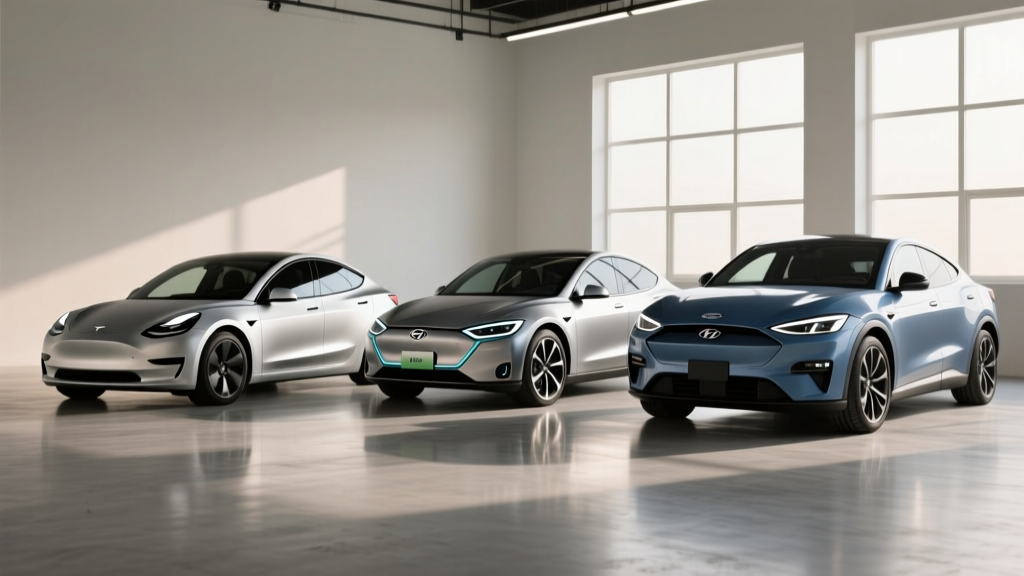
The Ioniq 5 N occupies a niche with few direct rivals. Here's how it stacks up against the closest competitors:
| Spec | Hyundai Ioniq 5 N | Tesla Model Y Performance | Porsche Macan 4 Electric |
|---|---|---|---|
| Base MSRP | $67,495 | ~$54,490 | ~$81,500 |
| EPA Range | 221 mi | 285 mi | 288 mi |
| 0–60 mph | 3.25 sec | 3.5 sec | 4.9 sec |
| Horsepower | 601 HP | 456 HP | 402 HP |
| Max DC Charge | 233 kW | 250 kW | 270 kW |
| 10–80% Charge | ~18 min | ~20 min | ~21 min |
| Federal Tax Credit | No | Partial (verify sourcing) | No |
Choose the Hyundai Ioniq 5 N if:
- You want the most engaging, track-capable EV crossover on the market
- Simulated gear shifts and synthetic sound enhance your driving experience rather than annoy you
- You can charge at home and your daily driving stays under 180 miles
- You value Hyundai's 8-year/100,000-mile battery warranty
Choose the Tesla Model Y Performance if:
- Range (285 mi) and Supercharger network access are your top priorities
- You want a lower purchase price and potential tax credit eligibility
- You prefer minimalism and over-the-air feature updates
Choose the Porsche Macan 4 Electric if:
- Brand prestige and traditional luxury materials matter more than raw power
- You want more range (288 mi) and don't mind paying $81,500+
Pros
- 601 HP and 3.25-sec 0–60 make it genuinely thrilling
- 800V architecture delivers best-in-class 233 kW DC charging
- Track-capable thermal management — sustained performance without derating
- N e-Shift and Active Sound+ add engagement missing from most EVs
- Industry-leading 8-yr/100,000-mi battery warranty
- Spacious cabin with 27.2 cu ft cargo and generous rear legroom
Cons
- 221-mi EPA range is the lowest in its class — a real limitation for road trips
- Does not qualify for the $7,500 federal tax credit
- $67,495 MSRP is steep for a Hyundai badge
- Simulated sound and shifts may feel gimmicky to some drivers
- 21-inch performance tires wear quickly and cost $300+ each
- CCS1 connector (NACS adapter required for Supercharger access)
Who Should Buy the 2026 Hyundai Ioniq 5 N?
This EV suits a specific buyer: someone who wants a daily-drivable performance vehicle that can also handle weekend track days or canyon carving — without the maintenance burden, fuel cost, or emissions of a gas-powered sports car. If you have home charging, a commute under 150 miles round-trip, and a passion for driving dynamics, the Ioniq 5 N delivers an experience no other EV crossover matches at this price.
It does not suit the range-maximizing road tripper, the budget-conscious buyer seeking tax-credit savings, or the family that needs 300+ miles between stops. For those use cases, the standard Ioniq 5 SEL AWD ($49,995, 290 mi range) or the Tesla Model Y Long Range are better fits.
Frequently Asked Questions
What is the real-world range of the Hyundai Ioniq 5 N?
The EPA rates it at 221 miles combined. In real-world highway driving at 70–80 mph, expect 185–200 miles. In cold weather, that can drop to 155–170 miles. City driving with regen may approach the EPA figure.
How fast does the Ioniq 5 N charge?
On a 350 kW DC fast charger, it peaks at 233 kW and charges from 10–80% in approximately 18 minutes. On a home Level 2 charger (10.9 kW), a full charge takes about 8 hours, adding roughly 30 miles of range per hour.
Does the Ioniq 5 N qualify for the federal EV tax credit?
No. As of 2026, the Ioniq 5 N does not qualify for the §30D federal tax credit due to battery component and critical mineral sourcing requirements. The MSRP is under the $80,000 SUV cap, but the battery supply chain does not meet North American sourcing thresholds. Always verify current eligibility on IRS.gov before purchasing.
Is the Ioniq 5 N worth it vs. the Tesla Model Y Performance?
If driving engagement, track capability, and chassis dynamics matter most, the Ioniq 5 N is the clear winner. If range, price, Supercharger access, and tax-credit eligibility are your priorities, the Model Y Performance is the more practical choice. They serve different buyers.
How much does the Ioniq 5 N cost after incentives?
The base MSRP is $67,495 with no federal tax credit available. Some states offer additional EV rebates or HOV lane access — check your local incentives. Realistic out-the-door pricing is $68,000–$69,500 before any state-level savings.
Can the Ioniq 5 N use Tesla Superchargers?
The Ioniq 5 N uses a CCS1 connector natively. Hyundai has made a NACS adapter available for newer models, enabling access to Tesla's Supercharger network. Confirm adapter compatibility with your dealer at the time of purchase.
What is the battery warranty on the Ioniq 5 N?
Hyundai provides an 8-year / 100,000-mile battery warranty covering defects and capacity degradation below 70% of original capacity. The powertrain (motors and reduction gear) is also covered for 8 years / 100,000 miles.
Sources: EPA Fuel Economy, IRS §30D Clean Vehicle Credits, Hyundai Motor America specifications.