The Performance EV That Doesn't Forget It's an EV
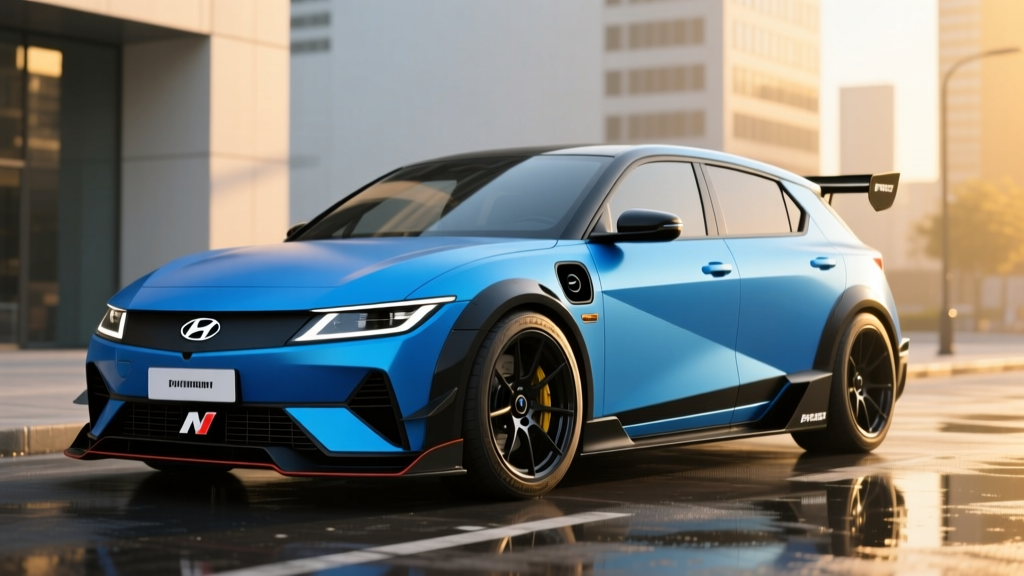
The Hyundai Ioniq 5 N isn't just a hot hatch with a battery bolted underneath. It's a 5,000-pound statement that electric performance cars can deliver sustained track abuse, daily-drivable range, and genuine driver engagement — all while functioning as a practical crossover. For 2026, the Ioniq 5 N carries over largely unchanged from its debut, continuing to occupy a niche no other automaker has fully committed to: an EV that prioritizes lap consistency and driver feedback over straight-line drag numbers alone.
But performance comes with trade-offs. The 221-mile EPA range is modest by modern EV standards, efficiency takes a hit, and the price pushes well into luxury territory. This review breaks down exactly what you get, what you give up, and whether the Ioniq 5 N earns its premium over the standard Ioniq 5 lineup and key competitors like the Tesla Model Y Performance and Porsche Macan EV.
Range and Efficiency: The Performance Tax
The Ioniq 5 N carries an 84.0 kWh usable battery pack (88.8 kWh gross) using NMC (nickel-manganese-cobalt) lithium-ion chemistry — chosen for its higher energy density and discharge-rate capability versus LFP, which matters when you're pulling 600+ horsepower repeatedly.
EPA Estimated Range: 221 miles
MPGe: 84 MPGe combined (city 89 / highway 78)
Efficiency: 40 kWh/100 mi
Real-World Expectations: In mixed driving at moderate temperatures (65-80°F), expect 190-210 miles. Sustained highway driving at 75+ mph drops this to roughly 160-180 miles due to the N's aggressive aero profile, sticky 275-section Pirelli P Zero tires, and dual-motor drag. In cold weather (below 32°F), range loss of 25-35% is realistic, bringing usable range down to 140-165 miles without preconditioning. Track sessions will drain the pack far faster — roughly 3-5 miles of range per hot lap depending on circuit length.
Source: EPA Fuel Economy Guide
The efficiency penalty is significant. The standard Ioniq 5 SEL AWD achieves 290 miles on a smaller 77.4 kWh pack thanks to 110 MPGe combined. That's a 33% range reduction for the N's performance hardware — stiffer suspension, larger brakes, stickier tires, and dual-motor output tuned for 641 hp with N Grin Boost engaged.
Hyundai includes an N-specific battery thermal management system with a dedicated "N Battery Preconditioning" mode that warms or cools the pack to optimal temperature before track sessions or DC fast charging. This is critical: without preconditioning, the N's aggressive discharge rates can trigger thermal throttling after just a few hard laps.
Charging Speed: Fast When It Counts
The Ioniq 5 N retains Hyundai's 800V electrical architecture, enabling some of the fastest DC charging available in any production vehicle.
| Charge Level | Power / Rate | Time / Speed |
|---|---|---|
| DC Fast Charge (peak) | 238 kW | 10-80% in ~18 minutes |
| DC Fast Charge (sustained avg.) | ~165 kW avg to 80% | Charge curve tapers sharply above 80% |
| Level 2 Home (240V, 48A) | 10.9 kW onboard charger | ~8.5 hours (0-100%), ~30 mi/hr |
| Level 1 (120V) | ~1.4 kW | ~4 mi/hr (emergency use only) |
The 800V architecture is the Ioniq 5 N's charging ace. On a 350 kW Electrify America or Ionity station, the N pulls a peak of 238 kW — though sustained rates average closer to 165 kW through the 10-80% window. The charge curve is aggressive early (hitting 200+ kW by 20% SoC) but tapers sharply past 80%, so charging to 100% at a DC fast charger adds significant time and battery stress. For daily use, set your charge limit to 80% and use the full 100% only before road trips.
At home on a Level 2 wall connector wired to a 60-amp circuit (48 amps continuous), the 10.9 kW onboard charger replenishes the pack in about 8.5 hours from empty — adequate for overnight charging. The N uses the NACS (North American Charging Standard) connector for 2026, granting native access to Tesla's Supercharger network alongside CCS-equipped public stations via the built-in charge-port adapter compatibility.
Performance: 641 HP and a Chassis That Earns It
| Spec | Value |
|---|---|
| Drivetrain | Dual-motor AWD |
| Horsepower (N Grin Boost) | 641 hp |
| Torque | 568 lb-ft |
| 0-60 mph | 3.25 seconds |
| Top Speed | 161 mph (electronically limited) |
| Battery (usable / gross) | 84.0 kWh / 88.8 kWh, NMC |
| Curb Weight | ~4,938 lbs |
| EPA Range | 221 miles |
| Base MSRP | $67,885 (incl. destination) |
The numbers tell part of the story: 641 horsepower with N Grin Boost engaged (a 10-second burst activated by a steering-wheel button), 3.25 seconds to 60 mph, and a 161-mph top speed. But the Ioniq 5 N's real engineering achievement is thermal endurance. Hyundai's N division developed an N-specific cooling system with enlarged radiators, a dedicated inverter cooler, and the battery preconditioning mentioned earlier. The result: the N can sustain multiple hot laps at a road course without the powertrain entering limp mode — something the Tesla Model Y Performance struggles with during repeated high-load use.
The chassis hardware is equally purposeful. The N rides on an electronically controlled adaptive suspension with N-specific tuning, reinforced body structure (additional weld points and structural adhesive), and a mechanical limited-slip front differential simulation via torque vectoring. The brake system uses 4-piston front calipers with 400mm rotors, augmented by an N-specific regenerative braking mode (N Pedal) that provides up to 0.6g of deceleration through regen alone — enough for aggressive one-pedal-style driving on canyon roads.
N e-Shift deserves specific mention: it simulates an 8-speed dual-clutch transmission with audible "shifts," torque interruption, and even simulated redline bounce. It's gimmicky in concept but genuinely effective at providing cadence and feedback during spirited driving. You can turn it off entirely for smooth, single-speed EV delivery.
Interior, Cargo, and Technology
The Ioniq 5 N's cabin follows the standard Ioniq 5's retro-futuristic dual-screen layout but adds N-exclusive elements: heavily bolstered N sport seats (heated and ventilated), a thick N-specific steering wheel with dedicated N buttons, an N shift-by-wire selector, and aluminum pedals. The 12.3-inch digital cluster and 12.3-inch infotainment touchscreen run Hyundai's latest interface with wireless Apple CarPlay and Android Auto.
Cargo and passenger dimensions:
- Cargo volume (rear seats up): 27.2 cu ft
- Cargo volume (rear seats folded): 59.3 cu ft
- Front legroom: 41.7 inches
- Rear legroom: 39.4 inches
- Frunk (front trunk): 0.85 cu ft (minimal — houses N-specific electronics and cooling hardware)
The frunk is essentially useless for storage on the N — a trade-off for the additional thermal management hardware. Rear seat space remains generous for two adults, though the N's stiffer suspension tuning transmits more road imperfection to passengers than the standard model.
Driver assistance includes Hyundai's Highway Driving Assist 2 (HDA2), which provides adaptive cruise control with stop-and-go, lane centering, and lane-change assist. This is an SAE Level 2 system — the driver must keep hands on the wheel and eyes on the road at all times. It's competent for highway commuting but not class-leading compared to GM's Super Cruise or Ford's BlueCruise on mapped highways.
Pricing, Trims, and Federal Tax Credit Eligibility
The 2026 Ioniq 5 N is offered as a single, fully loaded trim — no options packages beyond color choice and available Performance Blue Matte paint ($1,000).
| Item | Amount |
|---|---|
| Base MSRP (incl. destination) | $67,885 |
| Performance Blue Matte (optional) | +$1,000 |
| As-tested (with matte paint) | $68,885 |
| Federal §30D Tax Credit | Not eligible (see below) |
The Ioniq 5 N does not qualify for the $7,500 federal EV tax credit under current IRS rules. Two factors work against it:
- MSRP Cap: The §30D credit caps eligible SUVs/crossovers at $80,000 MSRP — the Ioniq 5 N clears this threshold.
- Battery Sourcing Requirements: For 2026, the critical-minerals and battery-component sourcing requirements have tightened significantly. The Ioniq 5 N's battery cells (sourced from Hyundai's SK On joint venture) do not currently meet the full domestic-content thresholds required for the $7,500 credit.
Without the federal credit, the Ioniq 5 N's effective price sits at $67,885. Some state-level incentives may still apply — California's CVRP, Colorado's state credit, and others vary by jurisdiction and income. Check your state's energy office or DMV for current programs.
Ownership Costs, Warranty, and Long-Term Outlook
Hyundai covers the Ioniq 5 N with the same warranty structure as the broader Ioniq lineup, with one notable exception for the battery:
- Basic (bumper-to-bumper): 5 years / 60,000 miles
- Powertrain: 10 years / 100,000 miles
- Battery capacity warranty: 10 years / 100,000 miles (guaranteed to retain ≥70% of original capacity)
- Complimentary maintenance: 3 years / 36,000 miles
- Roadside assistance: 5 years / unlimited miles
The 70% capacity retention threshold at 10 years/100,000 miles is standard for the industry, though Hyundai's track record with the standard Ioniq 5 suggests degradation has been well within this envelope for typical owners. The N's higher discharge rates and thermal cycling from track use could accelerate degradation modestly — if you plan frequent track days, monitor State of Health (SoH) through the infotainment system's battery diagnostics or via OBD-II tools like Leaf Spy-compatible apps.
Estimated 5-year cost of ownership: Insurance runs higher than the standard Ioniq 5 — expect $2,200-$2,800/year depending on your profile and state, reflecting the N's performance classification and $68K replacement value. Electricity costs at the national average of $0.16/kWh and the N's 40 kWh/100mi efficiency work out to roughly $0.064/mile — compared to $0.14/mile for a 25 MPG gas car at $3.50/gallon. Over 5 years and 60,000 miles, fuel savings of approximately $4,500 partially offset the higher purchase price and insurance premium.
How It Compares: Ioniq 5 N vs. the Competition
The Ioniq 5 N occupies a specific lane: track-capable electric crossover with manual-transmission energy. Here's how it stacks up against the three most common cross-shops.
| Spec | Ioniq 5 N | Tesla Model Y Performance | Porsche Macan 4 EV |
|---|---|---|---|
| MSRP | $67,885 | $54,990 | $81,800 |
| 0-60 mph | 3.25 sec | 3.5 sec | 4.9 sec |
| Horsepower | 641 hp | 456 hp | 402 hp |
| EPA Range | 221 mi | 285 mi | 307 mi |
| DC Fast Charge (peak) | 238 kW | 250 kW | 270 kW |
| Track Thermal Mgmt. | Excellent | Moderate | Good |
| Driver Engagement | High (e-Shift, N modes) | Low-Moderate | Moderate-High |
Tesla Model Y Performance undercuts the N by $13,000, offers 64 more miles of range, and has access to the most reliable DC fast-charging network. But it lacks the N's chassis depth, thermal endurance, and driver engagement features. It's a fast appliance; the N is a driver's car.
Porsche Macan 4 EV starts at $81,800 and offers superior range and build quality, but it's tuned more for grand-touring comfort than track attack. The Ioniq 5 N is sharper on a circuit and $14,000 cheaper.
Pros, Cons, and Who Should Buy
- Class-leading track thermal endurance for a production EV
- 800V architecture enables 238 kW DC fast charging
- N e-Shift and sound design add genuine driver engagement
- Generous 10-year/100,000-mile powertrain and battery warranty
- Practical crossover cargo space (27.2 cu ft rear seats up)
- NACS connector provides native Supercharger access
- 221-mile EPA range is below average for the price class
- Does not qualify for $7,500 federal tax credit
- Insurance premiums run $2,200-$2,800/yr (performance classification)
- Frunk virtually eliminated by N cooling hardware
- Firm ride quality noticeable on rough pavement
- Heavy at 4,938 lbs — tire wear will be accelerated
- Enthusiast drivers who want EV performance with real chassis feedback and track capability — not just straight-line acceleration.
- Track-day participants who need a car that can survive repeated hot laps without thermal derating.
- Daily commuters with home Level 2 charging and a round-trip commute under 150 miles who want weekend canyon-carving capability.
- Range-priority buyers: The standard Ioniq 5 Limited (305 mi EPA) or Model Y Long Range (320+ mi) serve better.
- Budget-conscious shoppers: The $68K price without a tax credit is steep. The Model Y Performance offers 80% of the thrills at $55K.
- Road-trip families: 221 miles of range and a small frunk make this a poor choice for frequent long-distance family hauls.
Frequently Asked Questions
What is the real-world range of the Hyundai Ioniq 5 N?
The EPA rates the Ioniq 5 N at 221 miles. In real-world mixed driving at moderate temperatures, expect 190-210 miles. Highway driving at 75+ mph reduces this to 160-180 miles, and cold weather (below 32°F) can drop range to 140-165 miles without preconditioning. Track use drains the battery far faster — plan for charging after any session.
How fast does the Ioniq 5 N charge?
On a 350 kW DC fast charger, the Ioniq 5 N peaks at 238 kW and charges from 10-80% in approximately 18 minutes. The sustained average through that window is roughly 165 kW. At home on a Level 2 charger (240V, 48 amps), the 10.9 kW onboard charger adds about 30 miles of range per hour, fully recharging overnight in about 8.5 hours.
Does the Ioniq 5 N qualify for the federal EV tax credit?
No. The 2026 Ioniq 5 N does not qualify for the $7,500 federal §30D clean vehicle credit due to battery component and critical-mineral sourcing requirements that its SK On-supplied cells do not currently meet. It does fall under the $80,000 SUV MSRP cap, but the sourcing rules are the disqualifying factor. State incentives may still apply — check your local program.
Is the Ioniq 5 N worth buying over the Tesla Model Y Performance?
It depends on your priorities. If you want maximum range, the lowest price, and access to the Supercharger network's reliability, the Model Y Performance ($54,990, 285 mi range) is the pragmatic choice. If you prioritize driver engagement, track-day thermal endurance, and a more involving driving experience — and can accept 64 fewer miles of range and a $13,000 premium — the Ioniq 5 N delivers something the Tesla simply doesn't attempt.
Can I daily-drive the Ioniq 5 N?
Yes, provided your commute fits within its range envelope and you have reliable home charging. The ride is firm but compliant, the cabin is well insulated, and features like ventilated seats and HDA2 make it livable. The main daily compromises are range (plan charging stops for trips over 150 miles), accelerated tire wear from the sticky P Zeros, and the performance insurance premium.
How long will the Ioniq 5 N battery last?
Hyundai warrants the battery for 10 years or 100,000 miles against dropping below 70% of original capacity. Based on data from standard Ioniq 5 owners, typical degradation has been 5-8% over the first 50,000 miles. The N's higher discharge rates and thermal cycling from track use may increase degradation modestly, but the robust cooling system is designed to mitigate this. Monitor SoH through the vehicle's battery diagnostics screen.