From Pikes Peak Glory to Your Driveway: The Ioniq 5 N Verdict
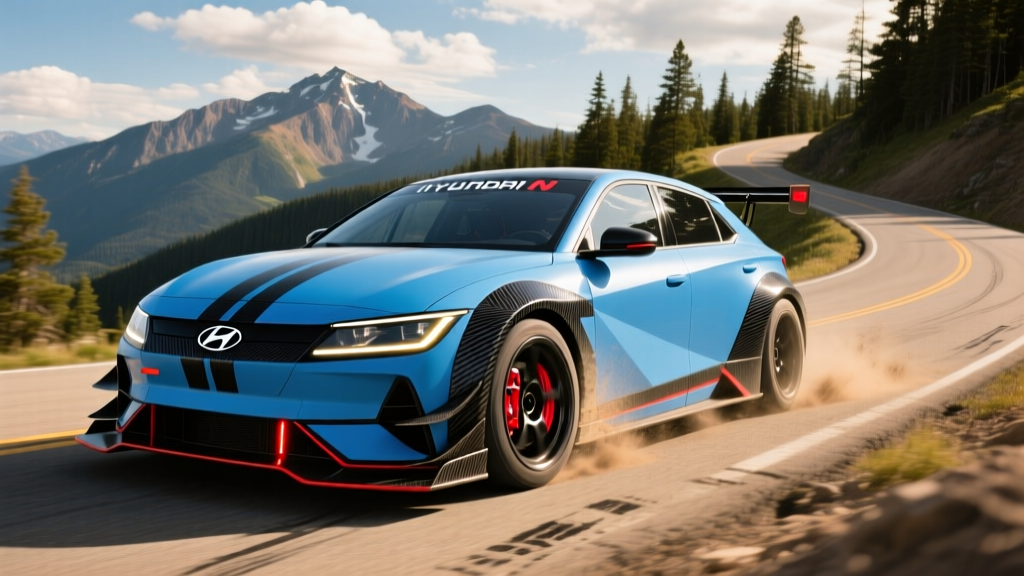
When Hyundai's Ioniq 5 N stormed up the 12.42-mile Pikes Peak International Hill Climb in June 2024, claiming first place in its class with a time of 8:58.49, it wasn't just a marketing stunt. The N variant took Hyundai's mainstream electric crossover and transformed it into a legitimate performance machine — one that happens to carry groceries the rest of the week. But does a track-honed EV make sense as a daily driver in 2026, and what do you sacrifice (or gain) compared to the standard Ioniq 5?
The short answer: the Ioniq 5 N is the most engaging electric car Hyundai has ever built, with 641 horsepower, a 326-mile EPA range, and class-leading 800V charging architecture. But it's also heavier, thirstier, and significantly more expensive than its mainstream sibling. Here's the full breakdown.
| Spec | Value |
|---|---|
| EPA Range | 326 miles (est. based on 2025 MY carryover) |
| Battery Capacity | 84.0 kWh usable (NMC lithium-ion) |
| Drivetrain | Dual-motor AWD |
| Horsepower | 601 HP (641 HP w/ N Grin Boost, 10-sec burst) |
| 0–60 mph | 3.4 seconds |
| Top Speed | 161 mph |
| Max DC Fast Charge | 238 kW peak (800V architecture) |
| 10–80% DC Charge Time | ~18 minutes (preconditioned) |
| Level 2 Home Charge Rate | 10.9 kW (CCS1 connector) |
| MPGe (Combined) | 84 MPGe |
| Energy Consumption | 40 kWh/100 mi |
| Cargo Volume (rear seats up) | 27.2 cu ft |
| Cargo Volume (rear seats folded) | 59.3 cu ft |
| Base MSRP | $67,500 |
| As-Tested (w/ options) | ~$71,000 |
| Battery/Powertrain Warranty | 10 years / 100,000 miles |
| Vehicle Warranty | 5 years / 60,000 miles |
Range and Efficiency: The Performance Tax
The Ioniq 5 N carries an 84.0 kWh usable battery pack using NMC (nickel manganese cobalt) chemistry — chosen for its higher energy density and ability to sustain repeated high-power discharge cycles without overheating. That's critical for a car that might see track use, but it comes at a real-world efficiency cost.
Real-World Highway (70+ mph): ~250–275 miles
Cold Weather (below 32°F, mixed driving): ~210–240 miles
Track/AutoX Session: Expect to burn 40–50% SoC in 20 minutes of hard driving
The 84 MPGe combined rating is noticeably lower than the standard Ioniq 5 Long Range RWD (114 MPGe). The N's stickier Pirelli P Zero tires, aggressive aero, and the simple physics of moving a 4,861-pound vehicle with dual motors all contribute. For context, fueleconomy.gov lists the Ioniq 5 N at roughly 40 kWh per 100 miles — about 40% thirstier than the base model.
For most commutes under 80 miles round-trip, you'll still only need to charge every three or four days. But road trippers should plan for more frequent stops than the standard Ioniq 5 requires.
Charging Speed: Where the 800V Architecture Shines
This is where the Ioniq 5 N earns back some practicality points. Hyundai's E-GMP platform runs on an 800-volt electrical architecture, allowing DC fast-charging speeds that most competitors still can't match without an adapter or proprietary network.
| Charge Level | Power / Voltage | Miles Added Per Hour | Notes |
|---|---|---|---|
| Level 1 (120V outlet) | 1.4 kW | ~3–4 mi/hr | Emergency/trickle only; full charge in 60+ hours |
| Level 2 (240V home) | 10.9 kW | ~30–33 mi/hr | Full charge in ~8 hours; requires 48A circuit |
| DC Fast (350 kW station) | 238 kW peak | ~200+ mi in 18 min (10–80%) | Preconditioning required for peak speed |
| DC Fast (150 kW station) | ~120 kW sustained | ~100 mi in 20 min | More common station type; still fast |
The charge curve matters here. The Ioniq 5 N peaks near 238 kW from roughly 10–55% state of charge, then tapers progressively. From 80–100%, charging slows dramatically — expect the final 20% to take as long as the first 70%. For road trips, the 10–80% sprint in roughly 18 minutes at a preconditioned Electrify America or Tesla Supercharger (with NACS adapter, which Hyundai began including for 2025+ models) is genuinely among the fastest in the segment.
At home on a 10.9 kW Level 2 charger (requiring a dedicated 50-amp circuit installed by a licensed electrician), a full charge from empty takes about 8 hours — perfect for overnight replenishment. Installation costs for a Level 2 home setup typically run $800–$2,500 depending on panel capacity and run length.
Performance: What Pikes Peak First Place Actually Means
The 2024 Pikes Peak International Hill Climb victory wasn't about raw straight-line speed — it was about sustained power delivery, thermal management, and chassis composure across 156 turns climbing 4,720 feet in elevation. The Ioniq 5 N's class win demonstrated that Hyundai's N performance division solved the problems that plague most EVs on track: battery overheating, brake fade, and weight-induced understeer.
Key performance hardware includes:
- N Grin Boost: Temporarily raises output from 601 HP to 641 HP for 10-second bursts
- N Battery Preconditioning: Heats or cools the battery pack before track sessions for optimal power delivery
- Regenerative braking with N Pedal: Up to 0.6g of regen, with blended mechanical brakes for track-level stopping power
- Electronically controlled limited-slip differential (e-LSD): Torque-vectoring between front and rear axles
- N Track Map: Displays lap times, G-forces, and battery/brake temps on the infotainment screen
- Simulated 8-speed DCT (N e-Shift): Artificial shift points with audible and haptic feedback — controversial but genuinely engaging
The 3.4-second 0–60 time places it in the same territory as a Porsche Taycan 4S or Tesla Model Y Performance. But the Ioniq 5 N's party trick is repeatability: Hyundai's thermal management system allows multiple hard launches and hot laps before power derates — something many performance EVs struggle with.
Pricing, Tax Credits, and Ownership Costs
The Ioniq 5 N is not an affordable EV. Starting at $67,500 (destination included), it commands roughly a $17,000 premium over the standard Ioniq 5 SEL AWD. Options like the N Performance package and Performance Blue paint can push the as-tested price past $71,000.
| Item | Amount |
|---|---|
| Base MSRP (incl. destination) | $67,500 |
| As-Tested (typical options) | ~$71,000 |
| Federal Tax Credit (§30D, max) | Up to $7,500 (if eligible) |
| Effective Price After Max Credit | ~$60,000–$63,500 |
| Est. Annual Charging Cost (12,000 mi/yr) | $620–$850 (varies by electricity rate) |
| Est. Annual Insurance | $2,200–$2,800 (performance EV premium) |
Federal tax credit eligibility requires careful checking. Under current IRS §30D rules, the Ioniq 5 N qualifies for up to $7,500 in federal tax credits — but only if you meet all of the following criteria:
- MSRP cap: The vehicle must be under $80,000 MSRP for SUVs/crossovers (the Ioniq 5 N qualifies)
- Buyer income cap: Modified AGI must not exceed $150,000 (single), $225,000 (head of household), or $300,000 (joint filers)
- Battery sourcing: Critical minerals and battery components must meet phased-in domestic/free-trade sourcing thresholds that tighten annually — confirm current-year compliance with your dealer
- Point-of-sale transfer: You can elect to transfer the credit to the dealer at purchase, reducing your out-of-pocket cost immediately
Always verify current-year eligibility on IRS.gov and with a qualified tax professional before relying on the credit in your purchase math.
Interior, Cargo, and Daily Livability
Despite its track ambitions, the Ioniq 5 N retains the practical bones of the standard model. The dual 12.3-inch displays (instrument cluster and infotainment) run Hyundai's latest software with wireless Apple CarPlay and Android Auto. N-specific touches include heavily bolstered bucket seats, an Alcantara-wrapped steering wheel, and N-branded trim throughout.
Interior dimensions remain generous:
- Front legroom: 41.7 inches
- Rear legroom: 39.4 inches
- Cargo (seats up): 27.2 cu ft — sufficient for a week's groceries or two large suitcases
- Cargo (seats folded): 59.3 cu ft — competitive with compact SUVs
- Frunk (front trunk): 2.0 cu ft — enough for charging cables, not much else
The N's stiffer suspension tuning is noticeable on broken pavement — it's firm but not punishing. Road noise from the sticky summer tires is louder than the standard Ioniq 5, and winter drivers will want to budget for a dedicated set of winter tires on separate wheels, as the P Zero rubber hardens dangerously below 40°F.
Pros
- Class-leading 800V DC fast charging (10–80% in ~18 min)
- Repeatable track performance without thermal derate
- Spacious interior and cargo area for a performance EV
- 10-year/100,000-mile battery warranty
- Engaging simulated shift and sound (N e-Shift) for enthusiasts
- Generous standard safety tech (Highway Driving Assist 2, blind-spot monitors)
Cons
- 84 MPGe is poor for the segment — higher charging costs
- $67,500 starting price; no federal credit guarantee
- Firm ride on rough roads; louder than standard Ioniq 5
- Summer-only tires require winter tire purchase in cold climates
- Simulated engine sound and shifts polarizing (can be disabled)
- Heavier than standard Ioniq 5 (~4,861 lbs) — affects tire and brake wear
Who Should Buy the Ioniq 5 N?
The Ioniq 5 N is built for a specific buyer: someone who wants one car that can genuinely perform at a track day or autocross event and still serve as a comfortable daily driver with real cargo space. It competes with the Tesla Model Y Performance, Ford Mustang Mach-E GT, and BMW i4 M50 — but none of those offer the same combination of 800V charging speed and dedicated track thermal management.
Buy it if: You want a performance EV with real track capability, you value ultra-fast DC charging for road trips, and you accept higher energy costs as the price of admission.
Consider the standard Ioniq 5 if: Your priority is efficiency, lower purchase price, and a softer ride. The Long Range AWD model delivers 290 miles of range, 99 MPGe combined, and starts around $50,000 — a more rational choice for pure commuting.
Look at the Tesla Model Y Performance if: You prioritize Supercharger network access and a lower starting price (~$53,000), though you'll sacrifice the Ioniq 5 N's dedicated track cooling and simulated gearshift engagement.
Frequently Asked Questions
What is the real-world range of the Hyundai Ioniq 5 N?
The EPA rates the Ioniq 5 N at 326 miles. In real-world highway driving at 70–80 mph, expect 250–275 miles. In cold weather (below freezing), range drops to approximately 210–240 miles due to battery resistance and cabin heating demands. The NMC chemistry handles cold better than LFP but still loses 15–25% range in deep winter.
How fast does the Ioniq 5 N charge at home and on the road?
On a 350 kW DC fast charger with battery preconditioning, the Ioniq 5 N peaks at 238 kW and charges from 10–80% in approximately 18 minutes. At home on a Level 2 (240V, 48A) charger, it adds roughly 30–33 miles of range per hour, with a full charge taking about 8 hours. On a standard 120V outlet (Level 1), expect only 3–4 miles per hour.
Does the Hyundai Ioniq 5 N qualify for the federal EV tax credit?
It can qualify for up to $7,500 under IRS §30D, but eligibility depends on your income (under $150K single / $300K joint), the vehicle's MSRP (under $80K — the Ioniq 5 N qualifies), and current-year battery sourcing requirements. The credit can be transferred to the dealer at point of sale. Always verify on IRS.gov before purchasing.
Is the Ioniq 5 N worth buying over the Tesla Model Y Performance?
It depends on priorities. The Ioniq 5 N offers superior track thermal management, faster DC charging (800V vs. Tesla's ~250 kW peak for non-Tesla networks), and a more engaging driver experience with N e-Shift. The Model Y Performance is cheaper (~$53,000 vs. $67,500), has access to the full Supercharger network natively, and offers better efficiency. For pure daily commuting, the Model Y wins on cost. For driving engagement and track use, the Ioniq 5 N is the stronger choice.
What is Hyundai's battery warranty on the Ioniq 5 N?
Hyundai covers the Ioniq 5 N's high-voltage battery for 10 years or 100,000 miles (whichever comes first), with a capacity retention threshold of 70%. If the battery degrades below 70% of original capacity within that period, Hyundai will repair or replace it. The powertrain (motors, reduction gear) shares the same coverage. The basic vehicle warranty is 5 years / 60,000 miles.
Does the Ioniq 5 N have self-driving capability?
No. The Ioniq 5 N features Hyundai's Highway Driving Assist 2 (HDA2), which is an SAE Level 2 driver-assistance system. It provides adaptive cruise control with stop-and-go, lane-centering, and lane-change assist — but the driver must remain fully engaged with hands on the wheel and eyes on the road at all times. It is not autonomous or self-driving.