The Pikes Peak Win That Put the Ioniq 5 N on the Map
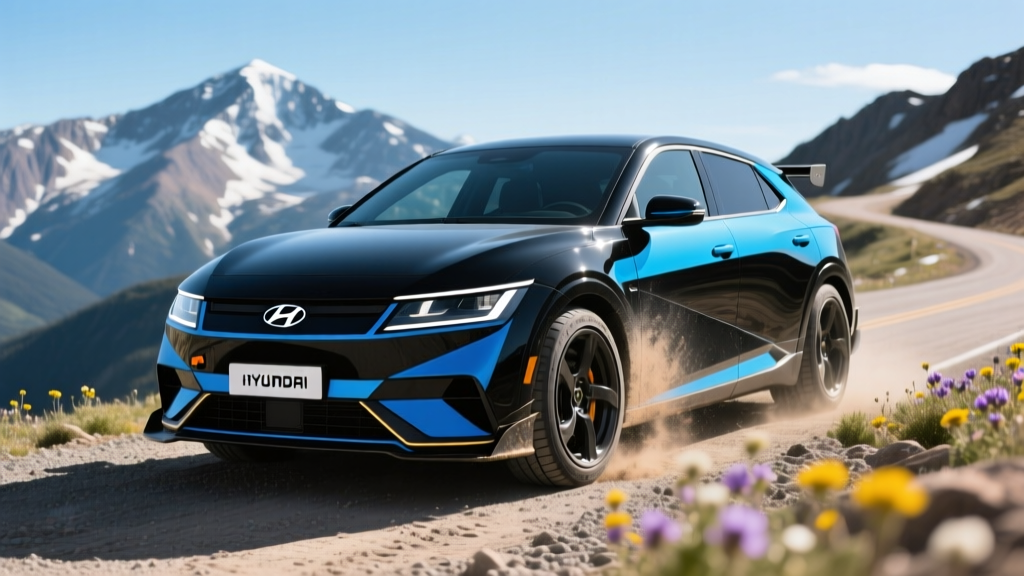
When Hyundai's Ioniq 5 N captured first place in the exhibition class at the 2025 Pikes Peak International Hill Climb, it wasn't just a trophy moment — it was a proof-of-concept for what a performance EV can do under extreme thermal and altitude stress. The 12.42-mile course climbs to 14,115 feet, where thin air cripples internal-combustion engines but electric motors barely notice. The Hyundai Ioniq Pikes Peak first place in 2025 validated what early adopters already suspected: Hyundai's N performance division knows how to manage battery heat and power delivery when it matters most.
But a hill-climb winner and a daily-drivable EV are two different things. This review breaks down whether the 2026 Hyundai Ioniq 5 N — the street-legal descendant of that Pikes Peak effort — actually makes sense for buyers who care about range, charging speed, and ownership costs as much as lap times.
Full Specifications: 2026 Hyundai Ioniq 5 N at a Glance
| Spec | Value |
|---|---|
| EPA Range | 221 miles (est. 2026 carryover from 2025) |
| Battery Capacity | 84.0 kWh usable, NMC lithium-ion |
| Drivetrain | Dual-motor AWD (N-tuned torque vectoring) |
| Horsepower | 601 hp standard / 641 hp with N Grin Boost (10 sec) |
| Torque | 568 lb-ft |
| 0–60 mph | 3.4 seconds (with launch control) |
| Top Speed | 161 mph |
| Max DC Fast Charge | 240 kW (peak) |
| 10–80% DC Time | ~18 minutes (preconditioned) |
| Level 2 Charge Rate | 10.9 kW (~37 miles/hr) |
| EPA Efficiency | 84 MPGe combined / 40 kWh/100 mi |
| Cargo Volume | 27.2 cu ft (rear seats up) / 59.3 cu ft (folded) |
| Rear Legroom | 39.4 inches |
| Base MSRP | $67,475 (including destination) |
| Battery/Powertrain Warranty | 10 years / 100,000 miles |
| Federal Tax Credit (§30D) | Up to $7,500 — subject to sourcing, income, and MSRP caps |
Range and Efficiency: The Performance Tax Is Real
EPA sticker: 221 miles. Expect 175–195 miles in real-world highway driving at 70+ mph. In cold weather (below 32°F), plan for 150–170 miles of usable range. Aggressive driving — the kind this car tempts you into — can drop observed range below 150 miles.
The Ioniq 5 N trades range for performance, and the math is unforgiving. The standard Ioniq 5 Long Range AWD achieves an EPA-estimated 290 miles on a similar 84.0 kWh pack. The N variant's lower efficiency (84 MPGe vs. 110 MPGe for the standard AWD) comes from stickier Pirelli P Zero tires, a sport-tuned suspension with higher rolling resistance, and the sheer energy cost of launching 4,800 pounds with 641 horsepower.
According to fueleconomy.gov, the Ioniq 5 N consumes roughly 40 kWh per 100 miles. That's meaningfully higher than the Tesla Model Y Performance (30 kWh/100 mi) or the Porsche Taycan 4S (35 kWh/100 mi). If your daily commute is under 60 miles round-trip and you charge at home nightly, this won't matter. If you regularly road-trip, you'll be stopping more often than owners of less powerful EVs.
Charging Speed: Where the N Pays Off
Hyundai's E-GMP platform remains one of the fastest-charging architectures on the market, and the Ioniq 5 N inherits that advantage. With an 800-volt electrical system, the N can accept a peak 240 kW at a compatible DC fast charger — meaning you can recover roughly 10 to 80% state of charge in approximately 18 minutes when the battery is properly preconditioned.
Preconditioning is critical here. If you navigate to a DC fast charger using the car's built-in route planner, the thermal management system will warm the battery to its optimal charging temperature before you arrive. Skip preconditioning — especially in cold weather — and your peak charge rate may stall at 80–100 kW, doubling your stop time.
| Charge Level | Max Power | Approx. Miles Added per Hour | Notes |
|---|---|---|---|
| Level 1 (120V household) | 1.4 kW | ~4 mi/hr | Emergency/trickle only; 55+ hours for full charge |
| Level 2 (240V home) | 10.9 kW | ~37 mi/hr | Full charge in ~8 hours; requires 48A circuit |
| DC Fast Charge | 240 kW peak | ~490 mi/hr (peak rate) | 10–80% in ~18 min; tapers sharply above 80% |
One nuance buyers should understand: the 240 kW figure is a peak, not a sustained rate. The Ioniq 5 N's charge curve is aggressive between 10% and 55% SoC, then progressively tapers. From 80% to 100%, charging slows dramatically to protect the NMC cells. For road trips, the optimal strategy is to charge to 80% and go — you'll spend less total time charging with two short stops than one long one.
The NACS adapter situation matters for 2026. Hyundai has confirmed North American Charging Standard (NACS) compatibility for newer builds, granting access to Tesla's Supercharger network. Verify your specific build's port configuration with the dealer, as some early-build 2025 models shipped with CCS1 ports and a NACS adapter included.
Performance: Pikes Peak Pedigree on Public Roads
The dual-motor AWD system in the Ioniq 5 N produces 601 horsepower in normal driving, jumping to 641 hp when you activate N Grin Boost — a 10-second overboost function triggered by the red N button on the steering wheel. The result is a 3.4-second 0–60 mph time that puts it in supercar territory from just a few years ago.
But straight-line speed is the least interesting thing about this car. The N division's real engineering achievement is thermal management. At Pikes Peak in 2025, the Ioniq 5 N ran the full 12.42-mile climb without significant power derating — a scenario that would force many performance EVs into limp mode. On the street, that translates to repeated hard launches and canyon-carving sessions without the battery overheating and cutting power.
N-specific features include:
- N Torque Distribution: Electronically controlled front/rear torque split with an e-LSD effect on the rear axle
- N Drift Optimizer: Allows controlled oversteer by biasing torque rearward (track use only — this disables several stability systems)
- N e-Shift: Simulates an 8-speed dual-clutch transmission with simulated shift shocks and a simulated redline — polarizing among EV purists but genuinely engaging for driving enthusiasts
- Regenerative Braking: Up to 0.65g of regen, with N-specific brake blending for track use
Pricing, Tax Credits, and Ownership Economics
The 2026 Hyundai Ioniq 5 N starts at $67,475 including destination. There is effectively one trim level — the N comes fully equipped with adaptive dampers, the performance brake package, N bucket seats, a 12.3-inch dual-screen setup, and Hyundai's full suite of driver-assist features.
The Ioniq 5 N's MSRP of $67,475 falls under the $80,000 SUV/truck cap set by the IRS. However, the full $7,500 credit depends on battery-sourcing and critical-minerals requirements that change annually. Hyundai has been working to qualify more of its US-built EVs for the full credit, but buyers should verify current eligibility on irs.gov before purchasing. Income caps apply: $300,000 joint / $150,000 single filer. The credit can now be transferred to the dealer as a point-of-sale discount.
| Scenario | Price |
|---|---|
| Base MSRP (incl. destination) | $67,475 |
| After full $7,500 §30D credit | ~$59,975 |
| After $3,750 partial credit (minerals only) | ~$63,725 |
| Estimated annual electricity (12,000 mi at $0.14/kWh) | ~$672/yr |
| Comparable gas car fuel cost (25 MPG at $3.50/gal) | ~$1,680/yr |
The ownership math favors the Ioniq 5 N over gas performance cars like the BMW M3 or Mercedes-AMG C63 on running costs. But compared to a standard Ioniq 5 SEL ($49,850), the N carries an $18,000 premium and significantly higher energy consumption. This is a car you buy with your heart, then justify with your spreadsheet.
Interior, Tech, and Daily Livability
Inside, the Ioniq 5 N differentiates itself with heavily bolstered N Light Sport bucket seats (heated and ventilated), an N-specific steering wheel with red buttons, aluminum pedals, and blue contrast stitching throughout. The dual 12.3-inch displays run Hyundai's latest infotainment with native EV route planning, over-the-air updates, and wireless Apple CarPlay/Android Auto.
Practical dimensions remain generous for a performance vehicle:
- Cargo (seats up): 27.2 cu ft — enough for a week's groceries or two carry-on bags
- Cargo (seats folded): 59.3 cu ft — competitive with compact SUVs
- Rear legroom: 39.4 inches — adults fit comfortably on shorter trips
- Frunk: Small front trunk for charging cables and emergency kit
The Hyundai SmartSense driver-assist suite is standard and includes forward collision-avoidance assist, blind-spot monitoring, lane-keeping assist, adaptive cruise control with stop-and-go, and rear cross-traffic alert. Per IIHS testing of the Ioniq 5 platform, expect Top Safety Pick+ ratings to carry over, though the N variant's specific crash-test results should be confirmed for the 2026 model year.
Notable drawbacks: The N's firm adaptive dampers, even in their softest setting, transmit more road imperfections than the standard Ioniq 5. Road noise from the Pirelli P Zero tires is noticeable above 65 mph. And the simulated e-Shift, while entertaining on a back road, becomes tiresome during stop-and-go commuting — fortunately, it can be turned off.
Ioniq 5 N vs. the Competition
| Spec | Hyundai Ioniq 5 N | Tesla Model Y Performance | Porsche Taycan 4S | BMW i4 M50 |
|---|---|---|---|---|
| EPA Range | 221 mi | 285 mi | 246 mi | 227 mi |
| 0–60 mph | 3.4 sec | 3.5 sec | 3.8 sec | 3.7 sec |
| Horsepower | 641 hp (boost) | 510 hp | 562 hp | 536 hp |
| Max DC Charge | 240 kW | 250 kW | 270 kW | 205 kW |
| 10–80% Time | ~18 min | ~15 min | ~22 min | ~31 min |
| Base MSRP | $67,475 | $54,990 | $105,000 | $70,700 |
| Body Style | Crossover | Crossover | Sedan | Gran Coupe |
The Ioniq 5 N occupies a unique niche: it's the most engaging driver's car in this group at a price point well below the Porsche and BMW. The Tesla Model Y Performance offers more range and a lower price but cannot match the Hyundai's chassis communication, brake feel, or track durability. The Porsche Taycan 4S is dynamically superb but costs $37,000 more. The BMW i4 M50 is a competent grand tourer but lacks the N's raw personality.
Who Should Buy the Ioniq 5 N?
- You want a performance EV that can handle track days without overheating
- Daily driving includes back roads, canyons, or spirited highway merging
- You value Hyundai's 10-year/100,000-mile battery warranty
- You need crossover practicality with sports-car acceleration
- Your commute is under 80 miles round-trip with home charging access
- Maximum range is your priority (get the standard Ioniq 5 or Tesla Model Y)
- You frequently road-trip more than 300 miles between stops
- You prioritize ride comfort over handling precision
- Your budget is under $55,000
Pros, Cons, and Final Verdict
- Class-leading thermal management — proven at Pikes Peak
- 240 kW DC fast charging with 800V architecture
- 641 hp with N Grin Boost; 3.4-sec 0–60
- Engaging e-LSD and torque vectoring
- 10-year/100,000-mile battery warranty
- Spacious crossover interior with 27.2 cu ft cargo
- Full SmartSense ADAS suite standard
- 221-mile EPA range is low for the price
- Firm ride quality, even in comfort mode
- High tire noise from P Zero rubber
- $67,475 MSRP is steep for an Ioniq 5 variant
- Simulated e-Shift divisive — some find it gimmicky
- Only one trim; no options to lower price
- Tax credit eligibility varies by sourcing year
The Hyundai Ioniq Pikes Peak first place in 2025 wasn't a marketing stunt — it was a stress test that revealed genuine engineering depth. The 2026 Ioniq 5 N delivers on that promise for buyers who want a performance EV that can actually sustain its performance, not just deliver one impressive launch before derating. If range is your top priority, look at the standard Ioniq 5 or the Model Y. But if you want the most driver-engaging EV under $70,000, the Ioniq 5 N is the one to drive.
Frequently Asked Questions
What is the real-world range of the Hyundai Ioniq 5 N?
The EPA estimates 221 miles. In real-world highway driving at 70 mph, expect 175–195 miles. In freezing temperatures, plan for 150–170 miles. Aggressive driving can push observed range below 150 miles. This is the trade-off for 641 horsepower and sticky performance tires.
How fast does the Ioniq 5 N charge?
On a DC fast charger capable of 240 kW or more, the Ioniq 5 N charges from 10% to 80% in approximately 18 minutes when the battery is preconditioned. On a home Level 2 charger (10.9 kW), a full charge takes about 8 hours, adding roughly 37 miles of range per hour.
Does the Ioniq 5 N qualify for the federal EV tax credit?
Potentially. The MSRP of $67,475 is under the $80,000 SUV cap. However, the full $7,500 credit under IRS §30D depends on battery-component sourcing, critical-minerals requirements, and your adjusted gross income ($300,000 joint / $150,000 single). Check the current eligibility list on irs.gov and confirm with your dealer before purchase. The credit can be applied as a point-of-sale reduction.
How much does the Ioniq 5 N cost after incentives?
With the full $7,500 federal credit, the effective price drops to approximately $59,975. Some states offer additional rebates (California's CVRP, Colorado's state credit, etc.), but these vary by jurisdiction and income. Always check your state's energy office for current programs.
Is the Ioniq 5 N worth buying over a Tesla Model Y Performance?
It depends on your priorities. The Model Y Performance offers 285 miles of range and a $54,990 price — significantly more range for less money. But the Ioniq 5 N delivers superior chassis dynamics, more engaging driving modes, better track thermal endurance (as proven at Pikes Peak), and Hyundai's longer 10-year battery warranty. For driving enthusiasts, the N justifies its premium. For efficiency-focused buyers, the Tesla wins.
What warranty covers the Ioniq 5 N's battery?
Hyundai provides a 10-year/100,000-mile warranty on the high-voltage battery and electric powertrain components. The warranty covers defects and capacity loss below a specified threshold (typically 70% state of health). The basic vehicle warranty is 5 years/60,000 miles. This is one of the strongest battery warranties in the segment.