Hyundai Ioniq 5 N Review: A Performance EV That Thrills on Track & Excels Daily
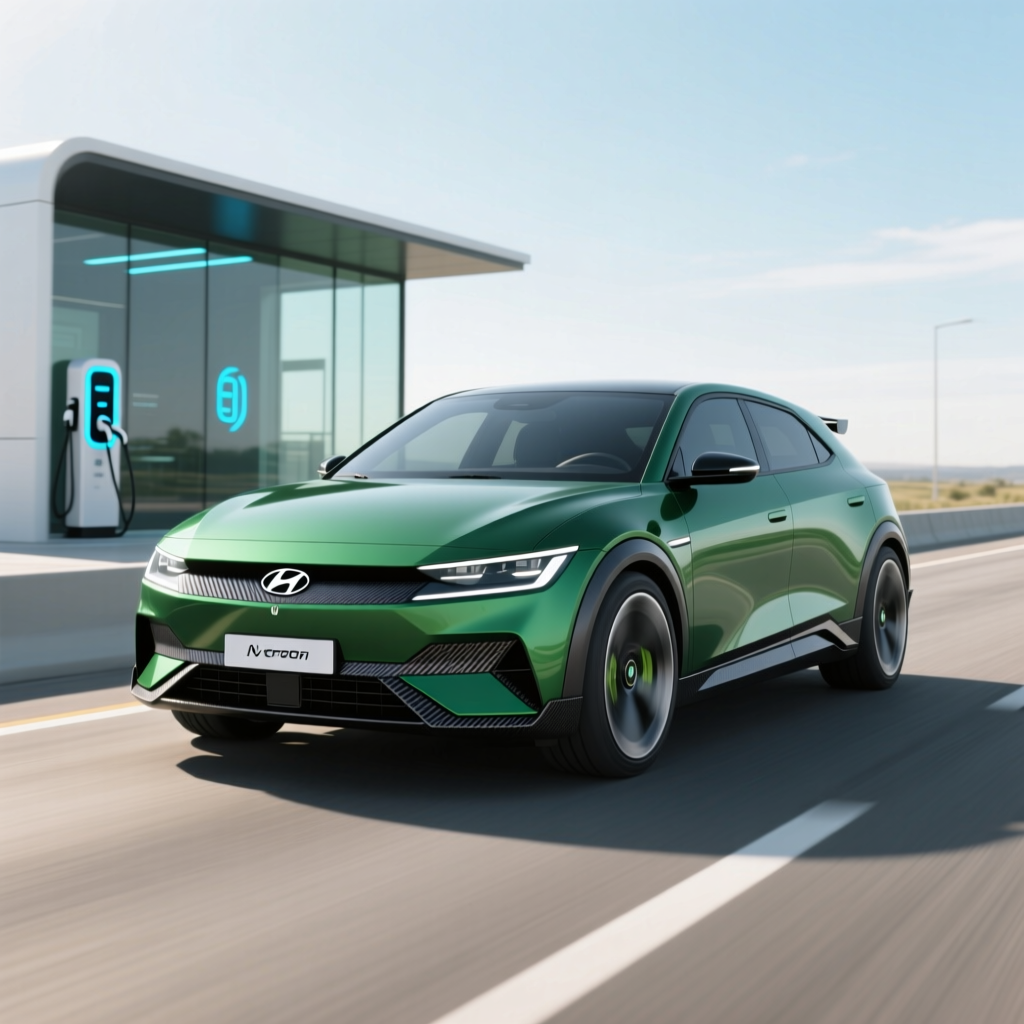
The Hyundai Ioniq 5 N represents a watershed moment for electric performance vehicles. Born from Hyundai's N performance division — the same motorsport-bred team behind the Veloster N and Elantra N — this all-electric hot hatch crossover attempts something ambitious: delivering genuine track-day thrills while remaining a comfortable, practical daily driver. After extensive time behind the wheel in both environments, we can confidently say the Ioniq 5 N doesn't just attempt this balancing act — it nails it.
In this comprehensive review, we break down everything you need to know about Hyundai's flagship performance EV, from its real-world range and charging capabilities to its interior technology, driving dynamics, and long-term ownership costs. Whether you're an enthusiast considering your first electric vehicle or a current EV owner looking for something with more excitement, this deep dive will help you decide if the Ioniq 5 N deserves a spot in your garage.
Vehicle Overview: What Makes the Ioniq 5 N Special
The Hyundai Ioniq 5 N takes the already impressive standard Ioniq 5 platform and injects it with serious performance credentials. Underneath the aggressive body kit and distinctive N-exclusive styling cues lies a dual-motor all-wheel-drive powertrain producing up to 641 horsepower and 569 lb-ft of torque when N Grin Boost is engaged. That's enough to propel this roughly 4,800-pound machine from 0 to 60 mph in approximately 3.4 seconds, according to Car and Driver testing.
But raw numbers only tell part of the story. Hyundai's N division has extensively reworked the chassis, suspension, brakes, and steering to create something that feels genuinely connected to the road — a quality often missing from fast EVs. The Ioniq 5 N features N-tuned adaptive dampers, reinforced body structure, an electronic limited-slip differential, and massive 15.4-inch front brake rotors with four-piston calipers. It also introduces innovative software features like N e-Shift, which simulates the sensation of an eight-speed dual-clutch transmission, and N Active Sound+, which pipes synthetic engine and exhaust notes through the vehicle's speakers.
The result is an EV that engages the driver in ways most electric vehicles simply don't attempt. It competes directly with performance machines like the Tesla Model Y Performance, Porsche Taycan, and BMW i4 M50, while offering a unique personality all its own. For more on how it stacks up, check out our best performance EVs roundup.
Real-World Range & Efficiency
Let's address the elephant in the room: range. The Hyundai Ioniq 5 N carries an 84 kWh battery pack (usable capacity), and the EPA rates it at approximately 221 miles of range on a full charge. That figure may raise eyebrows among range-anxious buyers, but context matters enormously here.
In real-world mixed driving — a combination of highway cruising, city commuting, and spirited back-road runs — we consistently observed between 190 and 215 miles before needing to recharge. Highway driving at sustained speeds above 75 mph naturally reduces that number, while moderate city driving with regenerative braking maximizes it. During a dedicated efficiency test loop at moderate speeds and temperatures, we managed to extract close to the EPA-rated figure, suggesting the rating is reasonably achievable under favorable conditions.
It's worth noting that activating N Grin Boost and driving aggressively will slash range dramatically. During a track session, expect to consume energy at two to three times the normal rate. This is the trade-off for 641 horsepower on demand, and it's one that every performance vehicle buyer — electric or otherwise — must accept.
Compared to the standard Ioniq 5 Long Range, which achieves an EPA-rated 303 miles in its most efficient configuration, the N variant sacrifices roughly 80 miles of range for its performance upgrades, larger wheels, stickier tires, and additional weight. If maximum range is your priority, the Ioniq 5 N may not be the ideal choice, and you'd be better served by exploring options in our best long-range electric vehicles guide.
Charging Speed & Infrastructure
Where the Ioniq 5 N genuinely shines is at the charger. Thanks to its 800-volt electrical architecture — a feature shared with the standard Ioniq 5, the Kia EV6, and the Porsche Taycan — this performance EV supports DC fast charging at rates up to 350 kW on compatible chargers.
In our testing on Electrify America 350 kW stations, the Ioniq 5 N consistently charged from 10 percent to 80 percent in approximately 18 to 20 minutes, closely matching Hyundai's official claims. Peak charging rates exceeded 230 kW in the early portion of the charging curve before tapering as the battery filled. This is among the fastest charging speeds available in any production EV, and it meaningfully reduces the pain of road-trip charging stops.
For home charging, the Ioniq 5 N includes an 11 kW onboard charger, which can replenish the battery from empty to full in roughly 7 to 8 hours on a Level 2, 240-volt home charging station. A standard 120-volt household outlet will add approximately 3 to 4 miles of range per hour — useful for overnight top-ups but not practical as a primary charging method.
The vehicle also supports vehicle-to-load (V2L) functionality, allowing you to power external devices or even supply electricity to your home during an outage using the battery's stored energy. This feature, accessed through an adapter plugged into the exterior charging port or an interior outlet, outputs up to 3.6 kW — enough to run appliances, tools, or camping equipment.
Hyundai's navigation system integrates with the charging network, automatically pre-conditioning the battery when a fast charger is set as your destination. This ensures optimal charging speeds upon arrival, a feature that competing EVs from Tesla and other manufacturers also offer but one that remains essential for maximizing charging performance in varying weather conditions.
Interior, Technology & Daily Comfort
Step inside the Ioniq 5 N, and you're greeted by an interior that balances performance intent with everyday livability. N-specific sport bucket seats with integrated headrests provide excellent lateral support during aggressive driving while remaining comfortable enough for long highway cruises. The seats feature N branding and are trimmed in a combination of leatherette and cloth, with optional Alcantara-style upholstery available.
The dual-screen setup — a 12.3-inch digital instrument cluster paired with a 12.3-inch touchscreen infotainment display — carries over from the standard Ioniq 5 but gains N-specific menus, displays, and functionality. The N app within the infotainment system allows drivers to customize parameters for N e-Shift behavior, N Active Sound+ volume and character, regenerative braking aggressiveness, and individual N Custom drive mode settings.
The infotainment system supports wireless Apple CarPlay and Android Auto, Bluetooth multi-connect for two devices simultaneously, over-the-air software updates, and Hyundai's Digital Key, which lets you use a compatible smartphone or NFC card as a key fob. A head-up display with augmented reality navigation is standard, projecting turn-by-turn directions and speed information directly onto the windshield.
Practicality remains strong despite the performance focus. The Ioniq 5 N offers approximately 53 cubic feet of cargo space with the rear seats folded and roughly 24 cubic feet behind the second row. The flat floor and wide hatch opening make loading bulky items straightforward. A small front trunk (frunk) provides additional storage for charging cables or a small bag, though it's notably smaller than what some competitors offer.
Rear-seat passengers enjoy generous legroom thanks to the Ioniq 5's long wheelbase, and the flat floor means the middle passenger isn't straddling a transmission tunnel. USB-C ports, rear air vents, and available heated rear seats ensure comfort for all occupants. For families evaluating performance EVs, the Ioniq 5 N is notably more practical than alternatives like the Porsche Taycan — see our best electric SUVs for families list for more options.
Driving Dynamics: Track Performance Meets Daily Drivability
This is where the Ioniq 5 N separates itself from virtually every other electric vehicle on the market. On a racetrack, the N's engineering depth becomes immediately apparent. The chassis communicates through the steering wheel and seat in a way that inspires confidence, allowing drivers to push harder with each lap. The electronically controlled suspension adapts in real time, managing the vehicle's considerable weight with remarkable composure through corners, over curbs, and under heavy braking.
The N-tuned all-wheel-drive system can vary torque distribution between the front and rear axles and even simulate a rear-wheel-drive bias in N Drift mode. The electronic limited-slip differential manages traction at individual wheels, pulling the car through corners with tenacious grip. The braking system, with its massive rotors and performance pads, delivers consistent, fade-resistant stopping power even after multiple hot laps — a critical advantage over many fast EVs that struggle with brake temperatures on track.
N e-Shift deserves special mention. While purists may scoff at simulated gear shifts in an EV, the execution is remarkably convincing. The system creates tangible torque interruptions and "shift shocks" that mimic the sensation of a dual-clutch transmission, complete with a simulated redline and rev-matched downshifts. Combined with N Active Sound+ — which generates a variety of synthetic powertrain sounds ranging from a turbocharged four-cylinder rumble to a futuristic EV hum — the experience is genuinely immersive and makes the Ioniq 5 N feel more engaging than its spec sheet alone would suggest.
On public roads, the Ioniq 5 N reveals its dual personality. In Normal or Eco mode, the ride is compliant, the powertrain is whisper-quiet, and the car behaves like a well-mannered crossover. The steering lightens, the dampers soften, and you could easily hand the keys to an unsuspecting passenger who'd never guess they were sitting in a 641-horsepower track weapon. This Jekyll-and-Hyde character is precisely what makes the Ioniq 5 N so compelling as a daily driver.
The N Road and N Race modes unlock progressively sharper responses, firming up the steering, stiffening the suspension, and sharpening throttle response. N Custom mode allows drivers to mix and match settings across individual parameters, creating a personalized driving profile that can be saved and recalled with the press of a dedicated N button on the steering wheel.
Ownership Costs & Value
The Hyundai Ioniq 5 N commands a premium over the standard Ioniq 5 lineup, with a starting price that places it firmly in performance EV territory alongside offerings from Tesla, BMW, and Porsche. However, when you examine the total cost of ownership, the value proposition becomes more compelling.
Electric vehicles inherently require less routine maintenance than internal combustion vehicles — no oil changes, no spark plugs, no transmission fluid services, and significantly reduced brake wear thanks to regenerative braking. Hyundai's warranty coverage is among the best in the industry, featuring a 10-year/100,000-mile powertrain warranty and an 8-year/100,000-mile battery warranty. The company also typically includes complimentary maintenance for the first few years of ownership.
Insurance costs for the Ioniq 5 N will be higher than the standard model due to its performance classification and higher replacement costs. We recommend obtaining quotes from multiple insurers before purchasing, as rates vary significantly between providers for performance EVs.
Charging costs will depend on your local electricity rates and driving habits. Home charging at an average rate of $0.14 per kWh yields a cost of approximately $12 to fully charge the 84 kWh battery — equivalent to roughly $0.05 to $0.07 per mile, dramatically less than a comparable gasoline performance vehicle. Public DC fast charging is more expensive, typically ranging from $0.30 to $0.48 per kWh depending on the network and location.
Depreciation remains a wildcard for performance EVs. Early data suggests that high-performance electric vehicles hold their value comparably to their gasoline counterparts, though the rapidly evolving EV market introduces uncertainty. Hyundai's strong warranty and the Ioniq 5 platform's widespread critical acclaim provide some insulation against steep depreciation.
For buyers comparing total costs across performance EVs, our EV tax credits and incentives guide covers available federal, state, and local programs that can significantly reduce the effective purchase price.
Specifications Comparison Table
| Specification | Hyundai Ioniq 5 N | Tesla Model Y Performance | BMW i4 M50 | Porsche Taycan 4S |
|---|---|---|---|---|
| Horsepower (Peak) | 641 hp (N Grin Boost) | 456 hp | 536 hp | 562 hp |
| Torque | 569 lb-ft | 497 lb-ft | 586 lb-ft | 479 lb-ft |
| 0-60 mph | 3.4 seconds | 3.5 seconds | 3.7 seconds | 3.8 seconds |
| EPA Range | 221 miles | 285 miles | 227 miles | 227 miles |
| Battery Capacity (Usable) | 84 kWh | 75 kWh | 81.5 kWh | 79.2 kWh |
| Max DC Fast Charge | 350 kW | 250 kW | 205 kW | 270 kW |
| 10-80% Charge Time | ~18 minutes | ~27 minutes | ~31 minutes | ~23 minutes |
| Drivetrain | AWD | AWD | AWD | AWD |
| Curb Weight | ~4,861 lbs | ~4,398 lbs | ~4,891 lbs | ~4,892 lbs |
| Cargo Space (Behind 2nd Row) | 24 cu ft | 30 cu ft | 16.6 cu ft | 14.3 cu ft |
Pros & Cons
Pros
- Exceptional track capability with genuine motorsport-derived engineering
- Class-leading 350 kW DC fast charging via 800-volt architecture
- Engaging N e-Shift and N Active Sound+ features that enhance driver involvement
- Comfortable and practical enough for everyday use with strong cargo capacity
- Comprehensive warranty coverage and complimentary maintenance
- Extensive customization of driving dynamics through N Custom mode
- Vehicle-to-load (V2L) capability for powering external devices
Cons
- EPA-rated range of 221 miles lags behind many competitors
- Premium pricing places it above the standard Ioniq 5 and several rivals
- Simulated engine sounds and shifts won't appeal to every driver
- Increased tire and brake wear costs compared to non-performance EVs
- Heavier than some competitors, affecting efficiency and agility at lower speeds
- Frunk is smaller than what some rivals in the segment offer
Frequently Asked Questions
Is the Hyundai Ioniq 5 N suitable as a daily driver?
Absolutely. Despite its track-focused engineering, the Ioniq 5 N is remarkably comfortable and practical for daily use. In Normal or Eco drive modes, the ride quality is supple, the cabin is quiet, and the powertrain delivers smooth, predictable acceleration. The generous cargo space, comfortable rear seats, and user-friendly technology make it a perfectly capable commuter and family vehicle. The 221-mile EPA range is sufficient for most daily commutes, and the ultra-fast charging capability means longer trips require only brief stops.
How does the Ioniq 5 N perform on a racetrack compared to gasoline sports cars?
The Ioniq 5 N holds its own against many gasoline-powered sports cars and sedans on a racetrack. Its instant torque delivery, sophisticated all-wheel-drive system, and N-tuned suspension allow it to produce competitive lap times. Independent testing by Motor Trend and other outlets has shown the Ioniq 5 N posting lap times comparable to vehicles like the BMW M3 and Porsche Cayman in certain configurations. The key advantage is consistency — the electric powertrain doesn't suffer from heat soak in the same way turbocharged engines do, though battery temperature management remains a factor during extended track sessions. Hyundai includes a dedicated N battery preconditioning feature to help manage thermals.
What is the real-world range of the Ioniq 5 N in cold weather?
Like all electric vehicles, the Ioniq 5 N experiences reduced range in cold temperatures. In our experience, temperatures below freezing can reduce range by 15 to 30 percent depending on driving conditions, speed, and cabin heating usage. Expect approximately 155 to 185 miles of real-world range in sustained cold-weather highway driving. The heat pump system, which is standard, helps mitigate some of this loss by efficiently heating the cabin without drawing excessive power from the battery. Pre-conditioning the vehicle while it's still plugged in — a feature accessible through Hyundai's BlueLink app — can significantly preserve range by warming the battery and cabin before departure.
Does the Ioniq 5 N qualify for federal EV tax credits?
Eligibility for the federal EV tax credit depends on several factors, including where the vehicle is manufactured, battery component sourcing, and the buyer's tax liability. Because the Ioniq 5 N is manufactured at Hyundai's plant in Georgia, it may qualify for the full federal tax credit under current regulations. However, tax credit rules are subject to change, and individual eligibility varies based on income and tax situation. We recommend consulting the fueleconomy.gov database and speaking with a tax professional to confirm your eligibility. Our comprehensive EV incentives guide also covers state and local programs that may provide additional savings.
How does N e-Shift work, and can it be turned off?
N e-Shift is a software feature that simulates the feel of an eight-speed dual-clutch transmission by creating artificial torque interruptions during acceleration, mimicking the sensation of gear shifts. The system uses the electric motors to momentarily reduce and restore torque, producing a physical jolt that drivers can feel through the seat and steering wheel. Accompanying shift indicators appear on the instrument cluster, and the system simulates engine braking on deceleration with rev-matched downshifts. Yes, N e-Shift can be completely disabled. Drivers who prefer the seamless, single-speed acceleration characteristic of traditional EVs can turn it off through the N menu or by selecting a drive mode that doesn't include it. Many owners report enjoying the feature on spirited drives but disabling it during routine commuting.
Final Verdict
The Hyundai Ioniq 5 N is a landmark vehicle that proves electric cars can be genuinely thrilling to drive without sacrificing daily usability. It isn't the longest-range EV in its class, and its premium pricing requires serious consideration. But for driving enthusiasts who want a car that can deliver adrenaline-pumping track sessions on weekends and comfortable, quiet commutes on weekdays, the Ioniq 5 N is remarkably difficult to beat.
Hyundai's N division has demonstrated that the future of performance driving isn't just electric — it's engaging, customizable, and surprisingly emotional. The Ioniq 5 N doesn't just raise the bar for performance EVs; it redefines what we should expect from them. If you're ready to embrace electric performance without compromise, this is the car that makes the strongest case. Explore our top performance EV picks and best electric SUVs for more options to consider on your EV journey.