Vehicle Overview: Redefining the Performance EV
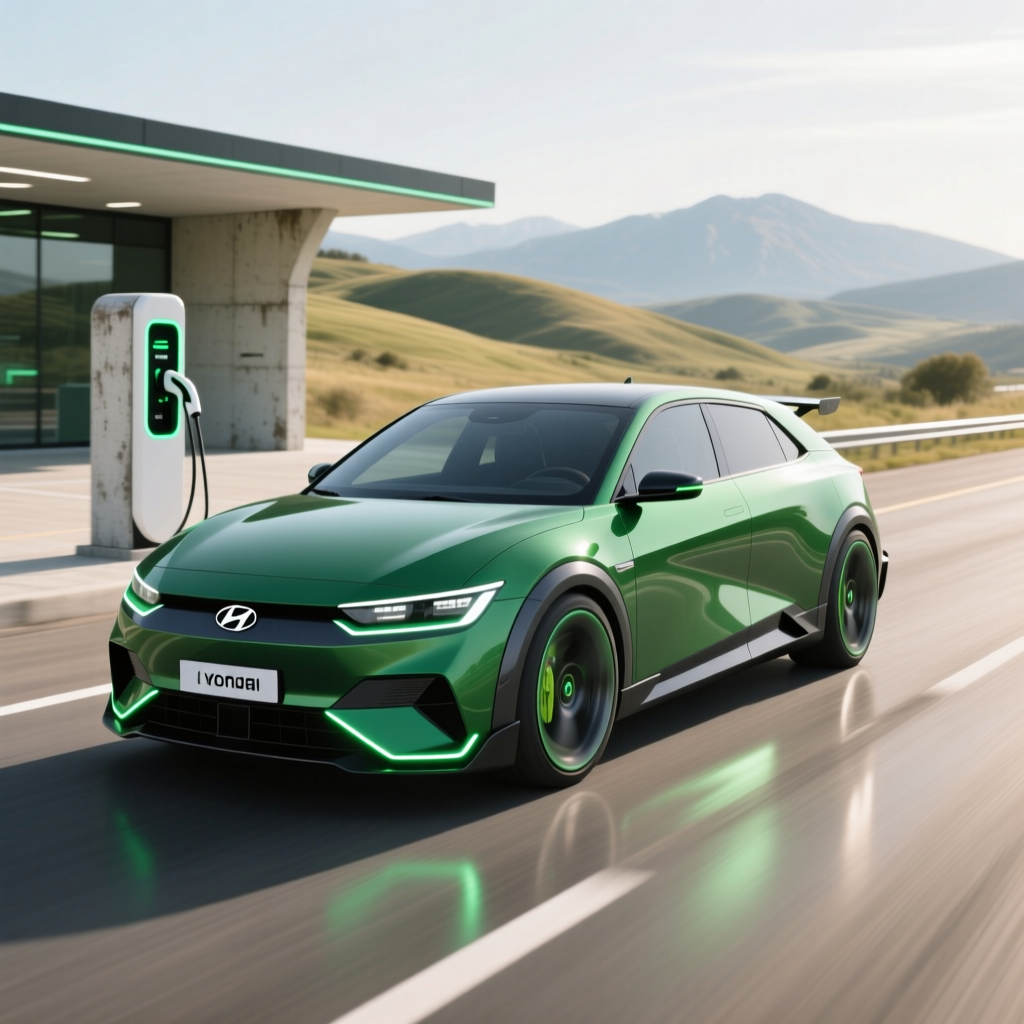
For years, automotive enthusiasts have debated whether an electric vehicle could truly capture the soul of a track-focused sports car. The skepticism was understandable: EVs are notoriously heavy, prone to battery thermal throttling after a single hot lap, and often lack the visceral, auditory feedback that connects a driver to the machine. Enter the Hyundai Ioniq 5 N. Developed by Hyundai’s legendary N performance division, this vehicle is not merely a standard crossover with a software tune and a body kit. It is a ground-up reimagining of what a performance EV can be, bridging the gap between digital efficiency and analog emotion.
The Ioniq 5 N takes the universally acclaimed, retro-futuristic styling of the standard Ioniq 5 and injects it with serious motorsport DNA. Featuring a reinforced chassis, a massively upgraded thermal management system, and innovative software that simulates the shift points of an internal combustion engine, it challenges the status quo. Whether you are looking to shave seconds off your lap time at a local circuit or simply want a thrilling, practical daily driver, this vehicle demands attention. In our comprehensive review, we explore how it fares across real-world range, charging speeds, interior technology, driving dynamics, and long-term ownership costs to see if it truly belongs on our list of the best performance EVs on the market.
Driving Dynamics: Track Prowess Meets Daily Comfort
The driving experience is where the Ioniq 5 N separates itself from every other electric crossover on the road. Power is delivered via a dual-motor all-wheel-drive setup producing a staggering 601 horsepower. However, engaging the N Grin Shift (NGS) button on the steering wheel unlocks an additional 40 horsepower for 10-second bursts, pushing the total output to 641 horsepower and 568 lb-ft of torque. This results in a blistering 0-60 mph time of roughly 3.4 seconds, launching the heavy SUV with the violence of a supercar.
But straight-line speed is the easy part of EV engineering. The true magic lies in the N e-Shift and N Active Sound+ systems. The N e-Shift software simulates an 8-speed dual-clutch transmission, introducing artificial "shift shocks" and holding "RPMs" to give the driver the rhythmic cues necessary to judge weight transfer and cornering speeds. Paired with the N Active Sound+, which projects synthesized engine notes, turbo flutters, and exhaust pops through internal and external speakers, the car provides the sensory feedback that EVs typically lack. You can turn these systems off for a silent, seamless EV experience, but leaving them on transforms the car into an engaging, analog-style sports machine.
On the track, the Ioniq 5 N’s thermal management system is a revelation. While most EVs limp into limp mode after two hard laps, the N utilizes an advanced dual-cooling system for the motors and the battery. The N Battery Preconditioning feature allows drivers to select between "Drag" mode for maximum straight-line acceleration or "Track" mode, which optimizes the battery temperature for sustained lateral G-forces and heavy regenerative braking. The N Torque Distribution system allows drivers to adjust the front-to-rear power split, while the N Drift Optimizer provides dedicated algorithms to sustain controlled oversteer.
Despite its track-focused hardware, the Ioniq 5 N remains remarkably compliant for daily driving. The electronically controlled suspension features N-specific tuning that absorbs highway imperfections with surprising grace when left in Normal mode. The steering is heavy and precise, and the regenerative braking system—capable of pulling up to 0.6G of deceleration before the massive mechanical brake calipers even engage—makes one-pedal driving in traffic effortless. For a deeper dive into how it stacks up against its main rival, check out our Tesla Model 3 Performance vs. Hyundai Ioniq 5 N comparison.
Real-World Range & Battery Efficiency
Performance always comes at a cost to efficiency, and the Ioniq 5 N is no exception. It is equipped with an 84.0 kWh battery pack (slightly larger than the standard model's 77.4 kWh unit to compensate for the increased power draw). According to EPA ratings, the Ioniq 5 N achieves an estimated 221 miles of combined range. While this figure may seem modest compared to the 300+ mile range of standard long-range EVs, it is highly competitive within the high-performance segment where sticky tires and aggressive aerodynamics create massive rolling resistance and drag.
In independent real-world highway testing at sustained speeds of 70 mph, the Ioniq 5 N consistently delivers between 200 and 215 miles of range before requiring a charge. City driving, which benefits heavily from regenerative braking, can push the range closer to the EPA estimate or slightly above, depending on ambient temperatures and climate control usage. The vehicle's heat pump system is highly efficient, ensuring that cabin heating during winter months does not decimate the battery pack as it does in older EV architectures.
It is crucial to note that track driving will severely impact these numbers. During aggressive lapping sessions, the energy consumption can easily exceed 3 miles per kWh, meaning a full battery might only yield 40 to 50 miles of continuous track time. However, this is a universal reality for all performance vehicles, whether they run on electrons or high-octane gasoline. For daily commuting and weekend canyon carving, the 221-mile range is more than sufficient for the vast majority of drivers.
Charging Speed & Infrastructure
Where the Ioniq 5 N easily forgives its slightly reduced range is in its phenomenal charging capabilities. Built on Hyundai Motor Group’s E-GMP platform, the vehicle features an 800-volt electrical architecture. This allows it to accept DC fast charging at rates up to 350 kW when connected to a compatible high-power charger. Under optimal conditions, the battery can charge from 10% to 80% in just 18 minutes, making it one of the fastest-charging EVs on the market.
This rapid charging speed fundamentally changes the road trip experience. A quick stop for a coffee and a restroom break is all that is needed to add 150 miles of range. For those new to the ecosystem, our comprehensive EV charging guide breaks down how to find and utilize these high-speed networks effectively. Furthermore, the N-specific battery preconditioning system doesn't just work for the track; it also optimizes the battery temperature for rapid DC charging when a fast charger is routed in the navigation system, ensuring you hit peak charging curves even in cold weather.
For home charging, the Ioniq 5 N supports Level 2 AC charging at up to 10.9 kW. Using a standard 48-amp home wallbox, a completely depleted battery can be replenished in roughly 7 to 8 hours, easily fitting into an overnight charging routine. The inclusion of the Nectar II vehicle-to-load (V2L) adapter also allows owners to use the car's massive battery to power external electronics, camping gear, or even home appliances during an outage.
Interior, Technology & Driver Focus
Stepping into the cabin of the Ioniq 5 N, you are immediately greeted by an environment that balances futuristic design with hardcore motorsport ergonomics. The standard Ioniq 5's spacious, lounge-like interior has been heavily bolstered. The N Light sport seats feature aggressive side bolsters to hold you in place during high-G cornering, clad in a durable mix of eco-leather and Alcantara. The seats also feature illuminated N logos that change color based on the selected drive mode.
Hyundai made a brilliant decision to retain physical controls for critical performance functions. The N-specific steering wheel features dedicated, tactile red buttons for N Grin Shift, N e-Shift, and N Active Sound+. The center console houses physical toggle switches for drive modes, suspension damping, and steering weight. When you are on a bumpy track surface, fumbling with a touchscreen to stiffen your suspension is dangerous and frustrating; these physical buttons solve that problem entirely.
The dual 12.3-inch panoramic display setup houses the digital instrument cluster and the central infotainment screen. The N-specific software overlay provides real-time telemetry, including battery temperature, motor temps, G-force meters, and lap timers. The infotainment system is snappy, supports wireless Apple CarPlay and Android Auto, and integrates seamlessly with the premium Bose sound system. Despite the roll-cage-inspired rear brace (which replaces the rear parcel shelf to increase chassis rigidity), the cabin remains remarkably practical, offering ample headroom and a generous cargo area typical of the best EV SUVs.
Ownership Costs, Warranty & Maintenance
Purchasing a performance vehicle is only the first step; maintaining it is where the true costs lie. The Ioniq 5 N commands a premium price tag, placing it in the territory of luxury sports sedans. However, when compared to internal combustion track cars like the BMW M3 or Mercedes-AMG C63, the day-to-day running costs of the Hyundai are significantly lower. Electricity is vastly cheaper than premium fuel, and the regenerative braking system drastically extends the life of the mechanical brake pads and rotors.
The most significant recurring expense for Ioniq 5 N owners will be tires. The vehicle comes wrapped in bespoke, high-performance summer tires (such as the Pirelli P Zero Trofeo R or N-specific Hankook Ventus S1 evo3) designed to handle the immense torque and heavy curb weight. These tires are expensive and will wear quickly if subjected to regular track abuse or aggressive canyon driving. Owners looking to maximize daily driving longevity may opt for high-performance all-season alternatives, though this will slightly compromise ultimate track grip.
Hyundai sweetens the deal with one of the best warranty packages in the industry. The vehicle is backed by a 5-year/60,000-mile limited warranty and a 10-year/100,000-mile powertrain and battery warranty. This extensive coverage provides immense peace of mind, especially concerning the long-term degradation of the high-output battery pack and dual electric motors. Routine maintenance is minimal, generally limited to cabin air filters, brake fluid checks, and tire rotations.
Pros & Cons
Pros:
- Class-leading thermal management allows for sustained track lapping without severe power degradation.
- Innovative N e-Shift and Active Sound+ systems successfully replicate the engagement of an ICE sports car.
- Ultra-fast 800V DC charging architecture (10-80% in 18 minutes).
- Physical buttons for critical track and drive-mode adjustments.
- Exceptional daily driving comfort and hatchback practicality.
- Industry-leading 10-year/100,000-mile battery and powertrain warranty.
Cons:
- Real-world range is lower than standard EVs, capping around 221 miles EPA.
- High curb weight is noticeable during rapid directional transitions.
- Premium performance tires are expensive and wear quickly under hard use.
- The rear chassis brace eliminates the rear parcel shelf and reduces rearward visibility slightly.
- Simulated engine sounds and shift shocks may not appeal to EV purists seeking a seamless experience.
Key Specifications Comparison Table
| Specification | Hyundai Ioniq 5 N | Tesla Model 3 Performance | Porsche Taycan GTS |
|---|---|---|---|
| Powertrain | Dual Motor AWD | Dual Motor AWD | Dual Motor AWD |
| Horsepower | 641 hp (w/ NGS) | 510 hp | 590 hp |
| Torque | 568 lb-ft | 546 lb-ft | 590 lb-ft |
| 0-60 mph | 3.4 seconds | 2.9 seconds | 3.5 seconds |
| Battery Capacity | 84.0 kWh | 79.0 kWh | 93.4 kWh (Gross) |
| EPA Range | 221 miles | 315 miles | 246 miles |
| Max DC Charging | 350 kW (800V) | 250 kW | 270 kW (800V) |
| Curb Weight | ~4,861 lbs | ~4,065 lbs | ~5,000 lbs |
Frequently Asked Questions
Can the Ioniq 5 N handle multiple track sessions without overheating?
Yes, this is one of the vehicle's most impressive engineering feats. Hyundai equipped the Ioniq 5 N with an oversized, multi-loop cooling system specifically designed for the battery, front motor, and rear motor. When utilizing the N Battery Preconditioning "Track" mode, the car actively manages thermal loads to prevent the severe power throttling that plagues most other performance EVs. While it will eventually get hot after extended, professional-level lapping, it is fully capable of handling multiple amateur track day sessions with proper cool-down laps.
Is the simulated engine noise and fake shifting annoying for daily driving?
Beauty is in the eye (and ear) of the beholder, but Hyundai has made these systems entirely customizable. The N Active Sound+ offers different profiles, including an "Evolution" sound that mimics a futuristic turbine, or a traditional combustion engine roar. If you prefer the silent, seamless torque delivery that EVs are naturally known for, you can completely disable the sound and the N e-Shift simulated gears with the press of a button, returning the car to a standard, quiet electric crossover.
How does the Ioniq 5 N compare to the Tesla Model 3 Performance?
The Tesla Model 3 Performance is lighter, more aerodynamic, offers significantly more EPA range, and is slightly quicker in a straight line. However, the Ioniq 5 N is built with a much heavier focus on track durability, driver engagement, and chassis feedback. The Tesla is an exceptional point-and-shoot daily driver, while the Hyundai is a dedicated enthusiast machine that happens to be practical. For a complete breakdown, read our dedicated Tesla Model 3 Performance vs. Hyundai Ioniq 5 N comparison.
What is the real-world range when driving aggressively?
Electric vehicle range is highly dependent on driving style. During aggressive canyon carving or track lapping, energy consumption skyrockets. On a closed circuit, you can expect to consume roughly 3 to 4 miles per kWh, meaning a full charge might only last 40 to 50 miles of hard driving. On public roads with spirited driving, expect the range to drop to roughly 150-170 miles before needing to seek out a charger.
Does the Ioniq 5 N qualify for EV tax credits and incentives?
Eligibility for federal and state EV tax credits is subject to changing legislation, battery sourcing requirements, and MSRP caps. Because the Ioniq 5 N is a high-performance variant with a premium price tag, it frequently pushes against the upper limits of MSRP caps set by federal incentive programs. Furthermore, its manufacturing origin plays a role in eligibility. Buyers should always consult the latest official government tax incentive databases and speak with a local tax professional to determine current qualification status at the time of purchase.