Quick Verdict: The Sporty Middle Ground
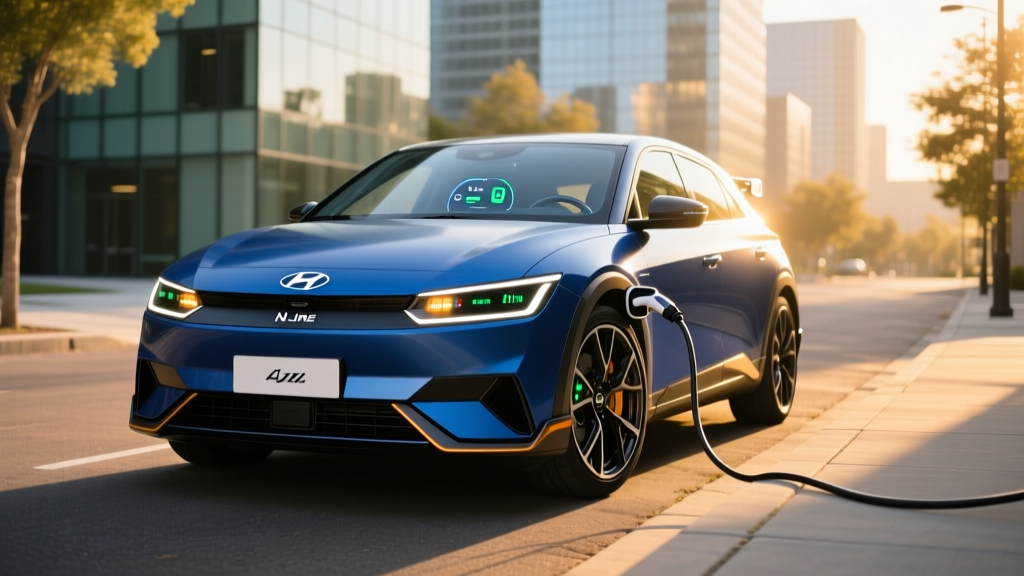
The 2026 Hyundai Ioniq 5 N Line occupies a specific niche: buyers who want the aggressive styling and chassis tuning of the track-focused Ioniq 5 N but need more daily-driver practicality and a lower price of entry. With a revised 84.0 kWh (usable) NMC battery, an EPA-estimated 290 miles of range on the AWD variant, and a peak DC fast-charge rate of 250 kW, the N Line threads the needle between the standard Ioniq 5 Limited and the 641-hp Ioniq 5 N. It starts at $54,900 before destination, and while it misses the full $7,500 federal tax credit under current IRS §30D sourcing rules, it remains one of the most complete sport-crossover EVs on the market.
After spending time with the N Line on both highway road trips and daily commuting loops, the takeaway is clear: this is the Ioniq 5 for drivers who prioritize engagement over maximum range. You sacrifice roughly 20 miles of EPA range versus the standard Long Range AWD model, but you gain a sport-tuned suspension, N-specific steering calibration, larger brakes, and the visual drama of the N Line body kit. Let's break down every number that matters.
Range, Battery & Real-World Efficiency
| Spec | 2026 Ioniq 5 N Line AWD |
|---|---|
| EPA Range | 290 miles |
| Battery (usable) | 84.0 kWh, NMC (Nickel Manganese Cobalt) |
| EPA Efficiency | 98 MPGe combined / 34 kWh/100 mi |
| Drivetrain | Dual-motor AWD |
| Horsepower | 320 hp (combined) |
| Torque | 446 lb-ft |
| 0–60 mph | 5.0 seconds |
| Heat Pump | Standard |
The EPA rates the Ioniq 5 N Line AWD at 290 miles. In mixed driving at 65–70 mph in moderate temperatures (55–75°F), expect roughly 255–270 miles before needing to charge. On a pure highway run at 75 mph, plan for 235–250 miles. In cold weather (below 30°F), range drops to approximately 210–235 miles depending on cabin heating use — the standard heat pump helps, but physics is physics. City-heavy driving with regenerative braking set to Level 3 can push you close to or slightly above the 290-mile sticker.
Hyundai uses an NMC (nickel manganese cobalt) cell chemistry in the Ioniq 5 N Line, which provides higher energy density than LFP alternatives — critical for fitting 84.0 kWh of usable capacity beneath the floor without raising ride height. The trade-off versus LFP is slightly more degradation sensitivity at extreme states of charge, so Hyundai recommends keeping daily charging between 20% and 80% for long-term battery health. The full 100% charge is best reserved for road trips.
According to fueleconomy.gov, the combined efficiency of 34 kWh per 100 miles is competitive with the Kia EV6 GT-Line AWD (33 kWh/100 mi) but trails the Tesla Model Y Long Range (28 kWh/100 mi) due to the Hyundai's boxier aero profile and heavier curb weight of roughly 4,600 lbs.
Charging Speed: DC Fast, Level 2 & the 800V Advantage
| Charging Level | Power / Rate | Speed / Notes |
|---|---|---|
| DC Fast Charge (peak) | 250 kW | 10–80% in ~18 minutes (optimal conditions) |
| DC Fast Charge (sustained avg.) | ~175 kW avg to 80% | Curve tapers sharply above 80% |
| Level 2 (240V / 48A) | 10.9 kW | ~32 miles of range per hour; 0–100% in ~8.5 hrs |
| Level 1 (120V / 12A) | 1.4 kW | ~4 miles per hour — emergency/trickle only |
The Ioniq 5's 800V electrical architecture remains one of its strongest technical advantages. On a 350 kW-capable DC fast charger (such as Electrify America's latest stalls), the N Line peaks at 250 kW and sustains above 200 kW up to roughly 55% state of charge before tapering. The 10–80% sprint takes approximately 18 minutes when the battery is preconditioned — meaning you've navigated to the charger using the car's built-in route planner, which warms the battery to optimal temperature.
Without preconditioning (for instance, pulling into a charger cold on a winter day), expect 10–80% times closer to 25–30 minutes as the battery management system limits charge rate to protect the cells. This is standard behavior for all EVs but worth planning for on road trips.
Above 80% SoC, the charge curve drops dramatically — from roughly 150 kW at 80% to under 50 kW by 90%. If you're road-tripping, the smart move is to charge to 80% and drive. Only charge past 80% at your overnight stop or destination.
For home charging, the onboard 10.9 kW charger means a Level 2 wall connector on a 60-amp circuit (48-amp continuous) will add roughly 32 miles of range per hour, fully replenishing the 84 kWh battery in about 8.5 hours. Most N Line owners will plug in overnight and wake up to a full charge every morning.
Performance & Driving Dynamics
The N Line's dual-motor AWD powertrain produces 320 horsepower and 446 lb-ft of torque, launching the car from 0–60 mph in 5.0 seconds. That's a meaningful step up from the standard Ioniq 5 AWD (5.1 seconds with 320 hp on the Long Range) and a world apart from the RWD base model's 7.4-second run. However, it's deliberately dialed back from the full Ioniq 5 N's 641 hp (with N Grin Boost) and 3.25-second 0–60.
Where the N Line truly differentiates itself from the standard Ioniq 5 is in the chassis. Hyundai's N division retuned the electronically controlled suspension with firmer damping, added a strut brace for improved front-end rigidity, and recalibrated the electric power steering for a quicker ratio and more feedback. The result is noticeably flatter cornering and more confidence on twisty back roads. The 20-inch N-specific alloy wheels wrapped in Pirelli P Zero summer tires (all-seasons available as a no-cost option) provide strong mechanical grip.
Braking duties are handled by larger front rotors compared to the standard Ioniq 5, though they're not the carbon-ceramic units found on the full Ioniq 5 N. Regen braking offers four levels adjustable via steering-wheel paddles, with Level 3 providing strong one-pedal-driving capability in most city scenarios. i-PEDAL mode brings the car to a complete stop without touching the brake pedal.
Interior, Tech & Cargo Space
The N Line's cabin borrows heavily from the standard Ioniq 5 Limited trim but adds N-specific touches: sport bucket front seats with N badging and enhanced bolstering, an N-branded heated steering wheel, aluminum pedals, and dark metal interior trim. The dual 12.3-inch display setup (instrument cluster + infotainment) runs Hyundai's latest ccNC (Connected Car Navigation Cockpit) software with wireless Apple CarPlay and Android Auto, over-the-air updates, and a digital key via smartphone.
On the driver-assistance front, the N Line comes standard with Hyundai SmartSense, which includes:
- Highway Driving Assist 2 (HDA-2) — adaptive cruise with lane centering and lane-change assist (SAE Level 2)
- Forward Collision-Avoidance Assist with pedestrian/cyclist detection
- Blind-Spot Collision-Avoidance Assist
- Rear Cross-Traffic Collision-Avoidance Assist
- Navigation-based Smart Cruise Control with stop-and-go
Cargo and passenger space remain identical to the standard Ioniq 5, which is one of the roomiest vehicles in its class thanks to the E-GMP platform's flat floor and long 118.1-inch wheelbase:
- Rear cargo (behind 2nd row): 27.2 cu ft
- Cargo (2nd row folded): 59.3 cu ft
- Front trunk (frunk): 0.85 cu ft (AWD models — enough for the charging cable, not much else)
- Rear legroom: 39.4 inches
- Front headroom: 39.6 inches
The frunk is the Ioniq 5's weakest practicality point. AWD models lose most of the front storage to drivetrain components, leaving a small compartment that's best used for the mobile charging cord and a tire-inflation kit. Competitors like the Ford Mustang Mach-E (4.7 cu ft frunk) and Rivian R1S offer substantially more front cargo space.
Pricing, Trims & Federal Tax Credit Eligibility
| Trim | MSRP (excl. destination) | Est. After §30D Credit* |
|---|---|---|
| N Line AWD | $54,900 | $51,150 (est. $3,750 credit) |
| N Line AWD w/ Ultimate Pkg | $58,400 | $54,650 (est. $3,750 credit) |
*Federal tax credit estimates are based on current IRS §30D rules for the 2026 tax year. The Ioniq 5 N Line qualifies for $3,750 of the potential $7,500 credit — it meets the critical-minerals requirement but does not fully satisfy the battery-component sourcing threshold for the additional $3,750. Always verify eligibility at irs.gov or with a tax professional before purchasing.
Additional §30D requirements you must meet:
- Buyer income cap: Modified AGI must not exceed $150,000 (single), $225,000 (head of household), or $300,000 (joint) — per IRS guidelines.
- MSRP cap: SUVs/vans/pickups are capped at $80,000 MSRP; sedans at $55,000. The Ioniq 5 is classified as an SUV, so the $80,000 cap applies — all N Line trims clear this easily.
- Point-of-sale transfer: As of 2024, you can transfer the credit to the dealer at purchase, reducing your out-of-pocket cost immediately rather than waiting to claim it on your tax return.
- Vehicle assembly: The Ioniq 5 sold in the US for 2026 is assembled at Hyundai's Metaplant in Ellabell, Georgia, satisfying the North American final-assembly requirement.
The Ultimate Package ($3,500) adds a panoramic sunroof, ventilated rear seats, a premium Head-Up Display with augmented-reality navigation, Digital Side Mirrors (camera-based), and a hands-free power liftgate. It's a worthwhile upgrade for buyers in hot climates (ventilated rear seats) or those who want the tech showcase, but it's not essential.
Pros, Cons & Ownership Costs
- 800V architecture enables best-in-class 18-min 10–80% DC charging
- Spacious rear seat (39.4" legroom) with flat floor
- N-tuned suspension delivers genuine sport-crossover handling
- Standard heat pump for better cold-weather range preservation
- 10-year/100,000-mile powertrain & battery warranty
- Vehicle-to-load (V2L) adapter included — power devices from the car
- Tiny 0.85 cu ft frunk on AWD models
- Only partial $3,750 federal tax credit (not the full $7,500)
- 20-inch summer tires reduce cold/wet-weather confidence vs all-seasons
- HDA-2 requires hands on wheel — no hands-off highway driving
- Rear wiper absent (common Ioniq 5 complaint in rain/snow)
- Infotainment can be slow to respond vs Tesla/Rivian interfaces
Warranty coverage is a Hyundai hallmark. The Ioniq 5 N Line includes:
- Battery & Powertrain: 10 years / 100,000 miles (capacity retention threshold: 70% — if the battery degrades below 70% of original capacity within the warranty period, Hyundai will repair or replace it)
- New Vehicle Limited: 5 years / 60,000 miles
- Anti-Perforation: 7 years / unlimited miles
- Roadside Assistance: 5 years / unlimited miles
The 10-year/100,000-mile battery warranty is among the best in the industry, matching Kia and exceeding Tesla's 8-year/120,000-mile (Model Y) and Ford's 8-year/100,000-mile coverage. For buyers concerned about long-term battery degradation, this warranty provides substantial peace of mind.
Who Should Buy the Ioniq 5 N Line?
- You want sporty handling and aggressive styling without paying the $67,500+ Ioniq 5 N price
- Ultra-fast DC charging (800V / 250 kW) is a priority for road trips
- You need a roomy rear seat for kids or passengers (39.4" legroom)
- You value a 10-year battery warranty and Hyundai's dealer network
- Maximum range is your top priority — the RWD Ioniq 5 SEL (318 mi EPA) or Tesla Model Y Long Range (330+ mi) go farther
- You need hands-off highway driving — consider the Ford Mustang Mach-E with BlueCruise or GM vehicles with Super Cruise
- Frunk space matters — the Rivian R1S or Ford F-150 Lightning offer far more front cargo
- You want the full $7,500 tax credit — check the Chevrolet Blazer EV or VW ID.4 for full credit eligibility
Frequently Asked Questions
What is the real-world range of the 2026 Hyundai Ioniq 5 N Line?
The EPA estimates 290 miles for the AWD N Line. In real-world mixed driving at moderate temperatures, expect 255–270 miles. Highway-only driving at 75 mph yields roughly 235–250 miles, and cold weather (below 30°F) can reduce range to 210–235 miles. The standard heat pump helps mitigate cold-weather losses but cannot eliminate them entirely.
How fast does the Ioniq 5 N Line charge at home and on the road?
On a 350 kW DC fast charger with battery preconditioning, the N Line peaks at 250 kW and charges from 10–80% in approximately 18 minutes. At home on a Level 2 (240V, 48A) charger, it draws up to 10.9 kW, adding about 32 miles of range per hour and fully charging in roughly 8.5 hours.
Does the 2026 Ioniq 5 N Line qualify for the federal EV tax credit?
Yes, but only partially. Under current IRS §30D rules, the Ioniq 5 N Line qualifies for $3,750 of the potential $7,500 credit. It meets the critical-minerals sourcing requirement but does not fully meet the battery-component requirement for the second $3,750. Eligibility also depends on your income (caps at $150K single / $300K joint) and the vehicle's MSRP (under the $80K SUV cap). The credit can be transferred to the dealer at point of sale. Verify current rules at irs.gov.
Is the Ioniq 5 N Line worth buying over the standard Ioniq 5 or the full Ioniq 5 N?
It depends on your priorities. The standard Ioniq 5 Long Range AWD ($50,900) gives you ~10 more miles of EPA range and saves $4,000, but lacks the N Line's sport suspension, larger brakes, and visual upgrades. The full Ioniq 5 N ($67,500) delivers 641 hp and track capability but sacrifices ~50 miles of range and costs $12,600 more. The N Line is the practical enthusiast's compromise — sporty enough to be fun, practical enough to daily-drive.
What is the battery warranty on the Ioniq 5 N Line?
Hyundai covers the high-voltage battery and electric powertrain for 10 years or 100,000 miles, whichever comes first. If the battery's state of health drops below 70% of its original capacity within that period, Hyundai will repair or replace it. This is one of the longest EV battery warranties available in the US market.
Can the Ioniq 5 N Line tow?
Yes. When properly equipped with the factory towing package, the AWD Ioniq 5 N Line is rated to tow up to 2,300 pounds — enough for a small utility trailer, a pair of dirt bikes, or a lightweight teardrop camper. Towing will reduce range significantly; plan on 150–180 miles of effective range when towing at highway speeds.