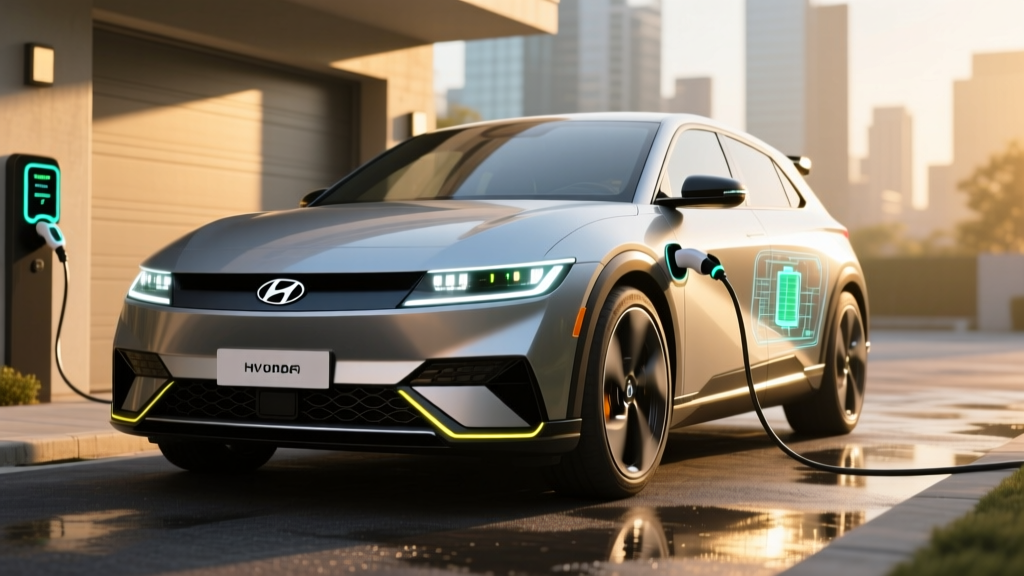
The Ioniq 5 N Puts 641 Horsepower to the Pavement — But at What Cost?
The Hyundai Ioniq 5 N is the performance halo of Hyundai's N division, and it doesn't whisper its intentions. With 641 horsepower in N Grin Boost mode and a 0-60 mph time of 3.25 seconds, it's one of the quickest SUVs on the road — electric or otherwise. But this isn't just a spec-sheet monster. The Ioniq 5 N pairs its brutal acceleration with an 800-volt architecture that enables some of the fastest DC charging in its class, plus a track-oriented thermal management system that lets you push hard without immediate derating.
The trade-off is range and price. At 221 miles EPA, the Ioniq 5 N gives up roughly 80 miles compared to a standard Ioniq 5 Long Range AWD, and its $67,695 starting MSRP puts it squarely in Porsche Macan Electric and Tesla Model Y Performance territory. This review breaks down exactly what you get for the money — the real-world range, charging speeds, ownership costs, and whether the horsepower justifies the compromises.
Spec Snapshot: Ioniq 5 N by the Numbers
| Spec | Value |
|---|---|
| Horsepower (N Grin Boost) | 641 hp / 568 lb-ft torque |
| Horsepower (Standard) | 601 hp |
| 0-60 mph | 3.25 seconds (N Grin Boost) |
| Top Speed | 161 mph (electronically limited) |
| Drivetrain | Dual-motor AWD |
| Battery (usable) | 84.0 kWh, NMC lithium-ion |
| EPA Range | 221 miles |
| MPGe (combined) | 84 MPGe |
| Max DC Fast Charge | 240 kW peak (800V architecture) |
| 10-80% DC Charge Time | ~18 minutes (preconditioned) |
| Level 2 Charge Rate | 10.9 kW (~37 miles/hr) |
| Base MSRP | $67,695 (including destination) |
| Federal Tax Credit (§30D) | Not eligible (MSRP cap + sourcing) |
| Battery/Powertrain Warranty | 10 years / 100,000 miles |
| Cargo Volume (rear seats up) | 27.2 cu ft |
| Cargo Volume (rear seats folded) | 59.3 cu ft |
Real-World Range: What 221 EPA Miles Actually Means
EPA combined range: 221 miles
Real-world highway (70-75 mph, moderate temps): ~175-190 miles
Real-world mixed driving (city/highway, 65°F): ~195-210 miles
Cold weather (below 32°F, highway): ~145-165 miles
Track use (sustained high-load): Significantly reduced; plan for pit stops
The Ioniq 5 N's 221-mile EPA figure already signals that this isn't a road-trip champion, but real-world conditions pull that number down further. The dual-motor AWD system, sticky Pirelli P Zero tires (275/35R21), and aggressive performance tuning all work against efficiency. At sustained highway speeds of 70-75 mph, expect roughly 175-190 miles before you're hunting for a charger — the aerodynamic drag of the N-specific body kit and 21-inch wheels compounds at higher speeds.
Cold weather hits the NMC battery particularly hard. Without a dedicated heat pump standard on all trims in every market, battery preconditioning becomes essential. In sub-freezing conditions, plan for 145-165 miles of usable range on the highway. The 800-volt architecture does precondition the battery effectively when you navigate to a DC fast charger, but you'll want to use that feature proactively rather than arriving at a charger cold.
For daily commuting under 80 miles round-trip with home charging, the range is perfectly adequate. For road trips exceeding 200 miles between charging stops, you'll need to plan carefully — and accept that the Ioniq 5 N prioritizes thrills over distance.
Charging Speed: 800V Architecture Delivers
This is where the Ioniq 5 N earns back some practicality points. Hyundai's E-GMP platform with 800-volt architecture enables peak DC charging rates that rival the Porsche Taycan and outpace most competitors in this price range.
| Charging Level | Power | Speed (Approx.) | Use Case |
|---|---|---|---|
| Level 1 (120V household) | 1.4 kW | ~5 miles/hr | Emergency/trickle only |
| Level 2 (240V home) | 10.9 kW | ~37 miles/hr | Overnight home charging (~6-7 hrs 10-100%) |
| DC Fast Charge (peak) | 240 kW | 10-80% in ~18 min | Highway road trips (350 kW-capable stations) |
| DC Fast Charge (50 kW station) | 50 kW | 10-80% in ~70 min | Older public chargers |
The headline number — 240 kW peak — is only achievable at DC fast chargers capable of delivering 350 kW or more (Electrify America, select EVgo and Tesla Supercharger locations with NACS adapter). The charging curve is aggressive in the early stages: from 10% to roughly 55% SoC, the Ioniq 5 N sustains above 200 kW before tapering. The 10-80% time of approximately 18 minutes assumes you've preconditioned the battery by setting the charger as your navigation destination.
Above 80% SoC, charging slows dramatically to protect the NMC cells — expect 80-100% to take an additional 20+ minutes. For road trips, the practical strategy is to charge to 80% and move on, which aligns well with typical rest-stop timing.
At home on a Level 2 charger (10.9 kW), a full charge from 10% takes roughly 6-7 hours, making overnight charging straightforward. Note that the Ioniq 5 N uses the NACS (Tesla-style) connector as of the 2025 model year, meaning native access to Tesla Supercharger stalls — a significant infrastructure advantage for road tripping.
Performance Deep Dive: What 641 Horsepower Feels Like
The dual-motor setup produces 601 hp in standard driving mode, but engaging N Grin Boost unlocks the full 641 hp and 568 lb-ft of torque for 10-second bursts. The result is a 3.25-second 0-60 mph sprint that puts the Ioniq 5 N in supercar territory — faster than a base Porsche 911 Carrera to 60.
But straight-line speed is only part of the N story. Hyundai's N division engineered this vehicle with track use in mind:
- N Torque Distribution: Adjustable front/rear torque split (up to 100% rear) for drift-ready handling
- N Battery Preconditioning: Pre-heats or cools the battery pack before track sessions to delay thermal derating
- N Drift Optimizer: Software-controlled slip angle management for controlled oversteer
- Simulated 8-speed DCT: N e-Shift mimics gear changes with torque interruptions — controversial but engaging for enthusiasts
- Active Sound Design (N Sound+): Synthesized engine and turbo sounds through interior and exterior speakers
- Track-tuned suspension: N-specific dampers, stiffer bushings, reinforced subframe
- Braking: 4-piston front calipers with 400mm rotors; integrated regenerative braking with adjustable levels
The thermal management system is genuinely impressive for a production EV. Hyundai claims the Ioniq 5 N can complete two laps of the Nürburgring Nordschleife before significant power derating — a claim that independent testing has largely validated. The 84.0 kWh NMC battery is liquid-cooled with a dedicated high-flow circuit, and the N Battery Preconditioning feature is essential for extracting maximum performance.
On public roads, the 641 hp is absurdly more than necessary, but the instant torque delivery and AWD grip make it accessible. The e-Shift and sound synthesis are polarizing — some enthusiasts find them gimmicky, others appreciate the engagement they add to an otherwise silent powertrain. Either way, they can be disabled.
Pricing, Tax Credits, and Total Cost
| Item | Amount |
|---|---|
| Base MSRP (single trim) | $67,695 |
| Destination charge | Included |
| Available options (N Matte Paint, etc.) | $0 - $2,500 |
| Federal §30D Tax Credit | $0 (exceeds MSRP cap; sourcing ineligible) |
| Estimated as-tested price | $67,695 - $70,195 |
The Ioniq 5 N comes in a single, fully-loaded trim at $67,695 (destination included). There are no major option packages — the only variable is paint color, with the N-exclusive Matte Gravity Gold adding roughly $2,500.
Federal tax credit eligibility: The Ioniq 5 N does not qualify for the $7,500 federal EV tax credit under IRS §30D rules. Two factors disqualify it:
- MSRP cap: The §30D credit limits SUVs to a $80,000 MSRP cap, which the Ioniq 5 N clears, but the vehicle's battery sourcing and critical mineral requirements are not met under current rules.
- Battery sourcing: The NMC battery cells (manufactured by SK On) do not currently satisfy the critical minerals and battery component sourcing thresholds that tightened through 2025-2026.
Buyers with state-level incentives may find partial relief — states like California, Colorado, and Massachusetts offer additional rebates that may apply, though amounts and eligibility vary. Check your state's energy office for current programs.
Ownership cost context: Insurance for the Ioniq 5 N runs significantly higher than a standard Ioniq 5 — expect $2,400-$3,600 annually depending on your profile, driven by the high horsepower classification and repair costs for N-specific body panels and 21-inch wheels. Hyundai's 10-year/100,000-mile battery and powertrain warranty provides long-term peace of mind, and the battery is expected to retain roughly 85-90% of its capacity after 100,000 miles based on Hyundai's NMC cell degradation data.
Interior, Tech, and Daily Livability
The Ioniq 5 N's cabin balances track function with daily comfort. N-specific sport bucket seats with integrated headrests and heavy bolstering hold you firmly during hard cornering, though they sacrifice some long-distance comfort compared to the standard Ioniq 5's more relaxed chairs. The seats are trimmed in a leather/Alcantara mix with N-logo stitching.
Space and cargo:
- Front legroom: 41.7 inches
- Rear legroom: 39.4 inches (slightly reduced vs. standard Ioniq 5 due to seat padding)
- Cargo behind rear seats: 27.2 cu ft
- Cargo with rear seats folded: 59.3 cu ft
- Frunk (front trunk): 0.85 cu ft (minimal — houses 12V battery and electronics)
Infotainment: A dual 12.3-inch display setup (instrument cluster + infotainment) runs Hyundai's latest software with wireless Apple CarPlay and Android Auto. N-specific screens include lap timers, G-force meters, battery temperature monitoring, and torque distribution displays. The head-up display projects speed, navigation, and N-mode alerts.
Driver assistance (SAE Level 2): Hyundai SmartSense includes adaptive cruise control with stop-and-go, lane-keeping assist, blind-spot monitoring, rear cross-traffic collision avoidance, and highway driving assist. These are Level 2 systems requiring active driver supervision — not autonomous driving.
Notable drawbacks:
- Ride quality is firm — the N-tuned suspension transmits road imperfections noticeably more than the standard Ioniq 5
- Tire replacement costs are steep: Pirelli P Zero 275/35R21 tires run $350-$450 each
- Rear visibility is compromised by the N-specific roof spoiler and thick C-pillars
- No frunk to speak of — the 0.85 cu ft space is essentially unusable for cargo
- The simulated engine sound and e-Shift, while toggleable, won't appeal to EV purists seeking a silent, seamless experience
How the Ioniq 5 N Stacks Up Against Competitors
| Spec | Hyundai Ioniq 5 N | Tesla Model Y Performance | Porsche Macan 4 Electric | BMW iX M60 |
|---|---|---|---|---|
| Horsepower | 641 hp | 510 hp | 402 hp | 610 hp |
| 0-60 mph | 3.25 sec | 3.5 sec | 4.9 sec | 3.6 sec |
| EPA Range | 221 mi | 285 mi | 307 mi | 296 mi |
| Max DC Charge | 240 kW | 250 kW | 270 kW | 195 kW |
| 10-80% Time | ~18 min | ~20 min | ~21 min | ~31 min |
| Base MSRP | $67,695 | $53,490 | $80,950 | $87,250 |
| Tax Credit (§30D) | Not eligible | Eligible (verify sourcing) | Not eligible | Not eligible |
The Ioniq 5 N occupies a unique position: it's the most powerful vehicle in this comparison by a wide margin, charges faster than all but the Macan, and costs significantly less than the Porsche and BMW. However, it gives up 60-85 miles of range to every competitor listed, and the Tesla Model Y Performance offers similar (if slightly slower) acceleration for $14,000 less while qualifying for the federal tax credit.
The Ioniq 5 N's advantage is its track-focused engineering. No competitor here offers simulated gear shifts, adjustable torque distribution for drifting, or the same level of thermal management for sustained high-load driving. If your use case includes track days or you simply want the most engaging driver's EV under $70,000, the Ioniq 5 N has no direct rival.
✓ Enthusiasts who want a daily-drivable track EV
✓ Drivers who value charging speed over maximum range
✓ Those who want supercar acceleration in a practical hatchback body
✓ Hyundai loyalists who want the N division's best work
Who Should Look Elsewhere
✗ Road-trip-heavy drivers who need 300+ mile range
✗ Budget-conscious buyers (consider Model Y Performance at $53K)
✗ Those who prioritize ride comfort over handling precision
✗ Buyers counting on the $7,500 federal tax credit
Frequently Asked Questions
What is the real-world range of the Hyundai Ioniq 5 N?
The EPA rates the Ioniq 5 N at 221 miles combined. In real-world highway driving at 70-75 mph, expect 175-190 miles. Mixed city/highway driving yields roughly 195-210 miles, while cold-weather highway driving (below 32°F) can drop range to 145-165 miles. Track use depletes the 84.0 kWh battery rapidly — plan for frequent charging during high-performance sessions.
How fast does the Ioniq 5 N charge at home and on the road?
On a DC fast charger capable of 350 kW, the Ioniq 5 N peaks at 240 kW and charges from 10-80% in approximately 18 minutes with battery preconditioning. At home on a Level 2 charger (10.9 kW), a full charge takes about 6-7 hours. Level 1 (120V) adds roughly 5 miles per hour — suitable only for emergencies or very short commutes.
Does the Ioniq 5 N qualify for the federal EV tax credit?
No. The 2026 Ioniq 5 N does not qualify for the $7,500 federal §30D tax credit. While it falls under the $80,000 SUV MSRP cap, its battery components and critical minerals do not meet the sourcing requirements under current IRS rules. State-level incentives may still apply — check your state's energy office or the AFDC state incentive database.
Is the Ioniq 5 N worth buying over a Tesla Model Y Performance?
It depends on your priorities. The Model Y Performance costs $14,000 less ($53,490), offers 285 miles of EPA range (64 miles more), and may qualify for the $7,500 tax credit — making the effective price gap even wider. The Ioniq 5 N wins on raw power (641 vs. 510 hp), track capability, charging speed, and driver engagement features like e-Shift and drift mode. If track days and driving thrills matter more than range and value, the Ioniq 5 N is the pick. If daily practicality and cost-efficiency lead your decision, the Model Y Performance is the stronger choice.
What are the biggest pros and cons of the Ioniq 5 N?
- 641 hp and 3.25-sec 0-60 — supercar acceleration
- 240 kW DC charging, 10-80% in ~18 min
- Track-capable thermal management with minimal derating
- NACS connector for native Tesla Supercharger access
- 10-year/100,000-mile battery warranty
- Adjustable torque distribution and drift mode
- Fully loaded at $67,695 — no expensive add-ons needed
- 221-mile EPA range (175-190 real-world highway)
- No federal tax credit eligibility
- Firm ride quality on rough roads
- Expensive 21-inch tire replacements ($350-$450 each)
- Tiny frunk (0.85 cu ft)
- Higher insurance costs due to horsepower class
- Simulated sounds/shifts won't appeal to all EV buyers
How long will the Ioniq 5 N battery last?
Hyundai covers the 84.0 kWh NMC battery with a 10-year/100,000-mile warranty against defects and excessive degradation (typically defined as dropping below 70% state of health). NMC cells in Hyundai's thermal management system have shown strong longevity — expect 85-90% capacity retention at 100,000 miles under normal use. Track-heavy driving with frequent high-discharge cycles may accelerate degradation slightly, but the battery preconditioning and active cooling systems mitigate thermal stress. A full battery replacement, if ever needed out of warranty, is estimated at $12,000-$18,000 based on current pricing for E-GMP platform packs.
Can I daily-drive the Ioniq 5 N?
Absolutely, with caveats. If your commute is under 80 miles round-trip and you have home Level 2 charging, the Ioniq 5 N works as a daily driver. The cargo space (27.2 cu ft) handles groceries and gear, the rear seats accommodate adults comfortably, and the driver-assistance suite reduces highway fatigue. The main compromises are the firm ride over potholes and speed bumps, the limited range for spontaneous long drives, and the premium tire wear from the performance compound. For a one-car household that needs to do everything — including regular 300-mile road trips — a standard Ioniq 5 Long Range or a PHEV might be more practical. As a second car or an enthusiast's daily, it's entirely viable.