The Quick Answer: Hyundai's Electric Sports Car
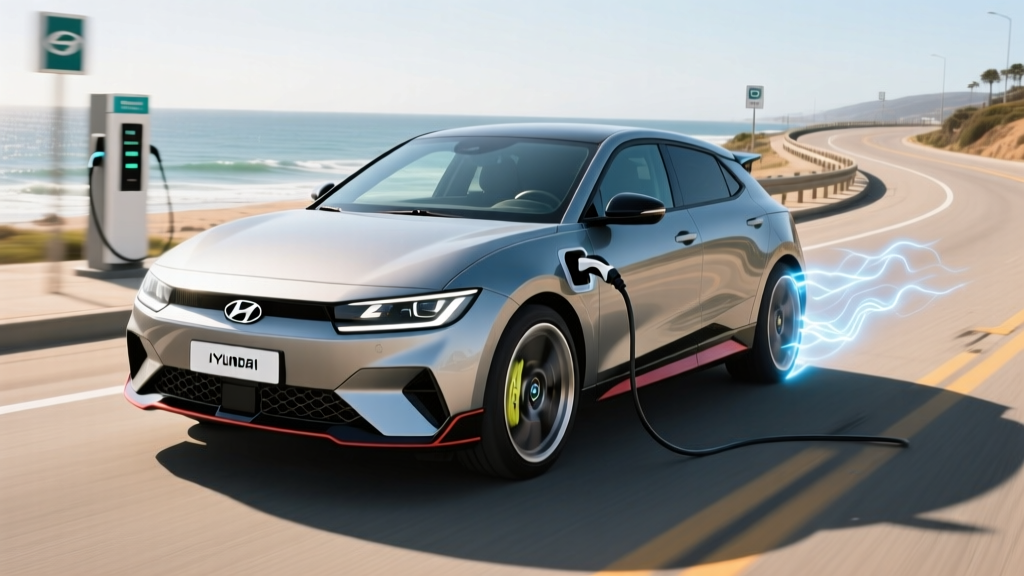
Hyundai's closest offering to an electric sports car is the Ioniq 5 N, a performance SUV coupe starting at $67,495 MSRP (2025 model year). It delivers 601 horsepower, a 3.4-second 0-60 mph time, and an EPA-estimated 221 miles of range from its 84 kWh battery. If you're searching for a two-door Hyundai electric sports car, one doesn't currently exist — though the Hyundai N Vision 74 concept hints at a future production model. For now, the Ioniq 5 N is the real-world performance EV you can actually buy, and it trades range for track capability in ways buyers need to understand before signing.
What Hyundai's Performance EV Lineup Actually Looks Like
Hyundai's N performance division has electrified aggressively, but the lineup is narrow. The Ioniq 5 N is the sole production performance model as of 2025–2026. The N Vision 74 — a retro-styled coupe with hydrogen fuel cell and battery hybrid powertrain — remains a concept with no confirmed production date or pricing.
That means buyers searching for a "Hyundai electric sports car" are really evaluating the Ioniq 5 N against gas performance cars and other electric performance vehicles. Here's what the numbers look like:
| Spec | Value |
|---|---|
| Base MSRP | $67,495 (before destination) |
| Battery (usable) | 84.0 kWh, NMC chemistry |
| EPA Range | 221 miles |
| Real-World Highway Range | ~170–190 miles (70+ mph, moderate temps) |
| Peak DC Fast Charge | 238 kW (10–80% in ~18 min) |
| Level 2 Charge Rate | 10.9 kW (~9 hours, 10–100%) |
| Motor Output | 601 HP / 568 lb-ft (N Grin Boost engaged) |
| 0–60 mph | 3.4 seconds |
| Top Speed | 161 mph |
| EPA Efficiency | 83 MPGe combined |
| Battery Warranty | 10 years / 100,000 miles |
| Federal Tax Credit (§30D) | Eligibility uncertain — MSRP exceeds $80K SUV cap; verify at fueleconomy.gov |
Range and Charging: The Sports Car Trade-Off
Performance EVs sacrifice range for power, and the Ioniq 5 N is no exception. The standard Ioniq 5 Limited (with AWD) achieves an EPA 290 miles from a similar battery. The N variant's lower ride height, stickier tires, aggressive aero, and higher curb weight (~4,800 lbs) reduce efficiency to 83 MPGe combined.
Real-World Range Expectations
EPA Sticker: 221 miles
Highway (70–75 mph, 65°F): ~180–195 miles
Cold Weather (30°F, highway): ~140–160 miles (30–35% loss without heat pump optimization)
Track Day (aggressive driving): 60–90 miles equivalent before needing a charge
The 800-volt architecture is the Ioniq 5 N's ace. At a functioning 350 kW DC fast charger (Electrify America, EVgo, or similar), the N can accept a peak 238 kW and charge from 10–80% in approximately 18 minutes — provided the battery is preconditioned via the navigation-linked charging optimizer. Above 80% SoC, the charge curve tapers sharply, as with all lithium-ion packs. Expect 80–100% to take an additional 15–20 minutes.
Home charging reality: On a 10.9 kW Level 2 home charger (48-amp circuit, hardwired), a full recharge takes roughly 9 hours. This is adequate for overnight replenishment after a spirited drive but means the Ioniq 5 N is less practical for back-to-back track sessions without DC fast-charging infrastructure nearby.
Cost Breakdown: Ioniq 5 N vs Gas Performance Cars
Buyers cross-shopping a Hyundai electric sports car are typically comparing it against the BMW M3, Toyota GR Supra, or Porsche Cayman. Here's how the five-year ownership math stacks up against a comparably priced gas performance car (using the 2025 BMW M340i xDrive at ~$58,000 as a baseline):
| Category | Ioniq 5 N | BMW M340i xDrive (Gas) |
|---|---|---|
| Purchase Price (MSRP) | $67,495 | $58,000 |
| Federal Tax Credit | $0–$7,500 (see IRS rules) | $0 |
| Fuel/Energy (60K mi) | ~$3,600 (home L2) / ~$6,200 (public DC) | ~$9,600 (premium gas, 25 MPG avg, $4.00/gal) |
| Maintenance (5 yr) | ~$1,200 (tire rotations, cabin filter, brake fluid) | ~$4,800 (oil changes, brakes, spark plugs) |
| Insurance (avg/yr × 5) | ~$14,000 ($2,800/yr avg) | ~$11,500 ($2,300/yr avg) |
| Tires (performance) | ~$2,400 (1 set replacement) | ~$2,400 (1 set replacement) |
| Estimated Total (5 yr) | ~$81,295–$88,695 | ~$86,300 |
Key takeaways:
- The Ioniq 5 N's higher purchase price is partially offset by dramatically lower fuel and maintenance costs — saving roughly $6,000–$9,600 over five years in energy and service alone.
- Insurance premiums for performance EVs run 15–25% higher than equivalent gas cars due to repair costs and parts pricing.
- Tire wear is aggressive on both vehicles; the N's 275/35R21 Pirelli P Zeros wear faster under hard driving.
- The §30D federal tax credit is not guaranteed. The Ioniq 5 N's MSRP and battery sourcing must meet IRS requirements. Check current eligibility at irs.gov and confirm with a tax professional before purchasing.
EV vs Gas Performance: What You Gain and What You Lose
| Factor | Ioniq 5 N (EV) | Gas Performance Car |
|---|---|---|
| Instant Torque | Yes — full 568 lb-ft from 0 RPM | Turbo lag; peak torque at ~1,800+ RPM |
| Track Endurance | Limited — battery overheats after ~2-3 hot laps; needs cooldown | Strong — fuel and cooling sustain longer sessions |
| Refueling/Recharging | 18 min (10–80% DCFC) or 9 hr (home L2) | 5 min at a gas station |
| Sound/Engagement | Simulated engine sound + synthetic shift "jolt" (N e-Shift) | Real exhaust note, mechanical feedback |
| Daily Practicality | Quiet, smooth, one-pedal driving in traffic | Stiffer ride, louder cabin, manual or DCT in traffic |
| Weight | ~4,800 lbs (felt in transitions) | ~3,800–4,000 lbs (more agile) |
| Cold-Weather Performance | Range drops 30%+; preconditioning required | Minimal range impact; instant heat |
Common Misconceptions About Hyundai's Electric Sports Car
| Myth | Fact |
|---|---|
| "The Ioniq 5 N qualifies for the full $7,500 tax credit." | Not automatically. §30D requires the vehicle MSRP to fall under caps ($80K for SUVs/trucks, $55K for sedans — classification matters), buyer income limits ($300K joint / $150K single), and critical-mineral/battery-sourcing thresholds. Hyundai's US production status and battery sourcing determine eligibility year-to-year. Always verify at fueleconomy.gov. |
| "Electric sports cars don't need maintenance." | They need less, but performance EVs still require brake fluid flushes, cabin air filters, coolant checks, and especially tire replacements. The Ioniq 5 N's weight and torque accelerate tire wear. |
| "221 miles of range is enough for road trips." | For daily driving, yes. For road trips, plan charging stops every 150–170 miles at highway speeds. In winter, that drops to 120–140 miles. The 18-minute DC fast charge helps, but only if 350 kW chargers are available on your route. |
| "The N e-Shift and fake engine sound are gimmicks." | Subjective, but functionally they address a real engagement gap. The simulated 8-speed DCT shifts create torque interruptions that mimic a gas car's rhythm, which many track-day drivers find more involving than single-speed EV delivery. |
| "Home charging isn't necessary if there are public chargers." | Public DC fast charging costs 2–3× more than home Level 2 charging per mile. Relying exclusively on public charging erases most of the Ioniq 5 N's fuel-cost advantage and accelerates battery wear from repeated high-power charging. |
Real-World Ownership: What First-Time EV Buyers Must Know
Home Charging Access Is Non-Negotiable
If you don't have access to a garage or driveway where a Level 2 charger (240V, 48-amp hardwired) can be installed, the Ioniq 5 N becomes significantly less practical. Budget $800–$2,500 for a quality Level 2 charger (ChargePoint Home Flex, Emporia Vue, or Hyundai-branded unit) plus $500–$2,000 for electrician installation. If your home's electrical panel needs a 200-amp upgrade, add $1,500–$3,500.
Cold Climate Buyers: Preconditioning Is Critical
The Ioniq 5 N includes a heat pump (standard), which helps preserve range in cold weather. However, the battery must be preconditioned before DC fast charging in cold conditions — otherwise, charge speeds can drop from 238 kW to under 50 kW. Use the navigation-based preconditioning feature: enter the charger as your destination, and the car warms the battery en route.
Track Use Changes the Equation
Hyundai designed the Ioniq 5 N for track capability, but sustained hot laps will trigger thermal limits. Expect 2–3 aggressive laps before the car enters a reduced-power cooldown mode. This is a battery-temperature reality, not a defect — all current performance EVs face this limitation. For dedicated track-day use, a gas sports car still holds an endurance advantage.
Decision Framework: Should You Buy the Ioniq 5 N?
Choose the Ioniq 5 N If:
- You want a daily-drivable performance car with instant torque and sub-4-second 0–60 times
- You have home Level 2 charging and drive under 180 miles per day
- You value low running costs (electricity + minimal maintenance) over track endurance
- You enjoy technology-forward engagement features (simulated shifts, customizable regen, N-specific drive modes)
- You want a practical 4-door with 27.2 cu ft of cargo space behind the rear seats
Look Elsewhere If:
- You need 300+ miles of range for frequent road trips (consider the standard Ioniq 5 or Tesla Model Y Performance)
- You plan regular track days with sustained hot laps (a gas BMW M2 or Porsche Cayman is more thermally resilient)
- You lack home charging access and your area has sparse DC fast-charging infrastructure
- You prefer analog mechanical feedback — real exhaust, real gears, lighter weight
- Your budget is under $55,000 (explore the standard Ioniq 5 SEL or a used performance EV)
Frequently Asked Questions
Will Hyundai make a two-door electric sports car?
Hyundai has not confirmed a production version of the N Vision 74 concept. The concept uses a hydrogen fuel cell combined with a battery, which adds complexity and depends on hydrogen infrastructure that barely exists in the US. If a production model arrives, expect it no earlier than 2027–2028. For now, the Ioniq 5 N is Hyundai's only performance EV.
Is the Ioniq 5 N classified as an SUV or a car for tax credit purposes?
The IRS classifies the Ioniq 5 N as an SUV for §30D purposes, which means the MSRP cap is $80,000 (vs. $55,000 for sedans). At $67,495 base, it clears the cap — but battery sourcing and critical-mineral requirements still apply and change annually. Confirm eligibility on the official DOE/EPA tax credit page at the time of purchase.
How much does it cost to charge the Ioniq 5 N at home vs. public chargers?
At the US average residential electricity rate (~$0.17/kWh), a full 84 kWh charge costs roughly $14.28 — yielding about 221 miles, or $0.065/mile. Public DC fast charging averages $0.35–$0.50/kWh, making a full charge $29–$42, or $0.13–$0.19/mile. Compare that to a gas sports car at 25 MPG and $4.00/gallon: $0.16/mile. Home charging is dramatically cheaper; public DC charging is roughly cost-neutral with gas.
What's the battery degradation risk on a performance EV?
Hyundai warranties the Ioniq 5 N's battery for 10 years / 100,000 miles, covering defects and capacity loss below 70% State of Health (SoH). Real-world data from Hyundai/Kia's E-GMP platform suggests 8–12% degradation over the first 100,000 miles under normal use. Frequent DC fast charging and track use accelerate wear, but the thermal management system is robust. Replacing the battery out of warranty would cost an estimated $15,000–$22,000 — a significant long-term risk to factor in.
Can I daily-drive the Ioniq 5 N comfortably?
Yes. In Normal or Eco mode, the ride is firm but compliant, the cabin is well-insulated, and one-pedal driving (i-Pedal) makes traffic effortless. The simulated engine sound can be turned off for silent cruising. With 27.2 cu ft of cargo space and a small frunk for charging cables, it functions as a practical daily driver that happens to hit 60 mph in 3.4 seconds.