The Quick Answer: Is Hyundai's Electric Hot Hatch Worth It?
Bottom line: The 2026 Hyundai Ioniq 5 N delivers the most convincing electric hot hatch design on the market — 640 hp, N e-Shift simulated gears, and a track-capable 84 kWh battery — but its 220-mile EPA range, $66,000+ starting price, and performance-EV insurance premiums mean it works best as a planned purchase, not an impulse buy. If you have Level 2 home charging, drive under 180 miles daily, and want a daily-driver that can pull double duty at track days, it's the segment benchmark. If you need 300+ mile road-trip range or budget under $50K, look elsewhere.
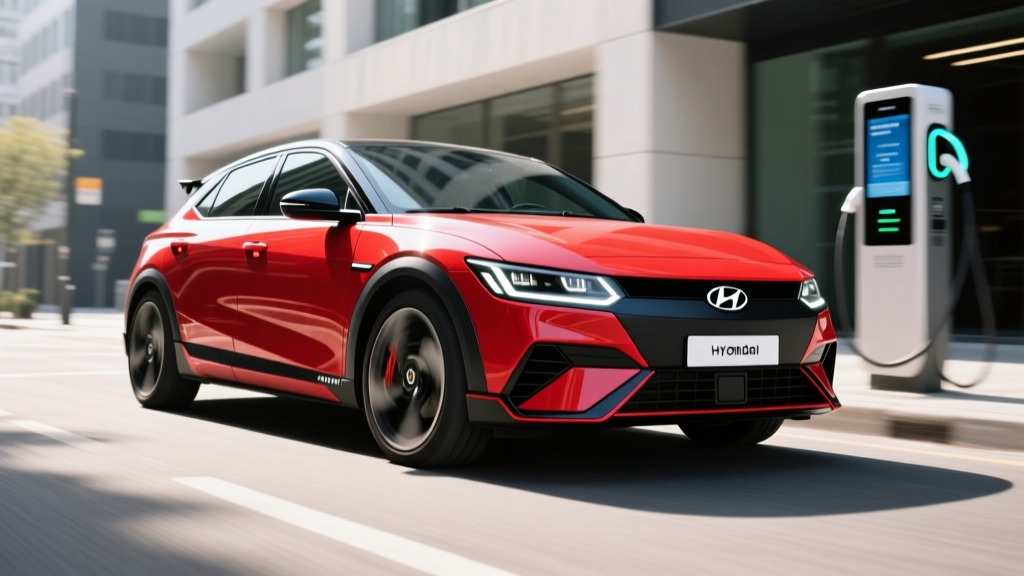
Hyundai's N performance division didn't just bolt a bigger motor onto an Ioniq 5. The electric hot hatch design philosophy here re-engineers the chassis, thermal management, and software to chase something EVs have historically lacked: emotional engagement. The result is a 4,486-lb hatchback that hits 60 mph in 3.25 seconds, sustains 230 kW DC fast charging, and offers simulated shift points that make it feel mechanical. Whether that justifies the premium over a standard Ioniq 5 — or a gas hot hatch like the Honda Civic Type R — depends on your driving life and charging access.
Specs That Define the Ioniq 5 N's Hot Hatch Identity
| Spec | 2026 Ioniq 5 N | 2026 Civic Type R (Gas) |
|---|---|---|
| Powertrain | Dual-motor AWD, 84 kWh NMC | 2.0L Turbo I4, FWD |
| Horsepower | 640 hp (N Grin Boost) | 315 hp |
| 0-60 mph | 3.25 seconds | 4.9 seconds |
| EPA Range / MPG | 220 mi / 100 MPGe combined | ~30 mpg combined |
| DC Fast Charge (10-80%) | ~18 min at 230 kW peak | N/A |
| Level 2 Charge Rate | 10.9 kW | N/A |
| Curb Weight | 4,486 lbs | 3,118 lbs |
| Cargo Volume | 27.2 cu ft (rear seats up) | 25.4 cu ft |
| Base MSRP | $66,250 | $45,095 |
| Battery/Powertrain Warranty | 10 yr / 100,000 mi | 5 yr / 60,000 mi |
EPA Range vs. Real World: The 220-mile EPA estimate assumes moderate temperatures and mixed driving. Expect ~175-190 miles on highway trips at 75+ mph, and as low as ~150 miles in sub-30°F winter conditions without preconditioning. Track sessions will drain the pack far faster — Hyundai's N team prioritized discharge rate over efficiency. If your daily commute exceeds 150 miles round-trip, this is not your car.
Charging Reality: Fast When You Plan, Painful When You Don't
The Ioniq 5 N uses Hyundai's 800V architecture, which is the backbone of its charging performance. At a 350 kW-capable DC fast charger (Electrify America, select Tesla Superchargers with NACS adapter), the Ioniq 5 N peaks near 230 kW, pulling from 10% to 80% in approximately 18 minutes. That's among the fastest in any production EV and is genuinely useful for road trips — provided you're stopping at stations that can deliver that power.
But here's the ownership nuance most reviews skip: sustained charge rate matters more than peak. The Ioniq 5 N's charge curve tapers meaningfully above 80% SoC, as all lithium-ion batteries do to protect cell longevity. A 10-90% session takes closer to 30-32 minutes. For daily driving, you'll charge at home on Level 2.
| Level | Power | Miles Added Per Hour | Typical Use |
|---|---|---|---|
| Level 1 (120V) | ~1.4 kW | ~4-5 mi/hr | Emergency / overnight trickle |
| Level 2 (240V, 48A) | 10.9 kW | ~32-36 mi/hr | Daily home charging |
| DC Fast (350 kW station) | Up to 230 kW | ~700+ mi/hr (peak) | Road trips |
At 10.9 kW on a properly installed 48-amp Level 2 home charger, a full 10-100% session takes roughly 8 hours — plug in at 10 PM, full by 6 AM. If your home electrical panel is older (100A service), you may need a $1,500-$3,000 panel upgrade to support a 48A circuit. Budget for this. Hyundai does not include a Level 2 charger in the box; expect to spend $400-$700 on a quality unit (ChargePoint Home Flex, Emporia Level 2, or Wallbox Pulsar Plus) plus $500-$1,500 for professional installation depending on run length and permitting in your area.
Total Cost of Ownership: Ioniq 5 N vs. Civic Type R
This is where Hyundai's electric hot hatch design faces its toughest scrutiny. The purchase price gap is significant, and the savings equation depends heavily on your local electricity rates, driving volume, and insurance market.
| Cost Category (5-Year) | Ioniq 5 N | Civic Type R |
|---|---|---|
| Purchase Price (MSRP) | $66,250 | $45,095 |
| Federal Tax Credit (§30D) | $0 (exceeds MSRP cap, sourcing TBD) | $0 |
| Fuel/Energy (75,000 mi) | $4,200-$5,600 | $7,500-$9,400 |
| Maintenance (5 yr) | $800-$1,200 | $2,500-$3,500 |
| Insurance (est. avg) | $12,000-$16,000 | $8,000-$11,000 |
| Estimated 5-Year Total | $83,250-$89,050 | $63,095-$69,995 |
Key takeaways:
- Energy savings are real but modest at this price point. At $0.14/kWh national average and 2.8 kWh/mile, the Ioniq 5 N costs roughly $0.07/mile to fuel at home. The Civic Type R at 30 mpg with $3.50/gal gas runs ~$0.12/mile. Over 75,000 miles, that's a $3,300-$5,200 fuel advantage for the EV.
- Maintenance favors the EV heavily — no oil changes, no clutch wear, regenerative braking extends pad life. Budget ~$800-$1,200 over five years (cabin filter, brake fluid, tire rotations).
- Insurance penalizes the Ioniq 5 N. Performance EVs carry higher premiums due to repair costs, parts pricing, and the 640-hp output. Get quotes before buying — the gap can be $400-$800/year.
- The §30D federal tax credit is unlikely to apply. The Ioniq 5 N's MSRP exceeds the $55,000 sedan cap (hatchbacks are classified as SUVs under IRS rules, which have an $80,000 cap), but battery sourcing and critical mineral requirements for 2026 may still disqualify it. Check IRS §30D guidance before counting on any credit.
Hot Hatch Design: What Hyundai Got Right (and Where It Compromises)
The Ioniq 5 N's design isn't just cosmetic. Hyundai's N team made structural and mechanical choices that separate this from a standard Ioniq 5 with a body kit:
- Chassis reinforcement: Additional weld points, a reinforced front subframe, and an integrated N battery brace reduce flex under hard cornering. The car feels taut in ways the standard Ioniq 5 does not.
- Thermal management: An upgraded cooling system with larger radiators and an oil cooler for the rear motor allows sustained track use. Hyundai rates the Ioniq 5 N for two laps of the Nürburgring without thermal derating — a claim most performance EVs cannot make.
- N e-Shift and N Active Sound: Simulated 8-speed shifts with torque interruption and synthesized engine sound through the speakers. Polarizing, but it addresses the numbness that makes many fast EVs feel like appliances. You can turn it off.
- 84 kWh NMC battery: The pack uses nickel-manganese-cobalt chemistry optimized for high discharge rates (up to 478 kW peak output), not maximum energy density. That's the trade-off behind the 220-mile range — Hyundai chose power over distance.
The compromises are real, though. The Ioniq 5 N is 1,368 lbs heavier than a Civic Type R, and you feel it in parking lots and tight autocross courses. The regenerative braking system, while powerful (up to 0.65g of regen), has a different pedal feel than friction brakes and takes acclimation. And the 220-mile range means road trips require planning — a 400-mile journey needs two charging stops, not one.
Common Misconceptions About the Ioniq 5 N
| Myth | Fact |
|---|---|
| "It qualifies for the $7,500 tax credit." | Unlikely in 2026. While the $80K SUV MSRP cap may apply, battery sourcing and critical mineral rules under §30D are restrictive. Verify at IRS.gov and with your dealer. |
| "220 miles of range is too low for daily use." | For 85% of American drivers who commute under 40 miles round-trip (per EPA data), 220 miles with nightly home charging is more than adequate. It's road trips where range matters. |
| "EV batteries need replacing every few years." | Hyundai warranties the Ioniq 5 N battery for 10 years/100,000 miles with a 70% capacity retention threshold. NMC degradation data from the broader Hyundai/Kia fleet shows ~8-12% loss over 100K miles in normal use. |
| "It can't handle a real track." | The Ioniq 5 N set competitive lap times at multiple circuits in independent testing. The thermal management sustains output where earlier performance EVs (Taycan, Model 3 Performance) would derate. |
| "I can charge it on any public charger." | The 2026 Ioniq 5 N ships with a NACS port, giving native access to Tesla Superchargers. For CCS stations (Electrify America, EVgo), no adapter is needed. CHAdeMO stations are effectively obsolete for this vehicle. |
Decision Framework: Should You Buy the Ioniq 5 N?
Choose the Hyundai Ioniq 5 N if:
- You have reliable Level 2 home charging (garage or driveway with 240V access)
- Your daily driving is under 180 miles and you take road trips fewer than 6 times per year
- You want a daily-driver that can genuinely perform at track days without modification
- You value instant torque, AWD traction, and near-silent performance over lightweight, analog feel
- Your total vehicle budget accommodates $66K+ purchase and $200+/month insurance
Look elsewhere if:
- You rely on street parking or apartment charging — public infrastructure alone won't satisfy a performance EV's needs
- You regularly drive 300+ mile routes and don't want to plan charging stops
- You want the lightweight, tossable feel of a gas hot hatch (Civic Type R, GR Corolla, Golf R)
- Your budget is firm under $50K — the standard Ioniq 5 SEL at ~$47K delivers 300+ miles of range and similar tech
- You live in extreme cold (regularly below 15°F) and can't garage the car — winter range loss to ~150 miles is real
First-Time EV Buyer Checklist for the Ioniq 5 N
If the Ioniq 5 N is your first electric vehicle, prepare before delivery day:
- Get an electrical panel assessment. A licensed electrician should confirm your panel can support a 60A breaker (for a 48A continuous charger). Cost: $150-$300 for the visit, $500-$3,000 for any upgrades.
- Install Level 2 charging before the car arrives. You'll want it ready. Permits and inspections can take 2-4 weeks in some municipalities.
- Download and set up charging apps. PlugShare, ChargePoint, EVgo, and the Tesla app (for Supercharger access via NACS) are essential for road trips.
- Learn preconditioning. The Ioniq 5 N can warm its battery before fast charging — set a departure time in the infotainment system, and the car will precondition the pack for maximum charge speed. Skip this in cold weather and your 18-minute charge becomes 30+.
- Set charge limits. For daily driving, cap charging at 80% to reduce NMC battery stress. Charge to 100% only before road trips. The car's battery management system allows you to set this.
- Get insurance quotes early. Performance EV insurance varies wildly by provider. Specialty insurers (Hagerty, collector car divisions) sometimes offer better rates than standard carriers for track-capable vehicles.
Frequently Asked Questions
Does the Ioniq 5 N have a frunk?
Yes, but it's small — approximately 2.0 cubic feet. Enough for a charging cable and a small bag. The dual-motor layout limits front trunk space compared to single-motor Ioniq 5 variants.
How does the Ioniq 5 N perform in snow and ice?
The dual-motor AWD system provides excellent traction, and the low center of gravity (battery pack under the floor) helps stability. However, the 4,486-lb weight means longer braking distances on ice. Winter tires are strongly recommended if you drive in sustained winter conditions. Expect range to drop to approximately 150-165 miles in sub-freezing temperatures.
Can I tow with the Ioniq 5 N?
Hyundai rates the Ioniq 5 N at 3,500 lbs towing capacity when properly equipped. However, towing significantly reduces range — expect a 30-40% reduction, putting real-world towing range around 130-150 miles.
What happens if the battery degrades?
Hyundai's battery warranty covers capacity loss below 70% for 10 years or 100,000 miles. Based on data from the broader Hyundai-Kia E-GMP platform, most owners see 8-12% degradation at 100K miles — well within the warranty threshold. Full battery replacement, if needed out of warranty, currently runs $12,000-$18,000 including labor.
Is the N e-Shift gimmicky or genuinely useful?
Opinions split sharply. On track, the simulated shift points provide useful rhythm cues for braking zones. On the street, many owners turn it off after the novelty fades. The system is fully defeatable, and the car is faster in a straight line with it disabled. It's a feature, not a requirement.
Does the Ioniq 5 N qualify for any state incentives?
This varies significantly by jurisdiction. Some states (California, Colorado, Massachusetts) offer additional rebates that may apply, while others have no EV incentives beyond federal rules. Check your state's energy office or AFDC state incentive database for current programs. Eligibility often depends on income, vehicle price, and residency.