Quick Verdict: A Track Weapon That Commutes
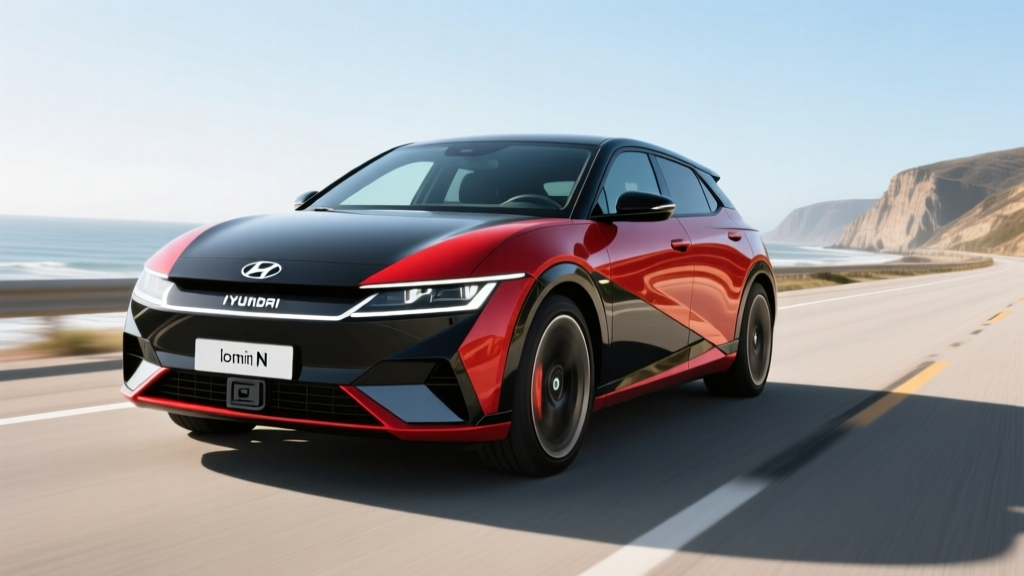
The Hyundai Ioniq 5 N isn't just the fastest Ioniq ever built — it's one of the most compelling performance EVs on the market. With a manufacturer-claimed 3.25-second 0-60 mph time and 641 horsepower on tap in N Grin Boost mode, this dual-motor AWD beast delivers supercar acceleration wrapped in a hot-hatch body. But beneath the track-focused suspension and simulated gear shifts lives the same 800-volt E-GMP platform that makes the standard Ioniq 5 one of the fastest-charging EVs available. The question for buyers isn't whether it's fast — it's whether a $67,000+ performance EV can still serve as a practical daily driver.
After analyzing EPA data, real-world driving logs, and Hyundai's official specs, we break down everything you need to know about the Ioniq 5 N's acceleration, range, charging, and ownership economics.
| Spec | Value |
|---|---|
| 0-60 mph | 3.25 seconds (N Grin Boost) |
| Horsepower | 641 hp (N Grin Boost) / 601 hp (standard) |
| Torque | 568 lb-ft (N Grin Boost) |
| Drivetrain | Dual-motor AWD |
| Battery Capacity | 84.0 kWh usable (NMC lithium-ion) |
| EPA Range | 221 miles |
| EPA Efficiency | 79 MPGe combined / 43 kWh/100 mi |
| Max DC Fast Charge | 238 kW peak (800V architecture) |
| 10-80% DC Charge Time | ~18 minutes (preconditioned) |
| Level 2 Charge Rate | 10.9 kW (approx. 35 mi/hr) |
| Base MSRP | $67,475 (incl. destination) |
| Battery Warranty | 8 years / 100,000 miles |
Hyundai Ioniq 5 N 0-60 and Performance Deep Dive
The headline number — 3.25 seconds to 60 mph — is achieved with N Grin Boost engaged, which temporarily raises combined system output from 601 hp to 641 hp and torque from 545 to 568 lb-ft for up to 20 seconds per activation. This puts the Ioniq 5 N in the same acceleration bracket as a Porsche Taycan 4S and noticeably quicker than the Tesla Model Y Performance (3.5 sec) and Ford Mustang Mach-E GT (3.5 sec).
What separates the Ioniq 5 N from straight-line rivals is its chassis. Hyundai N engineers added over 1,700 additional weld points, reinforced the body structure, and fitted a track-tuned adaptive suspension with electronically controlled dampers. The result is an EV that can handle repeated track sessions without the brake fade and power derating that plague most electric performance cars. The N-tuned regenerative braking system and available N-tuned brake pads are designed specifically for the thermal demands of a 4,800-pound vehicle under hard use.
The N e-Shift feature simulates an 8-speed dual-clutch transmission with simulated shift shock and rev-matching, complete with audible and haptic feedback. It's a polarizing feature — some drivers find it adds engagement, others consider it unnecessary in an EV. Fortunately, it can be toggled off for seamless single-speed acceleration.
Real-World Range: What 221 EPA Miles Actually Means
Real-World Expectation: Plan for approximately 175-195 miles during sustained highway driving at 70-80 mph, and as low as 145-165 miles in freezing temperatures (below 32°F) with cabin heating. City and mixed driving in moderate temperatures can approach or slightly exceed the EPA figure thanks to regenerative braking.
Why the gap? The Ioniq 5 N's 21-inch forged alloy wheels with Pirelli P Zero summer tires create more rolling resistance than the standard Ioniq 5's 18- or 20-inch setups. The performance-oriented dual-motor calibration and stiffer suspension also trade some efficiency for handling capability. If range is your top priority, the standard Ioniq 5 SEL AWD (290 miles EPA) is a better fit.
The 84.0 kWh battery pack uses NMC (nickel-manganese-cobalt) chemistry, which prioritizes energy density and high discharge rates over the cycle life advantages of LFP (lithium iron phosphate). For a performance vehicle, this is the correct engineering trade-off — NMC cells can deliver the sustained high-current output needed for track driving without voltage sag. However, NMC batteries degrade slightly faster than LFP over time, particularly if regularly charged to 100% or exposed to extreme heat. Hyundai's battery management system includes a buffer that protects against deep discharge and overcharge to mitigate this.
Charging Speed: 800V Architecture Still Sets the Standard
The Ioniq 5 N retains Hyundai's 800-volt E-GMP architecture, making it one of the fastest-charging EVs on public DC fast-charging networks. Here's the full breakdown:
| Charging Level | Power / Rate | Speed (Miles Added) | Notes |
|---|---|---|---|
| Level 1 (120V household) | ~1.4 kW | ~4 miles per hour | Emergency/trickle only; full charge in ~60+ hours |
| Level 2 (240V home/public) | 10.9 kW | ~35 miles per hour | Full 0-100% in approximately 8.5 hours |
| DC Fast Charge (350 kW station) | 238 kW peak | ~190 miles in 18 min (10-80%) | Requires battery preconditioning; tapers above 80% |
| DC Fast Charge (150 kW station) | ~130 kW sustained | ~100 miles in 18 min (10-80%) | More common station type; still fast |
Charging curve reality check: The 238 kW peak rate is achieved between approximately 10-40% State of Charge (SoC). Above 50%, the rate tapers to roughly 150-170 kW, and above 80% it drops further to protect battery health. This is normal for all lithium-ion EVs, but the Ioniq 5 N's 800V system sustains higher rates longer than most 400V competitors. Always use the vehicle's battery preconditioning feature (activated automatically when a DC fast charger is set as your navigation destination) to ensure the pack is at optimal temperature for maximum charge speed.
Home charging on a Level 2 (240V) circuit at 10.9 kW adds roughly 35 miles of range per hour. Most Ioniq 5 N owners who drive 40-60 miles per day will easily replenish overnight on a standard Level 2 home charger. A full Level 2 home installation typically costs $800-$2,000 depending on electrical panel proximity and local permit requirements — budget for a potential panel upgrade if your home has a 100-amp service panel.
Pricing, Tax Credits, and Ownership Cost
The 2025 Hyundai Ioniq 5 N starts at $67,475 including destination charges. Hyundai offers it in a single, well-equipped trim — there are no additional performance packages or battery upgrades to select. The only options are paint color ($0 for Atlas White, $400-$1,150 for premium colors) and available accessories.
| Item | Amount |
|---|---|
| Base MSRP (incl. destination) | $67,475 |
| Premium paint (e.g., Performance Blue Matte) | +$1,150 |
| As-tested typical price | $68,625 |
| Federal §30D EV Tax Credit (if eligible) | Up to $7,500 |
| Estimated price after max credit | ~$61,125 |
Federal tax credit eligibility is not guaranteed. Under current IRS §30D rules, the Ioniq 5 N must meet several criteria for the buyer to claim the full $7,500 credit:
- MSRP cap: The vehicle must have an MSRP at or below $80,000 for SUVs/trucks or $55,000 for sedans. The Ioniq 5 N is classified as an SUV and clears this threshold at $67,475.
- Buyer income cap: Modified adjusted gross income (MAGI) must not exceed $300,000 (joint filers), $225,000 (head of household), or $150,000 (single filers).
- Battery sourcing requirements: A percentage of critical minerals and battery components must be sourced from the U.S. or free-trade-agreement countries. These thresholds increase annually — verify current-year compliance on the IRS clean vehicle credit page or via the dealer at point of sale.
- Point-of-sale transfer: As of 2024, eligible buyers can transfer the credit to the dealer at purchase, receiving the $7,500 as an immediate price reduction rather than waiting to claim it on their tax return.
Confirm your specific eligibility with a tax professional and check the latest sourcing requirements at fueleconomy.gov before purchasing.
Interior, Cargo, and Daily Usability
The Ioniq 5 N's cabin mirrors the standard Ioniq 5's spacious, retro-futuristic layout but adds N-specific sport bucket seats with enhanced bolstering, an N-branded steering wheel, aluminum pedals, and performance-oriented display modes in the dual 12.3-inch screens. The flat floor and long 118.1-inch wheelbase deliver generous interior room:
- Front legroom: 41.7 inches
- Rear legroom: 39.4 inches
- Cargo volume (rear seats up): 27.2 cubic feet
- Cargo volume (rear seats folded): 59.3 cubic feet
- Front trunk (frunk): 0.85 cubic feet (significantly smaller than the standard Ioniq 5's frunk due to N-specific cooling hardware)
The reduced frunk space is a notable trade-off. The standard Ioniq 5 offers 2.4 cu ft of front trunk space, but the N variant uses much of that volume for additional cooling components required for sustained track driving. Rear cargo space remains unchanged and competitive with the segment.
Infotainment runs Hyundai's latest system with wireless Apple CarPlay and Android Auto, over-the-air updates, and a digital key. The N-specific infotainment features include a lap timer, G-force meter, battery temperature monitor, and customizable N Grin Boost and N e-Shift settings. Hyundai's Highway Driving Assist 2, blind-spot monitoring, rear cross-traffic avoidance, and a surround-view camera are all standard.
- 3.25-sec 0-60 mph rivals supercars at a fraction of the price
- 800V architecture enables best-in-class DC fast charging (~18 min 10-80%)
- Track-capable cooling and braking — not just a straight-line drag car
- Spacious cabin with 39.4" rear legroom and 27.2 cu ft cargo
- Comprehensive Hyundai warranty (8yr/100,000-mi battery)
- Eligible for up to $7,500 federal tax credit (verify sourcing rules)
- 221-mile EPA range is below the standard Ioniq 5 and many competitors
- Real-world highway range drops to ~175-195 miles
- Frunk nearly eliminated (0.85 cu ft) by cooling hardware
- Single trim with limited customization options
- $67,475 starting price is a significant premium over the standard Ioniq 5
- Summer tires reduce cold-weather grip; winter tire swap recommended in snow-belt states
Warranty and Long-Term Ownership
Hyundai backs the Ioniq 5 N with one of the strongest warranty packages in the performance-EV segment:
- Battery: 8 years / 100,000 miles (covers capacity loss below 70% State of Health)
- Powertrain (motors, reduction gear): 10 years / 100,000 miles
- New vehicle limited: 5 years / 60,000 miles
- Roadside assistance: 5 years / unlimited miles
- Complimentary maintenance: 3 years / 36,000 miles
The 70% SoH threshold for battery warranty coverage is industry-standard. Based on available data from E-GMP platform vehicles, Hyundai's NMC packs with active thermal management typically retain 85-90% capacity after 100,000 miles under normal use. Track-heavy driving with frequent high-discharge cycles and high-SoC fast charging may accelerate degradation, but Hyundai's BMS is conservative enough to mitigate severe loss within the warranty period.
Who Should Buy the Ioniq 5 N?
- You want supercar acceleration (3.25-sec 0-60) with four doors and practical cargo space
- You plan to attend track days or autocross events and need an EV that won't overheat after a few laps
- You have reliable access to DC fast charging for road trips (10-80% in ~18 min)
- You value Hyundai's warranty coverage and dealer network
- Range is your top priority — the standard Ioniq 5 SEL AWD (290 mi EPA, ~$52,000) offers 30% more range at $15,000 less
- You regularly drive 250+ miles between charging stops — 175-195 real-world highway miles requires careful route planning
- You need maximum frunk space for gear or groceries
- You live in a region with harsh winters and don't want to invest in a dedicated set of winter wheels and tires
Frequently Asked Questions
What is the real-world range of the Hyundai Ioniq 5 N?
The EPA rates the Ioniq 5 N at 221 miles. In real-world highway driving at 70-80 mph, expect approximately 175-195 miles. In freezing temperatures with cabin heating, that can drop to 145-165 miles. City driving with regenerative braking in moderate weather can match or slightly exceed the EPA figure.
How fast does the Hyundai Ioniq 5 N charge?
On a 350 kW DC fast charger with battery preconditioning, the Ioniq 5 N peaks at 238 kW and charges from 10-80% in approximately 18 minutes. On a typical 150 kW public charger, expect 10-80% in roughly 25-28 minutes. At home on Level 2 (240V, 10.9 kW), it adds about 35 miles per hour, with a full charge taking around 8.5 hours.
How much does the Ioniq 5 N cost after the federal EV tax credit?
The base MSRP is $67,475. If you qualify for the full $7,500 federal §30D credit (based on income, MSRP, and battery-sourcing requirements), the effective price drops to approximately $61,125. Eligibility depends on your MAGI, the vehicle's battery component and critical-mineral sourcing compliance for the current year, and the $80,000 SUV MSRP cap. Verify with the IRS or your tax professional.
Does the Hyundai Ioniq 5 N qualify for the federal EV tax credit?
The Ioniq 5 N meets the MSRP cap ($67,475, below the $80,000 SUV threshold). However, full credit eligibility depends on current-year battery-sourcing rules and your personal income. Hyundai has confirmed partial or full credit eligibility for many Ioniq 5 variants, but sourcing requirements tighten annually. Check the latest information at fueleconomy.gov before purchasing.
Is the Ioniq 5 N worth buying vs. the Tesla Model Y Performance or Porsche Taycan?
Against the Tesla Model Y Performance (~$52,490, 3.5-sec 0-60, 279 mi EPA), the Ioniq 5 N costs more and offers less range, but delivers a far more engaging chassis, track-capable cooling, and faster DC charging via its 800V system. Against the Porsche Taycan 4S (~$100,000+, 3.8-sec 0-60, 246 mi EPA), the Ioniq 5 N offers comparable or quicker acceleration at roughly 40% less cost, though the Taycan offers a more premium interior and sedan/wagon body styles. The Ioniq 5 N occupies a unique niche: track-focused performance at a non-luxury price.
What are the biggest drawbacks of the Ioniq 5 N?
The primary trade-offs are range (221 mi EPA, ~175-195 real-world highway), a nearly eliminated frunk (0.85 cu ft), and a $67,475 starting price that's roughly $15,000 more than a well-equipped standard Ioniq 5. Summer performance tires also require a winter tire swap for safe cold-weather driving in snow or ice.