Quick Verdict: The Ioniq 5 Limited at a Glance
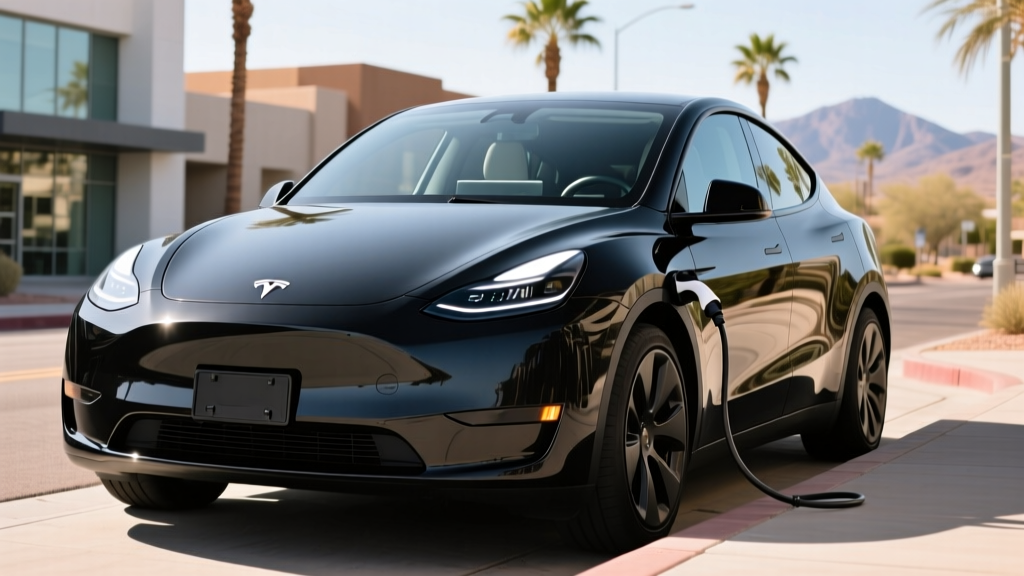
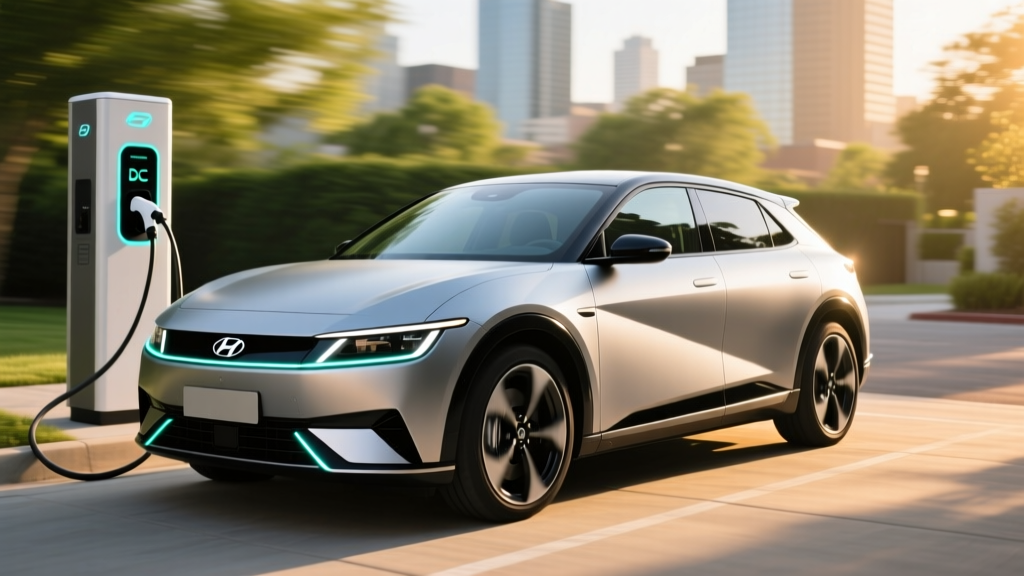
The Hyundai Ioniq 5 Limited remains the top-trim benchmark in the midsize electric crossover segment. Built on Hyundai's E-GMP platform with an 800-volt architecture, it delivers class-leading DC fast-charging speeds, a spacious cabin, and a compelling feature set that justifies its premium positioning. For 2026, the Limited trim continues with the larger 84.0 kWh usable battery, dual-motor AWD, and a suite of luxury and safety technology that puts it in direct competition with the Tesla Model Y Long Range, Ford Mustang Mach-E Premium, and Volkswagen ID.4 Pro S.
But does the range hold up on the highway? How does the charging curve behave past 80%? And does it still qualify for the federal tax credit under current IRS §30D rules? This review answers every question a serious buyer needs before signing the paperwork.
| Spec | Value |
|---|---|
| EPA Range (AWD) | 305 miles |
| Battery (usable) | 84.0 kWh, NMC (nickel manganese cobalt) |
| Drivetrain | Dual-motor AWD |
| Horsepower / Torque | 320 hp / 446 lb-ft |
| 0–60 mph | 4.5 seconds |
| Max DC Fast Charge | 240 kW (peak) |
| 10–80% DC Charge Time | ~18 minutes (ideal conditions) |
| Level 2 Home Charging | 10.9 kW (~36 mi/hr) |
| EPA Efficiency | 110 MPGe combined (30 kWh/100 mi) |
| Cargo (rear seats up / folded) | 27.2 / 59.3 cu ft |
| Frunk | 0.85 cu ft (AWD) |
| Base MSRP (Limited AWD) | $52,600 |
| Battery Warranty | 10 years / 100,000 miles |
Real-World Range: What the EPA Sticker Doesn't Tell You
The EPA rates the 2026 Ioniq 5 Limited AWD at 305 miles of combined range. That figure is competitive with the segment, but EPA estimates blend city and highway driving under moderate conditions. Real-world results depend heavily on how and where you drive.
- EPA Combined: 305 miles
- Highway (70–75 mph, moderate weather): ~255–275 miles
- City / Suburban mixed: ~290–310 miles
- Cold weather (below 30°F, highway): ~210–240 miles (20–30% reduction)
- Cold weather, city with heat pump active: ~250–270 miles
The Ioniq 5's standard heat pump recovers waste heat from the powertrain to warm the cabin, reducing the range penalty versus resistive heating. Cold-weather losses are real but mitigated compared to EVs without thermal management.
On a 250-mile highway road trip at 75 mph in 65°F weather, expect to arrive with roughly 20–40 miles of buffer depending on elevation changes and wind. In winter, plan conservatively: a 200-mile trip in 20°F temperatures may require a mid-route DC fast-charge stop. According to fueleconomy.gov, EV range drops 15–30% in freezing conditions due to battery chemistry limitations and cabin heating demands.
Charging Speed: 800V Architecture in Practice
The Ioniq 5's 800-volt E-GMP platform is its most significant technical advantage over competitors still running 400V systems. Higher voltage allows faster charging without excessive current, which reduces heat buildup and sustains peak power longer.
| Charging Level | Power (kW) | Speed / Notes |
|---|---|---|
| Level 1 (120V household) | ~1.4 kW | ~4–5 miles per hour |
| Level 2 (240V home, 48A) | 10.9 kW | ~36 miles per hour; full charge in ~8 hours |
| DC Fast (peak, 350 kW station) | 240 kW (peak) | 10–80% in ~18 min under ideal conditions |
| DC Fast (50 kW station) | 50 kW | 10–80% in ~65 min |
Understanding the charge curve: The "240 kW peak" figure is not sustained across the entire session. In real-world DC fast charging, the Ioniq 5 holds approximately 220–240 kW from roughly 10% to 40% state of charge, then tapers progressively. From 40–60%, expect ~175–190 kW; from 60–80%, roughly 120–140 kW. Above 80%, charging slows dramatically to protect battery longevity — typically dropping below 50 kW. This is why manufacturers quote 10–80% times rather than 0–100%.
For the fastest sessions, use the battery preconditioning feature: navigate to a DC fast charger using the built-in navigation, and the car will warm the battery to optimal temperature before arrival. Skip this step in cold weather and your peak charge rate may be cut in half for the first several minutes.
Home charging note: The onboard charger accepts up to 10.9 kW on Level 2. With a 48-amp hardwired Level 2 station (the recommended setup), you'll add roughly 36 miles of range per hour of charging, or replenish a full battery overnight in about 8 hours. A standard 240V NEMA 14-50 outlet on a 40-amp circuit delivers ~7.7 kW — still adequate for overnight charging but about 30% slower. Always have a licensed electrician assess your panel capacity before installation.
Performance and Driving Dynamics
The Limited AWD pairs a front and rear permanent-magnet synchronous motor for a combined 320 horsepower and 446 lb-ft of torque. The result is a 0–60 mph time of approximately 4.5 seconds — brisk enough to merge onto any highway with confidence and genuinely quick for a family crossover weighing over 4,600 pounds.
Driving impressions center on three qualities:
- Refinement: The E-GMP platform isolates road noise effectively. At 70 mph, cabin noise levels are among the lowest in the segment.
- Ride quality: The Limited's suspension tuning is firm but compliant. It absorbs sharp impacts without the floatiness that plagues some competitors.
- Regenerative braking: Four levels of regen are selectable via steering-wheel paddles, including a true one-pedal driving mode (i-Pedal) that brings the car to a complete stop without touching the brake pedal.
The Ioniq 5 is not a track car — its 4,654-lb curb weight is noticeable in tight corners — but it delivers composed, confidence-inspiring handling for daily driving and long-distance travel. Towing capacity is rated at 2,300 pounds (with trailer brakes), adequate for a small utility trailer or a pair of dirt bikes but not for a camper.
Interior, Cargo, and Technology
The Ioniq 5's "Living Space" interior concept takes advantage of the flat floor and long 118.1-inch wheelbase. Rear legroom measures 39.4 inches — more than the Model Y and enough for adults on long trips. The dual 12.3-inch displays (instrument cluster and infotainment) run Hyundai's latest software with wireless Apple CarPlay and Android Auto.
Cargo capacity: 27.2 cubic feet behind the rear seats, expanding to 59.3 cubic feet with the 60/40 split rear seats folded. The AWD model's front trunk (frunk) is a modest 0.85 cubic feet — enough for charging cables and a small bag but not a meaningful luggage area. RWD models get a larger 2.1 cu ft frunk.
Limited-exclusive features include:
- Ventilated front seats and heated rear seats
- Panoramic fixed glass roof with sunshade
- Head-up display with augmented reality navigation
- Highway Driving Assist 2 (HDA2) — adaptive cruise with lane centering and lane-change assist
- Digital side mirrors (camera-based, where permitted)
- Vehicle-to-Load (V2L) — power external devices up to 3.6 kW via the interior outlet or exterior adapter
- Bose premium audio system with 8 speakers
- Remote Smart Parking Assist (move the car in/out of tight spaces via key fob)
Highway Driving Assist 2 (HDA2) is an SAE Level 2 driver-assistance system. It manages steering, acceleration, and braking on highways, but the driver must remain fully attentive with hands on or near the wheel at all times. It is not self-driving. Hyundai does not currently offer a hands-off Level 3 system in the U.S. market.
Pricing, Trims, and Federal Tax Credit Eligibility
The 2026 Hyundai Ioniq 5 is offered in four trims. The Limited sits at the top:
| Trim | Drivetrain | MSRP | Est. Price After §30D Credit* |
|---|---|---|---|
| SE Standard Range | RWD | $42,600 | $35,100 |
| SEL | RWD / AWD | $46,100 / $50,100 | $38,600 / $42,600 |
| Limited | RWD / AWD | $48,600 / $52,600 | $41,100 / $45,100 |
| N (Performance) | AWD | $66,500 | Not eligible (over MSRP cap) |
*After-credit prices assume the buyer qualifies for the full $7,500 federal tax credit under IRS §30D. Eligibility is not automatic.
To claim the up-to-$7,500 credit on the Ioniq 5 Limited, all of the following must apply per current IRS guidelines:
- MSRP cap: Vehicle MSRP must be ≤ $80,000 for SUVs/crossovers. The Ioniq 5 Limited AWD at $52,600 qualifies. ✓
- Buyer income cap: Modified AGI must not exceed $150,000 (single), $225,000 (head of household), or $300,000 (joint). ✓ Check your situation.
- Battery sourcing: A percentage of critical minerals and battery components must be sourced from the U.S. or free-trade-agreement countries. These thresholds increase annually. Verify current-year compliance on fueleconomy.gov before purchasing.
- Point-of-sale transfer: As of 2024, buyers can transfer the credit to the dealer at purchase, reducing the vehicle price upfront rather than waiting to claim it on their tax return.
- VIN registration: The vehicle must be titled and registered in the U.S. for personal use.
Tax credit rules are subject to change. Consult a tax professional and verify eligibility on irs.gov before finalizing a purchase.
Efficiency and Ownership Costs
The EPA rates the Ioniq 5 Limited AWD at 110 MPGe combined, which translates to approximately 30 kWh per 100 miles. At the U.S. average residential electricity rate of roughly $0.17/kWh (EIA, 2025 data), that works out to about $0.051 per mile for home charging. Compare this to a comparable gas crossover at 25 MPG and $3.40/gallon — roughly $0.136 per mile. Over 15,000 miles per year, home charging saves approximately $1,275 annually versus gasoline.
Public DC fast charging is more expensive — typically $0.35–$0.55/kWh depending on the network — which narrows but does not eliminate the cost advantage. Owners who can charge at home or at work capture the most savings.
Insurance: EV insurance premiums tend to run 10–20% higher than comparable gas vehicles due to higher repair costs and parts pricing. Expect annual premiums of approximately $1,800–$2,400 depending on your state, driving record, and coverage level.
Warranty coverage is a Hyundai strength:
- Battery: 10 years / 100,000 miles (capacity retention threshold: 70% of original capacity)
- Powertrain: 10 years / 100,000 miles
- New vehicle limited: 5 years / 60,000 miles
- Roadside assistance: 5 years / unlimited miles
- Complimentary maintenance: 3 years / 36,000 miles
How It Compares: Ioniq 5 Limited vs. Key Rivals
| Spec | Ioniq 5 Limited AWD | Tesla Model Y LR AWD | Ford Mach-E Premium AWD |
|---|---|---|---|
| EPA Range | 305 mi | 320 mi | 290 mi |
| Battery | 84.0 kWh NMC | 78.1 kWh NMC | 91.0 kWh NMC |
| Peak DC Charge | 240 kW | 250 kW | 150 kW |
| 10–80% Time | ~18 min | ~20 min | ~36 min |
| 0–60 mph | 4.5 sec | 4.8 sec | 5.1 sec |
| MSRP | $52,600 | $48,990 | $51,875 |
| Cargo (seats up) | 27.2 cu ft | 30.2 cu ft | 29.7 cu ft |
| Battery Warranty | 10 yr / 100k mi | 8 yr / 120k mi | 8 yr / 100k mi |
Where the Ioniq 5 wins: DC fast-charge speed consistency (the 800V architecture sustains higher rates longer), rear-seat legroom, and Hyundai's 10-year battery warranty. The V2L feature is unique in this segment and genuinely useful for camping or emergency power.
Where competitors edge ahead: The Model Y offers slightly more range and cargo space, plus access to the Tesla Supercharger network (though the Ioniq 5 now supports NACS via adapter, expanding its DC fast-charging options significantly). The Mach-E offers a sportier driving feel and a slightly larger battery, though its slower peak charge rate is a real road-trip disadvantage.
- Choose the Ioniq 5 Limited if: You prioritize fast DC charging on road trips, want a spacious rear seat for family use, value a long battery warranty, and want V2L capability.
- Choose the Model Y Long Range if: Maximum range and cargo space are your top priorities, and you want native Supercharger access without an adapter.
- Choose the Mach-E Premium if: You prefer a more engaging driving experience and don't mind slower DC charging on road trips.
Pros and Cons
- Class-leading 800V DC fast-charging architecture
- Spacious rear seat (39.4" legroom) and flat floor
- 10-year / 100,000-mile battery warranty
- Standard heat pump reduces cold-weather range loss
- V2L capability (3.6 kW output)
- Comfortable, quiet ride quality
- Strong safety ratings (IIHS Top Safety Pick+)
- Small frunk on AWD models (0.85 cu ft)
- Cargo space trails Model Y and Mach-E
- No hands-free Level 3 driving system
- Infotainment learning curve with touch-sensitive climate controls
- AWD range drops to 266 mi in some configurations
- Limited trim pricing pushes past $52K before options
- Rear wiper was not included on early models (verify on 2026 build)
Frequently Asked Questions
What is the real-world range of the Ioniq 5 Limited?
The EPA rates it at 305 miles combined. In real-world highway driving at 70–75 mph, expect 255–275 miles. In cold weather below 30°F, range can drop to 210–240 miles on the highway. City driving is more efficient due to regenerative braking, often exceeding the EPA combined figure in mild weather.
How fast does the Ioniq 5 charge at home and on the road?
On a 48-amp Level 2 home charger, the Ioniq 5 adds about 36 miles of range per hour and charges fully in roughly 8 hours. On a 350 kW DC fast charger, it peaks at 240 kW and charges from 10–80% in approximately 18 minutes under ideal conditions. Battery preconditioning via navigation routing is essential for achieving peak rates in cold weather.
Does the Ioniq 5 Limited qualify for the $7,500 federal tax credit?
The Ioniq 5 Limited AWD at $52,600 MSRP falls well under the $80,000 SUV cap. Buyers with modified AGI under the IRS income thresholds ($150K single / $300K joint) may qualify for up to $7,500, subject to current-year battery sourcing requirements. The credit can be transferred to the dealer at the point of sale, reducing your purchase price upfront. Verify current sourcing compliance on fueleconomy.gov and consult a tax professional.
Is the Ioniq 5 worth buying over a Tesla Model Y?
It depends on your priorities. The Ioniq 5 charges faster on non-Tesla networks, offers a longer battery warranty, and provides a more comfortable ride. The Model Y offers more range, more cargo space, and native Supercharger access. With the NACS adapter now available for the Ioniq 5, the Supercharger advantage is partially bridged. Both are excellent choices — the right one depends on whether you value charging speed and comfort (Ioniq 5) or maximum range and cargo volume (Model Y).
What is the battery warranty, and what does it cover?
Hyundai covers the Ioniq 5's high-voltage battery for 10 years or 100,000 miles, whichever comes first. The warranty guarantees that the battery will retain at least 70% of its original usable capacity during the coverage period. If capacity drops below that threshold under normal use, Hyundai will repair or replace the battery at no cost. This is among the best battery warranties in the segment.
Can the Ioniq 5 use Tesla Superchargers?
Yes. Hyundai provides a NACS (North American Charging Standard) adapter that allows the Ioniq 5 to charge at Tesla Supercharger stations. This dramatically expands the available DC fast-charging network, particularly in rural areas where Tesla's infrastructure leads. The adapter supports the Supercharger's power delivery, though the Ioniq 5's 800V architecture means it may not reach its full 240 kW peak on all Supercharger stalls.