Quick Verdict: The Dual-Motor Flagship Worth Paying For?
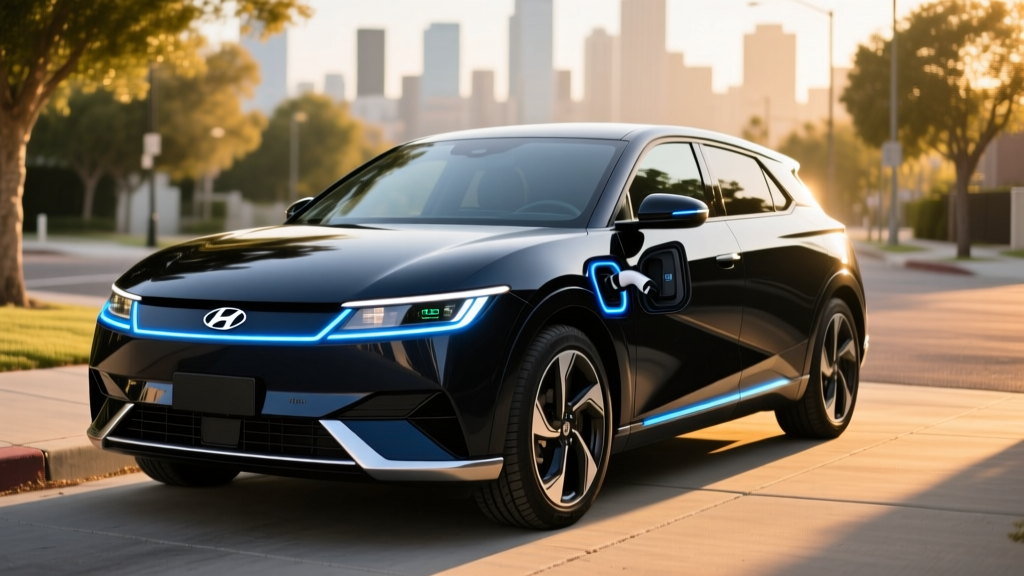
The 2026 Hyundai Ioniq 5 Limited AWD sits at the top of the Ioniq 5 lineup, pairing a dual-motor all-wheel-drive powertrain with Hyundai's most complete feature set. With an EPA-estimated 290 miles of range, a peak DC fast-charging rate of 240 kW, and a 0-60 mph time in the low 5-second range, it competes directly with the Tesla Model Y Long Range, Ford Mustang Mach-E Premium AWD, and Volkswagen ID.4 Pro S AWD. The Limited AWD's defining trait remains its 800-volt electrical architecture — a feature still rare at this price point that enables charging speeds most rivals can't match.
But the flagship trim commands a significant premium. At roughly $54,900 before incentives, buyers need to weigh whether the performance, range, and feature upgrades over the SEL AWD justify the cost — and whether the federal tax credit applies to their specific situation.
Range, Battery, and Real-World Efficiency
Real-World Expectation: 245–270 miles on highway-heavy trips at 70+ mph; 220–250 miles in freezing temperatures (below 30°F) without consistent preconditioning. City and mixed driving in moderate weather can match or slightly exceed the EPA sticker.
The Ioniq 5 Limited AWD uses an 84.0 kWh usable battery pack (gross capacity approximately 87.8 kWh) with NMC (nickel-manganese-cobalt) chemistry. Hyundai's E-GMP platform houses the pack low in the chassis, contributing to a flat floor and spacious cabin. The AWD model sacrifices roughly 30 miles of EPA range compared to the Long Range RWD variant (320 miles) due to the added weight and friction of the front motor.
The EPA rates the Limited AWD at 110 MPGe combined (113 city / 106 highway), translating to approximately 30 kWh per 100 miles. In our experience, sustained highway driving at 75 mph pushes consumption closer to 33–35 kWh/100mi, while temperate city driving with regenerative braking can dip to 26–28 kWh/100mi.
| Spec | Value |
|---|---|
| EPA Range | 290 miles |
| Battery (usable) | 84.0 kWh, NMC chemistry |
| Drivetrain | Dual-motor AWD |
| Horsepower | 320 hp |
| Torque | 446 lb-ft |
| 0-60 mph | 5.1 seconds |
| MPGe (combined) | 110 MPGe |
| Efficiency | ~30 kWh/100mi |
| Max DC Fast Charge | 240 kW (800V architecture) |
| 10-80% DC Charge Time | ~18 minutes (optimal conditions) |
| Level 2 Home Charge Rate | 10.9 kW (~37 miles/hour) |
| Base MSRP | $54,900 |
| Battery Warranty | 10 years / 100,000 miles |
Charging Performance: 800V Architecture in Practice
The Ioniq 5's 800-volt platform is its most significant technical differentiator. While most rivals in this segment use 400V systems that peak between 135–155 kW, the Ioniq 5 can accept up to 240 kW on compatible DC fast chargers — provided you arrive with a warm battery and a low state of charge.
| Charging Level | Power (kW) | Speed | Typical Use |
|---|---|---|---|
| Level 1 (120V) | ~1.4 kW | ~4 miles/hour | Emergency / trickle |
| Level 2 (240V, 48A) | 10.9 kW | ~37 miles/hour | Home overnight charging |
| DC Fast (350 kW station) | Peak 240 kW | 10-80% in ~18 min | Road trip stops |
| DC Fast (150 kW station) | Peak ~150 kW | 10-80% in ~25 min | Common public chargers |
Charging curve reality: The 240 kW peak only holds between roughly 10–45% state of charge. From 45–65%, the rate tapers to approximately 160–180 kW, and above 80%, it drops sharply to under 60 kW. Hyundai recommends charging to 80% for daily use to preserve long-term battery health. A full 10-80% session at a 350 kW Electrify America or Tesla Supercharger (with NACS adapter or native NACS port on 2025+ models) typically takes 18–20 minutes in moderate temperatures.
Cold-weather charging caveat: Without battery preconditioning — which the Ioniq 5 initiates automatically when you navigate to a DC fast charger via the built-in route planner — cold-soaked batteries (<40°F) may see peak rates cut by 40–60% until the thermal management system warms the pack. Always precondition for 15–30 minutes before a fast-charge stop in winter.
For home charging, the onboard 10.9 kW AC charger replenishes the battery from 10% to 100% in roughly 7.5 hours on a 48-amp Level 2 circuit. Most owners installing a home Level 2 charger on a 60-amp breaker will wake to a full battery every morning.
Performance and Driving Dynamics
The dual-motor AWD powertrain produces 320 horsepower and 446 lb-ft of torque, launching the Ioniq 5 Limited AWD from 0-60 mph in approximately 5.1 seconds. That's brisk enough for confident highway merging and passing, though it trails the Ford Mustang Mach-E GT (3.5 seconds) and Tesla Model Y Performance (3.5 seconds).
Where the Ioniq 5 distinguishes itself is ride quality. The long 118.1-inch wheelbase and well-tuned suspension deliver a composed, comfortable ride that absorbs highway imperfections better than the firmer Mach-E. Steering is light but precise, and the low center of gravity from the floor-mounted battery minimizes body roll through corners.
The regenerative braking system offers four levels selectable via steering wheel paddles, from coasting (Level 0) to near-one-pedal driving (Level 3). Hyundai's i-Pedal mode brings the car to a complete stop without touching the brake pedal. A heat pump comes standard on the Limited trim, improving cold-weather range retention and cabin heating efficiency compared to resistive heating.
Interior Space, Cargo, and Technology
The Ioniq 5's retro-futuristic interior remains one of the most spacious in the compact electric crossover segment:
- Front headroom: 39.6 inches
- Front legroom: 41.7 inches
- Rear headroom: 38.7 inches
- Rear legroom: 39.4 inches
- Cargo volume (rear seats up): 27.2 cu ft
- Cargo volume (rear seats folded): 59.3 cu ft
- Front trunk (frunk): 0.85 cu ft (AWD models; stores charging cables)
The flat floor and sliding center console (a signature Ioniq 5 feature) create a genuinely airy cabin. The Limited trim includes a panoramic fixed glass roof with an electrochromic dimming function, though the lack of a retractable shade can make the cabin warm in direct summer sun.
Infotainment: The dual 12.3-inch displays (instrument cluster and touchscreen) run Hyundai's latest infotainment software with wireless Apple CarPlay and Android Auto. The Limited adds a head-up display with augmented-reality navigation overlays, a premium Bose 8-speaker audio system, and digital side mirrors (camera-based) in select markets.
Driver assistance: Hyundai SmartSense is standard across all trims and includes forward collision-avoidance assist, blind-spot collision-avoidance, rear cross-traffic collision-avoidance, lane keeping assist, and highway driving assist (HDA2). HDA2 provides SAE Level 2 semi-automated driving with lane centering and adaptive cruise control, including lane-change assist. The driver must keep hands on the wheel at all times — this is not a self-driving system.
Pricing, Trims, and Federal Tax Credit Eligibility
| Trim | MSRP | Est. After §30D Credit* |
|---|---|---|
| SEL AWD | $49,900 | ~$42,400 |
| Limited AWD | $54,900 | ~$47,400 |
*Federal tax credit eligibility depends on multiple IRS requirements. Estimate assumes full $7,500 credit. Destination charges not included.
The 2026 Ioniq 5 Limited AWD carries an MSRP of approximately $54,900 (excluding destination). The SEL AWD starts around $49,900. The $5,000 gap buys you the panoramic glass roof, ventilated front seats, heated rear seats, head-up display, premium audio, 360-degree camera, parking collision-avoidance assist, and the digital mirror system.
- Credit amount: Up to $7,500 if all battery sourcing requirements are met ($3,750 for critical minerals + $3,750 for battery components)
- MSRP cap: SUVs/crossovers must be under $80,000 — the Ioniq 5 qualifies
- Buyer income caps: AGI ≤ $150,000 (single), ≤ $300,000 (joint), ≤ $225,000 (head of household)
- Battery sourcing: Critical minerals and battery components must meet phased-in domestic/free-trade sourcing thresholds — Hyundai has been working to shift supply chains to qualify
- Point-of-sale transfer: Eligible buyers can transfer the credit to the dealer at purchase for an immediate price reduction
- Assembly: The Ioniq 5 for the US market is assembled at Hyundai's Metaplant in Ellabell, Georgia (production began 2024)
Always verify current-year eligibility on IRS.gov and consult a tax professional before purchasing. Battery sourcing requirements tighten annually.
Pros, Cons, and Who Should Buy
Pros
- 800V charging architecture — fastest in class at compatible stations
- Spacious cabin with flat floor and generous rear legroom
- Comfortable ride quality superior to sportier rivals
- 10-year/100,000-mile battery warranty (industry-leading)
- Heat pump standard on Limited (cold-weather efficiency)
- US-assembled (Georgia) — strengthens tax credit eligibility
- Vehicle-to-load (V2L) capability powers external devices
Cons
- AWD range drops to 290 miles (RWD gets 320)
- Small frunk (0.85 cu ft) — essentially a cable storage bin
- Glass roof lacks retractable shade; cabin heat soak in summer
- No rear wiper (visibility issue in rain/snow)
- Infotainment learning curve; some features buried in menus
- Limited AWD price pushes past $55K before options
Who the Ioniq 5 Limited AWD Suits Best
Ideal for: Daily commuters with access to home Level 2 charging who take periodic road trips and value fast DC charging stops. The AWD system adds confidence in rain and light snow without the range penalty of a larger electric SUV. Families of four will find ample rear-seat space and cargo room for weekly groceries or weekend luggage.
Look elsewhere if: You need maximum range above all else (the RWD Long Range variant offers 320 miles), you want a third row (consider the Kia EV9 or Hyundai Ioniq 9), or you regularly tow heavy loads (the Ioniq 5 is rated for only 2,300 lbs with trailer brakes).
Frequently Asked Questions
What is the real-world range of the Ioniq 5 Limited AWD?
The EPA rates it at 290 miles. In real-world mixed driving at moderate temperatures, expect 260–280 miles. Sustained highway driving at 75+ mph drops that to roughly 245–265 miles. In sub-freezing weather without consistent preconditioning, plan for 220–250 miles. The heat pump helps, but cold still impacts lithium-ion chemistry and cabin heating demand.
How fast does the Ioniq 5 Limited AWD charge at home and on the road?
On a 48-amp Level 2 home charger (10.9 kW), you gain approximately 37 miles of range per hour — enough for a full overnight charge. At a 350 kW DC fast charger, the 800V system peaks at 240 kW and can go from 10-80% in about 18 minutes under ideal conditions. At a more common 150 kW station, expect 10-80% in roughly 25 minutes. Always precondition the battery via the route planner for optimal speeds.
Does the 2026 Ioniq 5 qualify for the $7,500 federal EV tax credit?
The Ioniq 5 is assembled in Georgia and falls well under the $80,000 MSRP cap for SUVs. Whether you receive the full $7,500, a partial $3,750, or no credit depends on your income (AGI limits apply), and whether the battery's critical minerals and components meet the 2026 sourcing thresholds. Hyundai's US battery supply chain has been expanding to meet these requirements. Verify on fueleconomy.gov and consult a tax professional before relying on the credit in your budget.
Is the Ioniq 5 Limited AWD worth buying over the Tesla Model Y or Ford Mach-E?
The Ioniq 5 wins on charging speed (800V vs. 400V for the Mach-E), ride comfort, interior spaciousness, and warranty coverage (10-year vs. 4-year basic). The Model Y offers a larger Supercharger network advantage (though the Ioniq 5 now has NACS access), slightly more cargo volume, and faster acceleration in Performance trim. The Mach-E offers sportier handling and a larger frunk. If fast road-trip charging and daily comfort are priorities, the Ioniq 5 Limited AWD is among the strongest choices in the segment.
What is the battery warranty on the Ioniq 5?
Hyundai covers the high-voltage battery for 10 years or 100,000 miles (whichever comes first) against defects and capacity loss below 70% of original capacity. The basic vehicle warranty is 5 years / 60,000 miles, and the powertrain warranty is 10 years / 100,000 miles. This is one of the most comprehensive EV warranties available.
Does the Ioniq 5 have a frunk?
Yes, but the AWD model's front trunk is only 0.85 cu ft — essentially a small compartment for storing the portable charging cable. The rear motor and associated electronics consume the space that the RWD model uses for a larger 2.0 cu ft frunk.