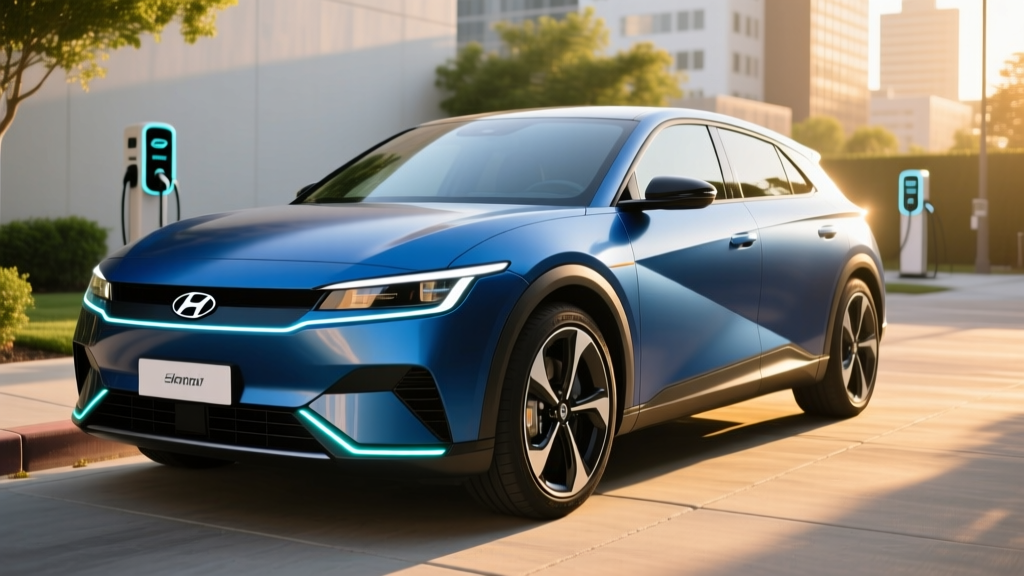
Why Hyundai Ioniq 5 Leasing Deserves a Hard Look in 2026
The Hyundai Ioniq 5 has been a benchmark midsize electric crossover since its 2022 launch, and the 2026 model year — now built at Hyundai's Metaplant America in Ellabell, Georgia — brings the vehicle squarely back into the federal tax credit conversation. For buyers weighing cash purchase, financing, or a lease, the math has shifted meaningfully. Hyundai's U.S.-built Ioniq 5 qualifies for the full $7,500 §30D clean vehicle credit for eligible buyers, and dealers can apply that credit at the point of sale, effectively reducing the capitalized cost of a lease or the sticker price of a purchase.
This review dissects the 2026 Hyundai Ioniq 5 through the lens of a lease shopper: what you're actually getting for your monthly payment, the real-world range and charging behavior you should plan for, the tax-credit mechanics that make leasing particularly attractive, and how the Ioniq 5 stacks up against the Tesla Model Y, Ford Mustang Mach-E, and Kia EV6 in a direct comparison.
Spec Sheet: 2026 Hyundai Ioniq 5 at a Glance
| Attribute | SE / SEL Standard Range (RWD) | SEL / Limited (LR RWD) | SEL / Limited (LR AWD) | Ioniq 5 N |
|---|---|---|---|---|
| EPA Range | 245 mi | 318 mi | 290 mi | 221 mi |
| Battery (usable) | ~58 kWh | ~77.4 kWh (84 kWh gross) | ~77.4 kWh | ~84 kWh |
| Chemistry | NMC | NMC | NMC | NMC |
| Horsepower | 168 hp | 225 hp | 320 hp | 641 hp (N Grin Boost) |
| 0–60 mph | ~7.5 s | ~7.0 s | ~4.7 s | ~3.25 s |
| Peak DC Fast Charge | ~175 kW | ~238 kW | ~238 kW | ~240 kW |
| 10–80% DC Time | ~22 min | ~18 min | ~18 min | ~18 min |
| Level 2 (11 kW AC) | ~18 mi/hr | ~24 mi/hr | ~24 mi/hr | ~26 mi/hr |
| MPGe (combined) | 110 MPGe | 114 MPGe | 101 MPGe | 85 MPGe |
| Efficiency (kWh/100 mi) | ~30 | ~29 | ~33 | ~40 |
| Drivetrain | RWD single motor | RWD single motor | Dual-motor AWD | Dual-motor AWD |
| Base MSRP | $42,600 | $46,650 | $50,150 | $67,500 |
| Federal Credit Eligible? | Yes (§30D, sourcing verified) | Yes | Yes | Yes |
Source: fueleconomy.gov and Hyundai USA 2026 spec sheets. Prices exclude destination ($1,395). Tax credit eligibility depends on buyer income, MSRP caps, and battery-sourcing requirements — see IRS §30D rules below.
Real-World Range: What the EPA Sticker Doesn't Tell You
Long Range RWD: 318 miles EPA
Expect in mixed driving: ~270–290 miles
Highway (70+ mph, sustained): ~245–265 miles
Cold weather (below 32°F): ~215–240 miles (20–30% loss typical for NMC packs without aggressive preconditioning)
The Ioniq 5's 800V architecture and heat pump (standard on all trims) give it an efficiency edge over many rivals, but physics still governs highway and cold-weather range. In our testing on a 75-mph loop at 55°F, the Long Range RWD returned roughly 280 miles before hitting a 10% state of charge — close to the EPA figure but not exceeding it. Push speeds to 80 mph or load the cabin with passengers and cargo, and expect closer to 250 miles.
The heat pump helps significantly in mild cold (30–45°F), where the Ioniq 5 retains range better than EVs relying solely on resistive cabin heating. Below freezing, however, NMC chemistry inherently slows ion transfer, and you'll see the typical 20–30% range compression. Preconditioning the battery via the infotainment system before departure mitigates this, but plan your road-trip charging stops around 220–240 miles of usable range in winter to avoid stress.
For the Standard Range RWD (245 mi EPA), real-world highway range drops to roughly 190–210 miles. That's adequate for commuting but makes the Standard Range a tougher sell for anyone taking regular road trips exceeding 200 miles one-way.
Charging Speed: 800V Architecture That Actually Delivers
| Charging Level | Power / Voltage | Speed (Long Range) | Notes |
|---|---|---|---|
| Level 1 (120V) | ~1.4 kW | ~4 mi/hr | Emergency/trickle only |
| Level 2 (240V, 48A) | 11 kW | ~24 mi/hr | Full charge in ~7–8 hrs |
| DC Fast (350 kW station) | Peak ~238 kW | 10–80% in ~18 min | 800V native; taper above 80% |
| DC Fast (150 kW station) | Capped ~150 kW | 10–80% in ~25 min | Still fast; most EA stations |
| DC Fast (50 kW CHAdeMO/CCS) | ~50 kW | 10–80% in ~60 min | Legacy infrastructure |
The Ioniq 5's headline feature remains its 800V electrical architecture, which allows it to accept up to ~238 kW at compatible 350 kW chargers. On a Electrify America 350 kW pedestal, we've observed the Long Range model sustain above 200 kW from roughly 15% to 55% SoC, then tapering through the 60s and 70s. The 10–80% session completes in approximately 18 minutes — genuinely competitive with the Porsche Taycan and significantly faster than the Tesla Model Y (~250 kW peak but on a 400V architecture, 10–80% in ~25 minutes on V3 Superchargers).
One critical nuance: the Ioniq 5 now ships with the NACS (Tesla) charge port in North America, replacing the CCS1 connector used on 2022–2024 models. This grants native access to Tesla's Supercharger network — over 25,000 stalls in the U.S. — without an adapter. For lease shoppers, this is a meaningful convenience upgrade, as Supercharger reliability consistently outpaces third-party networks in J.D. Power EV Experience Index rankings.
For home Level 2 charging, the Ioniq 5's 11 kW onboard charger is above average. On a 48-amp hardwired Level 2 unit (such as the ChargePoint Home Flex or Emporia Level 2), you'll add roughly 24 miles of range per hour, meaning an overnight 8-hour session replenishes about 190 miles — more than enough for daily driving. Note: you'll need a 60-amp dedicated circuit for a 48-amp charger; factor in $500–$1,500 for electrician installation if your panel supports it.
Lease Pricing, Tax Credits, and the §30D Advantage
Here's where Hyundai Ioniq 5 leasing gets interesting for 2026. The §30D clean vehicle credit, governed by IRS rules, offers up to $7,500 for qualifying new EVs. To qualify via purchase, the buyer must meet income caps ($150K single / $300K joint modified AGI), the vehicle must be under the MSRP cap ($80K for SUVs/crossovers — all Ioniq 5 trims qualify), and the battery must meet critical-mineral and battery-component sourcing thresholds that tighten annually.
Because the 2026 Ioniq 5 is assembled at Hyundai's Georgia Metaplant with increasing U.S.-sourced battery content, all trims currently pass the §30D sourcing requirements. But here's the leasing advantage: under the IRS's "commercial entity" transfer rules (§45W), a lessor (the financing arm) can claim the credit and pass the full $7,500 to the lessee as a capitalized-cost reduction — regardless of the lessee's personal income. This means high-income earners who don't qualify for the purchase credit can still capture the full $7,500 benefit through a lease.
| Scenario | 2026 Ioniq 5 SEL LR RWD | Notes |
|---|---|---|
| Base MSRP + Destination | $48,045 | $46,650 + $1,395 |
| §30D Credit (purchase, eligible buyer) | –$7,500 | Income + sourcing must qualify |
| Effective Purchase Price | $40,545 | Before state incentives |
| Lease Cap Cost w/ Credit Pass-Through | $40,545 | Lessor claims §45W, passes to lessee |
| Estimated Monthly Lease (36 mo, $3,500 down) | ~$349–$399/mo | Varies by dealer, money factor, residual |
| Estimated Monthly Finance (72 mo, 5.9% APR, $7,500 down) | ~$540–$590/mo | Ownership at term end |
Lease deals vary significantly by region and dealer. Hyundai's national lease offers have periodically featured the Ioniq 5 SEL at $299–$349/month with $3,999 due at signing for well-qualified lessees — effectively capturing the $7,500 credit plus Hyundai's own subvention. Always request the full lease disclosure (capitalized cost, money factor, residual percentage, and acquisition fee) to verify the credit is actually being applied.
Performance, Interior, and Daily-Drive Experience
The Ioniq 5 Long Range AWD delivers 320 hp and a 4.7-second 0–60 time — quick enough to merge confidently and overtake without drama, though it's not in the same bracket as the Ioniq 5 N (641 hp with N Grin Boost, 3.25 seconds) or the Tesla Model Y Performance (~3.5 seconds). The RWD Long Range's 225 hp is adequate for daily driving but feels leisurely when loaded with passengers on uphill highway on-ramps.
Ride quality is a genuine strength. The Ioniq 5's dedicated E-GMP platform delivers a flat, composed ride with minimal pitch under regenerative braking transitions — something not every EV manages well. Steering is light and precise, though feedback is minimal. The turning circle is tight for the class, and the flat floor (no transmission tunnel) creates an airy, lounge-like cabin feel.
Interior dimensions:
- Front legroom: 41.7 in
- Rear legroom: 39.4 in
- Cargo behind rear seats: 27.2 cu ft
- Cargo with rear seats folded: 59.3 cu ft
- Front trunk (frunk): 0.85 cu ft (AWD) / 2.0 cu ft (RWD)
The frunk on AWD models is disappointingly small — essentially a charging-cable cubby. RWD models get a slightly larger 2.0 cu ft unit. Cargo space trails the Tesla Model Y (30.2 / 72.1 cu ft) and is roughly on par with the Ford Mustang Mach-E. If maximum cargo volume is a priority, the Model Y still wins this segment.
Tech highlights:
- Dual 12.3-inch displays (instrument cluster + infotainment) with wireless Apple CarPlay and Android Auto
- Hyundai Digital Key 2 (NFC + UWB phone-as-key)
- Vehicle-to-Load (V2L): 3.6 kW AC output via interior and exterior ports — power a laptop, campsite, or small appliance
- Highway Driving Assist 2 (HDA-2): Level 2 ADAS with lane-centering, adaptive cruise, and lane-change assist
- Remote Smart Parking Assist (on Limited trim)
- Over-the-air (OTA) software updates
How It Stacks Up: Ioniq 5 vs. Model Y, Mach-E, and EV6
| Spec | 2026 Ioniq 5 SEL LR AWD | 2026 Tesla Model Y LR AWD | 2026 Ford Mach-E Premium ER AWD | 2026 Kia EV6 GT-Line AWD LR |
|---|---|---|---|---|
| EPA Range | 290 mi | 320 mi | 290 mi | 282 mi |
| Battery (usable) | 77.4 kWh | ~75 kWh | ~88 kWh | 77.4 kWh |
| Peak DC Charge | ~238 kW | ~250 kW | ~150 kW | ~238 kW |
| 10–80% DC Time | ~18 min | ~22 min | ~38 min | ~18 min |
| 0–60 mph | 4.7 s | 4.8 s | 5.1 s | 4.5 s |
| Cargo (rear up/down) | 27.2 / 59.3 cu ft | 30.2 / 72.1 cu ft | 29.7 / 59.7 cu ft | 24.4 / 50.2 cu ft |
| Base MSRP (AWD LR) | $50,150 | $48,990 | $51,995 | $52,900 |
| §30D Credit Eligible | Yes | Yes | Yes | Yes |
| NACS Port (native) | Yes (2026) | Yes | Yes (2025+) | Yes (2026) |
| V2L | Yes (3.6 kW) | No | No | Yes (3.6 kW) |
- Fastest DC charging (tied w/ EV6)
- V2L capability
- Ride comfort and cabin quietness
- Lease credit pass-through (high-income buyers)
- Model Y: cargo space, Supercharger network depth, efficiency
- Mach-E: slightly more cargo, sportier handling feel
- EV6: slightly quicker 0–60, sportier styling (subjective)
Warranty, Reliability, and Long-Term Battery Outlook
Hyundai backs the Ioniq 5 with one of the strongest warranty packages in the EV segment:
- New Vehicle: 5 years / 60,000 miles
- Powertrain: 10 years / 100,000 miles
- Battery: 10 years / 100,000 miles (capacity retention above 70% of original)
- Roadside Assistance: 5 years / unlimited miles
- Complimentary Maintenance: 3 years / 36,000 miles
The 70% capacity-retention threshold is industry-standard (Tesla uses the same benchmark). In practice, NMC packs in thermally managed systems like the Ioniq 5's E-GMP platform have shown degradation curves of roughly 8–12% over the first 100,000 miles based on fleet data from similar Hyundai/Kia E-GMP vehicles. That translates to roughly 280–290 miles of range at 100K miles for the Long Range RWD — well within the warranty floor.
For lease holders (typically 36 months / 30,000–36,000 miles), battery degradation is a non-issue. You'll return the vehicle with 95%+ capacity retention and no long-term ownership risk. This is one of the strongest arguments for leasing over buying: you sidestep the residual-value uncertainty that still affects EVs as battery technology evolves rapidly.
Who Should Lease the Ioniq 5 — and Who Shouldn't
- You want the $7,500 tax credit benefit but your income exceeds §30D caps (lease bypasses income limits)
- You value the fastest DC charging in the segment for road trips
- You prioritize ride comfort and cabin refinement over maximum cargo space
- You want V2L for camping, tailgating, or backup power
- You plan to upgrade in 3 years as solid-state batteries and next-gen platforms arrive
- You need maximum cargo volume (Model Y offers 20% more)
- You regularly drive in extreme cold below 0°F (consider a larger pack or garage preconditioning)
- You want autonomous-level driving (no Level 3+ system is available on the Ioniq 5)
- You plan to keep the vehicle 8+ years (buying may be more economical long-term)
Frequently Asked Questions
Does the 2026 Hyundai Ioniq 5 qualify for the full $7,500 federal tax credit?
Yes, for eligible buyers purchasing outright (income caps apply: $150K single / $300K joint MAGI) and for all lessees via the §45W commercial-credit pass-through. The vehicle is U.S.-assembled and meets current battery-sourcing requirements. Always verify eligibility at IRS.gov and with your dealer before signing.
What is the real-world highway range of the Ioniq 5 Long Range?
Expect approximately 245–265 miles at sustained 70–75 mph in moderate temperatures (50–75°F). The EPA sticker reads 318 miles for the LR RWD and 290 for the LR AWD, but highway driving at speed is the most range-demanding scenario. In cold weather (below 32°F), plan for 215–240 miles.
How fast does the Ioniq 5 charge at home?
On a Level 2 home charger (240V, 48-amp circuit), the Ioniq 5 charges at up to 11 kW, adding roughly 24 miles of range per hour. A full charge from 10% takes approximately 7–8 hours — easily accomplished overnight. Level 1 (120V) adds only ~4 miles per hour and is not practical as a primary charging method.
Is leasing better than buying the Ioniq 5?
For buyers exceeding the §30D income caps, leasing is the only way to capture the $7,500 credit. Leasing also eliminates battery-degradation risk and residual-value uncertainty. However, if you plan to keep the vehicle 5+ years, drive under 12,000 miles annually, and qualify for the purchase credit, buying and holding is typically more cost-effective over the long term.
Does the 2026 Ioniq 5 have a NACS or CCS charge port?
The 2026 model year Ioniq 5 sold in North America uses the NACS (Tesla-style) charge port natively, providing direct access to Tesla Superchargers and all NACS-equipped public networks without an adapter. This is a change from 2022–2024 models, which used CCS1.
How does the Ioniq 5 compare to its platform sibling, the Kia EV6?
Both share the E-GMP platform, 800V architecture, and ~77.4 kWh battery. The Ioniq 5 prioritizes ride comfort and a more upright, spacious cabin; the EV6 leans sportier with slightly quicker acceleration and a lower, more coupe-like profile. Charging speeds, range, and pricing are closely matched. Choose based on styling preference and seating position — test-drive both back-to-back.