The Case for a 2026 Hyundai Ioniq Lease
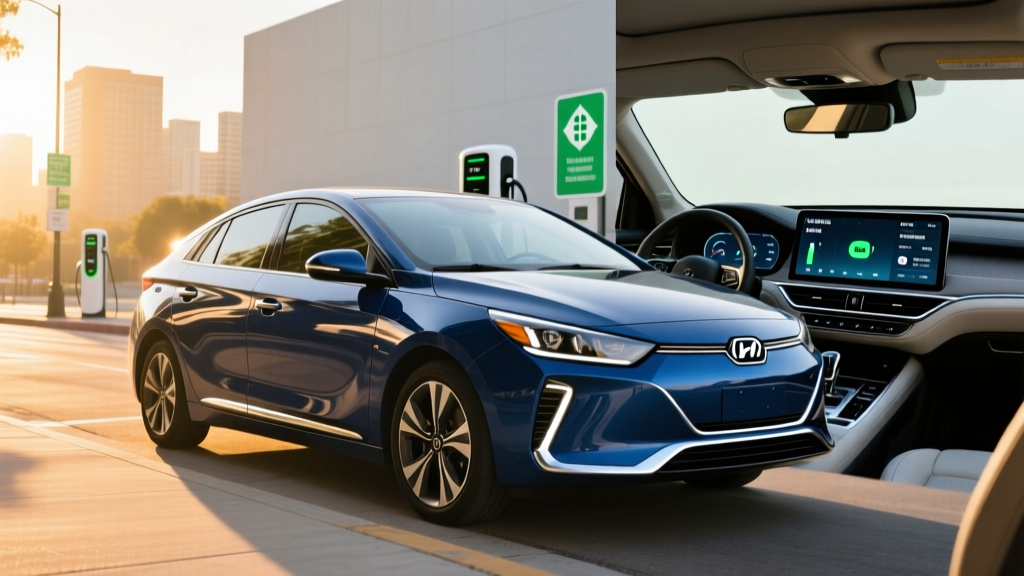
For many EV shoppers in 2026, the Hyundai Ioniq 5 remains the benchmark for balancing retro-futuristic design, ultra-fast 800V charging architecture, and practical daily usability. But with shifting federal tax incentives and competitive pressure from the Tesla Model Y and Ford Mustang Mach-E, is signing an Ioniq lease the smartest financial move? Leasing allows drivers to access the latest EV technology while mitigating concerns about long-term battery degradation and resale value volatility.
Unlike a purchase, where you must navigate the complex IRS §30D federal tax credit rules regarding income caps and battery sourcing, a lease often allows the leasing company to claim the commercial clean vehicle credit and pass the savings directly to you as a "lease cash" incentive. This guide explores the technical specs, real-world efficiency, and ownership economics of the 2026 Ioniq 5 to help you decide.
Performance and Drivetrain Specs
The 2026 Ioniq 5 continues to utilize Hyundai’s Electric-Global Modular Platform (E-GMP), which supports both 400V and 800V charging systems. Most trims are available in either Standard Range (RWD) or Long Range (RWD and AWD).
| Spec | Standard Range (RWD) | Long Range (RWD) | Long Range (AWD) |
|---|---|---|---|
| Horsepower | 168 hp | 225 hp | 320 hp |
| Torque | 258 lb-ft | 258 lb-ft | 446 lb-ft |
| 0-60 mph | ~7.2 sec | ~5.1 sec | ~4.5 sec |
| Top Speed | 115 mph | 115 mph | 115 mph |
| Towing Capacity | Not Rated | 1,650 lbs | 2,300 lbs |
The AWD model offers significantly more punch, making it the choice for those who frequently drive in inclement weather or need the extra passing power on highways. However, the RWD Long Range is the efficiency sweet spot for most commuters.
Battery Chemistry and Real-World Range
Hyundai primarily uses Nickel-Cobalt-Manganese (NMC) chemistry in the Ioniq 5's larger battery packs, prioritizing energy density for maximum range. The Standard Range model may use Lithium Iron Phosphate (LFP) in some markets, which is more durable but heavier; however, for the 2026 US model year, the focus remains on the 84.0 kWh usable battery for Long Range trims.
Range Reality Check
EPA Estimated Range: Up to 318 miles (Long Range RWD).
Real-World Expectation: In mixed driving at 70 mph, expect approximately 270–290 miles. In freezing temperatures (below 30°F), range can drop by 20–30% without preconditioning, falling to roughly 220–240 miles. The Ioniq 5's heat pump, standard on most trims, helps mitigate this loss compared to competitors.
According to fueleconomy.gov, the Long Range RWD achieves an impressive 117 MPGe combined, translating to roughly 29 kWh/100mi in real-world efficiency testing.
Charging Speed: The 800V Advantage
The standout feature of the Ioniq 5 is its 800V electrical architecture. While most EVs in this class are limited to 400V systems peaking at 150 kW, the Ioniq 5 can accept up to 240 kW at a DC fast charger. This means shorter stops on road trips, provided you can find a charger capable of delivering that power.
| Charging Level | Power / Rate | Time / Range Added |
|---|---|---|
| Level 1 (120V) | ~1.4 kW | ~3-4 miles per hour |
| Level 2 (240V Home) | 10.9 kW | ~35 miles per hour (0-100% in ~8 hrs) |
| DC Fast Charge | Peak 240 kW | 10-80% in ~18 minutes |
Note: To achieve the 18-minute 10-80% charge, the battery must be preconditioned (using the "Route to Charger" feature in the navigation) and the ambient temperature must be moderate.
2026 Ioniq Lease Pricing and Tax Credits
Leasing an Ioniq 5 can bypass the strict MSRP and income caps of the §30D purchase credit. Under current IRS guidance, leased vehicles may qualify for the §45W Commercial Clean Vehicle Credit, which leasing banks often factor into the "lease cash" rebate.
| Trim Level | Base MSRP | Est. Lease Cash | Eff. Cap Cost |
|---|---|---|---|
| SE Standard Range | $43,500 | -$7,500 | $36,000 |
| SEL Long Range | $48,500 | -$7,500 | $41,000 |
| Limited Long Range | $54,000 | -$7,500 | $46,500 |
Always verify with your local dealer whether the "lease cash" is being applied as a capitalized cost reduction. This effectively lowers the monthly payment significantly compared to financing without the incentive.
Interior, Tech, and Practicality
The Ioniq 5's cabin is defined by its "Living Space" concept, featuring a dual 12.3-inch panoramic display and a universal island center console that can slide back for easier access to rear seats.
- Cargo Volume: 27.2 cu ft (rear seats up), 59.3 cu ft (rear seats folded).
- Front Trunk (Frunk): 0.85 cu ft (enough for charging cables or a small bag).
- Rear Legroom: 39.4 inches, which is best-in-class for the crossover segment.
- Tech: Wireless Apple CarPlay/Android Auto, Digital Key 2, and Hyundai’s Highway Driving Assist 2 (HDA 2).
One notable drawback for some is the lack of a rear windshield wiper, which can be a visibility issue in heavy rain or snow, though Hyundai has addressed this with a hydrophobic glass coating in recent updates.
Is the Ioniq 5 Right for You?
Who Should Lease the Ioniq 5?
- The Tech-Focused Commuter: If you want the fastest charging in the segment and a unique interior design.
- The Urban Family: Excellent rear-seat space and easy-to-use LATCH anchors for child seats.
- The Lease-Seeker: Those who want to avoid the risk of battery degradation and want to upgrade to solid-state tech in 3-4 years.
Who Should Look Elsewhere?
- The Road-Tripper: While charging is fast, the real-world range at 80 mph is lower than the Tesla Model Y.
- The Towing Enthusiast: With a max of 2,300 lbs, it cannot handle heavy trailers or large boats.
Pros and Cons Summary
Pros
- Ultra-fast 800V DC charging (18 min 10-80%)
- Spacious, flat-floor interior with sliding console
- Standard heat pump for better cold-weather efficiency
- Vehicle-to-Load (V2L) capability to power devices
Cons
- No rear windshield wiper (visibility issue)
- Small frunk compared to Ford Mach-E
- Infotainment can be menu-heavy for simple tasks
- Highway range drops significantly at speeds over 75 mph
Frequently Asked Questions
Does the Ioniq 5 lease qualify for the $7,500 tax credit?
While you don't claim the §30D credit directly on a lease, the leasing company typically claims the §45W credit and passes it to you as "lease cash," effectively reducing your monthly payment by the same amount.
What is the battery warranty on the Ioniq 5?
Hyundai provides a 10-year/100,000-mile warranty on the EV battery and powertrain components, one of the best in the industry.
Can I charge the Ioniq 5 at a Tesla Supercharger?
For 2026, Hyundai has begun transitioning to the NACS port. If your model has a CCS port, you will need an adapter to use the Tesla network, which is now widely available through Hyundai's partnership.