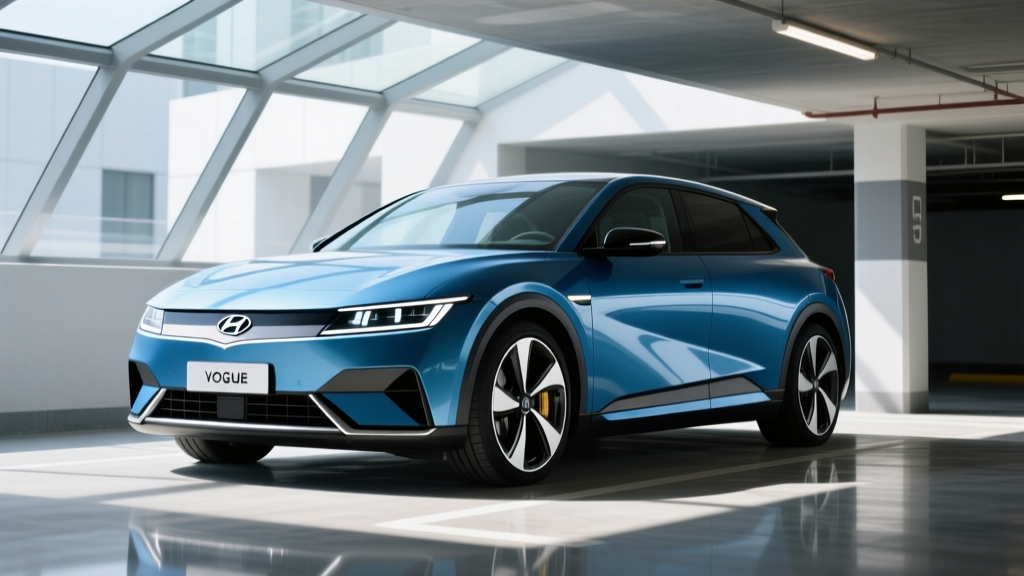
If you've searched for a Hyundai Ioniq lease in 2026, you're likely weighing the Ioniq 5 against the growing field of mid-size electric crossovers. The Ioniq 5 remains one of the most capable all-around EVs on the market, pairing an 800-volt architecture with retro-futuristic styling and practical cargo space. This profile covers every number you need — range, charging, pricing, tax credits, and how leasing compares to buying — so you can decide whether the Ioniq 5 fits your driveway and your budget.
Quick Verdict: Is the 2026 Ioniq 5 Worth Leasing?
The 2026 Hyundai Ioniq 5 earns its spot among the best electric crossovers for daily driving and road trips alike. Its 800V platform delivers genuinely fast DC charging, the NMC battery offers strong range across trims, and Hyundai's 10-year/100,000-mile powertrain warranty provides long-term confidence. Leasing the Ioniq 5 can make sense for drivers who want to lock in a predictable monthly payment, avoid depreciation risk, and potentially benefit from the $7,500 federal EV credit passed through the lease — even if they wouldn't qualify purchasing outright due to income or battery-sourcing rules.
2026 Hyundai Ioniq 5 Specs at a Glance
| Spec | SE/SEL RWD | Limited RWD | SEL/Limited AWD |
|---|---|---|---|
| EPA Range | 318 mi | 305 mi | 276 mi |
| Battery (usable) | 84.0 kWh, NMC (nickel-manganese-cobalt) | ||
| Max DC Fast Charge | 240 kW (peak) | ||
| 10–80% DC Charge | ~18 minutes (preconditioned) | ||
| Level 2 Home Charge | 10.9 kW onboard charger (~36 mi/hr) | ||
| Horsepower | 168 hp | 168 hp | 320 hp |
| 0–60 mph | 7.2 sec | 7.2 sec | 4.5 sec |
| Drivetrain | RWD | RWD | Dual-motor AWD |
| MPGe (combined) | 117 MPGe | 113 MPGe | 101 MPGe |
| Efficiency | 29 kWh/100mi | 30 kWh/100mi | 33 kWh/100mi |
| Base MSRP | $42,900 | $48,600 | $46,400 (SEL AWD) |
| Battery Warranty | 10 years / 100,000 miles | ||
Source: Hyundai USA and fueleconomy.gov. Prices exclude $1,295 destination fee.
Real-World Range: What the EPA Number Doesn't Tell You
The EPA estimate is a useful baseline, but real-world range depends heavily on speed, temperature, and terrain. Based on owner reports and independent testing, here's what to expect from the Long Range RWD (318 mi EPA):
- City/suburban driving (25–50 mph): 290–320 miles — regenerative braking recovers energy in stop-and-go traffic.
- Highway cruising (70–75 mph): 260–285 miles — aerodynamic drag dominates at sustained speed.
- Cold weather (20–32°F, highway): 210–250 miles — cabin heating and battery resistance reduce efficiency by 20–30%.
- Cold weather with heat pump (standard on Limited): Recovers roughly 15–20 miles of range vs. resistive heating.
The Ioniq 5's heat pump (standard on Limited, available on SEL) is a meaningful cold-weather advantage. If you live in the Upper Midwest or Northeast, prioritize trims that include it. Preconditioning the battery while plugged in — using the Hyundai app to warm the cabin and battery before departure — can recover significant range in winter.
Charging Speed: 800V Architecture Pays Off
The Ioniq 5's 800-volt electrical architecture is one of its strongest selling points. Here's how charging breaks down across levels:
| Charging Level | Power | Rate / Time | Notes |
|---|---|---|---|
| Level 1 (120V outlet) | 1.4 kW | ~5 mi/hr | Emergency/top-up only; 60+ hrs for full charge |
| Level 2 (240V home) | 10.9 kW | ~36 mi/hr; full charge in ~9 hrs | Requires 48A circuit on 60A breaker |
| DC Fast Charge | Peak 240 kW | 10–80% in ~18 min | Requires preconditioning; tapers above 80% |
Charging curve reality: The 240 kW peak only holds between roughly 10–55% state of charge. Above 60%, the rate tapers to ~150 kW, and above 80% it drops further to ~60–80 kW. This is normal lithium-ion behavior to protect cell health, but it means a 10–90% charge takes closer to 28–30 minutes, not 18. Plan your road-trip stops around 10–80% sessions for the best time efficiency.
For home Level 2 charging, you'll need a NACS connector (the Ioniq 5 adopted Tesla's North American Charging Standard for 2025 and beyond). This gives you direct access to the Tesla Supercharger network via adapter or native NACS port — a major advantage over CCS-only vehicles. Budget $500–$1,500 for a quality Level 2 home charger installation, depending on your electrical panel's capacity and proximity to your parking spot.
Pricing, Lease Deals & Federal Tax Credit
The 2026 Ioniq 5 lineup starts at $42,900 for the SE Standard Range and climbs to $52,600 for the Limited AWD (before destination). Here's how the trims break down:
- SE RWD (Long Range): $44,600 — cloth seats, 12.3" dual displays, basic Highway Driving Assist
- SEL RWD: $47,100 — heated front seats, power liftgate, enhanced ADAS suite
- Limited RWD: $48,600 — leather, ventilated seats, heat pump, premium audio, full LED lighting
- SEL AWD: $46,400 — same as SEL RWD plus dual-motor AWD
- Limited AWD: $52,600 — fully loaded with AWD
Federal Tax Credit: §30D Rules for 2026
Under IRS §30D, the Ioniq 5 may qualify for up to $7,500 in federal tax credits — but eligibility depends on three moving targets:
- MSRP cap: SUVs/crossovers must have an MSRP at or below $80,000 (all Ioniq 5 trims qualify).
- Buyer income cap: Modified AGI must not exceed $150,000 (single), $225,000 (head of household), or $300,000 (joint).
- Battery sourcing: Critical minerals and battery components must meet escalating domestic-content thresholds. Hyundai's U.S. manufacturing in Ellabell, Georgia, has improved sourcing compliance for 2026.
- Point-of-sale transfer: Eligible buyers can apply the credit as an instant rebate at the dealer, reducing the purchase price directly.
The leasing loophole: If you lease an Ioniq 5 rather than purchase it, the $7,500 credit goes to the leasing company (the vehicle's legal owner). Many Hyundai lease deals pass this savings through as a "lease cash" incentive, effectively reducing your monthly payment. This can make leasing attractive for buyers who exceed the income cap or whose tax liability is too low to absorb the full credit. Always confirm with your dealer that the lease cash incentive reflects the federal credit.
Interior, Cargo & Technology
The Ioniq 5's flat floor and long wheelbase (118.1 inches) create an airy, spacious cabin that punches above its class in passenger comfort:
- Front legroom: 41.7 inches
- Rear legroom: 39.4 inches — comparable to mid-size gas SUVs
- Cargo (rear seats up): 27.2 cu ft
- Cargo (rear seats folded): 59.3 cu ft
- Front trunk (frunk): 0.85 cu ft (RWD) / 0.4 cu ft (AWD) — enough for a charging cable bag
The dual 12.3-inch displays run Hyundai's latest infotainment with wireless Apple CarPlay and Android Auto. The Ioniq 5 also includes Vehicle-to-Load (V2L), which lets you power external devices (laptops, camping gear, even a small appliance) at up to 1.9 kW through an interior outlet or external adapter. It's a genuinely useful feature for camping or emergency backup power.
Driver Assistance: Highway Driving Assist 2
HDA2 works well on well-marked interstates and handles curves competently. It's competitive with Toyota's TSS 3.0 and Honda Sensing, though it doesn't offer hands-free driving like GM's Super Cruise or Ford's BlueCruise on pre-mapped highways.
Pros and Cons
- 800V charging: 10–80% in ~18 min at a capable DC station
- NACS connector: native Supercharger network access
- Spacious cabin with flat floor and generous rear legroom
- V2L capability for camping and emergency power
- Industry-leading 10-year/100,000-mile battery warranty
- Heat pump on Limited trim for cold-weather efficiency
- Competitive pricing vs. Tesla Model Y and Ford Mustang Mach-E
- Small frunk (especially AWD) limits front storage
- No hands-free driving mode (HDA2 requires hand contact)
- Rear wiper absent on earlier builds; confirm on 2026 units
- AWD range drops to 276 mi EPA — a 42-mile penalty vs. RWD
- Infotainment can lag when using wireless CarPlay/Android Auto
- Insurance premiums run 10–15% above comparable gas SUVs
How Does the Ioniq 5 Compare to Key Rivals?
| Spec | 2026 Ioniq 5 SEL RWD | 2026 Tesla Model Y LR | 2026 Ford Mach-E Premium RWD |
|---|---|---|---|
| EPA Range | 318 mi | 320 mi | 300 mi |
| Battery | 84 kWh NMC | ~78 kWh NMC | 91 kWh NMC |
| Peak DC Charge | 240 kW | 250 kW | 150 kW |
| 10–80% Time | ~18 min | ~20 min | ~35 min |
| 0–60 mph | 7.2 sec | 5.8 sec | 6.1 sec |
| Base MSRP | $47,100 | $44,990 | $46,995 |
| Battery Warranty | 10 yr / 100k mi | 8 yr / 120k mi | 8 yr / 100k mi |
| NACS Native | Yes | Yes | Adapter required |
The Ioniq 5's advantage lies in charging speed and warranty coverage. The Model Y offers slightly more range and faster acceleration at a lower starting price, but the Ioniq 5 counters with a longer battery warranty and a more traditional dealership experience for service. The Mach-E's 150 kW peak charge rate puts it at a significant road-trip disadvantage — those extra 17 minutes per stop add up on a cross-country drive.
Choose the Model Y if: Maximum Supercharger density matters in your region, you want the lowest starting price with strong range, and you prefer Tesla's software ecosystem.
Choose the Mach-E if: You prioritize driving dynamics and styling over charging speed, and most of your driving is within 200 miles of home.
Who Should Lease the 2026 Ioniq 5?
The Ioniq 5 fits several buyer profiles well:
- Daily commuters (30–80 miles round trip): The 318-mile range means charging once or twice a week at home. Level 2 overnight charging easily refills daily use.
- Young families: Rear legroom accommodates rear-facing car seats, and 27.2 cu ft of cargo space handles strollers and groceries. The flat floor makes the cabin feel larger than it is.
- Road-trip enthusiasts: With 10–80% charging in ~18 minutes at 350 kW stations, the Ioniq 5 minimizes downtime on long drives. NACS access opens up the Supercharger network for reliable cross-country travel.
- Lease-credit seekers: If your income exceeds the §30D cap or you can't use the full credit due to low tax liability, leasing can pass the $7,500 savings through as reduced monthly payments.
Who should look elsewhere? If you need more than 276 miles of range in AWD, tow more than 2,300 pounds, or require hands-free highway driving, consider the Rivian R1S, Model Y, or a BlueCruise-equipped Mach-E respectively.
Frequently Asked Questions
What is the real-world range of the 2026 Hyundai Ioniq 5?
The Long Range RWD carries an EPA estimate of 318 miles. In mixed real-world driving, expect 270–300 miles. Highway-only driving at 75 mph drops this to roughly 260–285 miles, and cold weather (below 32°F) can reduce range to 210–250 miles without preconditioning.
How fast does the Ioniq 5 charge at home and on the road?
At home on a 240V Level 2 charger (10.9 kW), the Ioniq 5 adds about 36 miles of range per hour, fully charging overnight in roughly 9 hours. On a DC fast charger, it peaks at 240 kW and charges from 10–80% in approximately 18 minutes when the battery is preconditioned.
Does the 2026 Ioniq 5 qualify for the $7,500 federal EV tax credit?
It may, depending on your income, the vehicle's MSRP, and battery-sourcing compliance. All Ioniq 5 trims fall under the $80,000 SUV MSRP cap. Buyer income must not exceed $150K (single) / $300K (joint). Hyundai's Georgia production has improved sourcing compliance for 2026, but verify with your dealer and consult a tax professional for your specific situation.
Is it better to lease or buy the Ioniq 5 in 2026?
Leasing makes sense if you want to avoid depreciation risk, prefer lower monthly payments, or can't qualify for the §30D credit as a purchaser (the leasing company claims the credit and may pass savings through as lease cash). Buying makes sense if you plan to keep the vehicle 5+ years, drive fewer than 15,000 miles annually, and qualify for the full credit at purchase.
What is the battery warranty on the Ioniq 5?
Hyundai covers the Ioniq 5's battery and powertrain for 10 years or 100,000 miles, whichever comes first. The warranty guarantees the battery will retain at least 70% of its original capacity during that period. This is among the longest EV battery warranties in the industry.
Can the Ioniq 5 use Tesla Superchargers?
Yes. Starting with the 2025 model year, the Ioniq 5 adopted the NACS (North American Charging Standard) connector, giving it native access to Tesla's Supercharger network without an adapter. This significantly expands reliable fast-charging options for road trips.