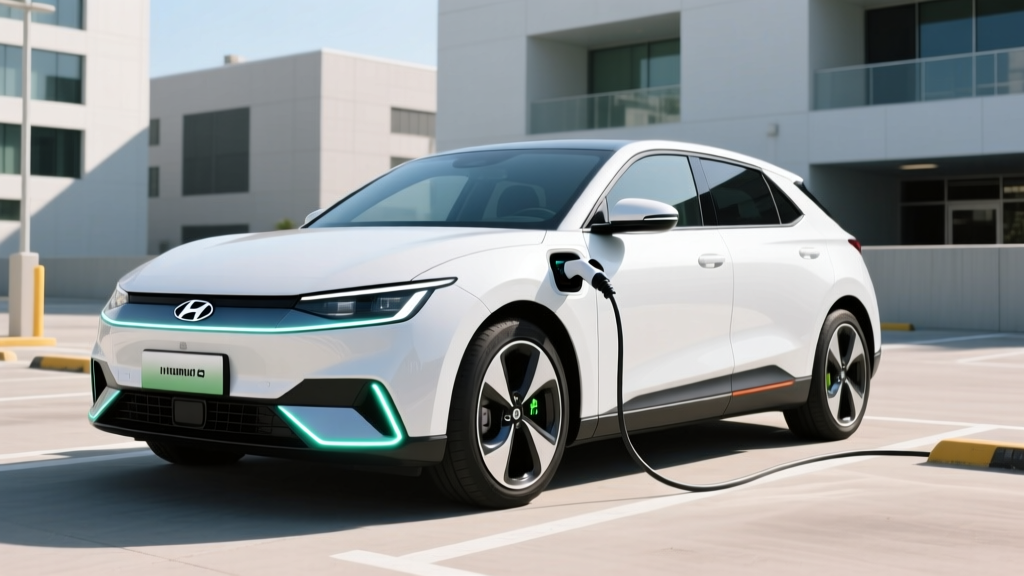
If you've been researching a Hyundai Ioniq car lease, you've likely noticed the Ioniq 5 dominating the conversation. The 2026 Hyundai Ioniq 5 arrives with meaningful updates — most notably the shift to the Tesla North American Charging Standard (NACS) port, a slightly enlarged battery, and revised pricing that makes leasing an increasingly compelling path to ownership. This profile breaks down every number that matters: real-world range, charging speeds, tax credit mechanics on a lease, and whether the Ioniq 5's monthly payment actually beats its rivals.
2026 Ioniq 5 Quick Spec Overview
| Spec | SEL RWD | Limited AWD |
|---|---|---|
| EPA Range | 318 mi | 274 mi |
| Usable Battery | 84.0 kWh (NMC) | 84.0 kWh (NMC) |
| Peak DC Fast Charge | 240 kW | 240 kW |
| 10–80% DC Charge | ~18 min (preconditioned) | ~18 min |
| Level 2 (240V) Rate | 10.9 kW (~40 mi/hr) | 10.9 kW (~40 mi/hr) |
| 0–60 mph | 7.1 sec | 4.7 sec |
| Horsepower / Torque | 168 hp / 258 lb-ft | 320 hp / 446 lb-ft |
| Drivetrain | RWD single motor | Dual-motor AWD |
| MPGe (city / hwy / combined) | 132 / 98 / 117 | 110 / 87 / 100 |
| Efficiency | 29 kWh/100 mi | 34 kWh/100 mi |
| Towing Capacity | — | 2,300 lbs |
| Base MSRP (incl. destination) | $43,975 | $52,675 |
| Battery / Powertrain Warranty | 10 yr / 100,000 mi | |
Real-World Range: What the EPA Sticker Doesn't Tell You
The EPA rates the 2026 Ioniq 5 SEL RWD at 318 miles and the AWD Limited at 274 miles. Hyundai uses an 84.0 kWh usable lithium-ion pack with NMC (nickel manganese cobalt) chemistry — chosen for its higher energy density compared to LFP, which matters in a mid-size crossover where packaging space is fixed.
- City / moderate-weather mixed driving: 295–315 mi (RWD) / 255–275 mi (AWD) — close to EPA if you use regen and avoid sustained 80+ mph speeds.
- Highway (70–75 mph sustained): Expect 245–265 mi (RWD) and 215–235 mi (AWD). Aerodynamic drag dominates above 65 mph.
- Cold weather (below 32°F): Budget a 20–30% reduction. A 318-mile RWD Ioniq 5 may deliver 220–250 miles in freezing conditions, even with the heat pump (standard on Limited, optional on SEL).
The Ioniq 5's heat pump and battery preconditioning help, but physics wins in deep cold. Source: fueleconomy.gov.
Charging: 800-Volt Architecture Still Pays Off in 2026
The Ioniq 5's E-GMP platform runs an 800-volt electrical architecture, which allows DC fast charging at up to 240 kW on a compatible 350 kW charger. In controlled testing with the battery preconditioned (navigate to a DC fast charger using the built-in routing, and the car warms the pack automatically), a 10–80% session takes roughly 18 minutes.
Here's the catch most spec sheets omit: the charge curve. The Ioniq 5 sustains peak power between roughly 10–55% state of charge, then tapers progressively. An 80–100% top-off can add another 20+ minutes. For road trips, plan to charge to 80% and drive on — that's the efficiency sweet spot.
| Level | Power / Voltage | Miles Added per Hour | Notes |
|---|---|---|---|
| Level 1 (120V household) | ~1.4 kW | ~5 mi/hr | Emergency / overnight trickle only |
| Level 2 (240V home) | 10.9 kW | ~40 mi/hr | Full 10–100% in ~8.5 hrs |
| DC Fast (350 kW station) | Peak 240 kW | Up to ~800 mi/hr (at peak) | 10–80% in ~18 min, preconditioned |
| DC Fast (150 kW station) | ~130 kW sustained | ~450 mi/hr (at peak) | 10–80% in ~25 min |
For 2026, Hyundai equips all Ioniq 5 models with the native NACS connector, granting access to Tesla Supercharger V3 and V4 stalls without an adapter. This dramatically expands the reliable fast-charging network — a major practical upgrade over the prior CCS1 port.
Lease Pricing, Tax Credits, and the §30D Loophole That Helps
A Hyundai Ioniq car lease in 2026 benefits from a quirk in the federal tax credit code that buyers should understand. Under IRS §30D, the $7,500 new clean vehicle credit has strict requirements for buyers:
- MSRP caps: $55,000 for SUVs (the Ioniq 5 qualifies as an SUV per IRS classification)
- Buyer AGI limits: $150,000 single / $300,000 married filing jointly
- Battery critical-mineral and component sourcing requirements (which shift annually and can disqualify specific trims)
However, under the commercial clean vehicle credit (§45W), leasing companies can claim the $7,500 credit regardless of MSRP caps, buyer income, or battery sourcing — and many pass the savings to lessees as a capitalized-cost reduction. Hyundai Capital has historically applied this "lease cash" to the Ioniq 5, effectively lowering the monthly payment. Always confirm current lease incentive amounts with your dealer, as they change monthly.
| Trim | MSRP | Est. Lease Cash Applied | Est. Monthly Payment | Due at Signing |
|---|---|---|---|---|
| SEL RWD | $43,975 | $7,500 | $349–$399 | $2,500–$3,500 |
| SEL AWD | $47,725 | $7,500 | $399–$449 | $2,500–$3,500 |
| Limited AWD | $52,675 | $7,500 | $469–$529 | $3,000–$4,000 |
These are estimates based on prevailing money factors and residual values for 2026 model-year leases. Actual payments depend on your credit tier, region, dealer fees, and current Hyundai incentive programs. The lease cash can sometimes stack with state rebates (e.g., California, Colorado, New York) — check your local DMV or energy office for details.
Performance, Interior, and Daily Livability
The dual-motor AWD Ioniq 5 hits 60 mph in 4.7 seconds with 320 hp, which is genuinely quick for a family crossover. The RWD model is more sedate at 7.1 seconds but offers the best efficiency and range. Both versions deliver composed ride quality; the 2026 model carries over the revised suspension tuning introduced in 2025 that firms up the low-speed rebound without sacrificing highway comfort.
Interior dimensions remain generous thanks to the flat-floor E-GMP skateboard:
- Front legroom: 41.7 in
- Rear legroom: 39.4 in
- Cargo behind rear seats: 27.2 cu ft
- Cargo with rear seats folded: 59.3 cu ft
- Front trunk (frunk): 0.85 cu ft (RWD) / 0.42 cu ft (AWD) — enough for the charge cable and a small bag, not a real luggage compartment
The 12.3-inch dual-screen layout runs Hyundai's latest ccNC infotainment with wireless Apple CarPlay and Android Auto, over-the-air updates, and native NACS-routing integration for Supercharger navigation. The center console slides fore and aft (the "Universal Island"), which is genuinely useful in tight parking spots when you need to exit through the passenger side.
Driver assistance comes via Hyundai SmartSense, including Highway Driving Assist 2 (HDA-2), which is an SAE Level 2 system — it handles lane centering and adaptive cruise on divided highways but requires continuous driver supervision. It is not autonomous driving. Hands must stay on or near the wheel, and the system will issue escalating warnings if you disengage.
Warranty Coverage and Long-Term Battery Confidence
Hyundai backs the Ioniq 5's high-voltage battery and electric powertrain for 10 years / 100,000 miles, one of the longest warranties in the segment. The battery is warranted to retain at least 70% of its original capacity during that period. The basic vehicle warranty is 5 years / 60,000 miles.
For lessees on a 36-month lease, the powertrain warranty far exceeds the lease term, meaning any battery or motor defect is Hyundai's responsibility, not yours. This is one reason leasing an Ioniq 5 carries lower long-term risk than buying a used EV out of warranty.
How the Ioniq 5 Stacks Up Against Key Rivals
If you're cross-shopping a Hyundai Ioniq car lease, these are the alternatives that matter in 2026:
| Spec | Hyundai Ioniq 5 AWD | Tesla Model Y LR AWD | Ford Mustang Mach-E Premium AWD | Kia EV6 GT-Line AWD |
|---|---|---|---|---|
| EPA Range | 274 mi | 320 mi | 290 mi | 274 mi |
| Battery (usable) | 84.0 kWh | 78.1 kWh | 88.0 kWh | 84.0 kWh |
| Peak DC Charge | 240 kW | 250 kW | 150 kW | 240 kW |
| 10–80% Time | ~18 min | ~17 min | ~34 min | ~18 min |
| 0–60 mph | 4.7 sec | 4.8 sec | 5.1 sec | 4.5 sec |
| Starting MSRP (AWD) | $47,725 | $48,990 | $47,995 | $51,900 |
| Native Connector | NACS | NACS | CCS1 | NACS |
The Ioniq 5 and its platform-mate the Kia EV6 share the 800-volt architecture and 240 kW charging, which trumps the Mach-E's slower 150 kW peak. The Tesla Model Y Long Range still leads on EPA range and Supercharger access, but the Ioniq 5's interior materials, ride comfort, and physical button layout earn it consistent praise from owners who find Tesla's minimalism fatiguing.
- You want the fastest DC charging in its class without a Tesla badge
- Interior quality and physical controls matter to you
- You value the 10-year/100k-mile battery warranty
- Lease incentives make the monthly payment competitive
- Maximum EPA range is the priority (Model Y LR wins)
- You need more than 27.2 cu ft of cargo space (consider the Ioniq 9 or Kia EV9)
- You want hands-free highway driving (BlueCruise on Mach-E or Super Cruise on Cadillac Lyriq)
- Third-row seating is required
Pros and Cons at a Glance
- 240 kW DC charging is among the fastest in the segment
- Native NACS port in 2026 unlocks Tesla Superchargers
- Spacious rear seat with 39.4 in of legroom
- 10-year / 100k-mile battery warranty
- Strong lease cash incentives via §45W commercial credit
- Vehicle-to-load (V2L) can power devices up to 3.6 kW
- AWD range drops to 274 mi — below Model Y LR
- Frunk is nearly useless (under 1 cu ft)
- Rear wiper absent on pre-2025 models; 2026 still uses a washer-only system
- No hands-free driving mode (HDA-2 requires hands on wheel)
- Insurance premiums run 15–25% higher than comparable ICE crossovers
Who the 2026 Ioniq 5 Is Really For
The Ioniq 5 excels as a daily commuter and weekend road-tripper for households with home Level 2 charging access. If you drive under 50 miles round-trip on weekdays and can charge overnight, you'll rarely visit a public station. The 318-mile RWD range handles most day trips without a charge stop, and the 18-minute DC fast charge makes longer highway runs manageable with a single coffee break.
It's less ideal for heavy towing (no rating on RWD; 2,300 lbs on AWD is modest) or large families needing three rows. If you frequently drive in sub-freezing climates, the heat pump (standard on Limited, optional elsewhere) is worth specifying to minimize range loss.
Frequently Asked Questions
What is the real-world range of the 2026 Hyundai Ioniq 5?
The EPA rates the RWD at 318 miles and AWD at 274 miles. In mixed real-world driving, expect 270–300 miles (RWD) and 235–260 miles (AWD). Highway-only driving at 75 mph or cold weather below freezing can reduce these figures by 20–30%.
How fast does the Ioniq 5 charge at home and on the road?
At home on a 240V Level 2 charger, the Ioniq 5 accepts up to 10.9 kW, adding roughly 40 miles of range per hour — a full charge in about 8.5 hours. On a 350 kW DC fast charger with preconditioning, it peaks at 240 kW and charges from 10–80% in approximately 18 minutes.
Does the 2026 Ioniq 5 qualify for the federal EV tax credit?
For outright buyers, §30D credit eligibility depends on MSRP (the Ioniq 5 qualifies as an SUV under the $55,000 cap), buyer income ($150K single / $300K joint), and battery sourcing rules that change annually. For lessees, the commercial credit (§45W) often allows Hyundai Capital to pass through a $7,500 incentive as a lease cash reduction regardless of income or sourcing. Confirm current eligibility with your dealer and consult a tax professional for your specific situation.
Is it worth leasing the Ioniq 5 versus buying?
Leasing sidesteps the §30D sourcing restrictions and income caps, often resulting in a lower effective monthly cost. It also eliminates long-term battery degradation risk — though Hyundai's 10-year/100k-mile warranty already covers that for buyers. If you plan to keep the vehicle beyond 5–6 years, buying may make more financial sense; if you prefer a new car every 3 years and want the latest tech, leasing is the stronger play.
What's the biggest drawback of the Ioniq 5?
The AWD range of 274 miles trails the Tesla Model Y Long Range's 320 miles, and the frunk is too small to be practical. Some owners also note the lack of a traditional rear wiper blade, which can impair visibility in heavy rain. For most buyers, these are manageable trade-offs against the charging speed, interior quality, and warranty.
Specs and pricing reflect 2026 model-year information available at publication. Federal and state incentives are subject to change. Always verify current figures with Hyundai's official newsroom, your local dealer, and the IRS before signing a lease agreement.