Hyundai's Ioniq 5 has anchored the midsize electric crossover segment since its debut, and the 2026 model year arrives with updated battery chemistry options, standard NACS compatibility, and aggressive manufacturer incentives that make leasing one of the most cost-effective paths into a premium EV. If you've been searching for ioniq lease deals, this profile gives you the exact numbers — range, charging speed, pricing, and tax-credit mechanics — you need to evaluate whether a 2026 Ioniq 5 lease makes financial sense versus buying or choosing a rival like the Tesla Model Y, Ford Mustang Mach-E, or Kia EV6.
2026 Ioniq 5 at a Glance: Core Specifications
| Specification | SE / SEL (Standard Range) | SEL / Limited (Long Range RWD) | Limited (Long Range AWD) |
|---|---|---|---|
| EPA Range | 245 mi | 318 mi | 290 mi |
| Usable Battery | 63.0 kWh (LFP) | 84.0 kWh (NMC) | 84.0 kWh (NMC) |
| Peak DC Fast Charge | 175 kW | 240 kW | 240 kW |
| 10–80% DC Time | ~22 min | ~18 min | ~18 min |
| Level 2 Charge Rate | 10.9 kW (~36 mi/hr) | 10.9 kW (~36 mi/hr) | 10.9 kW (~36 mi/hr) |
| 0–60 mph | 7.4 sec | 7.0 sec | 4.5 sec |
| Horsepower | 168 hp | 225 hp | 320 hp |
| Drivetrain | RWD | RWD | Dual-Motor AWD |
| MPGe (Combined) | 110 MPGe | 114 MPGe | 101 MPGe |
| Efficiency | 30 kWh/100 mi | 29 kWh/100 mi | 33 kWh/100 mi |
| Base MSRP (2026) | $42,600 | $47,150 | $54,300 |
Real-World Range: What the EPA Sticker Doesn't Tell You
Real-world expectation: Plan for 265–285 miles on highway-heavy trips at 70–75 mph. In cold weather (below 32°F), expect a 20–30% reduction, bringing effective range to roughly 220–255 miles. City driving with regenerative braking can match or slightly exceed the EPA figure.
The 84.0 kWh NMC pack in the Long Range variants delivers strong efficiency thanks to Hyundai's heat pump (standard on all trims), which mitigates cold-weather losses better than many competitors. The Standard Range model's LFP (lithium iron phosphate) battery trades range for longevity — LFP cells tolerate daily 100% charging without degradation concerns, making it ideal for predictable commuting patterns where you rarely need the full 245-mile envelope.
According to fueleconomy.gov, the Long Range RWD achieves 114 MPGe combined, which translates to roughly 29 kWh per 100 miles. At the national average electricity rate of $0.17/kWh, that's approximately $4.93 per 100 miles — compared to $12.50+ for a 25 MPG gas crossover at $3.15/gallon.
Charging Speed: 800-Volt Architecture Still Sets the Pace
| Charging Level | Power / Rate | Miles Added per Hour | Notes |
|---|---|---|---|
| Level 1 (120V) | 1.4 kW | ~5 mi/hr | Emergency/trickle only |
| Level 2 (240V, 48A) | 10.9 kW | ~36 mi/hr | Full charge overnight (~8.5 hrs for 84 kWh pack) |
| DC Fast (350 kW station) | Peak 240 kW | ~14 mi/min at peak | 10–80% in ~18 min; tapers sharply above 80% |
| DC Fast (150 kW station) | Sustained ~130 kW | ~8 mi/min | 10–80% in ~28 min |
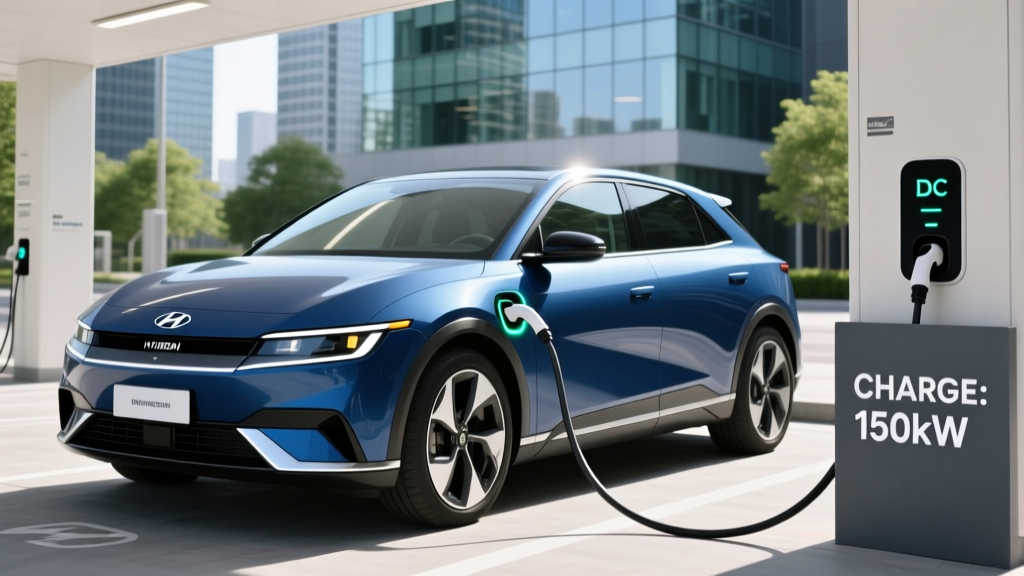
The Ioniq 5's 800-volt electrical architecture remains one of its strongest differentiators. On a 350 kW Electrify America or Tesla Supercharger (via native NACS port, now standard on the 2026 model), the Long Range variant peaks at 240 kW and sustains above 180 kW through roughly 55% State of Charge before tapering. The charge curve from 80–100% is considerably slower — adding that final 20% can take an additional 15–20 minutes. For road trips, the practical strategy is 10–80% charging and more frequent, shorter stops.
For home charging, a Level 2 wall connector on a 60-amp circuit (48 amps continuous) delivers the full 10.9 kW, replenishing the 84 kWh pack in about 8.5 hours. Installation costs typically range from $800 to $2,500 depending on panel proximity and local permit fees, per Hyundai's home charging guide. If your home has a 100-amp electrical panel, a panel upgrade to 200 amps may be necessary, adding $1,500–$3,000.
Lease Pricing, Incentives, and the Tax-Credit Advantage
Here's where ioniq lease deals get compelling. Hyundai has been aggressive with lease incentives, and the structure of the federal EV tax credit under IRS §30D creates a unique advantage for lessees.
| Trim | Base MSRP | Typical Lease (36 mo / 12k mi/yr)* | Federal Credit via Lease** | Effective Monthly |
|---|---|---|---|---|
| SE Standard Range | $42,600 | $399/mo + $2,999 due at signing | -$7,500 passed through | ~$349/mo equivalent |
| SEL Long Range RWD | $47,150 | $449/mo + $3,499 due at signing | -$7,500 passed through | ~$389/mo equivalent |
| Limited AWD | $54,300 | $549/mo + $3,999 due at signing | -$7,500 passed through | ~$479/mo equivalent |
*Lease figures are representative of national Hyundai promotional offers as of early 2026; dealer pricing varies by region. **Under the commercial clean vehicle credit (§45W), leasing companies can claim the $7,500 credit regardless of the buyer's income or the vehicle's battery-sourcing requirements, and pass savings through as a capitalized-cost reduction. Confirm with your dealer and tax advisor.
This "lease loophole" is the single biggest financial reason buyers choose leasing over purchasing. When you buy, the §30D credit requires:
- Adjusted gross income below $150,000 (single) or $300,000 (joint)
- Vehicle MSRP under $80,000 (SUVs/crossovers)
- Battery minerals and components meeting North American sourcing thresholds — which shift annually and can disqualify specific build months
With a lease, the lessor (Hyundai's financing arm) claims the commercial credit and applies it as a cap-cost reduction, sidestepping the income and sourcing restrictions entirely. Per IRS guidance on clean vehicle credits, this structure is fully legal and widely used. However, you don't own the vehicle at the end, and residual values for EVs remain uncertain — a risk you avoid with ownership but gain with flexibility.
Interior, Cargo, and Technology
The Ioniq 5's flat floor and 118.1-inch wheelbase create interior volume that punches well above its footprint:
- Front legroom: 41.7 inches
- Rear legroom: 39.4 inches (more than the Model Y's 35.2 inches)
- Cargo behind rear seats: 27.2 cu ft
- Cargo with seats folded: 59.3 cu ft
- Front trunk (frunk): 0.85 cu ft (RWD) / 0.68 cu ft (AWD) — enough for charging cables, not luggage
The dual 12.3-inch panoramic display runs Hyundai's latest infotainment with native wireless Apple CarPlay and Android Auto. The center console slides fore and aft by 5.5 inches — a signature feature called the "Universal Island" that makes front-seat walk-through practical in tight parking spots.
On the driver-assistance front, Highway Driving Assist 2 (HDA2) is standard on all trims. This is an SAE Level 2 system — it handles lane centering and adaptive cruise control, including lane-change assist, but requires continuous driver supervision. It is not autonomous driving. The Limited trim adds Remote Smart Parking Assist, which moves the vehicle in and out of tight spots via the key fob.
Warranty Coverage: Hyundai's Long-Game Advantage
- New Vehicle Limited Warranty: 5 years / 60,000 miles
- Powertrain Warranty: 10 years / 100,000 miles
- EV Battery Warranty: 10 years / 100,000 miles (covers capacity below 70% of original)
- Complimentary Maintenance: 3 years / 36,000 miles
- Roadside Assistance: 5 years / unlimited miles
For lease holders, the 3-year complimentary maintenance covers the entire typical lease term — tire rotations, cabin air filters, and multi-point inspections at no cost. The 10-year battery warranty far exceeds the lease duration, eliminating any degradation concern during ownership.
Pros and Cons: The Honest Assessment
Pros
- 800V charging: 10–80% in ~18 min on 350 kW stations
- Class-leading rear legroom (39.4 in)
- Heat pump standard on all trims — better cold-weather range retention
- Native NACS port for 2026 — direct Supercharger access, no adapter
- LFP option on Standard Range eliminates daily-charge degradation worry
- Lease structure sidesteps §30D income/sourcing restrictions
- Vehicle-to-load (V2L) powers devices up to 3.6 kW from the charge port
Cons
- Frunk is tiny (under 1 cu ft) — nearly useless for storage
- No rear wiper on early builds; check if 2026 resolves this
- AWD range drops to 290 mi (318 for RWD)
- Touch-capacitive climate controls — less intuitive than physical buttons
- Road noise noticeable above 70 mph on coarse pavement
- Insurance premiums run 15–25% higher than comparable gas crossovers
- Lease residuals uncertain — potential cost if you purchase at term end
Who Should Lease the 2026 Ioniq 5?
Best for: Suburban commuters who can install Level 2 at home and want a premium crossover without committing to long-term EV depreciation risk. The lease structure with pass-through credit makes the SEL Long Range RWD one of the best value propositions in the segment at roughly $389/month effective cost.
Also ideal for: Families who need rear-seat space (the 39.4 inches of rear legroom outclasses the Model Y and Mach-E), and road-trippers who value the 18-minute DC fast-charge capability on Electrify America's expanding 350 kW network.
Consider alternatives if: You need serious cargo volume (the Ford F-150 Lightning or Rivian R1S offer far more), you regularly tow over 2,000 lbs (the Ioniq 5 is rated for just 1,650 lbs with the AWD powertrain), or you want hands-free highway driving comparable to GM's Super Cruise.
Frequently Asked Questions
What is the real-world range of the 2026 Ioniq 5?
The EPA rates the Long Range RWD at 318 miles. In real-world highway driving at 70–75 mph, expect 265–285 miles. In cold weather below freezing, plan for 220–255 miles. The Standard Range LFP model delivers about 200–220 real-world highway miles from its 245-mile EPA rating.
How fast does the Ioniq 5 charge at home and on the road?
At home on a Level 2 (240V, 48A) charger, it adds roughly 36 miles per hour, fully replenishing the 84 kWh pack in about 8.5 hours. On a 350 kW DC fast charger, it peaks at 240 kW and charges from 10–80% in approximately 18 minutes. On a 150 kW station, expect roughly 28 minutes for the same 10–80% window.
Does the 2026 Ioniq 5 qualify for the $7,500 federal EV tax credit?
When purchasing, eligibility depends on your income (under $150K single / $300K joint), the vehicle's MSRP (under $80K — the Ioniq 5 qualifies), and battery-sourcing requirements that change annually. When leasing, the lessor can claim the commercial clean vehicle credit and pass the full $7,500 to you as a cap-cost reduction, regardless of your income or sourcing rules. Verify current eligibility at irs.gov.
Is leasing the Ioniq 5 better than buying?
Leasing is advantageous if you want to sidestep the purchase-side tax credit income/sourcing restrictions, avoid long-term EV depreciation risk, and upgrade every 3 years. Buying is better if you plan to keep the vehicle 5+ years (maximizing the warranty), drive under 12,000 miles annually, and qualify for the full §30D credit on your own tax return. Run both scenarios with your dealer — the break-even point typically favors leasing when the pass-through credit is applied.
How does the Ioniq 5 compare to the Tesla Model Y and Kia EV6?
The Ioniq 5 offers more rear legroom than the Model Y (39.4 vs 35.2 inches) and faster peak charging (240 kW vs ~250 kW, but with a flatter sustained curve). The EV6 shares the same 800V platform and battery options but has a sportier roofline that sacrifices cargo space. The Model Y has a denser Supercharger network advantage, though the Ioniq 5's native NACS port now provides direct Supercharger access. If interior space and charge speed matter most, the Ioniq 5 leads; if software ecosystem and network density matter most, the Model Y retains an edge.
What's the biggest drawback of the Ioniq 5?
The tiny frunk (under 1 cubic foot) is a persistent frustration — it fits charging cables but little else. Road noise on coarse pavement at highway speeds is also more noticeable than in the Genesis Electrified GV70 or BMW iX. Finally, EV insurance premiums remain elevated; expect quotes 15–25% above a comparable gas Tucson.