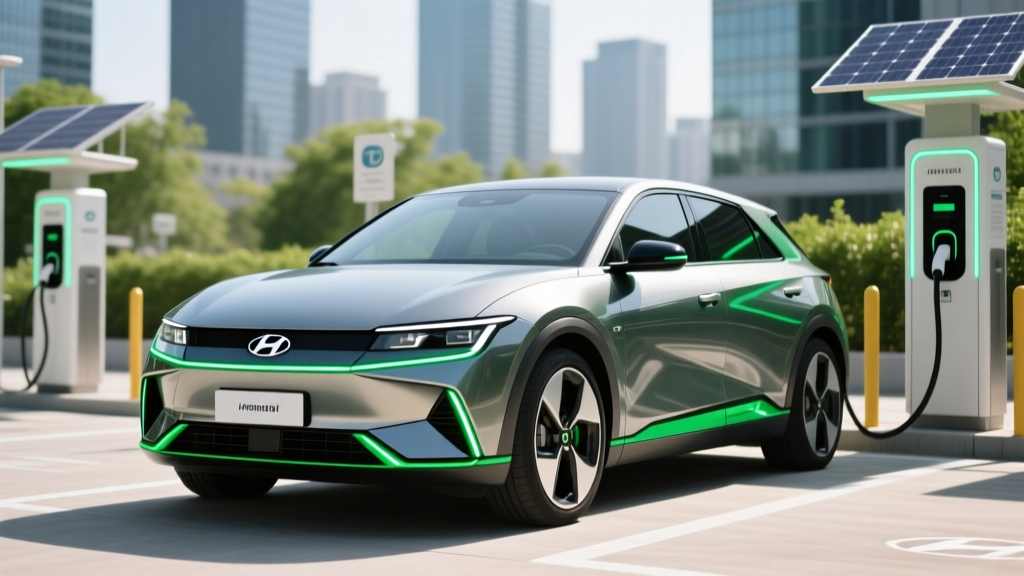
The Hyundai Ioniq 5 remains one of the most compelling electric crossovers on the market in 2026, blending 800V ultra-fast charging capability with a spacious interior and competitive EPA range. But with MSRP starting around $42,000 and climbing past $60,000 for the high-performance N variant, many buyers are turning to leasing to lower their monthly commitment. The real question isn't just what the monthly payment looks like — it's what the Ioniq 5 actually costs to own over five years when you factor in electricity, insurance, maintenance, depreciation, and the current federal tax credit landscape.
This guide breaks down the true total cost of ownership (TCO) for a 2026 Hyundai Ioniq 5, explains how the IRS §30D clean vehicle credit applies to lease structures, and shows you the real per-mile savings versus a comparable gas crossover. Whether you're weighing a lease or a purchase, the numbers below will tell you exactly where your money goes.
2026 Hyundai Ioniq 5: Key Specs at a Glance
Before we run the ownership numbers, here's what you're working with across the current Ioniq 5 lineup. Hyundai offers the Ioniq 5 in SE, SEL, Limited, and N trims, with both Standard Range and Long Range battery options.
| Spec | SE/SEL Std Range (RWD) | SE/SEL/Limited Long Range (RWD) | Long Range AWD | Ioniq 5 N |
|---|---|---|---|---|
| EPA Range | 240 mi | 303 mi | 260–290 mi | 221 mi |
| Battery (usable kWh) | 58 kWh (LFP) | 77.4 kWh (NMC) | 77.4 kWh (NMC) | 84 kWh (NMC) |
| Peak DC Charge Rate | ~150 kW | ~235 kW | ~235 kW | ~250 kW |
| 10–80% DC Fast Charge | ~25 min | ~18 min | ~18 min | ~18 min |
| Level 2 Charge Rate | 7.2 kW | 10.9 kW | 10.9 kW | 10.9 kW |
| Horsepower | 168 hp | 225 hp | 320 hp | 641 hp (N Grin Boost) |
| 0–60 mph | ~7.5 sec | ~6.8 sec | ~4.5 sec | ~3.3 sec |
| MPGe (combined) | 114 MPGe | 117 MPGe | 101–110 MPGe | 85 MPGe |
| Base MSRP (2026 est.) | ~$42,500 | ~$47,000 | ~$50,500 | ~$66,500 |
| Battery/Powertrain Warranty | 10 years / 100,000 miles | |||
5-Year Total Cost of Ownership: Ioniq 5 vs. Gas Crossover
The monthly lease payment is just one line item. Here's a realistic 5-year / 75,000-mile ownership cost projection for the Ioniq 5 Long Range RWD (SEL trim, ~$47,000 MSRP) compared against a similarly priced gas crossover like the Toyota RAV4 Limited (~$40,000 MSRP, 30 MPG combined).
| Cost Category | 2026 Ioniq 5 LR RWD (SEL) | Gas Crossover (30 MPG) | Notes |
|---|---|---|---|
| Purchase / Lease Cost (5 yr) | $24,600 (est. lease total incl. fees) | $26,400 (financed at 6.5%) | Ioniq 5 lease assumes ~$399/mo × 36 mo + $1,500 due at signing + renewal; gas vehicle financed over 60 mo |
| Federal Tax Credit | −$7,500 (applied as cap cost reduction via §30D/lease loophole) | $0 | See eligibility details below |
| Fuel / Electricity (75k mi) | $3,375 | $8,750 | EV: $0.15/kWh avg, 3.5 mi/kWh. Gas: $3.50/gal, 30 MPG |
| Maintenance (5 yr) | $1,200 | $3,800 | EV: cabin filter, wipers, tire rotation, brake fluid. Gas: oil, filters, spark plugs, transmission fluid, brake pads |
| Insurance (5 yr) | $10,500 | $7,800 | EV premiums run 15–35% higher on average |
| Depreciation (est. 5 yr) | ~$18,000 | ~$14,500 | EVs currently depreciate faster; lease transfers this risk to lessor |
| Net 5-Year Cost (est.) | ~$50,175 | ~$61,250 | Before state/utility incentives |
Federal Tax Credit: How §30D Applies to Ioniq 5 Leases in 2026
The federal clean vehicle credit under IRS §30D remains a major factor in EV affordability, but the rules have tightened considerably since the Inflation Reduction Act reshaped eligibility. Here's exactly what applies to the Ioniq 5 in 2026.
- Credit Amount: Up to $7,500 ($3,750 for critical minerals + $3,750 for battery components)
- MSRP Cap: Vans, SUVs, and pickup trucks capped at $80,000; sedans at $55,000. The Ioniq 5 qualifies as an SUV — all trims fall under $80,000.
- Buyer Income Limits (AGI): $300,000 joint filers / $225,000 head of household / $150,000 single
- Battery Sourcing: Critical minerals and battery components must meet escalating domestic/free-trade-partner thresholds. Hyundai's battery supply chain has been progressively restructured to meet these requirements, but confirm eligibility for the specific build month at the IRS qualified vehicles list.
- Point-of-Sale Transfer: As of 2024, you can transfer the credit to the dealer at purchase, reducing your out-of-pocket cost immediately — no waiting to claim on your tax return.
- Lease Loophole (§45W): When you lease (rather than buy), the credit technically goes to the lessor under the commercial clean vehicle credit (§45W). Most Hyundai dealers pass this through as a capitalized cost reduction, effectively lowering your monthly payment. This bypasses the §30D income caps, MSRP caps, and battery-sourcing requirements — making leasing a strategically advantageous path.
This lease structure is critical: if your income exceeds the §30D caps, or if a particular Ioniq 5 build doesn't meet the battery-sourcing thresholds for a purchase credit, leasing through the dealer can still deliver the full $7,500 benefit. Always confirm with the dealer that the lease quote reflects the credit as a cap cost reduction — not all dealers apply it automatically.
Charging vs. Gas: The Real Per-Mile Cost Math
EV ownership economics live or die on the cost-per-mile calculation. Here's how the Ioniq 5 stacks up under different charging scenarios versus a 30 MPG gas crossover at $3.50/gallon.
| Charging Scenario | Cost per kWh | Cost per Mile (Ioniq 5) | Cost per Mile (Gas, 30 MPG) | Savings per 1,000 Miles |
|---|---|---|---|---|
| Home Level 2 (national avg residential) | $0.15 | $0.043 | $0.117 | $74 |
| Home with off-peak utility rate | $0.09 | $0.026 | $0.117 | $91 |
| Public DC fast charging (avg) | $0.40 | $0.114 | $0.117 | $3 |
| Electrify America / Tesla Supercharger (peak) | $0.48–$0.55 | $0.14–$0.16 | $0.117 | −$23 to −$43 (more expensive) |
The Ioniq 5 achieves roughly 3.5 miles per kWh (28.6 kWh/100 mi) in mixed driving, per fueleconomy.gov data. At home charging rates, the savings are dramatic — roughly $74 per 1,000 miles, or $5,550 over 75,000 miles. But if you rely exclusively on public DC fast charging at premium rates, the Ioniq 5 can actually cost more per mile than a gas vehicle.
This is why home Level 2 charging is nearly essential to the EV value proposition. The Ioniq 5's 10.9 kW onboard charger (Long Range) adds roughly 38 miles of range per hour on a 240V/48A home charger — enough to fully replenish overnight. Installation of a home Level 2 charger typically costs $800–$2,500 depending on your electrical panel's capacity and the run length from panel to garage.
Maintenance Savings: Where EVs Actually Shine
The Ioniq 5's electric powertrain eliminates dozens of maintenance items that gas owners take for granted. Here's a direct comparison of typical 5-year / 75,000-mile maintenance costs.
| Service Item | Ioniq 5 (EV) | Gas Crossover |
|---|---|---|
| Oil changes (every 5,000–10,000 mi) | $0 | $750–$1,200 |
| Engine air filter | $0 | $150–$250 |
| Transmission fluid | $0 (no multi-speed trans) | $200–$400 |
| Spark plugs | $0 | $300–$500 |
| Brake pads (front + rear) | $0–$200 (regen braking extends life 2–3×) | $600–$1,200 |
| Cabin air filter | $150–$250 | $150–$250 |
| Coolant flush | $150 (at ~60k mi) | $150–$250 |
| Tire rotation + replacement | $1,400–$1,800 (EVs wear tires faster due to weight + instant torque) | $1,000–$1,400 |
| Estimated 5-Year Total | $1,200–$1,800 | $3,400–$5,000 |
The net maintenance savings of $2,000–$3,500 over five years is real, but note the tire cost caveat. The Ioniq 5 weighs roughly 4,300–4,700 lbs depending on trim, and its instant torque delivery accelerates tire wear. Budget for one set of replacement tires during a 5-year ownership period — and consider EV-specific tire compounds (like Michelin Pilot Sport EV or Hankook iON) that are optimized for lower rolling resistance and noise.
Insurance Reality: The Hidden EV Cost
EV insurance premiums remain a pain point. According to industry data, the Ioniq 5 costs roughly $2,000–$2,400 per year to insure for a driver with a clean record — approximately 20–30% more than a comparable gas crossover. Several factors drive this:
- Higher repair costs: EV battery packs and power electronics are expensive to replace after collision damage. Even minor rear-end impacts can trigger battery safety inspections that total a vehicle.
- Specialized labor: Fewer body shops are certified for high-voltage EV repairs, limiting competition and driving up labor rates.
- Vehicle MSRP: The Ioniq 5's starting price is higher than many gas crossovers, increasing comprehensive and collision premiums.
- Performance trims: The Ioniq 5 N's 641 hp and 3.3-second 0–60 time push it into sports-car insurance territory — expect premiums of $3,500+ annually.
Before signing a lease, run quotes from at least three insurers. Some carriers (like Progressive and State Farm) have begun offering EV-specific discounts, and bundling with homeowners insurance can shave 10–15% off the premium.
Depreciation and Resale: The Lease Advantage
EV depreciation has been steeper than the gas-vehicle average over the past three years, driven by aggressive price cuts from Tesla, rapid technology improvements, and consumer uncertainty about battery longevity. The Ioniq 5 has historically retained roughly 45–55% of its MSRP after three years and 40–48% after five years, compared to 55–65% for a well-regarded gas crossover like the RAV4.
For a $47,000 Ioniq 5 SEL Long Range, that translates to approximately $21,000–$24,500 in retained value after three years — meaning $22,500–$25,000 in depreciation. This is exactly why leasing makes financial sense for the Ioniq 5: the lessor (Hyundai Capital) absorbs the depreciation risk. Your lease residual is set at signing, and if the EV market continues to soften, you simply walk away at lease end.
Hyundai's 10-year/100,000-mile battery and powertrain warranty (transferable to second owners) provides some resale-value support, as does the brand's strong reliability reputation. But if long-term value retention is your top priority, purchasing a used Ioniq 5 at 2–3 years old (when the steepest depreciation has already occurred) may be the optimal strategy — and used EVs under $25,000 can qualify for a separate $4,000 used-EV tax credit under §25E.
State, Local, and Utility Incentives: Stacking the Savings
Beyond the federal credit, many Ioniq 5 buyers can stack additional incentives:
- California: Up to $2,000–$7,000 via the Clean Vehicle Rebate Project (CVRP) for income-eligible buyers, plus potential HOV lane access stickers.
- Colorado: State tax credit of up to $5,000 for new EV purchases (phased by MSRP and income).
- New York: Drive Clean Rebate of up to $2,000 at point of sale.
- Utility rebates: Many utilities offer $500–$1,500 rebates for home Level 2 charger installation (e.g., PG&E, ConEdison, Xcel Energy). Some offer time-of-use rate plans that cut charging costs by 40–60%.
- Home charger tax credit: The §30C Alternative Fuel Vehicle Refueling Property Credit offers up to $1,000 for home charger installation, subject to census-tract eligibility.
Combined with the federal credit, a buyer in California with utility rebates could potentially reduce the effective cost of an Ioniq 5 by $10,000–$12,000 — a meaningful dent in the lease cap cost or purchase price.
Frequently Asked Questions
How much does it really cost to own a Hyundai Ioniq 5 over 5 years?
Based on our analysis, the 5-year total cost for a 2026 Ioniq 5 Long Range RWD (SEL) lands around $50,000–$52,000 including lease payments, electricity, insurance, and maintenance — but before the $7,500 federal credit and state incentives. With all incentives applied, the net cost can drop to $40,000–$44,000, substantially less than a comparably equipped gas crossover over the same period.
Do I qualify for the $7,500 federal tax credit on the Ioniq 5?
For a purchase, you must meet income caps ($150k single / $300k joint), the vehicle must be under the $80,000 SUV MSRP cap (all Ioniq 5 trims qualify), and the battery must meet critical-mineral and component sourcing thresholds. Check the IRS qualified vehicle list for your specific build. For a lease, the §45W commercial credit pathway typically delivers the $7,500 benefit regardless of your income or the battery sourcing details — confirm with your dealer.
How much do I save on fuel and maintenance with the Ioniq 5?
If you charge primarily at home at $0.15/kWh, you'll save approximately $5,375 on fuel over 75,000 miles compared to a 30 MPG gas crossover. Maintenance savings add another $2,000–$3,500 over five years, for a combined savings of $7,400–$8,900. These savings shrink significantly if you rely on expensive public DC fast charging.
Are EVs more expensive to insure than gas cars?
Yes — typically 15–35% more expensive. The Ioniq 5 averages $2,000–$2,400 annually for a clean-record driver, compared to roughly $1,500–$1,800 for a gas crossover. Higher repair costs, specialized labor, and the vehicle's MSRP all contribute. Always get insurance quotes before committing to a lease or purchase.
How well does the Ioniq 5 hold its value?
The Ioniq 5 currently retains approximately 45–55% of MSRP after three years and 40–48% after five years. This is below the gas-crossover average but typical for mainstream EVs in the current market. Leasing transfers the depreciation risk to Hyundai Capital, which is one reason leasing is particularly attractive for this model.
What's the best Hyundai Ioniq 5 lease deal structure in 2026?
Look for a 36-month lease with the $7,500 federal credit applied as a capitalized cost reduction, minimal money due at signing (ideally first month + acquisition fee only, ~$1,500–$2,000), and a residual value of 55–60%. Monthly payments in the $350–$450 range for the SEL Long Range represent strong value. Hyundai frequently offers lease cash incentives on top of the federal credit — check HyundaiUSA.com's current offers page and negotiate the cap cost (sale price) independently of the lease terms.