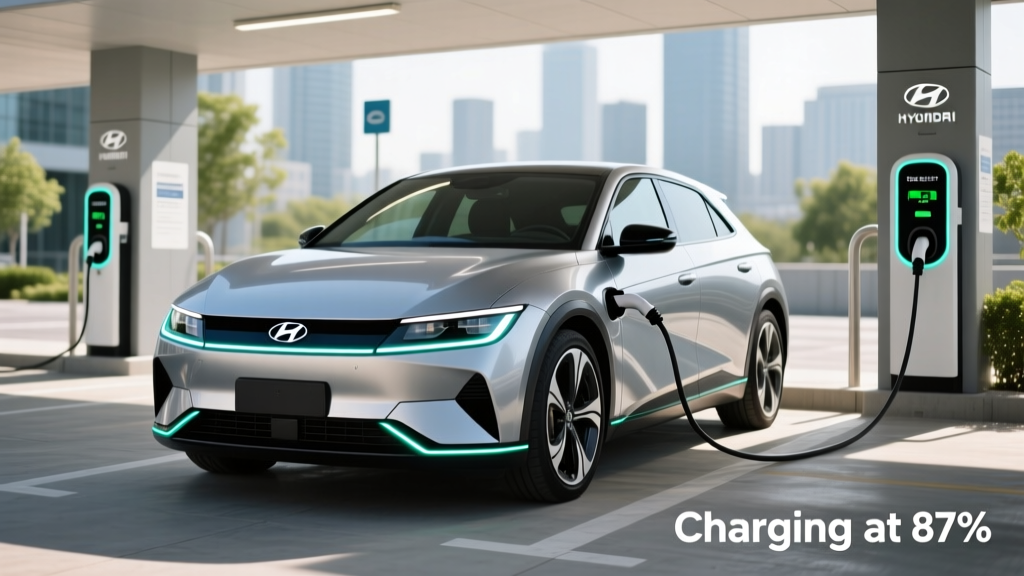
If you've searched for an EV deal lately, you've probably seen ads for a Hyundai Ioniq 5 lease $99 per month. The headline is irresistible: a world-class electric crossover for less than a streaming subscription bundle. But as any seasoned EV shopper knows, the sticker on a lease ad is only the beginning of the math. Behind that $99 figure lies a web of capitalized cost, down payment, mileage caps, and tax-credit pass-throughs that determine what you'll actually pay.
We've spent time in the 2026 Hyundai Ioniq 5 across multiple trims, road-tripped it, fast-charged it, and parsed the fine print on those viral lease offers. Here's the full picture — range, charging, pricing, tax credits, and whether this deal is genuinely worth it compared to rivals like the Tesla Model Y, Ford Mustang Mach-E, and Kia EV6.
Is the Hyundai Ioniq 5 $99 Lease Real?
Yes — but with critical caveats. The advertised $99/month Hyundai Ioniq 5 lease has appeared through Hyundai's promotional campaigns, typically on the SE Standard Range RWD trim. However, that price generally requires:
- A sizable down payment (capitalized cost reduction): Often $3,999 to $5,500 due at signing, which effectively pre-pays a large portion of the lease.
- Lease cash and incentive stacking: Hyundai frequently applies dealer cash, loyalty bonuses (typically $500–$1,000 for returning Hyundai owners), and passes through the $7,500 federal EV lease credit (structured under IRS §45W commercial clean vehicle rules, which bypass the MSRP and income caps that apply to purchases under §30D).
- Mileage limits: Usually 10,000 miles/year. Exceed that and you'll pay $0.20–$0.25 per mile at lease-end.
- 36-month term: Standard for these promotional leases.
2026 Hyundai Ioniq 5: Key Specs at a Glance
| Spec | SE Std Range RWD | SEL/Limited RWD | SEL/Limited AWD | Ioniq 5 N |
|---|---|---|---|---|
| EPA Range | 245 mi | 303 mi | 278 mi | 221 mi |
| Battery (usable) | 63.0 kWh (LFP) | 84.0 kWh (NMC) | 84.0 kWh (NMC) | 84.0 kWh (NMC) |
| Horsepower | 168 hp | 225 hp | 320 hp | 641 hp (N Grin Boost) |
| 0–60 mph | 7.4 sec | 6.8 sec | 4.7 sec | 3.25 sec |
| Max DC Fast Charge | ~150 kW | ~240 kW | ~240 kW | ~240 kW |
| 10–80% DCFC Time | ~25 min | ~18 min | ~18 min | ~18 min |
| Level 2 (Home) Rate | 10.9 kW | 10.9 kW | 10.9 kW | 10.9 kW |
| MPGe (combined) | 110 MPGe | 114 MPGe | 101 MPGe | 85 MPGe |
| Base MSRP | $42,600 | $46,650 | $50,150 | $66,200 |
| Drivetrain | RWD | RWD | Dual-motor AWD | Dual-motor AWD |
Sources: EPA fueleconomy.gov, Hyundai USA specifications.
Real-World Range: What the EPA Sticker Doesn't Tell You
EPA estimate: 303 miles (Long Range RWD) | 278 miles (AWD)
Real-world highway (70 mph, mild weather): ~250–275 miles (RWD) | ~230–250 miles (AWD)
Cold weather (below 30°F, mixed driving): Expect 20–30% range loss — roughly 210–240 miles for Long Range RWD
Best-case city/commuter driving: Can meet or slightly exceed EPA at 305–315 miles
The Ioniq 5 Long Range's 84.0 kWh NMC battery delivers solid efficiency at roughly 28–30 kWh/100 mi in mixed driving. The 800-volt architecture isn't just about charging speed — it also contributes to slightly better thermal efficiency under load. However, the boxy, retro-futuristic styling creates more aerodynamic drag than a Tesla Model Y, which costs the Ioniq 5 roughly 10–15 miles of highway range compared to its EPA figure.
The Standard Range model's 63.0 kWh LFP (lithium iron phosphate) battery trades range for longevity. LFP chemistry tolerates frequent 100% charging better than NMC, making it ideal for daily commuters who can charge at home every night. You won't road-trip as far between stops, but for a 40-mile round-trip commute, it's more than sufficient and the battery should degrade more slowly over time.
Charging Speed: The Ioniq 5's Strongest Suit
Hyundai's 800V E-GMP platform remains one of the fastest-charging architectures available in a mainstream EV. Here's what to expect across charging levels:
| Charging Level | Power / Rate | Time | Use Case |
|---|---|---|---|
| Level 1 (120V household) | ~1.4 kW | ~4 mi/hr added | Emergency/trickle only |
| Level 2 (240V home, 48A) | 10.9 kW | ~32 mi/hr added; full charge in ~8.5 hrs (84 kWh) | Daily home charging |
| DC Fast Charge (350 kW station) | Peak ~240 kW | 10–80% in ~18 min | Road trips |
| DC Fast Charge (150 kW station) | ~150 kW sustained | 10–80% in ~25 min | Common public chargers |
Charging curve reality: The Ioniq 5 peaks near 240 kW only when preconditioned and connected to a 350 kW-capable charger (like Electrify America's latest stalls). The curve holds above 180 kW from roughly 10% to 55% SoC, then tapers to ~100 kW by 70%, and drops below 50 kW above 85%. This means the 10–80% time is legitimately quick, but charging from 80–100% adds another 25+ minutes — plan accordingly on road trips and aim to leave chargers at 80%.
For home Level 2, you'll want a 48-amp hardwired charger on a 60-amp circuit. Expect $800–$1,500 for a quality Level 2 unit (ChargePoint Home Flex, Emporia Level 2, or Hyundai's own HomeOne) plus $500–$2,000 for electrician installation depending on your panel capacity and run distance. A 200-amp electrical panel is usually sufficient; older homes with 100-amp service may need a panel upgrade ($1,500–$3,000).
Pricing, Tax Credits, and What You'll Actually Pay
| Trim | Base MSRP | §30D Purchase Credit Eligibility | §45W Lease Credit |
|---|---|---|---|
| SE Standard Range RWD | $42,600 | Eligible (under $55K SUV cap; sourcing-dependent) | $7,500 typically passed through |
| SEL RWD | $46,650 | Eligible | $7,500 typically passed through |
| Limited AWD | $53,400 | Eligible (under $80K SUV cap) | $7,500 typically passed through |
| Ioniq 5 N | $66,200 | Eligible (under $80K SUV cap) | $7,500 typically passed through |
Purchase vs. Lease — the credit distinction matters. When you buy an Ioniq 5, the IRS §30D federal tax credit of up to $7,500 applies, but you must meet income caps ($150K single / $300K joint MAGI), the vehicle must satisfy critical-mineral and battery-component sourcing requirements, and SUVs must stay under an $80,000 MSRP cap. As of 2026, Hyundai has shifted significant battery sourcing to the U.S. (via the Georgia Metaplant), making many trims eligible — but always verify with your dealer and tax professional before committing.
When you lease, the credit flows through the leasing company under §45W (commercial clean vehicle credit), which has no buyer income cap and no MSRP cap. Most Hyundai dealerships pass the full $7,500 to you as a capitalized cost reduction, which is what makes the $99/month lease mathematically possible. This "lease loophole" remains one of the most accessible ways to capture the full federal incentive regardless of your income level.
Interior, Tech, and Daily Livability
The Ioniq 5's cabin is one of the most thoughtfully designed in the EV segment. The flat floor (thanks to the dedicated E-GMP platform) creates genuinely spacious rear legroom — 39.4 inches in the rear, which exceeds the Tesla Model Y and rivals midsize sedans. Cargo space measures 27.2 cu ft behind the rear seats and 59.3 cu ft with them folded, plus a small front trunk (frunk) of 0.85 cu ft on AWD models (2.0 cu ft on RWD).
Standout tech features:
- Dual 12.3-inch displays with Hyundai's latest infotainment — responsive, with native wireless Apple CarPlay and Android Auto
- Vehicle-to-Load (V2L) — power laptops, camping gear, or even a small appliance via the interior or exterior V2L port (up to 3.6 kW output)
- Highway Driving Assist 2 (HDA2) — a competent Level 2 driver-assist system with lane-centering, adaptive cruise, and lane-change assist. This is not self-driving; the driver must remain attentive at all times.
- Augmented reality head-up display (Limited trim) with navigation overlay
- Digital side mirrors (available on select trims) — sleek but take getting used to
- Heat pump standard on all trims — critical for preserving range in cold climates
Notable drawbacks:
- No rear wiper — the flat rear window collects rain and road grime, a persistent complaint
- Infotainment lacks a physical volume knob (touch-sensitive slider instead)
- Rear visibility is compromised by thick C-pillars; the surround-view camera helps but isn't a full substitute
- The frunk is quite small compared to the Ford Mustang Mach-E or Tesla Model Y
How Does It Compare to Key Competitors?
- You prioritize DC fast-charging speed (18-min 10–80% is class-leading)
- You want V2L capability for camping or emergencies
- Rear-seat space is a priority (39.4" legroom)
- You prefer a quieter, more comfortable ride over sporty handling
- The $99 lease deal is available in your market
- Tesla Model Y: You need Supercharger network access, more cargo space, or longer real-world highway range
- Ford Mustang Mach-E: You want a larger frunk, sportier handling, or BlueCruise hands-free driving
- Kia EV6: You prefer a sportier design and slightly quicker charging on some trims (same E-GMP platform)
- VW ID.4: You want a lower starting price and don't mind slower DC charging (~170 kW peak)
Warranty Coverage
Hyundai backs the Ioniq 5 with one of the strongest warranty packages in the segment:
- Battery: 10 years / 100,000 miles (capacity retention above 70% threshold)
- Powertrain: 10 years / 100,000 miles
- New vehicle limited: 5 years / 60,000 miles
- Roadside assistance: 5 years / unlimited miles
- Complimentary maintenance: 3 years / 36,000 miles
The 10-year battery warranty is a significant differentiator vs. Tesla (8 years / 120,000 miles for Model Y) and most European competitors. For lease holders, this is largely moot since you'll return the car at 36 months — but for buyers, it provides long-term peace of mind against degradation.
Frequently Asked Questions
What is the real-world range of the Hyundai Ioniq 5?
The EPA rates the Long Range RWD at 303 miles and AWD at 278 miles. In real-world highway driving at 70 mph, expect 250–275 miles (RWD) or 230–250 miles (AWD). In cold weather below 30°F, plan for 20–30% less — around 210–240 miles for the Long Range RWD. City commuters driving gently may match or slightly exceed EPA numbers.
How fast does the Ioniq 5 charge at home and on the road?
On a 350 kW DC fast charger with battery preconditioning, the Long Range models peak at ~240 kW and charge from 10–80% in approximately 18 minutes. At a typical 150 kW public charger, expect 10–80% in about 25 minutes. At home on a Level 2 (240V, 48A) charger, the onboard 10.9 kW charger adds about 32 miles per hour, fully replenishing the 84 kWh battery in roughly 8.5 hours.
How much does the Ioniq 5 cost after tax credits?
The SE Standard Range starts at $42,600 MSRP. If you qualify for the full $7,500 federal credit on a purchase (§30D — subject to income caps, battery sourcing, and MSRP limits), your effective price drops to ~$35,100 before state incentives. On a lease, the $7,500 typically passes through as a capitalized cost reduction regardless of your income, which is how the $99/month deal becomes possible (with ~$4,000–$5,500 due at signing).
Does the Hyundai Ioniq 5 qualify for the federal EV tax credit?
As of 2026, the Ioniq 5 is generally eligible for the §30D federal tax credit of up to $7,500 when purchased, provided you meet income thresholds ($150K single / $300K joint) and the specific vehicle's battery satisfies critical-mineral and component-sourcing requirements. Hyundai's U.S. battery production in Georgia has improved eligibility significantly. When leasing, the credit is applied via §45W with no buyer income or MSRP cap. Always confirm with your dealer and a tax professional before finalizing.
Is the Ioniq 5 worth it vs. the Tesla Model Y?
It depends on priorities. The Ioniq 5 charges faster on non-Tesla networks, offers V2L, has a more comfortable ride, and provides superior rear legroom. The Model Y wins on Supercharger network reliability (though Hyundai now has NACS access via adapter on 2025+ models), cargo volume, software ecosystem, and slightly better real-world highway range. If the $99 lease deal is available near you, the Ioniq 5's value proposition is hard to beat on pure cost.
Can I charge a Hyundai Ioniq 5 at Tesla Superchargers?
Starting with the 2025 model year, Hyundai adopted the NACS (North American Charging Standard) port on the Ioniq 5, enabling native access to Tesla's Supercharger network without an adapter. For 2024 and earlier models with CCS ports, Hyundai provides a NACS adapter. This significantly expands road-trip charging options and addresses one of the Ioniq 5's previous weaknesses.
Sources: EPA fueleconomy.gov, IRS §30D Clean Vehicle Credits, Hyundai Motor America.