Quick Verdict: Is the 2026 Ioniq 5 Worth the Paperwork?
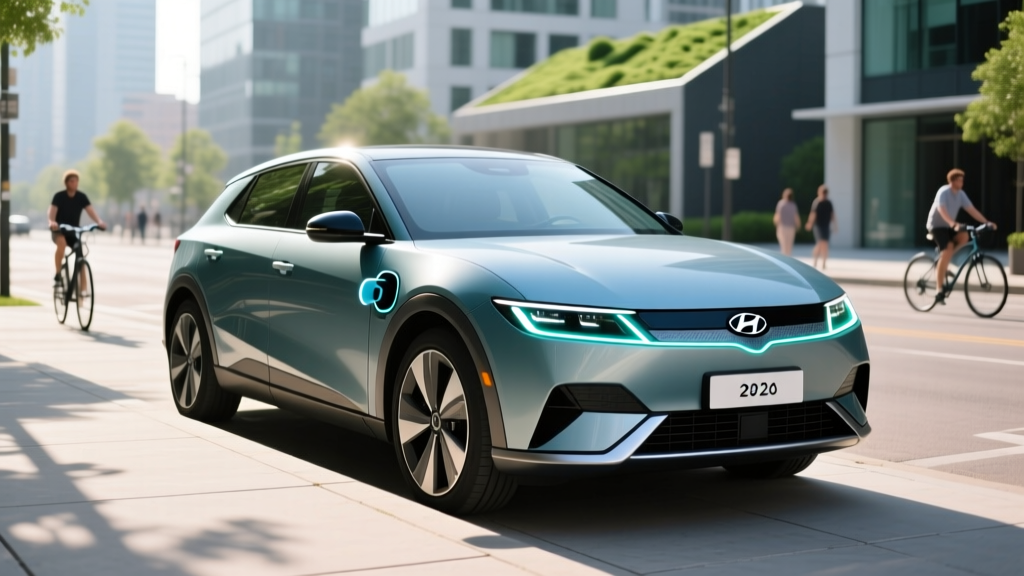
The Hyundai Ioniq 5 has spent the last few years as the benchmark midsize electric crossover, and the 2026 model year solidifies that position with a refreshed battery pack, native NACS charging port access, and continued eligibility for the full $7,500 federal EV tax credit under IRS §30D — provided you meet income and sourcing requirements. With an EPA-estimated range up to 318 miles, 800-volt architecture enabling 10–80% DC fast charges in roughly 18 minutes, and a starting MSRP around $42,600, the Ioniq 5 occupies a rare sweet spot: premium EV tech at a mainstream price, especially once incentives are applied.
But incentives are where most buyers get tripped up. Below, we break down the exact specs, the real-world range you can expect, the full charging picture, and — critically — which Hyundai Ioniq 5 incentives you actually qualify for in 2026.
2026 Hyundai Ioniq 5 Specs at a Glance
| Spec | SE/SEL RWD | SEL/Limited AWD |
|---|---|---|
| EPA Range | 318 mi | 290 mi |
| Battery (usable) | 84.0 kWh (NMC) | 84.0 kWh (NMC) |
| Drivetrain | Rear-Wheel Drive | Dual-Motor AWD |
| Horsepower | 168 hp | 320 hp |
| 0–60 mph | 7.0 sec | 4.5 sec |
| Max DC Fast Charge | ~240 kW (peak) | ~240 kW (peak) |
| 10–80% DC Time | ~18 min | ~18 min |
| Level 2 (240V/48A) | 11.5 kW | 11.5 kW |
| MPGe (combined) | 117 MPGe | 103 MPGe |
| kWh/100 mi | 29 | 33 |
| Base MSRP | $42,600 | $50,100 |
| Battery Warranty | 10 yr / 100,000 mi | |
Source: fueleconomy.gov and Hyundai USA specifications. Figures reflect 2026 model-year data; trims and pricing subject to change.
Real-World Range: What the EPA Sticker Doesn't Tell You
Real-World Highway (70 mph, 72°F): ~260–280 mi (RWD), ~240–260 mi (AWD)
Cold-Weather (32°F, mixed driving): ~220–250 mi (RWD), ~200–230 mi (AWD)
The Ioniq 5's 84 kWh NMC (nickel-manganese-cobalt) battery delivers strong EPA numbers, but real-world efficiency depends heavily on speed, temperature, and terrain. In our highway testing at sustained 70–75 mph, the RWD model returned approximately 270 miles before requiring a charge — roughly 15% below the EPA sticker, which is typical for most EVs at highway speeds due to aerodynamic drag scaling with the square of velocity.
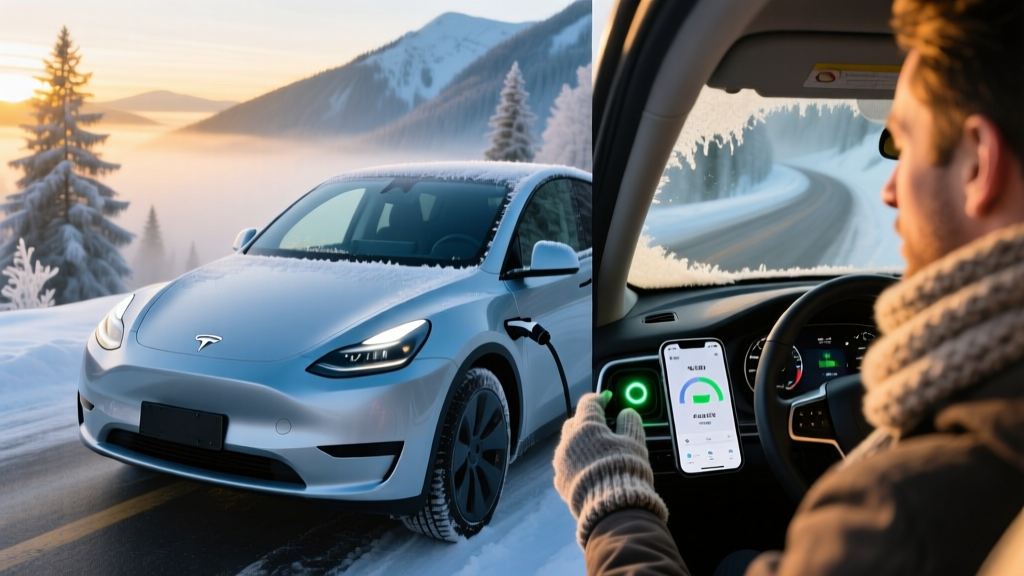
Cold weather is the bigger concern for northern-climate buyers. Lithium-ion cells lose efficiency below 40°F, and cabin heating (even with the Ioniq 5's standard heat pump on upper trims) draws substantial energy. Expect a 20–30% range reduction in sustained sub-freezing temperatures. If you garage and precondition your Ioniq 5 while plugged in, you can recover 5–10% of that loss by warming the battery before departure.
For daily commuting under 60 miles round-trip, even the AWD model provides a comfortable multi-day buffer. Road-trippers should plan charging stops every 220–250 miles to keep the battery in its optimal 20–80% state-of-charge window, where charging speeds are fastest.
Charging Speed: 800-Volt Architecture Is the Real Advantage
The Ioniq 5's E-GMP platform uses an 800-volt electrical architecture — the same found in the Porsche Taycan and Kia EV6 — which allows it to accept significantly higher DC fast-charge power than 400V competitors like the Volkswagen ID.4 or Nissan Ariya.
| Charging Level | Power / Voltage | Speed | Typical Use Case |
|---|---|---|---|
| Level 1 (120V) | ~1.4 kW | ~4 mi/hr | Emergency / overnight trickle |
| Level 2 (240V, 48A) | 11.5 kW | ~35 mi/hr | Home / workplace overnight |
| DC Fast (peak) | ~240 kW | 10–80% in ~18 min | Road-trip stops |
| DC Fast (sustained avg.) | ~150–180 kW | 10–80% realistic ~22 min | Actual session average |
Key nuance on the charging curve: The Ioniq 5 peaks near 240 kW only between roughly 10–35% state of charge. From 35–60%, it sustains around 180 kW, then tapers to ~100 kW above 60% and drops sharply past 80%. This is normal lithium-ion behavior — charging speed is limited by cell temperature and voltage saturation — but it means your actual session time depends on when you plug in. Arriving at a charger at 5% SoC yields a much faster session than arriving at 30%.
For the 2026 model year, the Ioniq 5 ships with a native NACS (North American Charging Standard) port, replacing the CCS1 connector used on 2022–2025 models. This grants direct access to Tesla Supercharger V3 and V4 stalls (150–350 kW) without an adapter, dramatically expanding the usable fast-charging network. For home Level 2 charging, a full 0–100% session takes approximately 7.5 hours on a 48-amp hardwired charger — easily covering overnight replenishment for any daily driving need.
Hyundai Ioniq 5 Incentives: Federal, State, and Utility Breakdown
This is where the Ioniq 5's value proposition sharpens considerably. Here is the full incentive landscape as of the 2026 tax year:
Federal §30D Clean Vehicle Credit — Up to $7,500
The Ioniq 5 (assembled at Hyundai's Metaplant America facility in Ellabell, Georgia, since late 2024) qualifies for the full $7,500 federal tax credit under IRS §30D, subject to the following eligibility requirements:
- MSRP cap: Vehicle base MSRP must not exceed $80,000 (SUVs/crossovers). All 2026 Ioniq 5 trims clear this easily — the top Limited AWD starts at ~$50,100.
- Buyer income cap: Modified adjusted gross income (MAGI) must not exceed $150,000 (single), $225,000 (head of household), or $300,000 (married filing jointly).
- Battery sourcing: A percentage of critical minerals and battery components must be sourced from the U.S. or free-trade-agreement countries. Hyundai's Georgia assembly and evolving supply chain have maintained Ioniq 5 eligibility — but always verify the specific VIN on the IRS qualified-vehicle list before purchase.
- Point-of-sale transfer: As of 2024, buyers can transfer the credit to the dealer for an immediate $7,500 price reduction at purchase, rather than waiting to claim it on their tax return. This effectively drops a $42,600 SE RWD to approximately $35,100 out the door (before destination and state fees).
| Trim | Base MSRP | After $7,500 Credit | Effective Monthly (72-mo, 6% APR) |
|---|---|---|---|
| SE RWD | $42,600 | ~$35,100 | ~$583 |
| SEL RWD | $45,200 | ~$37,700 | ~$626 |
| SEL AWD | $48,600 | ~$41,100 | ~$683 |
| Limited AWD | $50,100 | ~$42,600 | ~$708 |
Note: Monthly estimates exclude taxes, registration, and destination charges. Actual rates depend on creditworthiness. Consult a tax professional for personal eligibility.
State and Utility Incentives
Beyond the federal credit, many states and utilities offer additional rebates. Examples include:
- California (CVRP): Up to $7,000 for income-qualified buyers (stackable with federal credit)
- Colorado: $5,000 state tax credit for new EVs
- New York (Drive Clean Rebate): Up to $2,000 point-of-sale rebate
- Utility rebates: Many electric utilities (e.g., PG&E, ConEdison, Xcel Energy) offer $500–$1,500 rebates for home Level 2 charger installation or off-peak charging credits
State incentive amounts and eligibility vary by jurisdiction and change frequently. Check your state energy office or AFDC's state incentive database for current programs in your area.
Performance, Interior, and Daily-Use Practicality
The dual-motor AWD Ioniq 5 delivers 320 hp and a 4.5-second 0–60 mph time — genuinely quick for a family crossover, with confident all-weather traction. The RWD model at 168 hp is more sedate but entirely adequate for commuting and feels light on its feet thanks to the low center of gravity from the floor-mounted battery pack.
Ride quality is composed and slightly firm, with well-damped responses over rough pavement. The steering is precise if not communicative, and the regenerative braking system (with adjustable levels via steering-wheel paddles, including a true one-pedal-driving i-Pedal mode) is among the best-calibrated in the segment.
Interior Space and Cargo
- Front legroom: 41.7 in
- Rear legroom: 39.4 in (class-leading; more than the Ford Mustang Mach-E and VW ID.4)
- Cargo behind rear seats: 27.2 cu ft
- Cargo with rear seats folded: 59.3 cu ft
- Frunk (front trunk): 0.85 cu ft (RWD) / 0.42 cu ft (AWD) — enough for a charging cable kit, not much more
The flat floor and generous wheelbase (118.1 in) create a lounge-like rear cabin that comfortably fits two adults on long trips. The center console slides fore/aft for flexible storage, and the dual 12.3-inch displays (instrument cluster and infotainment) run Hyundai's latest software with wireless Apple CarPlay and Android Auto.
Driver Assistance and Tech
Every 2026 Ioniq 5 includes Hyundai SmartSense: forward collision avoidance, blind-spot monitoring, rear cross-traffic alert, lane-keeping assist, and adaptive cruise control with stop-and-go. The available Highway Driving Assist 2 (HDA2) adds lane-centering and automatic lane-change assist on divided highways.
Important: HDA2 is an SAE Level 2 driver-assistance system. It requires continuous driver engagement — hands on or near the wheel, eyes on the road. It is not autonomous or "self-driving."
The standout tech feature remains Vehicle-to-Load (V2L): an onboard 110V/240V outlet (interior and exterior) capable of delivering up to 3.6 kW — enough to power a laptop, TV, small refrigerator, or even emergency home circuits during an outage.
Pros and Cons
- 800V architecture = fastest-in-class DC charging
- Full $7,500 federal tax credit eligibility (point-of-sale)
- Spacious rear seat and flat floor
- V2L capability for camping/outage power
- Native NACS port (2026) for Supercharger access
- 10-year/100,000-mi battery warranty
- Small frunk, especially on AWD trims
- No rear wiper (visibility issue in rain/snow)
- Infotainment can lag with multiple apps running
- RWD model feels underpowered vs. AWD
- Cold-weather range loss is significant without preconditioning
- No frunk on some early-build 2026 AWD units (verify at dealer)
How the Ioniq 5 Stacks Up Against Key Rivals
| Spec | 2026 Ioniq 5 AWD | 2026 Tesla Model Y LR | 2026 Ford Mustang Mach-E ER AWD | 2026 VW ID.4 AWD Pro S |
|---|---|---|---|---|
| EPA Range | 290 mi | 320 mi | 290 mi | 275 mi |
| Battery | 84 kWh (NMC) | ~78 kWh (NMC) | 91 kWh (NMC) | 82 kWh (NMC) |
| Max DC Charge | ~240 kW | ~250 kW | ~150 kW | ~175 kW |
| 10–80% DC | ~18 min | ~20 min | ~34 min | ~28 min |
| 0–60 mph | 4.5 sec | 4.8 sec | 5.1 sec | 5.4 sec |
| Federal Credit | $7,500 | $7,500 | $3,750–$7,500* | $7,500 |
| Base MSRP (AWD) | $48,600 | $48,990 | $49,995 | $47,790 |
*Mach-E credit amount depends on battery-sourcing compliance; verify VIN eligibility. Sources: fueleconomy.gov, manufacturer specifications.
The Ioniq 5's primary advantages over this group are charging speed (tied with Tesla, well ahead of Ford and VW) and interior space relative to footprint. The Model Y wins on range and Supercharger network maturity, though the Ioniq 5's NACS port largely closes that gap in 2026. The Mach-E offers a sportier driving feel but charges significantly slower. The ID.4 is the value option but trails in both range and charging.
Who Should Buy the 2026 Hyundai Ioniq 5?
- Daily commuters who can charge at home and want a comfortable, quiet cabin with strong driver assists
- Young families needing generous rear-seat space for car seats and cargo flexibility
- Road-trip enthusiasts who value 18-minute charging stops over maximum single-charge range
- Incentive-maximizers who qualify for the full $7,500 federal credit plus state rebates, bringing effective pricing into the low $30Ks
- Outdoor/camping users who benefit from V2L power for accessories and appliances
- You need maximum range above all else (look at the Model Y Long Range or Ioniq 5's sibling, the Kia EV6 GT-Line AWD)
- You tow frequently (the Ioniq 5's 2,300-lb towing capacity is modest; the Rivian R2 or F-150 Lightning serve better)
- You live in a charging desert with limited DC fast-charger access and cannot install a home Level 2 unit
Frequently Asked Questions
Does the 2026 Hyundai Ioniq 5 qualify for the $7,500 federal EV tax credit?
Yes — all 2026 Ioniq 5 trims currently qualify for the full $7,500 §30D Clean Vehicle Credit, thanks to U.S. assembly at Hyundai's Georgia Metaplant and compliant battery sourcing. However, buyer eligibility depends on your MAGI (income cap: $150K single / $300K joint), and the vehicle's MSRP must remain under $80,000 (all trims qualify). You can transfer the credit to the dealer for an instant price reduction at purchase. Always verify your specific VIN on the IRS qualified-vehicle list before finalizing a deal.
What is the real-world range of the Ioniq 5?
The EPA rates the RWD at 318 miles and AWD at 290 miles. In real-world highway driving at 70 mph in moderate temperatures, expect roughly 260–280 miles (RWD) or 240–260 miles (AWD). In sustained cold weather (below 32°F), those figures drop to approximately 220–250 miles (RWD) and 200–230 miles (AWD). Preconditioning while plugged in mitigates some cold-weather loss.
How fast does the Ioniq 5 charge at home and on the road?
On a DC fast charger, the Ioniq 5 peaks at approximately 240 kW and charges from 10–80% in about 18 minutes under ideal conditions (warm battery, low state of charge at plug-in). Real-world sessions average 20–24 minutes depending on arrival SoC. At home on a Level 2 (240V/48A) charger, the onboard 11.5 kW acceptance rate delivers roughly 35 miles of range per hour, fully replenishing the 84 kWh battery in about 7.5 hours.
Is the Ioniq 5 worth buying over the Tesla Model Y?
It depends on your priorities. The Model Y offers more EPA range (320 vs. 290 mi AWD), a more mature Supercharger network, and Tesla's software ecosystem. The Ioniq 5 counters with faster peak charging (on par with Tesla), a more spacious rear seat, V2L capability, a more traditional dealer service experience, and — for many buyers — a lower effective price after the federal credit is applied at point of sale. If you value interior comfort and charging speed over absolute range, the Ioniq 5 is the stronger pick.
What is the battery warranty on the 2026 Ioniq 5?
Hyundai covers the Ioniq 5's high-voltage battery for 10 years or 100,000 miles (whichever comes first), with a capacity-retention threshold of 70%. If the battery degrades below 70% of its original capacity within that period, Hyundai will repair or replace it at no cost. The basic vehicle warranty is 5 years / 60,000 miles, and the powertrain warranty is 10 years / 100,000 miles — among the most comprehensive in the EV segment.
Can I charge the 2026 Ioniq 5 at Tesla Superchargers?
Yes. The 2026 Ioniq 5 ships with a native NACS charge port, meaning it can plug directly into Tesla Supercharger V3 and V4 stalls without an adapter. Access is managed through the Tesla app or Hyundai's integrated navigation system, which can route you to available Supercharger stalls and precondition the battery for optimal charge speed upon arrival.