Verdict: The Ioniq 5 ICCU Issue Is Largely Behind Us
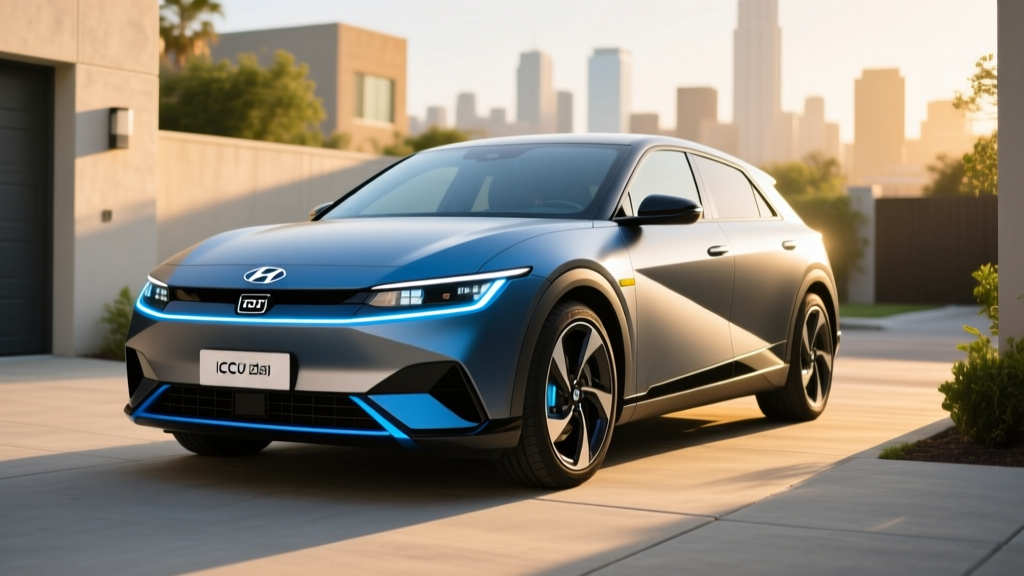
If you've been researching the Hyundai Ioniq 5 and encountered the term "ICCU," you're not alone. The Integrated Charging Control Unit became one of the most searched pain points among early Ioniq 5 owners — a component failure that could disable both AC charging and the 12V battery system, sometimes leaving the vehicle stranded. For 2026, Hyundai has revised the ICCU hardware and software across the Ioniq 5 lineup, and the latest model years reflect those engineering changes. This review covers everything you need to know about the 2026 Ioniq 5, from what the ICCU does to real-world range, charging speeds, pricing, and whether this EV earns a spot in your garage.
EPA Estimated: 305 miles (SEL/Limited AWD with 84 kWh battery). RWD trims achieve up to 318 miles EPA.
Real-world highway (70-75 mph): expect 250–275 miles. In freezing temperatures (below 32°F), plan for 210–240 miles of usable range before needing to charge. The Ioniq 5's heat pump (standard on most trims) mitigates some cold-weather loss compared to EVs without one.
What Is the ICCU and Why Does It Matter?
The Integrated Charging Control Unit (ICCU) is the Ioniq 5's onboard power electronics hub. It manages three critical functions:
- AC-to-DC conversion for Level 1 and Level 2 home/public charging
- DC-to-DC conversion to keep the 12V auxiliary battery charged from the high-voltage traction battery
- V2L (Vehicle-to-Load) power delivery, enabling the Ioniq 5 to output up to 3.6 kW of AC power to external devices
In 2022–2023 model-year Ioniq 5s, a combination of thermal management shortcomings and a software bug in the ICCU led to failures that could brick the charging system entirely. Hyundai issued recalls (including NHTSA Recall 23V-074 and subsequent service campaigns) and extended warranty coverage on affected components. The revised ICCU in 2025–2026 models features improved thermal dissipation and updated firmware that has dramatically reduced failure rates based on owner forum data and service bulletins.
Bottom line: If you're buying a new 2026 Ioniq 5, the ICCU concern is substantially resolved. If you're shopping used 2022–2023 models, verify that all recall work has been completed and ask for ICCU replacement documentation.
Battery, Range, and Efficiency Specs
| Specification | RWD Standard Range | RWD Long Range | AWD Long Range |
|---|---|---|---|
| Battery (usable) | 58 kWh | 84 kWh | 84 kWh |
| Chemistry | NMC (Nickel Manganese Cobalt) | NMC | NMC |
| EPA Range | 240 mi | 318 mi | 290–305 mi |
| MPGe (combined) | 114 MPGe | 117 MPGe | 110 MPGe |
| kWh/100 mi | 29 | 29 | 31 |
| Horsepower | 168 hp | 225 hp | 320 hp |
| 0–60 mph | 7.4 sec | 7.0 sec | 4.5 sec |
| Drivetrain | Rear-Wheel Drive | Rear-Wheel Drive | Dual-Motor AWD |
The 84 kWh (usable) NMC pack powers the majority of Ioniq 5 trims sold in the US. Hyundai does not offer an LFP (lithium iron phosphate) variant in the American market as of 2026, meaning you get higher energy density but should follow best practices for NMC longevity — primarily avoiding sustained 100% state of charge and utilizing the built-in charge-limit settings (set daily max to 80%).
Efficiency is a strong suit. The EPA rates the AWD Ioniq 5 at 110 MPGe combined, which translates to roughly 31 kWh per 100 miles — competitive with the Tesla Model Y Long Range and notably better than the Ford Mustang Mach-E AWD.
Charging Speed: 800V Architecture Pays Off
The Ioniq 5's E-GMP platform runs on an 800-volt electrical architecture — one of the few non-Luxury EVs to do so alongside its Kia EV6 sibling and the Porsche Taycan. This enables exceptionally fast DC charging when paired with a capable station.
| Charging Level | Power / Rate | Time / Miles Added |
|---|---|---|
| Level 1 (120V household) | ~1.4 kW | ~4–5 miles per hour |
| Level 2 (240V home, 48A) | 10.9 kW | ~37 miles per hour; full charge in ~8.5 hrs |
| DC Fast Charge (350 kW station) | Peak 240 kW | 10–80% in ~18 minutes |
| DC Fast Charge (150 kW station) | Peak ~130 kW | 10–80% in ~28 minutes |
Charging curve reality check: The 240 kW peak is only sustained between roughly 10% and 45% state of charge. Above 60%, the rate tapers to approximately 100–120 kW, and above 80% it drops further to around 50–60 kW to protect battery health. This is normal for NMC chemistry, but it means a 10–90% session will take closer to 28–32 minutes on a 350 kW charger, not 18.
The Ioniq 5 uses the CCS1 connector for DC fast charging in North America. Hyundai has confirmed that 2025+ model-year Ioniq 5s will include a NACS (Tesla Supercharger) adapter in the box, and 2026 models are expected to ship with a native NACS port. Check your specific build sheet, as transition-year vehicles may vary. The NACS adapter grants access to Tesla's V3 and V4 Supercharger network — a significant practical advantage for road trips.
Pricing, Trims, and Federal Tax Credit Eligibility
| Trim | MSRP (2026) | Est. After §30D Credit |
|---|---|---|
| SE Standard Range (RWD) | $42,600 | Varies — see eligibility below |
| SEL (AWD) | $48,950 | Varies |
| Limited (AWD) | $54,300 | Varies |
| N Line (AWD) | $56,500 | Varies |
Federal §30D Tax Credit Eligibility: The Ioniq 5 is assembled in Ellabell, Georgia (Hyundai's Metaplant America facility), which satisfies the North American final-assembly requirement. However, whether you personally qualify for the full $7,500 credit depends on several factors that change periodically:
- Buyer income caps: Modified AGI must not exceed $150,000 (single), $225,000 (head of household), or $300,000 (joint filers)
- MSRP cap: SUVs/vans are capped at $80,000 — all Ioniq 5 trims qualify
- Battery component and critical-mineral sourcing: The IRS periodically updates which vehicles meet the sourcing thresholds. As of early 2026, some Ioniq 5 trims qualify for the full $7,500 while others may receive $3,750 depending on the battery-cell sourcing for that production batch. Verify the specific VIN at fueleconomy.gov before purchasing.
- Point-of-sale transfer: You can elect to transfer the credit to the dealer at purchase, reducing your out-of-pocket cost immediately rather than waiting to claim it on your tax return.
Always confirm current eligibility with your dealer and a tax professional. IRS rules evolve, and battery-sourcing compliance can shift between production runs.
Interior, Cargo, and Technology
The Ioniq 5's interior is one of its strongest selling points. The flat floor (thanks to the dedicated E-GMP platform) and 118.1-inch wheelbase create genuinely spacious accommodations:
- Front legroom: 41.7 inches
- Rear legroom: 39.4 inches — more than the Model Y and Mach-E
- Cargo behind rear seats: 27.2 cu ft
- Cargo with rear seats folded: 59.3 cu ft
- Frunk (front trunk):strong> 0.85 cu ft (AWD) — enough for charging cables, not luggage
The dual 12.3-inch displays (instrument cluster and infotainment) run Hyundai's latest Bluelink connected software. Wireless Apple CarPlay and Android Auto are standard. The Ioniq 5 also features Hyundai's Digital Key 2 (NFC/BLE-based phone-as-key), a sliding center console ("Universal Island"), and ambient lighting with 64 color options.
Driver Assistance (SAE Level 2): The Ioniq 5 comes equipped with Hyundai SmartSense, which includes adaptive cruise control with stop-and-go, lane-keeping assist, blind-spot monitoring, and rear cross-traffic collision avoidance. Available Highway Driving Assist 2 (HDA-2) adds lane-centering and semi-autonomous lane changes on divided highways. This is an SAE Level 2 system — you must keep your hands on the wheel and eyes on the road at all times. It is not self-driving.
Warranty and Long-Term Ownership
Hyundai provides one of the strongest warranty packages in the EV segment:
- New Vehicle Limited Warranty: 5 years / 60,000 miles
- EV Battery Warranty: 10 years / 100,000 miles (capacity retention threshold: 70% of original capacity)
- Electric Powertrain Warranty: 10 years / 100,000 miles
- ICCU-specific coverage: Hyundai extended ICCU warranty coverage to 10 years / 100,000 miles for 2022–2024 model-year vehicles under recall; 2025–2026 models carry the standard powertrain warranty with the revised hardware.
The 10-year battery warranty is among the longest in the industry, exceeding Tesla's 8-year/120,000-mile threshold. The 70% capacity retention floor is standard — if your 84 kWh pack drops below roughly 59 kWh of usable capacity within the warranty window, Hyundai will repair or replace it.
Pros, Cons, and Who Should Buy
- 800V architecture enables 18-min 10–80% DC charging at 350 kW stations
- Spacious flat-floor interior with class-leading rear legroom
- V2L capability (3.6 kW output) for camping, tailgating, or emergency backup
- 10-year / 100,000-mile battery and powertrain warranty
- Revised ICCU hardware resolves early-model reliability concerns
- US-assembled (Georgia) — supports §30D final-assembly requirement
- Frunk is very small (0.85 cu ft) compared to competitors
- No rear wiper (dealer-installed accessory only) — a common complaint in rain/snow
- CCS-to-NACS adapter required for Supercharger access on some 2025 builds
- AWD highway range drops to ~250 real-world miles at 75 mph
- Infotainment lacks native route planning with integrated charging stops (use Apple CarPlay/Android Auto workaround)
Best for: Daily commuters who want a comfortable, spacious cabin and the option to DC fast-charge quickly on road trips. Families who value rear-seat space over maximum cargo volume. Buyers who want strong warranty protection and don't need a third row. The AWD Limited trim is the sweet spot for four-season climates.
Consider alternatives if: You need 350+ miles of real-world range (look at the Lucid Air or Tesla Model Y Long Range), you require a large frunk, or you frequently tow (the Ioniq 5 is not rated for towing in the US market).
Frequently Asked Questions
What is the real-world range of the 2026 Hyundai Ioniq 5?
The AWD Long Range Ioniq 5 is EPA-rated at 290–305 miles depending on wheel size. In real-world highway driving at 70–75 mph, expect 250–275 miles. In cold weather (below freezing), plan for 210–240 miles. The RWD Long Range achieves up to 318 miles EPA and roughly 270–290 miles real-world highway.
How fast does the Ioniq 5 charge at home and on DC fast chargers?
On a Level 2 home charger (240V, 48A), the Ioniq 5 charges at up to 10.9 kW, adding roughly 37 miles of range per hour — a full charge takes about 8.5 hours. On a 350 kW DC fast charger, it peaks at 240 kW and charges from 10–80% in approximately 18 minutes. On a more common 150 kW charger, expect 10–80% in about 28 minutes.
Does the 2026 Ioniq 5 qualify for the $7,500 federal EV tax credit?
The Ioniq 5 is assembled in Georgia, meeting the North American final-assembly requirement. However, eligibility for the full $7,500 depends on your income, the MSRP (all trims qualify under the $80,000 SUV cap), and battery-component/critical-mineral sourcing requirements that the IRS updates periodically. Check fueleconomy.gov for the latest VIN-specific eligibility and consult a tax professional.
Is the ICCU problem fixed on the 2026 Ioniq 5?
Hyundai revised the ICCU hardware and firmware starting with 2025 model-year vehicles. The updated unit has improved thermal management and corrected software logic. While no component is failure-proof, the widespread ICCU failures that affected 2022–2023 models have not been reported at comparable rates in the revised design. The ICCU is covered under the 10-year/100,000-mile powertrain warranty.
How does the Ioniq 5 compare to the Tesla Model Y and Ford Mach-E?
The Ioniq 5 offers faster peak DC charging (240 kW vs. ~250 kW for Model Y and ~150 kW for Mach-E), more rear legroom than either competitor, and a longer powertrain warranty (10 years vs. Tesla's 8 years and Ford's 8 years). The Model Y has more cargo space and access to the native Supercharger network. The Mach-E offers a sportier driving feel but slower charging. The Ioniq 5 sits between them as the comfort-and-charging-speed play.
What is the Ioniq 5's V2L feature and how much power can it supply?
Vehicle-to-Load (V2L) allows the Ioniq 5 to output up to 3.6 kW of AC power through an adapter plugged into the charge port or a dedicated interior outlet (trim-dependent). This is enough to power a laptop, small refrigerator, coffee maker, or power tools — useful for camping, job sites, or emergency home backup during outages.