Quick Verdict: The Ioniq 5's Power Story
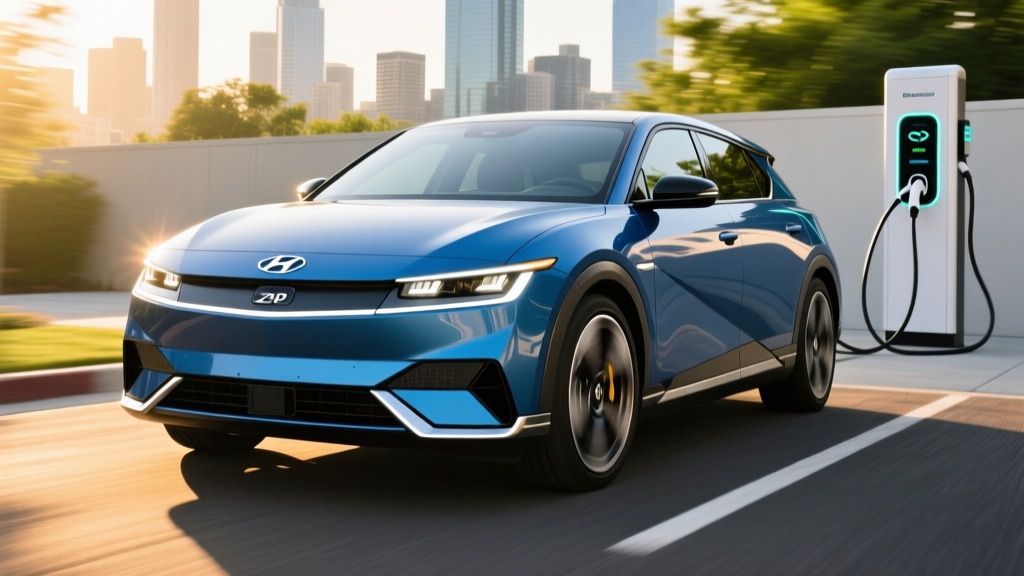
Hyundai's Ioniq 5 remains one of the most compelling electric crossovers on the market, and its horsepower lineup is a big reason why. For 2026, the Ioniq 5 spans from a 168-hp Standard Range RWD model all the way up to the 601-hp Ioniq 5 N performance variant. The sweet spot for most buyers? The Long Range AWD trim, which delivers 320 hp, a 290-mile EPA range, and blistering 800V DC fast-charging — all starting around $51,000 before incentives.
This review breaks down every Ioniq 5 hp configuration, real-world range expectations, charging speeds, pricing, and federal tax credit eligibility so you can decide exactly which trim fits your driving needs.
| Spec | SE Standard Range | SE/SEL/Limited RWD | SE/SEL/Limited AWD | Ioniq 5 N |
|---|---|---|---|---|
| Horsepower | 168 hp | 225 hp | 320 hp | 601 hp (641 w/ N Grin Boost) |
| Torque (lb-ft) | 258 | 258 | 446 | 568 |
| Drivetrain | RWD | RWD | Dual-Motor AWD | Dual-Motor AWD |
| Battery (usable) | 58.0 kWh | 77.4 kWh | 77.4 kWh | 84.0 kWh |
| Chemistry | NMC | NMC | NMC | NMC |
| EPA Range | 240 mi | 318 mi | 290 mi | 221 mi |
| MPGe (combined) | 110 | 117 | 110 | 87 |
| 0-60 mph | ~8.0 sec | ~7.0 sec | ~4.5 sec | ~3.4 sec |
| Max DC Charge Rate | ~175 kW | ~240 kW | ~240 kW | ~240 kW |
| 10-80% DC Time | ~22 min | ~18 min | ~18 min | ~18 min |
| Base MSRP | $42,600 | $46,700 | $51,200 | $68,000 |
Range and Efficiency: EPA Sticker vs. Real-World Miles
- City/mixed driving (65°F): 270–295 miles — regen braking in stop-and-go extends range
- Highway cruising (75 mph, 65°F): 240–260 miles — aerodynamic drag cuts efficiency ~15%
- Cold weather (20°F, highway): 185–220 miles — battery chemistry and cabin heating reduce range 25–35%
- Cold weather, city (20°F): 210–240 miles — heat pump on SEL/Limited helps mitigate loss
The 77.4 kWh Long Range battery pack uses nickel-manganese-cobalt (NMC) chemistry, which offers higher energy density than LFP alternatives. That translates to more miles in a lighter, more compact pack — important for a crossover of this size. However, NMC batteries are more sensitive to sustained high state-of-charge (SoC), so daily charging to 80% is recommended for longevity.
Efficiency figures from fueleconomy.gov show the Long Range RWD achieving 117 MPGe combined (29 kWh/100 mi), while the AWD drops to 110 MPGe combined (31 kWh/100 mi). In our experience, expect real-world efficiency of 30–34 kWh/100 mi in mixed driving for the AWD, rising to 36–40 kWh/100 mi on sustained highway trips at 75+ mph.
The Standard Range model's 240-mile EPA figure is adequate for city commuters but falls short for road-trip duty. If you regularly drive more than 150 miles one-way, the Long Range pack is worth the $4,100 premium.
Charging Speed: 800V Architecture Still Sets the Pace
| Charging Level | Power / Rate | Miles Added Per Hour | Connector |
|---|---|---|---|
| Level 1 (120V household) | ~1.4 kW | ~4–5 mi/hr | NACS (native, 2025+) |
| Level 2 (240V home, 48A) | 10.9 kW | ~33–37 mi/hr | NACS (native, 2025+) |
| DC Fast Charge (peak) | Up to 240 kW | ~150+ mi in 18 min (10-80%) | NACS (native at Superchargers & 800V stations) |
Starting with the 2025 model year, Hyundai transitioned the Ioniq 5 to the Tesla NACS charge port natively. That means 2026 models plug directly into Tesla Superchargers (now open to non-Tesla EVs) without an adapter — a significant real-world convenience upgrade over the outgoing CCS port.
The Ioniq 5's 800V electrical architecture remains its biggest charging advantage. While many competitors peak at 150–175 kW on 400V systems, the Ioniq 5 sustains close to its 240 kW peak for a larger portion of the charge curve. In practice, a 10-80% session takes approximately 18 minutes at a capable 350 kW charger (like Electrify America or Ionity stations). The curve does taper significantly above 85% SoC — expect the final 80-100% to add another 15–20 minutes. Plan your road-trip stops to charge to 80% and move on.
Home charging reality check: A full Level 2 installation (48A hardwired charger, 60A circuit) typically costs $800–$1,800 including equipment and electrician labor, assuming your panel has capacity. At 10.9 kW, you'll add roughly 35 miles of range per hour — enough to fully replenish the 77.4 kWh pack in about 7.5 hours overnight. Most owners never need public charging for daily use.
Performance and Drivetrain: From 168 to 641 HP
The 2026 Ioniq 5 horsepower range covers four distinct personalities:
Standard Range RWD — 168 hp
The entry-level single-motor setup prioritizes efficiency over acceleration. The 0-60 mph time of roughly 8.0 seconds is unremarkable but adequate for commuting. This trim exists primarily to hit a lower price point and maximize city MPGe. Highway merging requires planning.
Long Range RWD — 225 hp
Same single-motor configuration but paired with the larger 77.4 kWh battery. The extra 57 hp comes from a more powerful rear motor, and the 0-60 drops to about 7.0 seconds. This is the efficiency champion of the lineup at 117 MPGe combined and 318 miles of EPA range. For buyers who rarely need AWD traction, this is the smartest spec-to-price ratio in the Ioniq 5 range.
Long Range AWD — 320 hp
The dual-motor AWD configuration adds a front motor for a combined 320 hp and 446 lb-ft of torque. The 0-60 mph time of ~4.5 seconds puts it firmly in sporty crossover territory — comparable to a BMW X3 M40i. The AWD system is torque-vectoring, meaning the front motor can disconnect under light loads to improve efficiency. You sacrifice 28 miles of EPA range versus the RWD, but gain confident all-weather traction and genuinely quick acceleration.
Ioniq 5 N — 601 hp (641 with N Grin Boost)
Hyundai's N performance division turned the Ioniq 5 into a legitimate track-capable EV. With 84.0 kWh usable battery capacity, N-specific dual motors, and simulated gear shifts with synthetic engine sound, the Ioniq 5 N delivers 601 hp standard or 641 hp in 10-second N Grin Boost bursts. The 0-60 time of ~3.4 seconds rivals a Porsche Taycan 4S. The tradeoff: range drops to 221 miles EPA, and the $68,000 starting price pushes it above the federal tax credit MSRP cap.
Pricing, Trims, and Federal Tax Credit Eligibility
| Trim | Base MSRP | As-Tested (typical) | §30D Credit Eligible? | Effective Price (est.) |
|---|---|---|---|---|
| SE Standard Range | $42,600 | $43,500 | Yes (if income/sourcing met) | ~$35,100–$36,000 |
| SE Long Range RWD | $46,700 | $47,800 | Yes | ~$39,200–$40,300 |
| SEL Long Range AWD | $53,700 | $55,500 | Yes | ~$46,200–$48,000 |
| Limited Long Range AWD | $58,200 | $61,000 | Yes | ~$50,700–$53,500 |
| Ioniq 5 N | $68,000 | $70,500 | No (exceeds $80K SUV cap) | $68,000–$70,500 |
The federal EV tax credit under IRS §30D offers up to $7,500 for qualifying new EVs, but eligibility depends on three moving targets:
- MSRP cap: SUVs must be under $80,000 (the Ioniq 5 is classified as an SUV, so all trims except the N qualify on price).
- Buyer income limits: AGI must not exceed $150,000 (single), $225,000 (head of household), or $300,000 (joint filers).
- Battery sourcing requirements: The critical minerals and battery component thresholds tighten annually. For 2026, a growing percentage of minerals must be sourced from the U.S. or FTA partners. Hyundai has been actively re-shoring battery supply, but always verify the specific VIN's eligibility on the IRS portal before purchasing.
Starting in 2024, the credit can be transferred to the dealer at point of sale, reducing your out-of-pocket cost immediately rather than waiting for a tax refund. Confirm with your dealer that they're registered with the IRS Energy Credits portal.
Interior, Cargo, and Technology
The Ioniq 5's retro-futuristic cabin remains one of the most spacious in the compact EV crossover segment. Key dimensions:
- Cargo volume (rear seats up): 27.2 cu ft
- Cargo volume (rear seats folded): 59.3 cu ft
- Front trunk (frunk): 0.85 cu ft (AWD) / 2.0 cu ft (RWD) — enough for a charging cable bag, not much more
- Rear legroom: 39.4 inches — genuinely generous, comparable to a midsize SUV
- Front headroom: 40.2 inches
The sliding center console ("Universal Island") moves forward and back 5.5 inches, a practical feature for accessing rear storage or creating a pass-through. The dual 12.3-inch panoramic display runs Hyundai's latest infotainment with wireless Apple CarPlay and Android Auto. Physical climate controls remain — a welcome choice over touch-only interfaces.
Standout tech: Vehicle-to-load (V2L) capability lets you power external devices (up to 3.6 kW) through an interior outlet or an external adapter — useful for camping, tailgating, or emergency backup power. Highway Driving Assist 2 (HDA2) provides solid Level 2 driver assistance with lane centering, adaptive cruise, and lane-change assist. This is not self-driving — you must keep hands on the wheel and eyes on the road.
Notable drawbacks: The rear wiper is absent on U.S.-spec models (a persistent complaint in rain/snow). The frunk is disappointingly small on AWD trims. Rear visibility is compromised by thick C-pillars — consider the Limited trim's 360-degree camera. Infotainment can be slow to boot on cold mornings.
Warranty and Long-Term Ownership
Hyundai backs the Ioniq 5 with one of the strongest warranty packages in the EV segment:
- Battery & powertrain: 10 years / 100,000 miles (whichever comes first) — covers the battery pack, drive motors, and associated power electronics. Hyundai warrants the battery against capacity loss below 70% of original capacity during the warranty period.
- New vehicle limited: 5 years / 60,000 miles bumper-to-bumper
- Complimentary maintenance: 3 years / 36,000 miles (oil changes aren't needed, but this covers cabin air filter, tire rotation, multi-point inspections)
- Roadside assistance: 5 years / unlimited miles
The 10-year battery warranty is a key differentiator versus Tesla's 8-year/120,000-mile coverage and matches Kia's offering. NMC chemistry in the Ioniq 5 has shown strong real-world degradation data — most owners report less than 5% capacity loss in the first 50,000 miles based on fleet data and owner surveys. Following best practices (charge to 80% daily, avoid frequent DC fast-charging to 100%, precondition the battery in cold weather) should keep degradation well within acceptable limits over a decade of ownership.
Pros, Cons, and Who Should Buy
Pros
- Class-leading 800V DC fast charging (~18 min, 10-80%)
- Native NACS port for direct Supercharger access (2025+)
- Spacious rear seat and cargo area for the segment
- Up to 318 miles EPA range (Long Range RWD)
- 10-year/100,000-mile battery warranty
- V2L capability for off-grid and emergency power
- Federal tax credit eligible on most trims
Cons
- No rear wiper on U.S. models
- Tiny frunk, especially on AWD trims
- Thick C-pillars reduce rear visibility
- Cold-weather range loss of 25-35% (no LFP option for better cold resilience)
- Ioniq 5 N is not tax-credit eligible due to price
- Infotainment boot times can lag
Who the Ioniq 5 Suits Best
- Choose the Long Range RWD (225 hp) if: You commute in mild climates, rarely need AWD, and want maximum range and efficiency for the lowest price.
- Choose the Long Range AWD (320 hp) if: You need all-weather traction, want genuinely quick acceleration (4.5 sec 0-60), and regularly take road trips where 800V charging saves real time.
- Choose the Standard Range (168 hp) if: You're a city-only driver with reliable home charging and want the lowest possible entry price after the tax credit.
- Choose the Ioniq 5 N (601 hp) if: You want a performance EV that can genuinely handle a track day and don't care about range efficiency or tax credits.
- Look elsewhere if: You need three rows of seating (consider the Ioniq 9 or Kia EV9), you regularly tow heavy loads (max tow rating is 2,300 lbs — not a truck substitute), or you live in a charging desert with no reliable DC fast-charging infrastructure.
Frequently Asked Questions
What is the real-world range of the Hyundai Ioniq 5?
The Long Range AWD model is EPA-rated at 290 miles, but expect 240–260 miles on sustained highway drives at 75 mph, and 185–220 miles in cold weather (below 30°F) with cabin heating. The Long Range RWD achieves 318 miles EPA and can approach 280–300 miles in mild city driving. Real-world range depends heavily on speed, temperature, and terrain.
How fast does the Ioniq 5 charge at home and on the road?
At home on a 240V Level 2 charger (48A), the Ioniq 5 charges at up to 10.9 kW, adding roughly 35 miles of range per hour — a full charge from empty takes about 7.5 hours. On DC fast chargers, the 800V architecture enables peak rates up to 240 kW, achieving a 10-80% charge in approximately 18 minutes at a capable 350 kW station.
How much does the Ioniq 5 cost after the federal tax credit?
If you qualify for the full $7,500 §30D credit (meeting income caps, MSRP limits, and battery sourcing requirements), the Long Range RWD SE drops from $46,700 to approximately $39,200. The SEL AWD falls from $53,700 to about $46,200. The credit can now be applied as a point-of-sale rebate through registered dealers. Always verify eligibility for your specific VIN and tax situation at IRS.gov.
Does the 2026 Ioniq 5 qualify for the federal EV tax credit?
Most trims do, with important caveats. The Ioniq 5 is classified as an SUV, so the $80,000 MSRP cap applies — all trims except the Ioniq 5 N ($68,000+) clear this threshold. However, you must also meet buyer income limits ($150K single / $300K joint) and the vehicle's battery must satisfy the 2026 critical-mineral and component sourcing thresholds. Hyundai has been shifting battery production to the U.S. (Savannah, GA plant), which improves sourcing compliance, but verify per-VIN eligibility before committing.
Is the Ioniq 5 worth buying versus competitors like the Tesla Model Y or Ford Mustang Mach-E?
The Ioniq 5's primary advantages are its 800V charging speed (faster than both the Model Y and Mach-E on comparable chargers), its 10-year battery warranty (Tesla offers 8 years), and its spacious rear cabin. The Model Y counters with a more extensive Supercharger network (though the Ioniq 5 now accesses it natively via NACS), stronger software/OTA features, and slightly more cargo volume. The Mach-E offers a sportier driving feel and more aggressive styling. For buyers prioritizing charging speed, warranty, and interior comfort, the Ioniq 5 is the strongest pick in this segment.
What are the biggest pros and cons of the Ioniq 5?
Top pros: 800V fast charging, 318-mile max range, spacious interior, 10-year battery warranty, V2L capability, NACS Supercharger access. Top cons: no rear wiper, small frunk, poor rear visibility, significant cold-weather range loss, Ioniq 5 N priced out of tax credit eligibility.