The Hyundai Ioniq 5 has been a cornerstone of the mainstream EV market since its launch, and the 2026 model year refines what was already a compelling package. For buyers whose primary goal is seamless home electrification — pairing a capable EV with a straightforward Level 2 charging setup — the Ioniq 5 remains one of the most practical choices available. Its 800-volt architecture, generous battery, and competitive pricing make it a strong anchor for a household transitioning away from gas.
Quick Verdict: Who Should Buy the 2026 Ioniq 5?
The Ioniq 5 is best suited for suburban commuters and small families who can install a Level 2 home charger and want a crossover with real road-trip capability. If your daily driving is under 60 miles and you can charge overnight, this EV essentially eliminates fuel stops for daily life while retaining enough range and charging speed for 300-mile highway trips with a single 20-minute DC fast-charge stop.
- You want ultra-fast DC charging (10-80% in ~18 minutes) for road trips
- Home Level 2 charging is your primary refueling strategy
- You need crossover cargo space (27.2 cu ft behind rear seats)
- You value distinctive design and a spacious, flat-floor cabin
- You need three rows of seating (consider the Ioniq 9 or Kia EV9)
- You want a frunk with meaningful storage (the Ioniq 5's is tiny on AWD trims)
- You prioritize sporty driving dynamics over comfort (the Tesla Model Y is sharper)
Range, Battery, and Efficiency
The 2026 Hyundai Ioniq 5 offers two battery configurations depending on trim. The Standard Range model uses a 63.0 kWh battery (LFP chemistry in some markets, NMC in the US), while the Long Range trims pack an 84.0 kWh usable NMC (nickel-manganese-cobalt) battery. We focus on the Long Range here, as it's the volume seller and the trim most buyers cross-shop.
| Spec | Value |
|---|---|
| EPA Range (RWD) | 318 miles |
| EPA Range (AWD) | 290 miles |
| Battery (usable) | 84.0 kWh, NMC |
| Efficiency (RWD) | 117 MPGe combined / 29 kWh/100mi |
| Efficiency (AWD) | 110 MPGe combined / 31 kWh/100mi |
| Max DC Fast Charge | ~240 kW peak |
| 10-80% DC Fast Charge | ~18 minutes (ideal conditions) |
| Level 2 Home Charge Rate | 10.9 kW (48A) |
| Level 2 Miles per Hour | ~37 mi/hr at 10.9 kW |
| 0-60 mph (RWD) | 7.4 seconds |
| 0-60 mph (AWD) | 5.0 seconds |
| Horsepower (AWD) | 320 hp |
| Drivetrain | RWD or Dual-Motor AWD |
| Battery Warranty | 10 years / 100,000 miles |
| Base MSRP (SE RWD) | $42,600 |
| As-Tested (Limited AWD) | ~$53,500 |
The EPA rates the Long Range RWD at 318 miles and the AWD at 290 miles. In real-world highway driving at 70-75 mph, expect roughly 250-275 miles from the RWD and 230-250 miles from the AWD before needing to charge. In cold weather (below 32°F), range can drop 15-25%, putting the AWD realistically around 195-220 miles on a winter highway trip. City driving with regenerative braking recovers more energy, often exceeding the EPA combined estimate.
The Ioniq 5's efficiency of 29-31 kWh/100 miles is competitive but not class-leading — the Tesla Model Y achieves slightly better figures thanks to lighter weight and aggressive thermal management. Still, 29 kWh/100mi translates to roughly $0.04-$0.05 per mile on average US residential electricity rates (~$0.16/kWh), compared to $0.12-$0.15 per mile for a 30 MPG gas car at $3.50/gallon.
Charging Speed: DC Fast and Home Level 2
Hyundai's 800-volt E-GMP platform is the Ioniq 5's biggest technical advantage for charging. While most mainstream EVs use 400-volt architectures that peak around 150 kW, the Ioniq 5 can accept up to ~240 kW at a compatible DC fast charger — provided the station can deliver it and the battery is preconditioned.
| Charging Level | Power | Speed / Time | Typical Use Case |
|---|---|---|---|
| Level 1 (120V) | ~1.4 kW | ~5 mi/hr | Emergency / trickle top-up |
| Level 2 (240V, 48A) | 10.9 kW | ~37 mi/hr / full charge in ~8.5 hrs | Home overnight charging |
| DC Fast (CCS/NACS) | Peak ~240 kW | 10-80% in ~18 min | Road-trip stops |
| DC Fast (sustained avg) | ~175-190 kW avg | 10-80% real-world ~22 min | Actual highway charging |
Charging curve reality: The 240 kW figure is a peak, not a sustained rate. In practice, the Ioniq 5 holds strong power from 10-55% SoC, then tapers progressively. On a 350 kW Electrify America or Tesla Supercharger (with NACS adapter), a 10-80% session takes roughly 18-22 minutes depending on battery temperature and station output. Above 80%, charging slows dramatically — a quirk of lithium-ion chemistry, not a Hyundai limitation. For road trips, plan to charge to 80% and go.
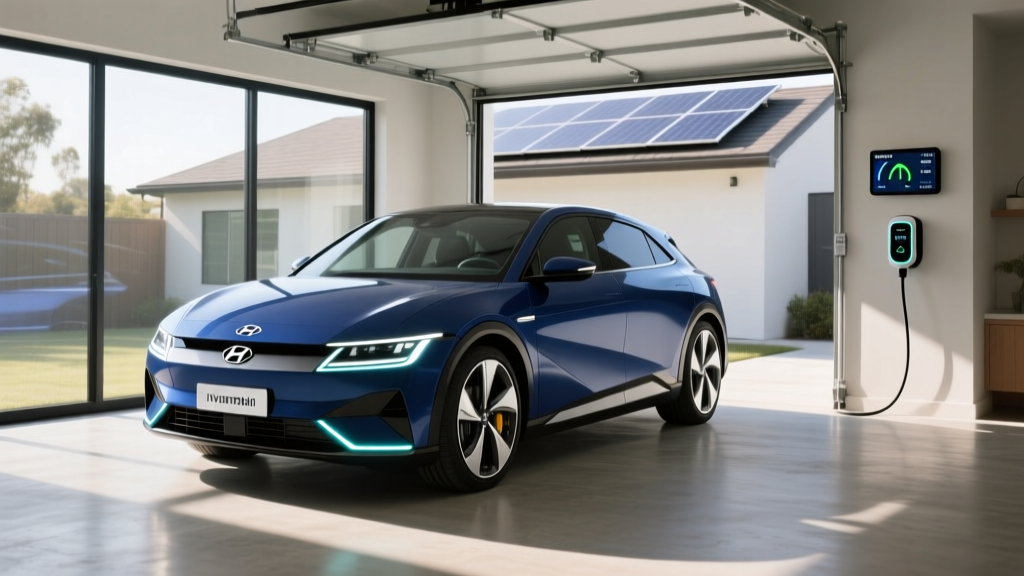
For home electrification, the Ioniq 5's 10.9 kW onboard charger is a strong point. With a 48-amp Level 2 wall connector on a 60-amp circuit, you'll add roughly 37 miles of range per hour of charging. An overnight session of 8 hours easily replenishes 250+ miles — more than enough for any daily commute. Most owners will need a 240V/60A circuit installed; expect $500-$2,000 for professional installation depending on panel proximity and local permitting.
Performance and Driving Dynamics
The dual-motor AWD Ioniq 5 produces 320 horsepower and 446 lb-ft of torque, delivering a 5.0-second 0-60 mph time. That's quick for a family crossover, though the Tesla Model Y Long Range AWD edges it at ~4.8 seconds. The RWD model, at 168 hp and 7.4 seconds to 60, prioritizes efficiency over acceleration and feels adequate for commuting but not thrilling.
Ride quality is where the Ioniq 5 shines. The suspension tuning favors comfort over sportiness, absorbing highway imperfections with a compliance that the stiffer Model Y can't match. Steering is light and precise, though feedback is minimal. The low center of gravity from the under-floor battery pack keeps body roll well-controlled in corners.
Regenerative braking is adjustable via steering-wheel paddles, from coasting (Level 0) to near one-pedal driving (Level 3/i-Pedal). The i-Pedal mode brings the car to a complete stop without touching the brake pedal, which is ideal for city traffic and extends range in stop-and-go conditions.
Interior, Cargo, and Technology
The Ioniq 5's cabin is one of its strongest selling points. The flat floor (no transmission tunnel) creates an airy, spacious feel. Hyundai's dual 12.3-inch displays — one for the instrument cluster, one for infotainment — are standard across trims, running the latest Hyundai Digital Key and over-the-air update capability.
| Measurement | Value |
|---|---|
| Front legroom | 41.7 inches |
| Rear legroom | 39.4 inches |
| Cargo (behind rear seats) | 27.2 cu ft |
| Cargo (rear seats folded) | 59.3 cu ft |
| Frunk (RWD) | 2.0 cu ft |
| Frunk (AWD) | 0.85 cu ft |
The rear seat is genuinely comfortable for adults on longer trips — a notable advantage over some competitors with tighter rear quarters. The sliding center console ("Universal Island") provides flexible storage between the front seats.
Standout tech: Vehicle-to-Load (V2L) capability lets you power external devices — laptops, camping gear, even a small appliance — using an adapter plugged into the charge port or the interior outlet. This is a practical home-electrification bonus: during a grid outage, the Ioniq 5's 84 kWh battery can serve as a backup power source for essential loads.
Notable drawbacks: The frunk is disappointingly small, especially on AWD trims (0.85 cu ft — barely fits a charging cable). Rear wiper is absent on earlier model years (check your specific build). The infotainment system, while functional, isn't as intuitive as Tesla's or Rivian's interface. Wireless Apple CarPlay and Android Auto are standard.
Driver Assistance: Hyundai SmartSense
The Ioniq 5's Hyundai SmartSense suite — including Highway Driving Assist 2 (HDA2), lane-centering, adaptive cruise control, and automatic emergency braking — is a Level 2 driver-assistance system. The driver must remain fully engaged, hands on the wheel, eyes on the road at all times. This is not autonomous or self-driving capability.
HDA2 works well on divided highways, maintaining speed and lane position with smooth inputs. It includes lane-change assist (tap the turn signal and the car executes the change). The system is competitive with Toyota's Safety Sense and Honda's Sensing suites, though it falls short of GM's Super Cruise and Ford's BlueCruise in terms of hands-off capability on mapped highways. According to IIHS testing, the Ioniq 5 has earned top crash-test ratings in prior model years.
Pricing, Trims, and Federal Tax Credit
The 2026 Ioniq 5 lineup spans four trims for the Long Range model:
| Trim | Drivetrain | MSRP | Est. After §30D Credit* |
|---|---|---|---|
| SE | RWD | $42,600 | ~$35,100 |
| SEL | AWD | $47,500 | ~$40,000 |
| Limited | AWD | $53,100 | ~$45,600 |
| N Line | AWD | $54,500 | ~$47,000 |
*Federal tax credit estimates assume full §30D eligibility. Actual credit depends on battery sourcing, buyer income, and MSRP caps. See checklist below.
- MSRP cap: SUVs/crossovers must be under $80,000 — all Ioniq 5 trims qualify ✓
- Buyer income cap: AGI must not exceed $150,000 (single), $225,000 (head of household), or $300,000 (joint) ✓ for most buyers
- Battery sourcing: Critical minerals and battery components must meet phased-in percentage thresholds from US/FTA countries — check current IRS guidance as sourcing rules tighten annually
- Point-of-sale transfer: Eligible buyers can transfer the credit to the dealer at purchase, reducing the out-of-pocket price immediately
- Assembly: The Ioniq 5 for the US market is assembled at Hyundai's Metaplant in Ellabell, Georgia ✓
Important: Battery-sourcing requirements become stricter each year. Consult a tax professional and verify current eligibility at irs.gov before purchasing. The credit amount may be partial ($3,750) or full ($7,500) depending on the specific build date and sourcing compliance.
How It Compares: Ioniq 5 vs. Key Competitors
| Spec | Hyundai Ioniq 5 (LR AWD) | Tesla Model Y (LR AWD) | Ford Mustang Mach-E (ER AWD) |
|---|---|---|---|
| EPA Range | 290 mi | 320 mi | 290 mi |
| Battery | 84 kWh NMC | ~78 kWh NMC | 91 kWh NMC |
| DC Fast Charge (peak) | ~240 kW | ~250 kW | ~150 kW |
| 10-80% Time | ~18 min | ~20 min | ~36 min |
| 0-60 mph | 5.0 sec | 4.8 sec | 5.1 sec |
| Cargo (rear seats up) | 27.2 cu ft | 30.2 cu ft | 29.7 cu ft |
| Base MSRP (AWD) | $47,500 | $44,990 | $48,995 |
| Battery Warranty | 10 yr / 100k mi | 8 yr / 120k mi | 8 yr / 100k mi |
Ownership Costs and Long-Term Value
Over five years, the Ioniq 5's total cost of ownership is competitive, particularly for buyers who can charge at home. Here's a rough breakdown:
| Category | Estimated Cost |
|---|---|
| Purchase (after $7,500 credit) | ~$40,000 |
| Home electricity (75,000 mi @ $0.16/kWh) | ~$3,480 |
| Insurance (avg) | ~$9,000 ($1,800/yr) |
| Maintenance (tires, cabin filter, fluid top-ups) | ~$1,500 |
| Depreciation (est. 5-yr) | ~$18,000 |
| Total 5-Year | ~$71,980 |
EV insurance premiums tend to run 15-25% higher than comparable gas vehicles, so shop quotes before buying. Maintenance is minimal — no oil changes, no transmission fluid, just tire rotations, cabin air filter replacements, and brake fluid checks (regen braking saves significant pad wear).
Pros and Cons
- Class-leading DC fast-charge speed (800V, ~240 kW peak)
- Spacious, flat-floor cabin with generous rear legroom
- 10-year/100,000-mile battery warranty
- V2L capability for backup power and outdoor use
- Comfortable ride quality for daily commuting and road trips
- US-assembled (Georgia) — strong §30D credit eligibility
- Competitive pricing across the trim lineup
- Tiny frunk, especially on AWD trims (0.85 cu ft)
- No rear wiper on some builds
- Efficiency slightly behind Tesla Model Y
- Infotainment UI is functional but not best-in-class
- Real-world highway range drops to ~230-250 mi (AWD)
- Requires NACS adapter for Tesla Supercharger access
- Insurance costs higher than gas crossover equivalents
Frequently Asked Questions
What is the real-world range of the 2026 Hyundai Ioniq 5?
The EPA rates the Long Range RWD at 318 miles and the AWD at 290 miles. In real-world highway driving (70-75 mph), expect 250-275 miles from the RWD and 230-250 from the AWD. In cold weather below freezing, range can drop an additional 15-25%, bringing the AWD to roughly 195-220 miles on winter highways. City driving with regenerative braking often matches or slightly exceeds the EPA combined figure.
How fast does the Ioniq 5 charge at home and on DC fast chargers?
At home on a 240V Level 2 charger (48 amps), the Ioniq 5 charges at 10.9 kW, adding roughly 37 miles of range per hour. A full charge from empty takes about 8.5 hours — ideal for overnight charging. On a DC fast charger, it peaks at ~240 kW and can go from 10-80% in approximately 18 minutes under ideal conditions, though real-world sessions average 20-22 minutes due to charge-curve tapering above 55% SoC.
Does the 2026 Ioniq 5 qualify for the federal EV tax credit?
Yes, the US-built Ioniq 5 is expected to qualify for the full or partial §30D federal tax credit (up to $7,500), depending on battery-sourcing compliance at the time of purchase. All trims fall under the $80,000 SUV MSRP cap. Buyer income must not exceed $150K (single) / $300K (joint). The credit can be transferred to the dealer at point of sale. Verify current sourcing eligibility at irs.gov before purchasing, as requirements tighten annually.
Is the Ioniq 5 worth buying vs. the Tesla Model Y or Ford Mach-E?
It depends on your priorities. The Ioniq 5 wins on ride comfort, DC charging speed at non-Tesla stations, and battery warranty length (10 years vs. 8). The Model Y offers better range, efficiency, and native Supercharger access. The Mach-E provides slightly more cargo space. For home-electrification-focused buyers who value fast road-trip charging and a comfortable daily driver, the Ioniq 5 is a top-tier choice. If maximum range and cargo volume are paramount, the Model Y edges ahead.
What home electrical setup do I need for the Ioniq 5?
For optimal home charging, you'll want a 240V circuit with a 60-amp breaker feeding a 48-amp Level 2 wall connector (such as the ChargePoint Home Flex or Emporia Vue). This delivers the full 10.9 kW the Ioniq 5 can accept. Installation costs typically range from $500-$2,000 depending on the distance from your electrical panel to the garage or parking spot. If your home has a 100-amp main panel, you may need a panel upgrade ($1,500-$3,000) to support a dedicated 60-amp EV circuit alongside existing loads. Consult a licensed electrician for a site-specific assessment.
How long will the Ioniq 5's battery last?
Hyundai warranties the battery for 10 years or 100,000 miles against degradation below 70% of original capacity. Industry data from similar NMC packs suggests 80-85% capacity retention at 100,000 miles under normal use. To maximize longevity, avoid routinely charging to 100% (set a daily limit of 80%) and minimize extended periods at very low SoC. The battery management system includes active liquid cooling/heating to protect cell health across temperature extremes.
Sources: EPA Fuel Economy (fueleconomy.gov), IRS §30D Clean Vehicle Credit, Hyundai USA specifications.