Quick Verdict: The Ioniq 5 Hatchback in 2026
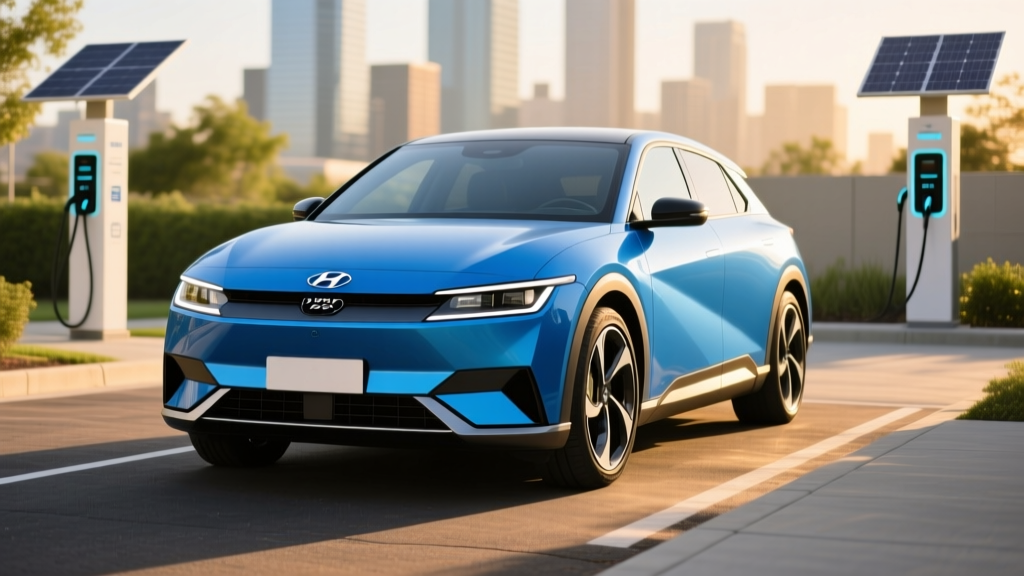
The Hyundai Ioniq 5 remains one of the most well-rounded electric crossovers on the market in 2026, and the switch to the North American Charging Standard (NACS) port this year cements its position for Tesla Supercharger access. With up to 318 miles of EPA-estimated range, 800V architecture enabling 10-80% DC fast charging in roughly 18 minutes, and a starting MSRP around $42,600, the Ioniq 5 hatchback targets buyers who want a practical daily driver with credible road-trip capability. It isn't the fastest, the cheapest, or the roomiest in its segment — but it occupies a compelling middle ground that few competitors match across all dimensions simultaneously.
Range and Efficiency: EPA Sticker vs. Reality
The 2026 Ioniq 5 is offered with two battery configurations. The Standard Range model pairs a 63.0 kWh usable battery (LFP chemistry) with rear-wheel drive for an EPA-estimated 245 miles. The Long Range RWD uses a 84.0 kWh NMC (nickel-manganese-cobalt) pack and achieves the headline 318-mile EPA rating. The dual-motor AWD Long Range drops to approximately 290 miles EPA.
EPA estimate: 318 mi (Long Range RWD) / 245 mi (Standard Range RWD)
Expect in mixed driving: ~270-290 mi for the Long Range RWD under normal conditions. Highway-only driving at 75+ mph typically yields 250-265 mi. In freezing temperatures (below 32°F), expect a 20-30% reduction, bringing the Long Range to roughly 220-255 mi depending on cabin heat usage and whether you precondition the battery. The heat pump (standard on Long Range, optional on Standard Range) mitigates some cold-weather loss but doesn't eliminate it.
Efficiency for the Long Range RWD is rated at 117 MPGe combined (29 kWh/100 mi), which is competitive but not class-leading — the Tesla Model Y Long Range edges it out at roughly 122 MPGe. The Standard Range RWD returns about 114 MPGe combined.
Charging Speed: 800V Architecture Pays Off
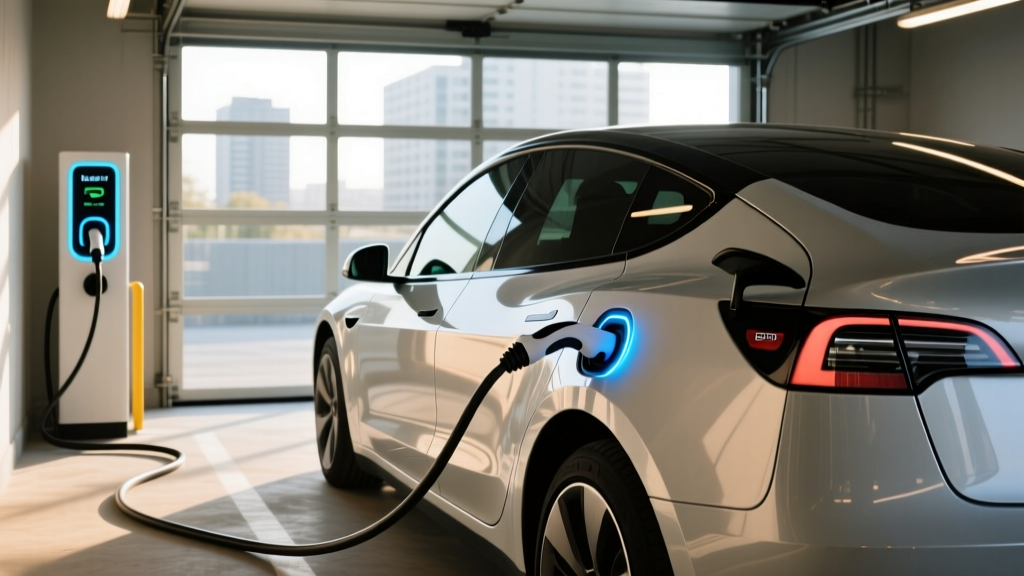
Hyundai's E-GMP platform uses an 800V electrical architecture, which allows the Ioniq 5 to accept higher-power DC fast charging than the more common 400V systems found in competitors like the Volkswagen ID.4 or Subaru Solterra. For 2026, the Ioniq 5 ships with a native NACS charge port, granting direct access to Tesla's Supercharger network without an adapter — a significant practical advantage for road-trip charging.
| Charging Level | Power / Rate | Speed / Time |
|---|---|---|
| Level 1 (120V household) | ~1.4 kW | ~4 mi/hr (Long Range) |
| Level 2 (240V home, 48A) | 10.9 kW | ~36 mi/hr; full charge ~8.5 hr (LR) |
| DC Fast Charge (peak) | ~240 kW (LR) / ~180 kW (SR) | 10-80% in ~18 min (LR); ~20 min (SR) |
| DC Fast Charge (sustained avg) | ~150-170 kW avg to 80% | Charge curve tapers sharply above 80%; 80-100% adds ~15 min |
The charge curve matters more than the peak number. The Ioniq 5 sustains strong charging speeds from 10% through about 60% state of charge, then gradually tapers. By 80%, power drops to roughly 80-90 kW, and above 90% it slows significantly. For road trips, plan to charge to 80% and go — pushing to 100% at a DC fast charger is rarely time-efficient.
At home on a Level 2 240V/48A circuit, expect to add roughly 36 miles of range per hour of charging. A full overnight charge easily replenishes the Long Range battery from 20% to 100% in about 7-8 hours. Budget approximately $800-$1,500 for a professional Level 2 home charger installation (equipment plus electrician labor), depending on your panel capacity and run distance. If your home has a 200A panel with spare capacity, installation is straightforward; a panel upgrade to support a 60A circuit can add $1,500-$3,000+.
Performance and Drivetrain
The 2026 Ioniq 5 offers three drivetrain configurations:
- Standard Range RWD: 168 hp, 258 lb-ft torque, 0-60 mph in ~7.5 seconds
- Long Range RWD: 225 hp, 258 lb-ft torque, 0-60 mph in ~6.5 seconds
- Long Range AWD (dual motor): 320 hp, 446 lb-ft torque, 0-60 mph in ~4.5 seconds
None of these will embarrass you at a stoplight, but the Ioniq 5 isn't positioned as a performance EV. The RWD models prioritize efficiency and range; the AWD provides confident all-weather traction and brisk acceleration. Steering is well-weighted but numb at the limit — this is a comfortable cruiser, not a canyon carver. Ride quality is a strength: the suspension absorbs bumps with composure, and cabin noise isolation is excellent for the price point.
Towing capacity is rated at 2,300 lbs (AWD) or 1,650 lbs (RWD) — adequate for a small utility trailer but not a serious towing platform. If you need 5,000+ lbs, look at the Rivian R1S or Ford F-150 Lightning.
Interior, Cargo, and Technology
The Ioniq 5's interior leans retro-futuristic, with a dual 12.3-inch display setup (instrument cluster and infotainment on a single curved panel), physical climate controls (a welcome choice over touchscreen-only HVAC), and a flat floor enabled by the skateboard platform. Materials are a mix of recycled fabrics and soft-touch plastics — pleasant but not luxury-tier.
Passenger space: Front headroom is generous at 39.6 inches; rear legroom measures 39.4 inches, which is competitive with midsize sedans and exceeds most compact crossovers. The flat floor makes the rear middle seat genuinely usable for an adult on short trips.
Cargo volume: 27.2 cubic feet behind the rear seats, expanding to 59.3 cu ft with the rear seats folded. The front trunk (frunk) adds 0.85 cu ft on RWD models and 0.4 cu ft on AWD — enough for a charging cable bag or small groceries, but not a meaningful cargo area.
Notable tech:
- Vehicle-to-load (V2L): powers devices up to 3.6 kW via an interior outlet or exterior adapter — useful for camping, tailgating, or emergency backup power
- Highway Driving Assist 2 (HDA2): SAE Level 2 driver assistance with lane-centering, adaptive cruise, and lane-change assist. This is not autonomous driving — hands must remain on the wheel and eyes on the road
- Digital Key 2: use your smartphone or smartwatch as a key fob via NFC/UWB
- Over-the-air (OTA) updates for powertrain calibration, infotainment, and ADAS improvements
- Bluelink connected services with remote preconditioning — critical for maximizing range in extreme temperatures
Drawbacks: The rear wiper is absent (a common complaint in rain/snow). The infotainment system, while functional, lacks the polish and responsiveness of Tesla's or even Hyundai's own newer systems in the Ioniq 6. Wireless Apple CarPlay and Android Auto are present but can be laggy. Rear visibility is compromised by thick C-pillars; the digital rearview mirror option helps but costs extra.
Pricing, Trims, and Federal Tax Credit
The 2026 Ioniq 5 lineup breaks down as follows:
| Trim | Drivetrain | MSRP | Est. After §30D Credit* |
|---|---|---|---|
| SE Standard Range | RWD | $42,600 | $35,100 |
| SE Long Range | RWD | $46,100 | $38,600 |
| SEL Long Range | RWD | $49,600 | $42,100 |
| Limited Long Range | AWD | $57,200 | $49,700 |
*Federal tax credit estimates assume buyer eligibility. Actual credit amount depends on IRS §30D rules.
The IRS §30D federal EV tax credit offers up to $7,500 for qualifying new EVs, but eligibility is governed by a matrix of requirements that change periodically:
- MSRP cap: SUVs/wagons (which the Ioniq 5 is classified as) must have an MSRP at or below $80,000 — all Ioniq 5 trims qualify
- Buyer income cap: Modified adjusted gross income must not exceed $150,000 (single), $225,000 (head of household), or $300,000 (joint filing)
- Battery sourcing: A percentage of critical minerals and battery components must be sourced from the US or free-trade-agreement countries; this threshold increases annually and affects the credit split ($3,750 for minerals + $3,750 for components)
- Point-of-sale transfer: As of 2024, eligible buyers can transfer the credit to the dealer at purchase, reducing the purchase price upfront rather than waiting to claim it on a tax return
- Foreign entity of concern (FEOC) restriction: Vehicles with battery components from a FEOC are disqualified; Hyundai's supply chain has generally met compliance, but verify at purchase
Confirm eligibility with your tax professional and check the latest fueleconomy.gov tax credit listings before purchasing, as sourcing compliance and credit amounts can shift mid-year.
Warranty and Ownership Costs
Hyundai backs the Ioniq 5 with one of the strongest warranty packages in the EV segment:
- New vehicle limited warranty: 5 years / 60,000 miles
- Powertrain warranty: 10 years / 100,000 miles (covers drive motors, reduction gear)
- Battery warranty: 10 years / 100,000 miles, covering capacity loss below 70% of original
- Complimentary maintenance: 3 years / 36,000 miles (covers tire rotation, cabin air filter, multi-point inspection)
The 70% capacity retention threshold is standard for the industry; in practice, Hyundai's battery degradation data from early Ioniq 5 owners suggests roughly 5-8% loss over the first 100,000 miles under normal usage — well within warranty tolerance. LFP-equipped Standard Range models may see even slower degradation, as LFP chemistry typically offers longer cycle life, though at lower energy density.
Insurance costs for the Ioniq 5 average approximately $1,800-$2,400 annually for a clean-record driver, depending on trim, location, and insurer — roughly 15-25% higher than a comparable gas-powered Tucson, reflecting the higher repair costs associated with EV battery packs and specialized body structures.
Ioniq 5 vs. Key Competitors
The Ioniq 5's closest rivals are the Tesla Model Y, Ford Mustang Mach-E, and Volkswagen ID.4. Here's how they stack up on the metrics that matter:
- Tesla Model Y Long Range: ~330 mi EPA, ~$48,000 MSRP, superior Supercharger integration and software, but tighter rear seat, no V2L, and more polarizing interior minimalism
- Ford Mustang Mach-E (Extended Range RWD): ~320 mi EPA, ~$48,000 MSRP, sportier driving dynamics, but slower DC charging (~150 kW peak) and less rear cargo space
- Volkswagen ID.4 Pro S: ~291 mi EPA, ~$47,000 MSRP, comfortable ride, but slower DC charging (~170 kW peak), 400V architecture, and less engaging to drive
Choose the Ioniq 5 if: You value fast DC charging for road trips, want V2L capability, prefer a comfortable ride over sporty handling, need NACS Supercharger access without an adapter, and want a strong battery warranty with a 10-year horizon.
Look elsewhere if: You need maximum cargo space (Model Y wins), you prioritize the lowest purchase price (ID.4 often has aggressive incentives), you want cutting-edge autonomous driving features (Tesla FSD, though still Level 2, has broader deployment), or you need serious towing capacity (consider the F-150 Lightning or Rivian R1S).
Best use case: Daily commuter who takes 2-4 road trips per year, has home Level 2 charging access, and values a well-rounded package over excelling in any single category.
Pros and Cons
Pros
- 10-80% DC fast charge in ~18 minutes (best in class for non-Lucid/Tesla)
- Native NACS port for direct Supercharger access (2026+)
- V2L capability (3.6 kW) for camping/emergency use
- Strong 10-yr/100,000-mi battery and powertrain warranty
- Comfortable ride quality with excellent noise isolation
- Physical climate controls alongside touchscreen
- Spacious rear seat with flat floor
Cons
- Real-world highway range falls 15-20% below EPA sticker
- Frunk is tiny (under 1 cu ft) — barely useful
- No rear wiper — a practical annoyance in wet weather
- Infotainment responsiveness lags behind Tesla and newer Hyundai systems
- AWD towing limited to 2,300 lbs
- Insurance costs 15-25% higher than comparable gas crossovers
- Limited Long Range AWD trim pushes past $57K before options
Frequently Asked Questions
What is the real-world range of the 2026 Hyundai Ioniq 5?
The Long Range RWD is EPA-rated at 318 miles, but expect roughly 270-290 miles in mixed real-world driving, 250-265 miles on the highway at 75 mph, and 220-255 miles in freezing temperatures. The Standard Range RWD (EPA 245 mi) delivers approximately 200-220 miles in typical mixed use.
How fast does the Ioniq 5 charge at home and on the road?
At home on a Level 2 (240V/48A) charger, the Ioniq 5 adds about 36 miles of range per hour, with a full charge taking roughly 8.5 hours for the Long Range. On a DC fast charger, it peaks at ~240 kW and charges from 10-80% in approximately 18 minutes — one of the fastest in its price segment, thanks to the 800V architecture.
Does the 2026 Ioniq 5 qualify for the $7,500 federal EV tax credit?
All Ioniq 5 trims fall under the $80,000 MSRP cap for SUVs, so the vehicle itself qualifies. However, your personal eligibility depends on income limits ($150K single / $300K joint), battery-sourcing compliance (which Hyundai has generally met), and FEOC restrictions. Verify current eligibility on irs.gov and with your tax professional. The credit can be transferred to the dealer at point of sale to reduce your purchase price upfront.
Is the Ioniq 5 worth buying over the Tesla Model Y?
It depends on your priorities. The Ioniq 5 offers faster DC charging, V2L, a more traditional (and to many, more comfortable) interior layout, and a longer warranty. The Model Y offers slightly more range, more cargo space, a more mature software ecosystem, and the broadest Supercharger network access. With the Ioniq 5 now using NACS in 2026, the charging-network gap has narrowed significantly. If you value ride comfort and road-trip charging speed, the Ioniq 5 has a strong case. If cargo volume and software polish matter more, the Model Y may edge it out.
What battery chemistry does the Ioniq 5 use?
The Standard Range model uses LFP (lithium iron phosphate) chemistry, which offers longer cycle life, better thermal stability, and lower cost but less energy density. The Long Range models use NMC (nickel-manganese-cobalt), which provides higher energy density for greater range but typically degrades slightly faster over time. Both chemistries are covered by the same 10-year/100,000-mile battery warranty.
How much does it cost to charge the Ioniq 5 at home vs. public DC fast chargers?
At the US average residential electricity rate of ~$0.16/kWh, fully charging the Long Range (84 kWh) at home costs roughly $13.44 — equating to about $0.04-$0.05 per mile. Public DC fast charging averages $0.30-$0.48/kWh depending on the network and time of day, putting a 10-80% charge at roughly $18-$30. For daily driving, home charging is dramatically cheaper; reserve DC fast charging for road trips.