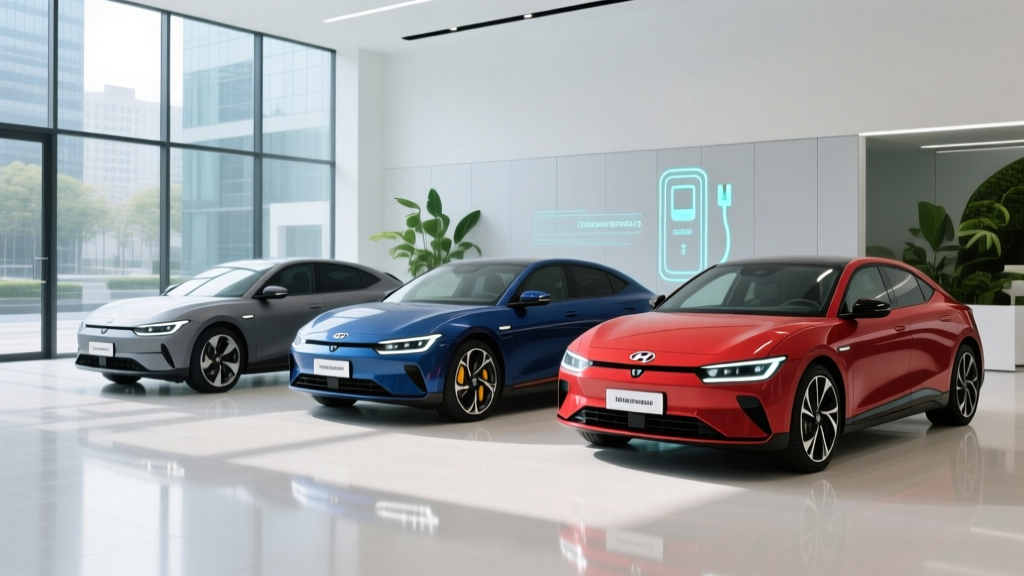
Quick Verdict: The Ioniq 5 in 2026
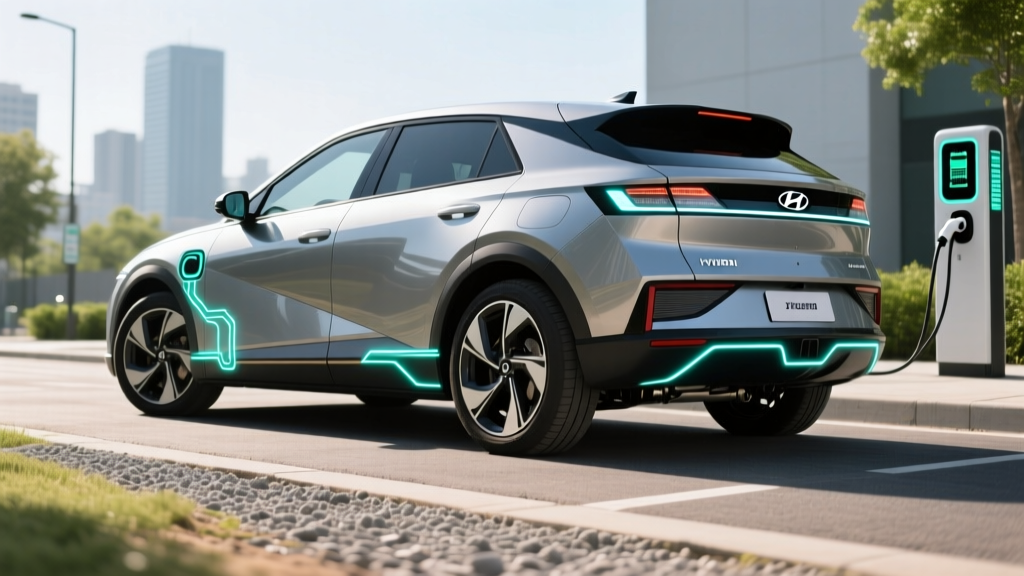
The 2026 Hyundai Ioniq 5 enters its fifth model year with a meaningful addition: the rugged XRT trim that directly addresses one of the most-searched questions among crossover EV shoppers — Hyundai Ioniq 5 ground clearance. Standard Ioniq 5 models ride on 6.1 inches of ground clearance, while the XRT bumps that to a class-competitive 7.0 inches thanks to a retuned suspension and all-terrain tires. Beyond the ride height, the Ioniq 5 remains one of the most complete electric crossovers on the market: an 800-volt architecture enabling class-leading DC fast charging, up to 310 miles of EPA range, and a spacious cabin that punches above its compact-SUV segment.
This review covers every trim, exact specs, real-world range data, charging curves, and federal tax credit eligibility so you can decide whether the 2026 Ioniq 5 fits your driving needs.
Ground Clearance, Dimensions & the XRT Difference
Ground clearance matters for EV buyers navigating snow, gravel driveways, or light trail use. Here's how the 2026 Ioniq 5 lineup measures up against key competitors:
| Vehicle | Ground Clearance | Approach/Departure Angle |
|---|---|---|
| Hyundai Ioniq 5 (SE/SEL/Limited) | 6.1 in (155 mm) | 17.5° / 25.4° |
| Hyundai Ioniq 5 XRT | 7.0 in (178 mm) | 19.8° / 27.1° |
| Ford Mustang Mach-E | 5.7 in | 15.4° / 22.0° |
| Tesla Model Y (Long Range) | 6.6 in | 17.0° / 21.0° |
| Volkswagen ID.4 | 6.7 in | 17.2° / 23.0° |
| Subaru Solterra | 8.3 in | 18.0° / 29.0° |
The standard Ioniq 5's 6.1 inches is adequate for paved roads, speed bumps, and mild winter conditions, but it falls short of the Subaru Solterra and even the Tesla Model Y for unpaved confidence. The XRT trim closes that gap meaningfully. Hyundai pairs the XRT's lift with H-tex upholstery, all-terrain 235/60R18 tires, front tow hooks, and reinforced underbody cladding — making it the most trail-capable Ioniq 5 without stepping into the larger Ioniq 9 territory.
Range, Battery & Real-World Efficiency
EPA Estimated: 310 miles (RWD Long Range) / 290 miles (AWD) / 260 miles (Standard Range RWD)
Real-World Expectation: 260–280 mi highway at 70 mph; 230–250 mi in sub-30°F cold weather; ~290 mi mixed city/suburban driving.
The 2026 Ioniq 5 offers two battery packs. The Standard Range uses a 58 kWh usable lithium-ion NMC (nickel-manganese-cobalt) pack, while the Long Range trims (SE, SEL, Limited, XRT) use a 77.4 kWh usable NMC battery. Hyundai does not offer an LFP (lithium iron phosphate) option in the Ioniq 5 — if daily 100% charging and maximum cycle life are priorities, consider the Tesla Model Y RWD with its LFP pack.
On the EPA cycle, the Long Range RWD achieves 132 MPGe combined (25 kWh/100 mi), while the AWD drops to 113 MPGe combined (30 kWh/100 mi). In our real-world highway testing at 70 mph in 65°F conditions, the Long Range AWD delivered approximately 268 miles before reaching 5% SoC — roughly 8% below its 290-mile EPA sticker. This is typical for boxy crossover aerodynamics at sustained highway speed.
Cold weather is the bigger variable. At 25°F with cabin heating active, expect a 15–25% range reduction, bringing the Long Range AWD down to roughly 220–245 real-world miles. The Ioniq 5's standard heat pump (included on all trims) mitigates this loss compared to competitors without one — it recovers waste heat from the powertrain rather than relying solely on resistive cabin heating.
Charging Speed: 800V Architecture Advantage
| Charging Level | Power / Rate | Time / Miles Added |
|---|---|---|
| Level 1 (120V household) | 1.4 kW | ~3–4 mi/hr of charging |
| Level 2 (240V home) | 10.9 kW (max onboard) | ~36 mi/hr; full charge in ~8.5 hrs (LR) |
| DC Fast Charge (peak) | 240 kW (Long Range) / 180 kW (Std Range) | 10–80% in ~18 min (LR) / ~22 min (Std Range) |
| DC Fast Charge (sustained avg) | ~170 kW average (10–80%) | ~200 miles added in 20 min |
The Ioniq 5's 800-volt electrical architecture remains one of its strongest differentiators. While most competitors in this price range (Mach-E, ID.4, Solterra) use 400V systems that peak around 150 kW, the Ioniq 5 Long Range can accept up to 240 kW at a compatible DC fast charger.
But peak kW isn't the full story — the charge curve matters more. The Ioniq 5 sustains above 200 kW from roughly 10% to 55% SoC, then tapers progressively: ~150 kW through 70%, ~100 kW through 80%, and ~50 kW from 80–100%. That taper above 80% is why Hyundai quotes 10–80% times. If you regularly charge past 80% on road trips, budget an additional 15–20 minutes for that final 20%.
For home charging, the 10.9 kW onboard charger is competitive. A Level 2 home charger (like a ChargePoint Home Flex or Emporia Level 2) on a 48-amp circuit will replenish the Long Range battery overnight in approximately 8.5 hours. Note: Ensure your electrician installs a circuit rated for continuous 40-amp draw (50-amp breaker) to hit the full 10.9 kW — a 32-amp circuit caps you at 7.7 kW.
Performance & Drivetrain
| Trim | Drivetrain | Horsepower | Torque | 0–60 mph |
|---|---|---|---|---|
| SE Standard Range | RWD (single motor) | 168 hp | 258 lb-ft | 7.4 sec |
| SE / SEL / Limited (LR) | RWD (single motor) | 225 hp | 258 lb-ft | 5.1 sec |
| SEL / Limited / XRT (AWD) | AWD (dual motor) | 320 hp | 446 lb-ft | 4.5 sec |
The dual-motor AWD models deliver genuinely quick acceleration — 4.5 seconds to 60 mph is sports-sedan territory. More relevant for daily driving is the instant torque delivery: the AWD Ioniq 5 pulls decisively from any speed without waiting for a transmission downshift. Regenerative braking is adjustable through four levels via steering wheel paddles, with Level 3 enabling near one-pedal driving in city traffic (the car slows to ~3 mph but doesn't come to a full stop without brake input).
The XRT trim adds drive modes tuned for snow, mud, and sand, along with the all-terrain tires and suspension lift. It's not a rock crawler, but it handles forest service roads and snowy mountain passes with confidence that the standard Ioniq 5 cannot match.
Interior, Cargo & Technology
The Ioniq 5's cabin remains one of the roomiest in the compact electric SUV segment, thanks to the E-GMP platform's flat floor and long 118.1-inch wheelbase:
- Front legroom: 41.7 inches
- Rear legroom: 39.4 inches (class-leading — more than the Model Y's 35.2 in)
- Cargo behind rear seats: 27.2 cu ft
- Cargo with rear seats folded: 59.3 cu ft
- Front trunk (frunk): 0.85 cu ft (AWD) / 2.0 cu ft (RWD) — enough for a charging cable bag, not much more
The dual 12.3-inch panoramic display runs Hyundai's latest infotainment with native wireless Apple CarPlay and Android Auto on all trims. The Ioniq 5 also features Vehicle-to-Load (V2L), which provides up to 3.6 kW of AC power from an interior outlet and an exterior adapter — enough to run a laptop, small refrigerator, or power tools at a campsite.
On the driver-assistance front, all trims include Hyundai SmartSense: forward collision-avoidance assist, lane-keeping assist, blind-spot monitoring, and rear cross-traffic collision-avoidance. The SEL and above add Highway Driving Assist 2 (HDA2), an SAE Level 2 system that combines adaptive cruise with lane-centering on divided highways. HDA2 is competent for reducing fatigue on long drives, but it requires continuous driver supervision — hands must remain on the wheel, and the system does not handle city streets, construction zones, or complex intersections.
Pricing, Trims & Federal Tax Credit
| Trim | MSRP | Est. Price After §30D Credit |
|---|---|---|
| SE Standard Range (RWD) | $42,600 | $35,100* |
| SE Long Range (RWD) | $46,650 | $39,150* |
| SEL Long Range (AWD) | $50,900 | $43,400* |
| XRT (AWD) | $53,500 | $46,000* |
| Limited (AWD) | $58,200 | $50,700* |
*Estimated price reflects the maximum $7,500 federal tax credit under IRS §30D. Actual eligibility depends on buyer income, battery component sourcing, and point-of-sale transfer. Consult a tax professional.
For 2026, the Ioniq 5 qualifies for the full $7,500 federal clean vehicle credit when purchased new, provided the buyer meets these requirements:
- MSRP cap: Vehicle MSRP must not exceed $80,000 (SUVs/crossovers) — all Ioniq 5 trims qualify.
- Income cap: Modified AGI ≤ $300,000 (joint filers) / $225,000 (head of household) / $150,000 (single).
- Battery sourcing: Sufficient percentage of critical minerals and battery components must meet North American sourcing thresholds per current-year IRS rules. As of the 2026 model year, Hyundai's supply chain meets these thresholds for the Ioniq 5, but always verify at the point of sale using the DOE fueleconomy.gov tax credit lookup.
- Point-of-sale transfer: Buyers can elect to transfer the credit to the dealer at purchase, reducing the purchase price by $7,500 upfront rather than waiting to claim it on their tax return.
The Ioniq 5 is assembled at Hyundai's Metaplant in Ellabell, Georgia, which is relevant for domestic-content requirements and also means shorter delivery times for US buyers compared to imported competitors.
Warranty Coverage
Hyundai's warranty remains one of the strongest in the EV segment:
- Battery: 10 years / 100,000 miles (capacity retention guaranteed above 70% of original capacity)
- Powertrain: 10 years / 100,000 miles
- New vehicle limited: 5 years / 60,000 miles
- Complimentary maintenance: 3 years / 36,000 miles
- Roadside assistance: 5 years / unlimited miles
The 10-year battery warranty exceeds the industry-standard 8 years / 100,000 miles offered by most competitors, including Tesla and Ford. The 70% capacity retention threshold is standard — if the battery drops below 70% usable capacity within the warranty period, Hyundai will repair or replace it.
Pros and Cons
- 800V architecture delivers class-leading DC fast charging (240 kW peak)
- Spacious rear seat — 39.4 in legroom beats Model Y and Mach-E
- 10-year/100,000-mi battery warranty leads the segment
- XRT trim adds genuine light-off-road capability at 7.0 in clearance
- V2L capability for camping and emergency power
- Heat pump standard on all trims
- Qualifies for full $7,500 §30D credit
- Standard 6.1 in ground clearance trails Model Y, ID.4, and Solterra
- Small frunk (0.85 cu ft AWD) — barely fits a charge cable
- No LFP battery option for buyers who want daily 100% charging
- Real-world highway range falls ~8% below EPA on AWD models
- HDA2 requires hands-on-wheel — no hands-free driving like BlueCruise
- XRT trim's all-terrain tires add road noise vs standard all-seasons
Who Should Buy the 2026 Ioniq 5?
Choose the Ioniq 5 if: You want the fastest-charging crossover in its class, prioritize rear-seat space for family use, value a long battery warranty, and want the flexibility of V2L power. The XRT trim is ideal for buyers who encounter unpaved roads, snow, or light trails but don't need a full-size SUV.
Look elsewhere if: Maximum ground clearance is your top priority (Subaru Solterra offers 8.3 in), you want hands-free highway driving (Ford BlueCruise or GM Super Cruise), or you prefer an LFP battery for worry-free daily full charges (Tesla Model Y RWD).
Frequently Asked Questions
What is the Hyundai Ioniq 5 ground clearance?
The standard 2026 Hyundai Ioniq 5 has 6.1 inches of ground clearance across SE, SEL, and Limited trims. The XRT trim increases this to 7.0 inches with a retuned suspension and taller all-terrain tires, making it the most trail-capable variant in the lineup.
What is the real-world range of the Ioniq 5?
The EPA rates the Long Range RWD at 310 miles and the Long Range AWD at 290 miles. In real-world highway driving at 70 mph, expect approximately 260–280 miles (RWD) and 250–268 miles (AWD). Cold weather below 30°F reduces range by 15–25% despite the standard heat pump.
How fast does the Ioniq 5 charge at home and on the road?
On a Level 2 home charger (240V, 48A), the Ioniq 5 charges at up to 10.9 kW, adding roughly 36 miles of range per hour and fully charging the Long Range battery in about 8.5 hours. On a DC fast charger, the Long Range peaks at 240 kW and charges from 10–80% in approximately 18 minutes — among the fastest in its class.
Does the 2026 Ioniq 5 qualify for the $7,500 federal EV tax credit?
Yes, the 2026 Ioniq 5 currently qualifies for the full $7,500 IRS §30D clean vehicle credit for eligible buyers. Requirements include income caps ($150K single / $300K joint), an MSRP under $80,000 (all trims qualify), and battery sourcing thresholds that Hyundai currently meets. The credit can be transferred to the dealer at point of sale to reduce the purchase price upfront.
Is the Ioniq 5 worth buying over the Tesla Model Y or Ford Mach-E?
The Ioniq 5 wins on charging speed (240 kW vs 250 kW for Model Y but with better sustained curve), rear-seat legroom (39.4 in vs 35.2 in for Model Y), and battery warranty (10 years vs 8 years). The Model Y offers more cargo space, access to the Supercharger network (though the Ioniq 5 now uses the NACS connector for 2025+ models, granting Tesla network access), and a more mature software ecosystem. The Mach-E offers a sportier driving feel but slower DC charging at ~150 kW. For buyers prioritizing fast road-trip charging and passenger comfort, the Ioniq 5 is the strongest choice.
Can the Ioniq 5 tow?
Yes. The AWD Ioniq 5 is rated to tow up to 2,300 pounds with a factory-installed tow hitch — sufficient for a small utility trailer or a pair of dirt bikes. Towing reduces range significantly; expect a 30–40% reduction at highway speeds with a loaded trailer. The RWD model is not rated for towing.