Quick Verdict: Does the Ioniq 5's Ground Clearance Limit It?
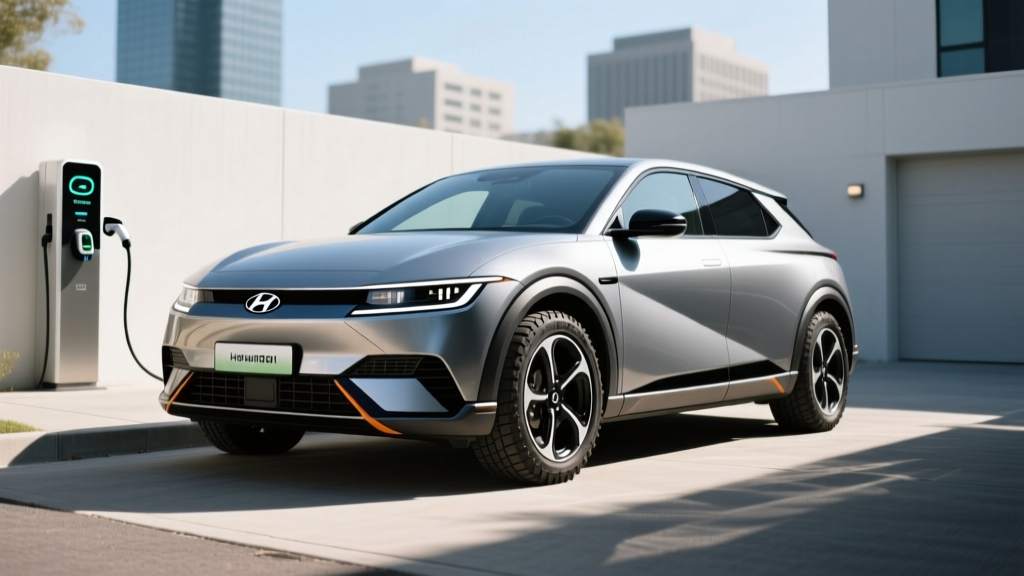
The 2026 Hyundai Ioniq 5 measures 6.8 inches of ground clearance across all trims — a figure that places it squarely among crossover EVs optimized for pavement, not trails. For context, the Ford Mustang Mach-E sits at 5.7 inches, the Toyota RAV4 Hybrid at 8.1 inches, and the Subaru Outback at 8.7 inches. The Ioniq 5's clearance is adequate for speed bumps, steep driveways, and light snow (roughly 4–5 inches unplowed), but it will scrape on deeper ruts or unmaintained forest roads.
That said, ground clearance is only one dimension of this EV's story. The Ioniq 5 remains one of the most compelling midsize electric crossovers on the market, pairing an 800-volt architecture with class-leading charge speeds, a spacious cabin, and competitive range. Here is the full breakdown of what you are actually buying.
Range, Battery, and Real-World Efficiency
Hyundai offers the 2026 Ioniq 5 with two battery configurations. The Standard Range models use a 63.0 kWh (usable) lithium-ion pack with NMC (nickel-manganese-cobalt) chemistry, while the Long Range variants step up to a 77.4 kWh usable NMC battery. Neither trim uses LFP chemistry, which means you should follow typical NMC care: avoid routinely charging to 100% and try to keep daily state of charge between 20–80%.
| Trim / Drivetrain | Battery (usable kWh) | Chemistry | EPA Range | MPGe (combined) | kWh/100 mi |
|---|---|---|---|---|---|
| SE Standard Range RWD | 63.0 | NMC | 245 mi | 114 MPGe | 29 |
| SEL / Limited RWD | 77.4 | NMC | 318 mi | 117 MPGe | 28 |
| SEL / Limited AWD | 77.4 | NMC | 290 mi | 110 MPGe | 30 |
Real-World Range Note: The EPA 318-mile figure for the Long Range RWD is achievable in mixed city/suburban driving at moderate temperatures. Expect ~265–285 miles on sustained highway runs at 70–75 mph. In cold weather (below 32°F), plan for a 20–30% reduction, dropping effective range to roughly 220–255 miles on the Long Range AWD. The heat pump (standard on SEL and above) helps mitigate cabin-heating losses but does not eliminate cold-weather degradation entirely. Source: fueleconomy.gov.
Charging Speed: The 800V Advantage in Practice
The Ioniq 5's headline feature remains its 800-volt electrical architecture, which enables DC fast charging at rates most competitors still cannot match. On a 350 kW CCS-capable station (Electrify America, EVgo, or any provider with CCS1 connectors), the Long Range model peaks at roughly 240 kW and sustains above 150 kW through most of the charge curve.
| Charging Level | Power (kW) | Time / Rate | Notes |
|---|---|---|---|
| Level 1 (120V household) | ~1.4 kW | ~3–4 mi/hr | Emergency / trickle only |
| Level 2 (240V, 48A home charger) | 10.9 kW | ~7 hr (10–100%) | Overnight full charge |
| DC Fast Charge (350 kW station) | Peak 240 kW | 10–80% in ~18 min | Precondition battery for best results |
| DC Fast Charge (150 kW station) | Peak ~130 kW | 10–80% in ~28 min | Common at older EA / ChargePoint sites |
A critical ownership note: preconditioning matters. When you navigate to a DC fast charger using the built-in route planner, the Ioniq 5 warms the battery to optimal temperature before arrival. Without preconditioning — particularly in cold weather — peak charge rates may drop to 150 kW or lower, and 10–80% times can stretch past 30 minutes. Always use the in-car navigation for charger routing when possible.
For the 2025–2026 model years, Hyundai adopted the NACS (Tesla) charge port on new Ioniq 5 vehicles sold in North America, granting native access to Tesla Supercharger stalls without an adapter. If you are shopping a remaining 2024 CCS-equipped model, the included CCS-to-NACS adapter provides the same access.
Performance, Drivetrain, and Ground Clearance Details
The Ioniq 5 is not a performance EV, but it is not slow either. The RWD Long Range produces 225 horsepower and 258 lb-ft of torque from a single rear motor, hitting 0–60 mph in approximately 7.0 seconds. The AWD dual-motor configuration bumps output to 320 hp and 446 lb-ft, dropping the 0–60 time to 4.5 seconds.
The 6.8-inch ground clearance applies to all trims regardless of drivetrain. Approach angle is 18.7 degrees, departure angle is 25.4 degrees, and breakover angle is 16.2 degrees. These figures confirm what the clearance number suggests: the Ioniq 5 is a road-oriented crossover. It handles gravel driveways, parking-garage ramps, and moderate snow without issue, but it is not designed for rock crawling or deep-sand conditions. If your lifestyle involves regular unpaved or rough-terrain driving, the Subaru Solterra (8.3 inches) or a lifted RAV4 Prime may be more practical.
Towing capacity is rated at 2,300 pounds (AWD with towing package) — enough for a small utility trailer or a pair of dirt bikes, but not a camper. The Ioniq 5 XRT variant, introduced for the 2025 model year and continuing into 2026, adds rugged cladding, all-terrain tires, and a slight suspension lift that brings ground clearance to approximately 7.0 inches, though the mechanical underpinnings remain unchanged.
Interior Space, Cargo, and Technology
Thanks to Hyundai's E-GMP dedicated EV platform (flat battery pack, no transmission tunnel), the Ioniq 5 offers interior volume that punches well above its exterior footprint.
- Front legroom: 41.7 inches
- Rear legroom: 39.4 inches
- Cargo behind rear seats: 27.2 cu ft
- Cargo with rear seats folded: 59.3 cu ft
- Frunk (front trunk):strong> 0.85 cu ft (AWD) / 2.1 cu ft (RWD) — enough for charging cables and a small bag
The dual 12.3-inch display layout (instrument cluster + infotainment) runs Hyundai's latest infotainment software with wireless Apple CarPlay and Android Auto. Physical climate controls remain — a welcome choice for drivers fatigued by touchscreen-only HVAC. The center console slides fore and aft by up to 5.5 inches ("Universal Island"), creating pass-through space between front seats in tight parking situations.
On the driver-assistance front, the Ioniq 5 comes with Hyundai SmartSense as standard: forward collision-avoidance assist, lane-keeping assist, blind-spot monitoring, and rear cross-traffic alert. Highway Driving Assist 2 (HDA2) is available on SEL and standard on Limited — this is an SAE Level 2 system that provides adaptive cruise with lane-centering on divided highways. It is not self-driving; you must keep your hands on the wheel and eyes on the road at all times.
Pricing, Trims, and Federal Tax Credit Eligibility
The 2026 Ioniq 5 lineup spans five trims. Pricing below reflects base MSRP including destination charge, before any incentives.
| Trim | Drivetrain | Base MSRP | Est. Federal Credit | Effective Price |
|---|---|---|---|---|
| SE Standard Range | RWD | $42,600 | Up to $7,500* | ~$35,100 |
| SE | RWD / AWD | $47,100 / $50,600 | Up to $7,500* | ~$39,600 / $43,100 |
| SEL | RWD / AWD | $50,350 / $53,850 | Up to $7,500* | ~$42,850 / $46,350 |
| Limited | RWD / AWD | $55,400 / $58,900 | Up to $7,500* | ~$47,900 / $51,400 |
| XRT | AWD | $54,500 | Up to $7,500* | ~$47,000 |
*Federal EV Tax Credit (§30D) Eligibility — Key Rules for 2026:
- MSRP cap: The Ioniq 5 qualifies as an SUV/crossover under IRS rules, so the cap is $80,000 — all trims clear this threshold.
- Buyer income cap: Modified AGI must not exceed $150,000 (single), $225,000 (head of household), or $300,000 (joint filers).
- Battery sourcing: The full $7,500 requires both critical-minerals and battery-component requirements to be met. Hyundai has shifted significant battery sourcing to the Georgia plant (Metaplant America), improving eligibility. However, partial credit ($3,750) may apply if only one requirement is satisfied. Always verify current eligibility on IRS.gov before purchasing.
- Point-of-sale transfer: You can elect to transfer the credit to the dealer at purchase, reducing your out-of-pocket cost immediately rather than waiting for tax filing.
Warranty and Long-Term Ownership
Hyundai backs the Ioniq 5 with one of the strongest warranty packages in the segment:
- Battery & drive unit: 10 years / 100,000 miles (whichever comes first) — covers capacity loss below 70% state of health
- New vehicle limited: 5 years / 60,000 miles
- Powertrain: 10 years / 100,000 miles
- Roadside assistance: 5 years / unlimited miles
- Complimentary maintenance: 3 years / 36,000 miles (oil changes are obviously not needed, but this covers tire rotations, inspections, and fluid top-offs)
The 70% capacity-retention threshold on the battery warranty is industry-standard (Tesla uses the same benchmark). Based on current degradation data from high-mileage Ioniq 5 owners, NMC packs in this platform lose approximately 8–12% capacity over the first 100,000 miles under normal use — well within the warranty buffer.
Pros, Cons, and Who Should Buy the Ioniq 5
Pros
- Class-leading DC fast-charge speed (18 min 10–80% at 350 kW stations)
- Spacious, flat-floor cabin with generous rear legroom (39.4 in)
- Strong warranty: 10-yr/100,000-mi battery coverage
- NACS port (2025+ models) for native Supercharger access
- Competitive real-world efficiency (28–30 kWh/100 mi)
- Physical buttons for climate controls
Cons
- 6.8-inch ground clearance limits rough-road and deep-snow capability
- Modest 2,300-lb towing capacity
- No LFP battery option for buyers who prefer 100% daily charging
- Frunk is small, especially on AWD trims (0.85 cu ft)
- HDA2 is competent but less refined than GM Super Cruise or Ford BlueCruise on highways
- Cold-weather range loss is noticeable without preconditioning discipline
Best for: Daily commuters and small families who prioritize fast charging and cabin space over off-road capability. If your routine involves a 40–80-mile round-trip commute, regular access to a Level 2 home charger, and occasional road trips where 18-minute DC fast-charge stops are a priority, the Ioniq 5 is one of the best vehicles in its price class.
Look elsewhere if: You need more than 7 inches of ground clearance for unplowed snow or gravel roads, regularly tow over 2,500 pounds, or want a one-pedal driving experience (the Ioniq 5's regen is strong but does not come to a full stop in all conditions without brake input).
Frequently Asked Questions
What is the ground clearance of the 2026 Hyundai Ioniq 5?
The 2026 Ioniq 5 has 6.8 inches of ground clearance across all standard trims (SE, SEL, Limited) in both RWD and AWD configurations. The XRT variant adds approximately 0.2 inches with its suspension tuning and all-terrain tires, bringing it to roughly 7.0 inches. These measurements are sufficient for paved roads, speed bumps, parking structures, and light snow, but not for off-road trails or deep unplowed conditions.
What is the real-world range of the Ioniq 5?
The EPA rates the Long Range RWD at 318 miles and the Long Range AWD at 290 miles. In real-world highway driving at 70–75 mph, expect roughly 265–285 miles from the RWD and 245–265 from the AWD. In freezing temperatures, subtract another 20–30%, yielding roughly 200–230 miles on the AWD. City and suburban driving with regenerative braking can match or slightly exceed EPA estimates in mild weather.
How fast does the Ioniq 5 charge at home and on the road?
At home on a 240V Level 2 charger (48 amps), the Ioniq 5 accepts up to 10.9 kW, adding roughly 35–40 miles of range per hour and fully charging from 10–100% in about 7 hours. On a 350 kW DC fast charger, it peaks at 240 kW and charges from 10–80% in approximately 18 minutes when the battery is preconditioned. At a 150 kW station, expect 10–80% in roughly 28 minutes.
Does the 2026 Ioniq 5 qualify for the $7,500 federal tax credit?
The Ioniq 5 qualifies as an SUV under IRS classification (MSRP cap of $80,000), and all trims fall well under that limit. Full $7,500 eligibility depends on your income (under $150K single / $300K joint), and whether the battery meets critical-mineral and component-sourcing requirements under §30D. Hyundai's Georgia battery production has improved eligibility for 2025–2026 models, but you should confirm the exact credit amount with your dealer and consult IRS.gov or a tax professional before purchase. The credit can be transferred to the dealer at point of sale.
Is the Ioniq 5 worth buying over the Tesla Model Y or Ford Mustang Mach-E?
It depends on your priorities. The Ioniq 5 charges faster than both (240 kW peak vs. ~250 kW for Model Y but on a more reliable CCS/NACS network experience, and ~150 kW for the Mach-E). The Model Y offers more cargo space (30.2 cu ft vs. 27.2) and access to the maturest Supercharger network (though Ioniq 5 NACS models now share that access). The Mach-E is sportier to drive but charges slower and has less rear-seat room. If fast charging, warranty coverage, and interior comfort are your top criteria, the Ioniq 5 wins. If maximum cargo volume and software ecosystem matter more, the Model Y has the edge. See the IIHS ratings for crash-test comparisons.
Does the Ioniq 5 have one-pedal driving?
The Ioniq 5 offers multiple regenerative braking levels (0 through 3) selectable via steering-wheel paddles. Level 3 provides aggressive regen that slows the car significantly when you lift off the accelerator, but it does not reliably bring the vehicle to a complete stop in all conditions. You will still need to use the brake pedal for final stops. This is a deliberate Hyundai design choice, and some drivers prefer the predictability; others find it less seamless than true one-pedal systems in the Chevrolet Bolt or Nissan Leaf.
What is the Ioniq 5's towing capacity?
The 2026 Ioniq 5 AWD with the factory towing package is rated for 2,300 pounds. The RWD model is rated for 1,650 pounds. These figures cover light-duty tasks such as a small enclosed trailer, kayak trailer, or bicycle rack with multiple bikes, but not a travel trailer or boat on a dual-axle trailer. If towing is a priority, the Rivian R1S (7,700 lb) or Ford F-150 Lightning (7,700–10,000 lb) are far more capable alternatives.