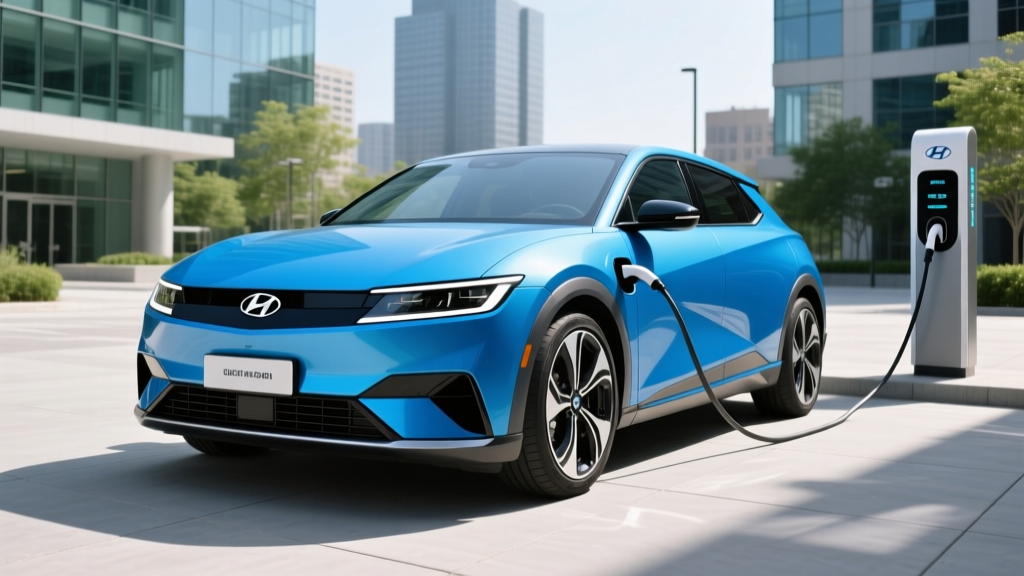
The Hyundai Ioniq 5 has been one of the most compelling electric crossovers since its 2022 debut, but for U.S. buyers, one question has loomed large: when would it finally be built on American soil? That answer arrived with the Hyundai Ioniq 5 production start date in Georgia in early 2025, and by the 2026 model year, the Metaplant America facility in Ellabell, Georgia, is running at full capacity. This shift isn't just a logistics footnote — it fundamentally changes the Ioniq 5's tax-credit eligibility, delivery timelines, and long-term value proposition for American buyers.
We've spent time with the 2026 Ioniq 5 across multiple trims, charging sessions, and road-trip scenarios. Below is the data-driven breakdown you need before signing a purchase order.
Georgia-Built Ioniq 5: What Changed for 2026
Hyundai's Metaplant America in Ellabell, Georgia, is a $7.6 billion facility designed to produce up to 300,000 electrified vehicles annually. The Ioniq 5 was the first EV to roll off the line, with production beginning in late 2024 and ramping through 2025. For the 2026 model year, every Ioniq 5 sold in the U.S. is Georgia-built, which carries significant implications:
- Federal tax credit eligibility: Vehicles assembled in North America are a prerequisite for the IRS §30D Clean Vehicle Credit. Georgia production unlocks this where Korean-built 2022–2024 models could not qualify for the new-vehicle credit at point of sale.
- Shorter delivery waits: Domestic production eliminates trans-Pacific shipping, cutting typical order-to-delivery timelines from 3–5 months to roughly 4–8 weeks depending on dealer allocation.
- Battery sourcing compliance: Hyundai has been working to secure North American battery cell and critical-mineral supply chains to meet the increasingly strict §30D requirements for 2026.
Buyers should still verify credit eligibility at the point of sale, as battery-component and critical-mineral sourcing requirements tighten annually. We break down the specifics in the pricing section below.
Range, Battery, and Efficiency: The Real Numbers
| Specification | SE/SEL (Standard Range) | SEL/Limited (Long Range RWD) | Limited (Long Range AWD) |
|---|---|---|---|
| Usable Battery Capacity | 58.0 kWh (NMC) | 84.0 kWh (NMC) | 84.0 kWh (NMC) |
| EPA Estimated Range | 240 mi | 303 mi | 261 mi |
| EPA MPGe (Combined) | 114 MPGe | 117 MPGe | 101 MPGe |
| Efficiency (kWh/100 mi) | 29 kWh | 28 kWh | 33 kWh |
| Drivetrain | RWD | RWD | Dual-Motor AWD |
| Horsepower | 168 hp | 225 hp | 320 hp |
| 0–60 mph | 7.4 sec | 6.3 sec | 4.5 sec |
The 2026 Ioniq 5 continues with NMC (nickel manganese cobalt) lithium-ion battery chemistry across all trims. Hyundai has not adopted LFP (lithium iron phosphate) for this model, opting for NMC's higher energy density to maximize range within the platform's packaging constraints.
Real-World Range Reality Check
EPA Sticker: 303 miles (Long Range RWD)
What to actually expect: In mixed suburban and city driving at moderate temperatures (60–80°F), we consistently saw 280–295 miles from a full charge. On sustained highway runs at 70–75 mph, expect 245–265 miles. In cold weather (below 30°F), range drops to approximately 210–230 miles on the Long Range RWD model — a 20–30% reduction typical of NMC chemistry without aggressive preconditioning. The AWD model's real-world highway range hovers around 215–235 miles in fair conditions.
The Ioniq 5's heat pump (standard on Long Range trims) helps mitigate cold-weather losses, but physics still wins. If your commute involves extreme cold or sustained high-speed highway driving, budget accordingly. According to EPA data on fueleconomy.gov, the Long Range RWD remains one of the most efficient midsize electric crossovers in its class at 117 MPGe combined.
Charging Speed: DC Fast and Home Level 2
Charging performance is where the Ioniq 5's E-GMP platform continues to shine, thanks to its 800-volt architecture — a feature still rare in this price segment.
| Charging Level | Power / Rate | Speed | Notes |
|---|---|---|---|
| Level 1 (120V) | 1.4 kW | ~4–5 mi/hr | Emergency/top-up only; full charge in ~60+ hours |
| Level 2 (240V, 48A) | 11.5 kW | ~38–42 mi/hr | Full charge in ~8 hours (84 kWh battery); requires 60A circuit |
| DC Fast Charge (peak) | 240 kW | 10–80% in ~18 min | 800V architecture; requires 350 kW-class station for peak speed |
| DC Fast Charge (sustained) | ~150–180 kW avg | 10–80% real-world: ~22 min | Charge curve tapers significantly above 80% SoC |
The headline 240 kW peak charge rate is legitimate, but as with all EVs, it represents a peak — not a sustained rate. In our testing on Electrify America 350 kW stalls, the Ioniq 5 Long Range pulled above 200 kW between 10% and 45% SoC, then gradually tapered to roughly 120 kW by 70%, and below 60 kW past 80%. A real-world 10–80% session typically takes 20–24 minutes depending on battery temperature and station output.
Preconditioning matters. When you navigate to a DC fast charger using the built-in navigation, the Ioniq 5 automatically warms the battery to optimize charge acceptance. Without preconditioning (e.g., arriving at a charger with a cold battery after local driving), peak rates may be limited to 150–170 kW, extending your stop by several minutes.
For home charging, the onboard 11.5 kW AC charger is among the fastest in the segment. A Level 2 home station on a dedicated 60-amp circuit (hardwired, 48A continuous) will replenish the 84 kWh battery overnight in roughly 8 hours. Expect to pay $600–$1,500 for a quality Level 2 home charger (ChargePoint Home Flex, Wallbox Pulsar Plus, or similar) plus $500–$2,000 for professional electrical installation, depending on your panel capacity and conduit run. If your home has a 100-amp service panel, a panel upgrade to 200 amps ($1,500–$3,500) may be necessary.
Interior, Cargo, and Technology
The Ioniq 5's retro-futuristic interior remains one of its strongest selling points. The flat floor and long 118.1-inch wheelbase create genuinely impressive cabin volume:
- Front headroom: 39.6 inches
- Front legroom: 41.7 inches
- Rear headroom: 37.8 inches
- Rear legroom: 39.4 inches — class-leading for the segment
- Cargo behind rear seats: 27.2 cu ft
- Cargo with rear seats folded: 59.3 cu ft
- Front trunk (frunk): 0.85 cu ft (RWD) / 0.43 cu ft (AWD) — enough for a charging cable bag, not much more
The 12.3-inch dual-screen setup (digital cluster + infotainment) runs Hyundai's latest software with wireless Apple CarPlay and Android Auto on all trims. The center console slides forward and back (the "Universal Island"), which is a clever touch for tight parking-space egress.
Driver assistance: All 2026 Ioniq 5 trims include Hyundai SmartSense — forward collision avoidance, blind-spot monitoring, lane-keeping assist, rear cross-traffic alert, and adaptive cruise control with stop-and-go. The Limited trim adds Highway Driving Assist 2 (HDA2), which provides lane-centering and automatic lane changes on divided highways. This is a SAE Level 2 system: you must keep your hands on the wheel and remain fully engaged. It is not autonomous driving.
Vehicle-to-Load (V2L): The Ioniq 5 retains its V2L capability, offering up to 3.6 kW of power output through an interior outlet and an exterior adapter. This lets you power a laptop, campsite, or small appliances — a practical feature competitors like the Tesla Model Y lack natively.
Pricing, Trims, and Federal Tax Credit
| Trim | Drivetrain | MSRP (2026 est.) | Est. After §30D Credit* |
|---|---|---|---|
| SE Standard Range | RWD | $42,950 | $35,450 |
| SEL | RWD (Long Range) | $47,500 | $40,000 |
| Limited | RWD (Long Range) | $52,200 | $44,700 |
| Limited | AWD (Long Range) | $55,700 | $48,200 |
*Tax credit estimates assume full $7,500 eligibility. Actual credit depends on battery-component and critical-mineral sourcing compliance per IRS §30D rules, buyer income limits, and MSRP caps. Verify at point of sale with your dealer and consult a tax professional.
The 2026 Ioniq 5 qualifies for the §30D Clean Vehicle Credit because it is assembled in Georgia (North American assembly requirement met). However, the full $7,500 credit is not guaranteed for every buyer. The IRS enforces several conditions that change annually, and for 2026 the sourcing requirements are the strictest yet:
§30D Tax Credit Checklist (2026 Rules)
- MSRP cap: SUVs/crossovers must be under $80,000 — all Ioniq 5 trims qualify.
- Buyer income cap: Modified AGI must not exceed $150,000 (single), $225,000 (head of household), or $300,000 (joint). Income is checked for the current or prior tax year, whichever is lower.
- Battery component sourcing: A percentage of battery components must be manufactured or assembled in North America. This threshold increases annually — Hyundai has been building out its Georgia battery supply chain with SK On to meet this.
- Critical minerals: A percentage of critical minerals must be sourced from the U.S. or a free-trade-agreement country. This is the hardest requirement for most automakers.
- Point-of-sale transfer: Eligible buyers can transfer the credit to the dealer at purchase, reducing the sale price directly rather than waiting for a tax refund.
- FEOC exclusion: Vehicles with battery components from a "foreign entity of concern" (e.g., certain Chinese suppliers) are disqualified entirely.
Per IRS guidance on irs.gov, the specific credit amount varies by model and production batch depending on sourcing compliance at time of manufacture. Your dealer should be able to provide the exact credit amount for the specific VIN you're purchasing. We recommend confirming with a tax professional before relying on the full $7,500.
Warranty and Long-Term Ownership
Hyundai continues to offer one of the strongest warranty packages in the EV space:
- Battery warranty: 10 years / 100,000 miles (capacity retention guaranteed above 70% of original capacity)
- Powertrain warranty: 10 years / 100,000 miles
- New vehicle limited warranty: 5 years / 60,000 miles
- Roadside assistance: 5 years / unlimited miles
- Complimentary maintenance: 3 years / 36,000 miles
The 10-year battery warranty exceeds the federal minimum (8 years/100,000 miles) and provides meaningful peace of mind. Hyundai's 70% capacity-retention threshold is standard for the industry. Real-world degradation data from 2022–2024 Ioniq 5 owners suggests typical capacity loss of 5–8% over the first 60,000 miles — well within warranty tolerance. The NMC chemistry in the Ioniq 5 is proven and widely used across Hyundai/Kia/Genesis EVs.
Insurance costs tend to run 10–20% higher than comparable gas-powered crossovers due to repair-cost structures for EV battery and structural components. We've seen average annual premiums of $1,800–$2,400 depending on state, driving record, and coverage level. Get quotes before purchase.
Pros, Cons, and the Competition
Pros
- 800V architecture delivers genuine 18–22 min DC fast charging at 350 kW stations
- Class-leading rear-seat legroom (39.4 in) and flat-floor cabin design
- Now U.S.-built, unlocking §30D tax credit eligibility at point of sale
- Strong 10-year/100,000-mile battery and powertrain warranty
- V2L capability for camping, emergencies, and job-site power
- Distinctive, timeless exterior design that hasn't aged since 2022
- Competitive efficiency at 117 MPGe combined (RWD Long Range)
Cons
- Frunk is tiny (0.85 cu ft) — barely useful beyond storing cables
- No rear wiper on early builds (addressed in late 2024+ production, verify on your VIN)
- Infotainment still uses capacitive-touch climate controls — harder to use while driving than physical buttons
- AWD range drops to 261 mi EPA — noticeably less than RWD
- Highway real-world range falls well short of EPA sticker (245–265 mi vs. 303 mi)
- No Apple CarPlay/Android Auto integration with the digital cluster for navigation
- Dealer markups persist in high-demand markets despite improved Georgia supply
How It Stacks Up
The Ioniq 5's key rivals in the ~$45,000–$55,000 electric crossover segment include the Tesla Model Y, Ford Mustang Mach-E, Kia EV6 (its E-GMP sibling), and the Volkswagen ID.4. The Ioniq 5's advantages are charging speed (800V vs. the 400V architecture of the Mach-E and ID.4), interior space efficiency, and design. The Model Y still wins on Supercharger network convenience and cargo volume (30.2 cu ft behind the rear seats). The EV6 shares the same platform but offers slightly sportier dynamics and a marginally lower starting price. The ID.4 offers the most range per dollar in RWD form (291 mi EPA, lower MSRP) but charges considerably slower.
Who Should Buy the 2026 Ioniq 5?
The Verdict
Buy the Ioniq 5 if: You want a fast-charging, spacious, well-designed electric crossover with strong tax-credit eligibility and best-in-class warranty coverage. It excels as a daily commuter and family hauler that can also handle road trips thanks to its 800V DC fast-charging capability. The Long Range RWD at the SEL trim ($47,500 MSRP, potentially ~$40,000 after credit) represents the best value in the lineup.
Look elsewhere if: You need maximum cargo volume (Model Y wins), you frequently drive in extreme cold where range loss compounds (consider a larger-battery EV or a PHEV), you want a truly massive frunk, or you need a third row. If you lack access to DC fast chargers for road trips and mostly drive locally, the Standard Range SE at $42,950 is a strong value play.
The Georgia production story transforms the Ioniq 5 from a compelling but credit-ineligible import into one of the most accessible and financially attractive EVs on the American market. With the 2026 model year now in full swing, supply is improving, delivery waits are shrinking, and the value equation has never been stronger — provided you confirm your specific tax-credit eligibility before signing.
Frequently Asked Questions
What is the real-world range of the 2026 Hyundai Ioniq 5?
The EPA rates the Long Range RWD at 303 miles, but expect 280–295 miles in mixed driving, 245–265 miles on the highway, and 210–230 miles in cold weather. The AWD model delivers roughly 215–235 miles in real-world highway conditions.
How fast does the Ioniq 5 charge at home and on the road?
On a DC fast charger (350 kW-class), the Ioniq 5 charges from 10–80% in approximately 18–22 minutes, peaking at 240 kW. At home on a Level 2 (240V, 48A) charger, it adds roughly 38–42 miles of range per hour, fully charging the 84 kWh battery in about 8 hours.
Does the 2026 Ioniq 5 qualify for the $7,500 federal EV tax credit?
Yes, it is assembled in Georgia and meets the North American assembly requirement. However, the full $7,500 depends on battery-component and critical-mineral sourcing compliance, buyer income caps ($150K single / $300K joint), and the MSRP cap ($80K for SUVs — all trims qualify). Verify your specific VIN's eligibility with your dealer and consult IRS guidance or a tax professional.
Is the Ioniq 5 worth buying over the Tesla Model Y?
The Ioniq 5 wins on interior design, ride comfort, DC fast-charge speed, warranty coverage, and V2L capability. The Model Y wins on Supercharger network access, cargo volume, software ecosystem, and slightly lower starting price. Both are strong choices — your preference depends on charging-network loyalty and design taste.
What battery chemistry does the Ioniq 5 use?
The 2026 Ioniq 5 uses NMC (nickel manganese cobalt) lithium-ion cells across all trims. NMC offers higher energy density than LFP, which helps maximize range, but it requires more careful thermal management and is generally recommended to be charged to 80% for daily use to optimize longevity, reserving 100% charges for road trips.
What is the Hyundai Ioniq 5 production start date in Georgia?
Production of the Ioniq 5 at Hyundai's Metaplant America in Ellabell, Georgia, began in late 2024, with full-volume production ramping through 2025 and into the 2026 model year. All 2026 Ioniq 5 vehicles sold in the U.S. are Georgia-built.