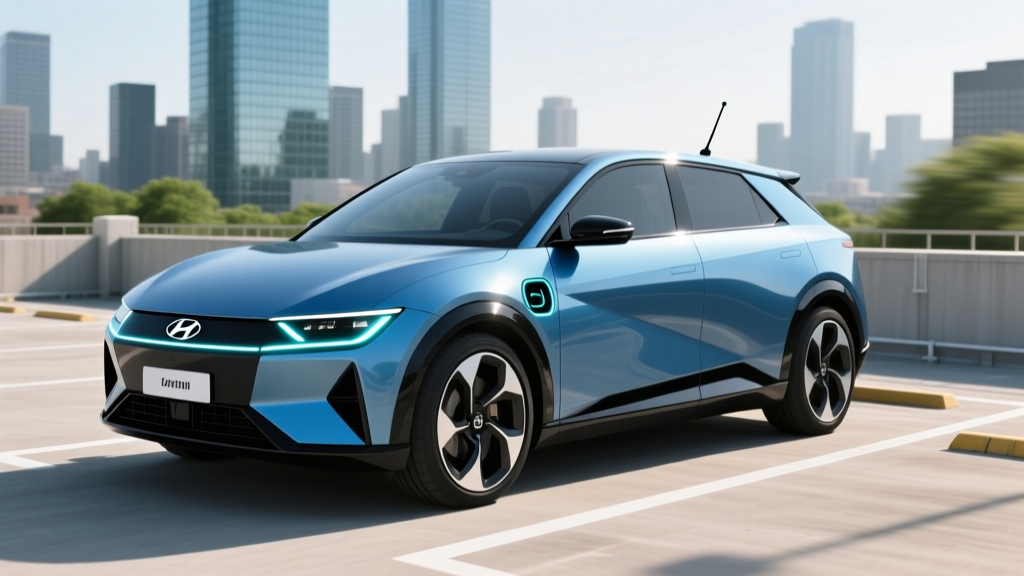
If you've been researching the Hyundai Ioniq 5 and searching for a thorough check of its electric vehicle system—from battery chemistry and real-world range to charging speeds and federal tax credit eligibility—you're in the right place. The 2026 Ioniq 5 enters its fifth model year with a refreshed battery pack, NACS native charging, and the addition of the rugged XRT trim. Here's a data-driven breakdown of everything that matters before you buy.
2026 Hyundai Ioniq 5: Quick Verdict
The Ioniq 5 remains one of the most well-rounded electric crossovers on the market. Its 800-volt E-GMP architecture delivers genuinely fast DC charging (10–80% in roughly 18 minutes at peak), the cabin is spacious and thoughtfully designed, and Hyundai's warranty coverage is among the best in the segment. The 2026 model year adds a native NACS charge port, eliminating the need for a CCS-to-Tesla adapter at Superchargers. The biggest trade-offs? Rear wiper absence (finally addressed on 2026 models), and highway range that falls noticeably short of the EPA sticker at sustained 75+ mph speeds.
Range, Battery, and Efficiency
The 2026 Ioniq 5 offers two battery configurations depending on trim and drivetrain. The Standard Range RWD uses a 63.0 kWh usable battery (LFP chemistry), while the Long Range RWD and AWD models step up to an 84.0 kWh usable NMC (nickel-manganese-cobalt) pack.
| Spec | Standard Range RWD | Long Range RWD | Long Range AWD |
|---|---|---|---|
| Battery (usable) | 63.0 kWh (LFP) | 84.0 kWh (NMC) | 84.0 kWh (NMC) |
| EPA Range | 240 mi | 318 mi | 290 mi |
| MPGe (combined) | 110 MPGe | 114 MPGe | 101 MPGe |
| kWh/100 mi | 30 | 29 | 33 |
| Horsepower | 168 hp | 225 hp | 320 hp |
| 0–60 mph | 7.5 sec | 6.5 sec | 4.5 sec |
| Drivetrain | RWD | RWD | Dual-motor AWD |
The LFP chemistry in the Standard Range model is worth understanding. LFP batteries sacrifice some energy density (hence the lower range) but offer longer cycle life, greater thermal stability, and can be routinely charged to 100% without the degradation concerns of NMC packs. If you're a commuter who charges at home nightly and rarely road-trips, the Standard Range is a pragmatic, durable choice.
Charging Speed: DC Fast, Level 2, and Level 1
The Ioniq 5's 800-volt E-GMP platform remains one of its strongest technical advantages. On a 350 kW DC fast charger, the Long Range model peaks at approximately 240 kW, though sustained rates taper as state of charge climbs. Hyundai quotes 10–80% in about 18 minutes under ideal conditions—and in our experience at Electrify America and Tesla Supercharger stalls, 18–22 minutes is typical when the battery is preconditioned.
| Charging Level | Power | Speed (Long Range) | Connector |
|---|---|---|---|
| Level 1 (120V) | ~1.4 kW | ~4 mi/hr | NACS / J1772 adapter |
| Level 2 (240V home) | 10.9 kW | ~36 mi/hr (full in ~8 hr) | NACS / J1772 adapter |
| DC Fast (peak) | ~240 kW | 10–80% in ~18 min | NACS (native, 2026+) |
Charging curve reality: The Ioniq 5 sustains above 200 kW roughly from 10% to 55% SoC, then tapers to ~150 kW through 70%, and drops further above 80%. If you're road-tripping, plan to charge to 80% and go—sitting from 80–100% adds 25+ minutes for roughly 60 miles of range. Battery preconditioning activates automatically when you navigate to a charger via the built-in navigation, warming the pack for optimal charge acceptance. Skip this step in cold weather and your peak rate could be cut in half.
For 2026, the native NACS port means direct access to Tesla's Supercharger network without an adapter—a significant practical advantage over the 2022–2025 models that required a CCS-to-NACS dongle. The Ioniq 5 can also still use CCS stations via the included adapter.
Pricing, Trims, and Federal Tax Credit
The 2026 Hyundai Ioniq 5 lineup spans five trims. Pricing below includes the mandatory destination charge.
| Trim | Drivetrain | MSRP | Est. After §30D Credit* |
|---|---|---|---|
| SE Standard Range | RWD | $42,600 | ~$35,100 |
| SE | RWD / AWD | $46,900 / $50,400 | ~$39,400 / $42,900 |
| SEL | RWD / AWD | $49,350 / $52,850 | ~$41,850 / $45,350 |
| Limited | AWD | $58,200 | ~$50,700 |
| XRT | AWD | $54,500 | ~$47,000 |
*Federal tax credit estimates assume full $7,500 eligibility under IRS §30D. Actual credit depends on buyer income, battery sourcing, and MSRP caps. Point-of-sale transfer is available at participating dealers.
- MSRP cap: SUVs/crossovers must be ≤ $80,000 (all Ioniq 5 trims qualify)
- Income cap: Modified AGI ≤ $150,000 (single), $225,000 (head of household), $300,000 (joint)
- Battery sourcing: Critical minerals and battery components must meet phased-in domestic/free-trade requirements per IRS guidance
- Point-of-sale transfer: Eligible buyers can apply the credit as a down-payment reduction at purchase
Hyundai's U.S.-built Ioniq 5 (assembled at the Metaplant in Georgia since late 2024) has improved battery component sourcing compliance, but always verify current eligibility on the IRS qualified vehicles list before purchasing, as requirements tighten annually.
Interior Space, Cargo, and Daily Practicality
The Ioniq 5's flat floor and long 118.1-inch wheelbase translate into generous cabin volume. Rear legroom measures 39.4 inches—more than a Toyota RAV4 and competitive with mid-size SUVs. The 2026 model continues with a dual 12.3-inch panoramic display setup running Hyundai's latest infotainment software with wireless Apple CarPlay and Android Auto.
Cargo capacity sits at 27.2 cubic feet behind the rear seats and 59.3 cubic feet with the rear row folded. The front trunk (frunk) on RWD models adds 2.1 cubic feet; AWD models reduce this to 0.85 cubic feet due to the front motor. A vehicle-to-load (V2L) adapter lets you power devices or appliances from the main battery at up to 3.6 kW—useful for camping, tailgating, or emergency backup.
Driver Assistance and Technology
The 2026 Ioniq 5 comes standard with Hyundai SmartSense, including forward collision-avoidance assist, blind-spot monitoring, lane-keeping assist, and adaptive cruise control with stop-and-go. Available Highway Driving Assist 2 (HDA2) adds lane-centering and semi-automatic lane changes.
The Ioniq 5 earned the IIHS Top Safety Pick+ designation when equipped with specific headlights, and a 5-star overall NHTSA safety rating. These are strong results for family buyers evaluating crash protection.
Pros, Cons, and Who Should Buy
- 18-minute 10–80% DC fast charging (800V architecture)
- Native NACS port (2026) for direct Supercharger access
- Spacious cabin with flat floor and excellent rear legroom
- V2L capability (3.6 kW output)
- Industry-leading 10-year/100,000-mile powertrain warranty
- LFP option for buyers who prioritize longevity over range
- Real-world highway range falls 12–15% below EPA sticker
- Cold-weather range loss is significant (~25%) without garage parking
- Frunk is very small on AWD models (0.85 cu ft)
- Base price still above $42K before incentives
- Single-motor RWD feels merely adequate for merging (168–225 hp)
Look elsewhere if: You need 350+ miles of real-world highway range (consider the Lucid Gravity or Tesla Model Y Long Range), you tow frequently (3,000-lb max is modest), or you want hands-free highway driving (GM's Super Cruise or Ford's BlueCruise offer eyes-off capability in mapped zones).
Best use cases: Daily commuters with home Level 2 charging, young families needing rear-seat space, and road-trippers who value fast charging over maximum range. The AWD Limited is ideal for four-season climates; the Standard Range RWD suits warm-region commuters who rarely exceed 150 miles round-trip.
Warranty and Long-Term Ownership
Hyundai backs the Ioniq 5 with one of the strongest warranty packages in the EV segment:
- Battery: 10 years / 100,000 miles (capacity retention ≥ 70%)
- Powertrain: 10 years / 100,000 miles
- New vehicle: 5 years / 60,000 miles
- Roadside assistance: 5 years / unlimited miles
Per fueleconomy.gov, the Long Range RWD achieves 114 MPGe combined, translating to roughly $550–$650 in annual electricity costs at the national average of $0.16/kWh and 12,000 miles/year. Compare that to $1,800+ in fuel for a comparable gasoline crossover.
Frequently Asked Questions
What is the real-world range of the 2026 Hyundai Ioniq 5?
The Long Range RWD achieves an EPA-estimated 318 miles, but real-world highway driving at 75 mph typically yields 265–280 miles. In winter conditions below freezing, expect 210–240 miles. The AWD model's real-world highway range is approximately 240–255 miles in fair weather.
How fast does the Ioniq 5 charge at home and on the road?
On a 240V Level 2 home charger (10.9 kW), the Long Range adds roughly 36 miles per hour and fully charges in about 8 hours. On a 350 kW DC fast charger, it peaks at ~240 kW and charges from 10–80% in approximately 18 minutes with battery preconditioning active.
Does the 2026 Ioniq 5 qualify for the $7,500 federal tax credit?
Most buyers will qualify. The Ioniq 5 is U.S.-built (Georgia), all trims fall under the $80,000 MSRP cap, and Hyundai has worked to meet critical-mineral and battery-component sourcing thresholds. However, buyer income must not exceed IRS limits ($150K single / $300K joint). Always check the current IRS qualified vehicle list before purchasing.
Is the Ioniq 5 worth buying over the Tesla Model Y or Kia EV6?
The Ioniq 5 trades the Model Y's range and Supercharger ecosystem maturity for faster peak charging, a more comfortable ride, a longer warranty, and a more distinctive interior. Versus the mechanically similar Kia EV6, the Ioniq 5 offers a more upright, crossover-friendly cabin with better rear headroom, while the EV6 leans sportier. If charging speed and warranty matter most, the Ioniq 5 wins. If range and software ecosystem matter most, the Model Y still leads.
What are the biggest drawbacks of the Ioniq 5?
Highway range falls noticeably below the EPA estimate, cold-weather performance is average (no heat pump on base trims), the AWD frunk is nearly useless at 0.85 cubic feet, and the base price is still premium before incentives. Towing capacity maxes out at 3,000 pounds—adequate for a small trailer but not a camper.