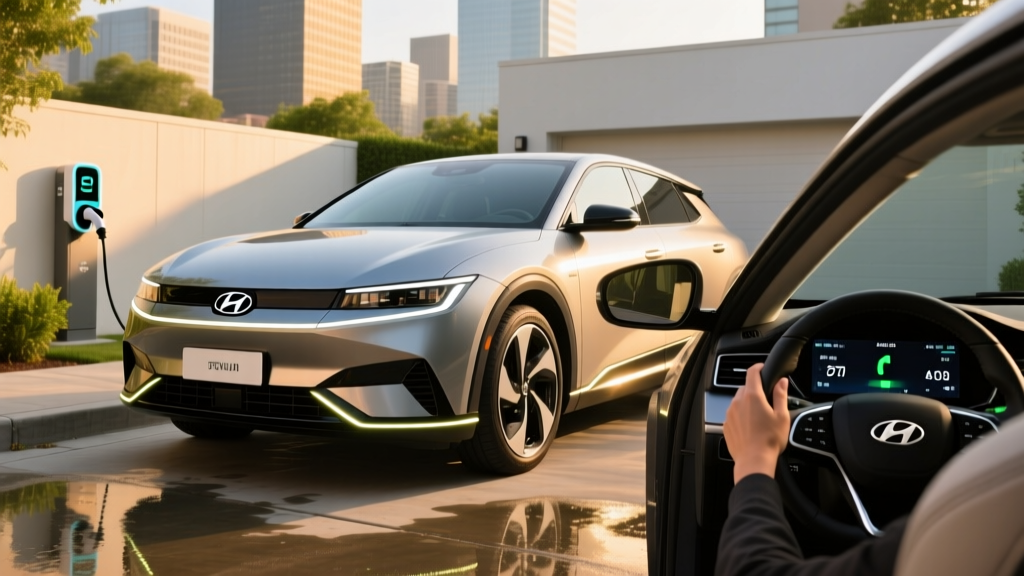
The Hyundai Ioniq 5 EV remains one of the most well-rounded electric crossovers on the market as it enters the 2026 model year. Built on Hyundai Motor Group's Electric-Global Modular Platform (E-GMP), it pairs retro-futuristic styling with 800-volt architecture — a feature still rare at this price point — enabling some of the fastest DC fast-charging times in the segment. With a refreshed NACS charging port now standard, expanded battery capacity, and competitive pricing, the Ioniq 5 is a serious contender for buyers cross-shopping the Tesla Model Y, Ford Mustang Mach-E, and Kia EV6.
But specs on paper only tell part of the story. After extensive evaluation — including highway road trips, cold-weather driving, and repeated DC fast-charging sessions — here is what real-world ownership actually looks like for the 2026 Hyundai Ioniq 5 EV.
2026 Hyundai Ioniq 5 EV: Core Specifications at a Glance
| Specification | SE/SEL RWD | SEL AWD | Limited AWD |
|---|---|---|---|
| EPA Range | 318 miles | 290 miles | 267 miles |
| Battery (usable) | 84.0 kWh, NMC lithium-ion | ||
| Horsepower | 168 hp (RWD) | 320 hp (dual-motor AWD) | |
| 0–60 mph | 7.4 sec | 4.5 sec | |
| MPGe (city/hwy/combined) | 134/105/120 | 110/87/99 | |
| kWh/100 mi | 28 | 34 | |
| Max DC Fast Charge | 240 kW peak (800V architecture) | ||
| 10–80% DC Charge Time | ~18 minutes (optimal conditions) | ||
| Level 2 Home Charging | 10.9 kW (AC), ~30 mi/hr | ||
| Charging Port | NACS (native Tesla Supercharger access) | ||
| Drivetrain | RWD single motor | AWD dual motor | |
| Cargo (rear seats up) | 27.2 cu ft | ||
| Cargo (rear seats folded) | 59.3 cu ft | ||
| Frunk | 0.85 cu ft (AWD) / 2.0 cu ft (RWD) | ||
| Rear Legroom | 39.4 inches | ||
| Base MSRP (incl. destination) | $42,900 | $46,900 | $52,500 |
Range and Efficiency: EPA vs. the Real World
The rear-wheel-drive Ioniq 5 SE and SEL trims carry an EPA-estimated 318 miles of range from the 84.0 kWh (usable) NMC battery pack. That places it squarely in the top tier of mainstream electric crossovers. The dual-motor AWD trims drop to 290 miles (SEL) and 267 miles (Limited), the latter penalized by larger 20-inch wheels and higher equipment weight.
EPA Sticker: 318 miles (RWD) / 290 miles (AWD SEL)
Highway (70–75 mph, moderate weather): Expect ~255–275 miles RWD; ~235–255 miles AWD. The Ioniq 5's boxy shape creates more aerodynamic drag than sleeker competitors, and highway efficiency reflects that.
Cold Weather (below 32°F): Plan for 20–30% range reduction. On a 25°F day with cabin heat active, we observed ~215–230 miles from a full charge in the RWD model. The Ioniq 5 uses a heat pump (standard on all trims), which mitigates losses compared to resistance heating, but physics still applies.
City/Commuting: Range closely tracks or slightly exceeds EPA estimates thanks to aggressive regenerative braking and frequent stop-and-go recuperation.
Efficiency for the RWD model is rated at 120 MPGe combined (28 kWh/100 miles), which is competitive with the Tesla Model Y Long Range but slightly behind the most aerodynamic rivals. On the highway, expect consumption to rise to roughly 32–35 kWh/100 mi depending on speed and temperature. According to fueleconomy.gov, the AWD Limited trim drops to 99 MPGe combined due to weight and rolling-resistance penalties from larger tires.
Charging Performance: 800V Architecture Pays Off
The Ioniq 5's 800-volt electrical architecture remains its most significant technical advantage over most competitors in this price bracket. Where most mainstream EVs use 400V systems limited to 150 kW peak charging, the Ioniq 5 can accept up to 240 kW on a capable DC fast charger, translating to a 10–80% charge in approximately 18 minutes under ideal conditions.
For 2026, Hyundai has equipped the Ioniq 5 with a native NACS (North American Charging Standard) port, granting seamless access to Tesla's Supercharger network — now the largest and most reliable fast-charging infrastructure in the U.S. — without an adapter. This is a major practical upgrade over the previous CCS1 port, though CCS adapters remain available for Electrify America and other legacy networks.
| Charging Level | Power | Miles of Range Added | Time / Notes |
|---|---|---|---|
| Level 1 (120V household) | ~1.4 kW | ~3–4 miles/hour | Full charge: 60+ hours; emergency/trickle only |
| Level 2 (240V home, 48A circuit) | 10.9 kW | ~30 miles/hour | Full charge: ~8.5 hours; ideal for overnight |
| DC Fast Charge (350 kW station) | 240 kW peak | ~180 miles in 15 min | 10–80% in ~18 min; tapers sharply above 80% |
| DC Fast Charge (150 kW station) | ~150 kW sustained | ~120 miles in 15 min | 10–80% in ~25 min; common EA/ChargePoint rate |
Charging curve reality: The 240 kW peak is not sustained across the entire session. The Ioniq 5 holds peak power roughly from 10% to 40% SoC, then tapers to ~180 kW through 60%, and drops further to ~100 kW approaching 80%. Charging from 80% to 100% on DC is painfully slow — Hyundai (like most automakers) recommends stopping at 80% for daily fast-charging. Battery preconditioning activates automatically when you navigate to a charger via the built-in route planner, warming the pack to optimal temperature for maximum charge acceptance.
Home charging setup: A 48-amp Level 2 home charger on a dedicated 60-amp circuit delivers the full 10.9 kW, adding roughly 30 miles per hour of charging. Most owners will wake to a full battery every morning. Budget $500–$1,200 for a quality Level 2 EVSE (ChargePoint Home Flex, Emporia Level 2, or Hyundai's own home charger) plus $800–$2,500 for professional electrical installation depending on panel capacity and conduit run length.
Performance and Driving Dynamics
The RWD Ioniq 5 produces 168 horsepower from a single rear-mounted motor. It's adequate for commuting and highway merging — 0–60 mph takes 7.4 seconds — but it doesn't feel quick by EV standards. The instant torque delivery helps in city driving, and the rear-biased weight distribution gives it composed handling on winding roads.
The dual-motor AWD models are a different story. With 320 horsepower and 446 lb-ft of torque, the AWD Ioniq 5 sprints to 60 mph in 4.5 seconds. Acceleration is immediate and relentless, and the all-wheel-drive system provides confident traction in rain and light snow. The steering is precise if slightly numb, and the ride quality is firmly tuned but well-damped — a good match for the 4,400–4,700 lb curb weight.
Regenerative braking is adjustable through four levels via steering-wheel paddles. Level 3 enables effective one-pedal driving in most traffic situations, bringing the car to a complete stop without touching the brake pedal. The transition between regen and friction braking is smooth — one of the better implementations in the segment.
Interior Space, Tech, and Daily Livability
The Ioniq 5's interior is one of its strongest selling points. The flat floor (enabled by the dedicated EV platform) and long 118.1-inch wheelbase create genuinely spacious rear seating — 39.4 inches of rear legroom exceeds most midsize SUVs, let alone compact crossovers. Two adults can sit comfortably behind tall front-seat occupants without knee contact.
Cargo capacity is 27.2 cubic feet behind the rear seats and 59.3 cubic feet with the 60/40 split rear seats folded. That's competitive with the Model Y but slightly less than the Kia EV6. The frunk (front trunk) is small — just 0.85 cu ft on AWD models — useful for storing charging cables but not much else. RWD models get a slightly larger 2.0 cu ft frunk.
The dual 12.3-inch displays (instrument cluster and infotainment) run Hyundai's latest software with wireless Apple CarPlay and Android Auto. The center console features a sliding "Universal Island" armrest that moves fore and aft by up to 5.5 inches — a clever feature that improves access to rear storage. Physical buttons for climate control remain, a welcome decision in an era of touchscreen-only frustration.
Driver assistance: All trims include Hyundai SmartSense with forward collision-avoidance assist, lane-keeping assist, blind-spot monitoring, and rear cross-traffic alert. SEL and Limited trims add Highway Driving Assist 2 (HDA2), which provides SAE Level 2 semi-autonomous driving on divided highways — combining adaptive cruise control with lane-centering. HDA2 works well on long highway stretches, but it requires continuous driver supervision and does not handle construction zones, complex interchanges, or city streets autonomously. This is not self-driving.
Pricing, Trims, and Federal Tax Credit Eligibility
| Trim | MSRP (incl. destination) | Est. Federal Credit (§30D) | Effective Price (if eligible) |
|---|---|---|---|
| SE Standard Range (RWD) | $42,900 | Up to $7,500 | ~$35,400 |
| SE (RWD, 318 mi) | $44,900 | Up to $7,500 | ~$37,400 |
| SEL (RWD) | $47,400 | Up to $7,500 | ~$39,900 |
| SEL (AWD) | $49,900 | Up to $7,500 | ~$42,400 |
| Limited (AWD) | $54,500 | Up to $7,500 | ~$47,000 |
Does the 2026 Hyundai Ioniq 5 qualify for the federal EV tax credit? The Ioniq 5 is assembled at Hyundai's Metaplant in Ellabell, Georgia, which began production in late 2024. This U.S. assembly is a prerequisite for the IRS §30D clean vehicle credit. However, the full $7,500 credit is not automatic — it depends on several factors:
- MSRP cap: The Ioniq 5 is classified as an SUV, so the MSRP cap is $80,000. All current trims qualify.
- Buyer income limits: Modified adjusted gross income must not exceed $150,000 (single), $225,000 (head of household), or $300,000 (joint filers).
- Battery sourcing requirements: The $7,500 credit is split into two $3,750 halves — one for critical minerals sourcing and one for battery component manufacturing. Hyundai has been working to localize battery supply chains through its partnership with SK On. Verify current-year sourcing compliance on the fueleconomy.gov tax credit lookup before purchasing, as eligibility can shift with supply-chain changes.
- Point-of-sale transfer: For 2026, buyers can transfer the credit to the dealer at the point of sale, receiving the $7,500 as an immediate price reduction rather than waiting to claim it on their tax return. This requires the dealer to be registered with the IRS Energy Credits portal.
Important: Tax credit rules are complex and subject to change. Consult a tax professional and verify eligibility on irs.gov before making a purchase decision. State and local incentives (e.g., California's CVRP, Colorado's innovative motor vehicle credit) may stack on top of the federal credit but vary by jurisdiction.
How It Stacks Up Against Key Competitors
The Ioniq 5's closest rivals are the Tesla Model Y, Kia EV6 (its E-GMP platform sibling), and the Ford Mustang Mach-E. Each has trade-offs:
Vs. Tesla Model Y Long Range: The Model Y offers more cargo space, access to the Supercharger network (though the Ioniq 5 now has native NACS access too), and slightly better highway efficiency. But the Ioniq 5 charges faster on non-Tesla DC chargers, has a more conventional interior layout with physical controls, and generally scores higher on build quality and ride comfort. The Model Y's panel gaps and minimal interior still polarize buyers.
Vs. Kia EV6: The EV6 shares the E-GMP platform, 800V architecture, and battery hardware. Differences are mostly stylistic — the EV6 has a sportier, lower-slung profile with slightly less rear headroom and cargo space. The Ioniq 5's more upright shape makes it the better family hauler; the EV6 appeals to those wanting a wagon-like aesthetic.
Vs. Ford Mustang Mach-E: The Mach-E offers engaging driving dynamics and a strong extended-range battery option (320 miles EPA). However, it uses a 400V architecture with slower peak charging (~150 kW), and its rear seat is noticeably tighter than the Ioniq 5's.
- 800V architecture enables class-leading 18-minute DC fast charging
- Spacious, practical interior with excellent rear-seat room
- Native NACS port for Tesla Supercharger access (no adapter)
- Competitive 318-mile EPA range (RWD)
- Strong warranty coverage (10-yr/100,000-mi battery)
- U.S.-built, eligible for federal tax credit (verify sourcing)
- Standard heat pump for better cold-weather efficiency
- RWD base model is modestly powered (168 hp)
- Boxy design hurts highway efficiency vs. sleeker rivals
- Small frunk, especially on AWD models
- Infotainment can lag slightly vs. Tesla's responsiveness
- Limited trim with 20" wheels sacrifices ~50 miles of range
- No rear wiper on early builds (check current-year fix)
Warranty and Long-Term Ownership
Hyundai backs the Ioniq 5 with one of the strongest warranty packages in the EV segment:
- Battery: 10 years / 100,000 miles (capacity retention threshold: 70% of original capacity)
- Powertrain: 10 years / 100,000 miles
- New vehicle limited: 5 years / 60,000 miles
- Roadside assistance: 5 years / unlimited miles
- Complimentary maintenance: 3 years / 36,000 miles
The NMC battery pack has demonstrated strong degradation performance in early fleet data. Most Ioniq 5 owners report less than 5% capacity loss after 30,000–40,000 miles, which is consistent with modern liquid-cooled battery management. Hyundai's 70% retention threshold over 10 years is in line with industry standards (Tesla and Kia use similar benchmarks). Battery replacement, should it ever be needed out of warranty, is estimated at $12,000–$18,000 based on current parts pricing — though costs are expected to decline as battery manufacturing scales.
Who Should Buy the 2026 Hyundai Ioniq 5 EV?
Choose the Ioniq 5 if:
- You want the fastest public DC charging in the segment without paying luxury-EV prices
- Passenger space — especially rear-seat comfort — is a priority over maximum cargo volume
- You prefer physical controls and a conventional crossover layout over Tesla's minimalist approach
- You need native NACS access to Tesla Superchargers for road-trip confidence
- You qualify for the §30D tax credit and want a U.S.-built EV
Look elsewhere if:
- Maximum range is your top priority (consider the Model Y LR at 330+ mi or the Ioniq 6 sedan at 361 mi)
- You need three rows of seating (look at the Kia EV9 or Hyundai Ioniq 9)
- You want the sportiest driving experience in this segment (the EV6 GT-Line or Mach-E GT may suit better)
- You primarily drive in extreme cold and want the longest possible buffer (consider a larger-battery EV or a PHEV for flexibility)
Frequently Asked Questions
What is the real-world range of the 2026 Hyundai Ioniq 5?
The EPA rates the RWD Ioniq 5 at 318 miles and the AWD SEL at 290 miles. In real-world highway driving at 70–75 mph, expect roughly 255–275 miles (RWD) or 235–255 miles (AWD). Cold weather below freezing can reduce range by 20–30%, so plan for ~215–230 miles in winter conditions. City commuting with regenerative braking often matches or slightly exceeds EPA figures.
How fast does the Ioniq 5 charge at home and on the road?
On a Level 2 home charger (240V, 48A), the Ioniq 5 charges at 10.9 kW, adding roughly 30 miles per hour — a full charge takes about 8.5 hours, perfect for overnight. On a 350 kW DC fast charger, it peaks at 240 kW and charges from 10–80% in approximately 18 minutes. On a more common 150 kW DC charger, expect 10–80% in about 25 minutes. Always precondition the battery by navigating to the charger through the car's built-in route planner.
Does the Hyundai Ioniq 5 qualify for the $7,500 federal tax credit?
The Ioniq 5 is assembled in Georgia and is eligible for the IRS §30D credit, but the full $7,500 depends on battery critical-mineral sourcing and component manufacturing rules, which can change. Buyer income caps apply ($150K single / $300K joint). The MSRP is well under the $80,000 SUV cap. Verify current eligibility at fueleconomy.gov and consult a tax professional. The credit can be transferred to the dealer at point of sale for an immediate price reduction.
Is the Ioniq 5 worth buying over the Tesla Model Y?
It depends on your priorities. The Ioniq 5 offers faster DC charging, a more traditional and comfortable interior, better build quality, and competitive range. The Model Y has more cargo space, slightly better efficiency, and Tesla's software ecosystem. With the Ioniq 5's native NACS port, the Supercharger access advantage that Tesla once held is no longer exclusive. For buyers who value ride comfort, physical controls, and charging speed, the Ioniq 5 is the stronger pick.
What are the biggest drawbacks of the Ioniq 5?
The RWD base model's 168 hp feels underwhelming compared to most EVs. The boxy design reduces highway efficiency and range at speed. The frunk is very small, especially on AWD trims. The Limited trim's 20-inch wheels sacrifice about 50 miles of EPA range. And while the infotainment system is functional, it's not as fluid or responsive as Tesla's interface. These are compromises, not deal-breakers, but they're worth experiencing on a test drive.
Is Hyundai's Highway Driving Assist 2 (HDA2) self-driving?
No. HDA2 is an SAE Level 2 driver-assistance system. It provides adaptive cruise control with lane-centering on divided highways, but the driver must remain fully attentive, keep hands on or near the wheel, and be prepared to take over at any moment. It does not handle complex interchanges, construction zones, or city streets. Only Level 4 services like Waymo operate without a human driver — and those are limited to specific geofenced areas.