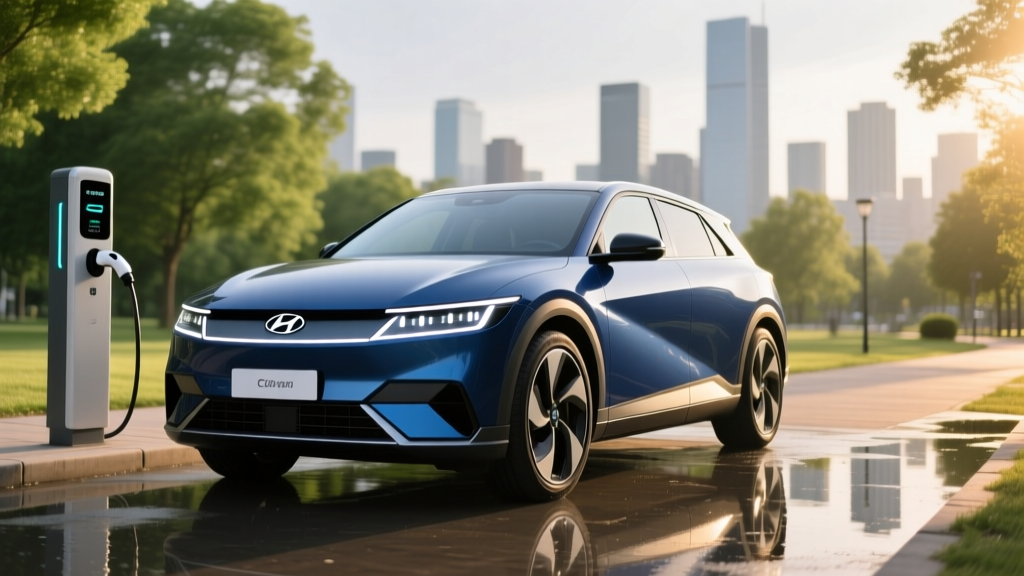
The Hyundai Ioniq 5 has anchored the mainstream electric crossover segment since its 2022 debut, and the 2026 model year arrives with meaningful refinements: a larger battery, the long-awaited NACS (Tesla-style) charge port from the factory, updated infotainment, and the addition of the high-performance Ioniq 5 N variant alongside the rugged XRT trim. For buyers searching for a practical ioniq 5 electric suv that balances range, charging speed, interior space, and price, this remains one of the most complete packages on the market. But how does it stack up once you leave the EPA sticker behind and plug into a real-world charger?
Quick Verdict: Who the 2026 Ioniq 5 Is For
The 2026 Ioniq 5 is best suited for suburban families and commuters who want a midsize electric crossover with genuine road-trip capability, class-leading DC fast-charging speeds, and a usable frunk. It is not the longest-range EV in its class — the Tesla Model Y Long Range still edges it out on highway miles — and its ADAS suite trails Ford's BlueCruise and GM's Super Cruise for hands-free convenience. But if 800-volt architecture, a spacious flat-floor cabin, and sub-$50,000 pricing (before incentives) matter more to you than badge prestige, the Ioniq 5 earns a top-three spot in the segment.
| Spec | SE/SEL RWD | Limited AWD | Ioniq 5 N |
|---|---|---|---|
| EPA Range | 318 mi | 290 mi | 221 mi |
| Battery (usable) | 84.0 kWh, NMC | 84.0 kWh, NMC | 84.0 kWh, NMC |
| Horsepower | 168 hp | 320 hp | 641 hp (N Grin Boost) |
| 0-60 mph | 7.0 sec | 4.5 sec | 3.25 sec |
| Drivetrain | RWD (single motor) | Dual-motor AWD | Dual-motor AWD |
| Max DC Fast Charge | ~240 kW peak | ~240 kW peak | ~240 kW peak |
| 10-80% DCFC Time | ~18 min | ~18 min | ~18 min |
| Level 2 Home Charge | 10.9 kW (~37 mi/hr) | 10.9 kW (~37 mi/hr) | 10.9 kW (~37 mi/hr) |
| MPGe (combined) | 117 MPGe | 103 MPGe | 79 MPGe |
| Base MSRP (2026) | $42,600 | $52,200 | $67,500 |
| Battery Warranty | 10 years / 100,000 miles | ||
Range and Efficiency: EPA Sticker vs. Real-World Miles
EPA Range: 318 miles (SE RWD) / 290 miles (AWD) / 221 miles (N)
Real-World Expectation: Plan on roughly 250–275 highway miles in the RWD at 70 mph; 230–250 in the AWD. In freezing weather (below 30°F), expect a 20–30% reduction, bringing the RWD down to ~220–240 miles per charge. City and mixed driving typically tracks within 5% of the EPA number thanks to regenerative braking.
The jump from the pre-2025 77.4 kWh pack to the current 84.0 kWh NMC battery is the single biggest range improvement Hyundai has delivered. The RWD's 117 MPGe combined translates to about 29 kWh per 100 miles — competitive with the Tesla Model Y Long Range (~30 kWh/100mi) and noticeably more efficient than the Ford Mustang Mach-E Extended Range AWD (~34 kWh/100mi), according to EPA fueleconomy.gov data.
A few real-world variables matter here. The Ioniq 5's boxy, retro-futuristic styling looks great but carries a higher drag coefficient (~0.29 Cd) than the sleeker Tesla Model Y (~0.23 Cd), which is why highway efficiency drops off more steeply above 70 mph. If your commute is mostly 55–65 mph suburban roads, you'll likely see the EPA number. If you regularly cruise at 75–80 mph on interstates, budget 15% less range than the sticker.
Cold-weather performance is mitigated somewhat by the Ioniq 5's standard heat pump (on all trims except the base SE Standard Range, if offered), which recovers waste heat from the powertrain to warm the cabin. In our experience, preconditioning the battery while still plugged in before a winter departure makes a meaningful difference in both range preservation and subsequent DC charging speed.
Charging Speed: 800V Architecture Still Sets the Pace
| Charging Level | Power / Voltage | Miles Added per Hour | Typical Use Case |
|---|---|---|---|
| Level 1 (120V household) | ~1.4 kW | ~4–5 mi/hr | Overnight trickle, emergencies |
| Level 2 (240V home) | 10.9 kW | ~37 mi/hr | Daily home charging (full charge ~9 hrs) |
| DC Fast Charge (350 kW station) | ~240 kW peak (800V) | ~15–18 min 10-80% | Road trips, highway stops |
The Ioniq 5's 800-volt electrical architecture remains its most underappreciated advantage. While many competitors in this price range use 400V systems that peak around 150 kW, the Ioniq 5 can sustain over 200 kW for a significant portion of the charge curve when connected to a 350 kW-capable station. The result: a 10–80% charge in approximately 18 minutes under good conditions (battery preconditioned, moderate ambient temperature).
Important charge-curve reality: That 240 kW peak is not sustained for the full session. Expect peak rates between 10–55% state of charge, then a taper to ~150 kW through 70%, and a further drop to ~80 kW above 80%. If you're on a road trip, charging to 80% and driving on is almost always faster than waiting for the slow trickle from 80–100%. This is true of all EVs, but the Ioniq 5's curve is among the most favorable in its class.
For the 2026 model year, Hyundai has switched to the NACS (North American Charging Standard) connector as the factory port, replacing the previous CCS1 port. This means direct access to Tesla Supercharger stalls (now open to non-Tesla EVs via the NACS standard) without an adapter — a significant practical improvement for road-trip charging reliability. If you own a 2022–2025 Ioniq 5 with CCS, Hyundai offers a NACS adapter, and many Electrify America and EVgo stations still provide CCS connectors.
At home on a Level 2 (240V / 48A) wall connector, the onboard 10.9 kW charger replenishes the 84 kWh pack in roughly 8.5–9 hours — ideal for overnight charging. If your home electrical panel supports a 60A circuit, you'll get the full 10.9 kW; on a 40A circuit, you'll be limited to about 7.7 kW (~26 mi/hr).
Performance and Driving Dynamics
The standard RWD single-motor setup produces 168 horsepower — adequate for commuting but not quick by EV standards (0–60 in ~7.0 seconds). The dual-motor AWD bumps output to 320 hp and drops the 0–60 time to approximately 4.5 seconds, which is genuinely brisk for a family crossover and makes highway merging effortless.
The Ioniq 5 N is an entirely different animal: 641 hp with N Grin Boost engaged, a 3.25-second 0–60, simulated gear shifts, and track-capable thermal management. It's a legitimate performance EV, but at $67,500 and 221 miles of range, it's a niche pick — enthusiasts who want a daily-drivable track toy.
Ride quality on the standard trims is comfortable and well-damped, with a flat floor and low center of gravity that keeps body roll controlled. The steering is light but precise. One criticism: the regenerative braking, while adjustable via paddle shifters (four levels including i-PEDAL one-pedal mode), doesn't quite match the seamless one-pedal feel of a Chevrolet Bolt or Tesla Model Y on its strongest setting.
Interior Space, Cargo, and Technology
The Ioniq 5's E-GMP skateboard platform gives it an unusually long 118.1-inch wheelbase for its exterior footprint, and the interior shows it. Rear legroom measures 39.4 inches — more than the Model Y (37.5 in) and comparable to midsize sedans. The flat floor and slim center console create an airy, lounge-like cabin that passengers consistently praise.
Cargo volume behind the rear seats is 27.2 cubic feet, expanding to 59.3 cu ft with the rear seats folded. The front trunk (frunk) on RWD models provides an additional 2.0 cu ft — enough for charging cables and a small bag. AWD models have a smaller frunk (~0.85 cu ft) due to the front motor.
The infotainment system uses a dual 12.3-inch display layout (instrument cluster + center touchscreen) running Hyundai's latest ccNC software. Wireless Apple CarPlay and Android Auto are standard. The center screen is responsive, and physical climate-control buttons remain — a practical choice that avoids the touchscreen-only frustration of some competitors. Over-the-air updates are supported.
Driver assistance comes via Hyundai's Highway Driving Assist 2 (HDA 2), which includes adaptive cruise control with stop-and-go, lane-centering, and lane-change assist. This is an SAE Level 2 system — you must keep your hands on the wheel and eyes on the road. It does not offer the hands-free highway driving of Ford BlueCruise or GM Super Cruise, which is a notable gap at this price point.
ADAS Limitation Notice: Hyundai HDA 2 is a Level 2 driver-assist system. It requires continuous driver supervision. It is not autonomous or "self-driving." You are legally and operationally responsible for the vehicle at all times.
Pricing, Trims, and Federal Tax Credit Eligibility
| Trim | Base MSRP | Est. After §30D Credit* | Federal Credit Eligible? |
|---|---|---|---|
| SE Standard Range (RWD) | ~$39,900 | ~$32,400 | Yes (if sourcing rules met) |
| SE (RWD) | $42,600 | ~$35,100 | Yes (if sourcing rules met) |
| SEL (AWD) | $47,350 | ~$39,850 | Yes (if sourcing rules met) |
| Limited (AWD) | $52,200 | ~$44,700 | Yes (if sourcing rules met) |
| Ioniq 5 N | $67,500 | ~$60,000 | Yes (if sourcing rules met) |
*All §30D credit figures assume the buyer qualifies for the full $7,500 federal tax credit. Eligibility depends on multiple factors that change frequently. Always verify current rules on IRS.gov.
2026 Federal EV Tax Credit (§30D) Requirements — Summary:
- MSRP Cap: SUVs, vans, and pickups must have an MSRP at or below $80,000. All Ioniq 5 trims qualify.
- Buyer Income Cap: Modified adjusted gross income must not exceed $300,000 (joint), $225,000 (head of household), or $150,000 (single).
- Battery Sourcing: The $7,500 credit is split into two halves — $3,750 for critical-mineral sourcing and $3,750 for battery-component sourcing. Hyundai has been working to shift battery production to the U.S. (via the Georgia Metaplant), but specific sourcing compliance varies by build date. Confirm with your dealer and a tax professional before purchase.
- Point-of-Sale Transfer: As of 2024, eligible buyers can transfer the credit to the dealer at purchase, reducing the purchase price directly rather than waiting for a tax refund. This is available on the Ioniq 5 if all requirements are met.
- New vs. Used: The §30D credit applies to new vehicles. A separate used-EV credit (up to $4,000) applies to pre-owned Ioniq 5 models meeting price and income caps.
Destination charges add approximately $1,395 to the MSRP. Popular options (cargo covers, mud guards, carpeted floor mats) typically add $300–$500. The SEL trim with the Premium Package (~$2,500) adds a panoramic sunroof, ventilated front seats, and a head-up display — a worthwhile upgrade for most buyers.
Pros and Cons
Pros
- Class-leading DC fast-charging speed (800V, ~18 min 10–80%)
- Spacious rear seat and flat-floor cabin design
- Factory NACS port (2026) — direct Tesla Supercharger access
- Strong 10-year / 100,000-mile battery warranty
- Vehicle-to-load (V2L) capability — power devices from the car
- Heat pump standard on most trims for better cold-weather efficiency
- Competitive pricing before and after incentives
Cons
- Highway range drops more than sleeker competitors at 75+ mph
- HDA 2 is capable but not hands-free (trails BlueCruise / Super Cruise)
- Small frunk on AWD models
- RWD base model feels underpowered for the price
- No third-row option — families needing 7 seats must look elsewhere
- Infotainment learning curve for first-time Hyundai EV buyers
How It Compares: Ioniq 5 vs. Key Rivals
In the mainstream electric crossover segment, the Ioniq 5 faces three primary competitors:
| Spec | Hyundai Ioniq 5 AWD | Tesla Model Y LR AWD | Ford Mach-E ER AWD |
|---|---|---|---|
| EPA Range | 290 mi | 320 mi | 290 mi |
| Battery | 84 kWh NMC | ~78 kWh NMC | ~91 kWh NMC |
| Peak DC Charge | ~240 kW | ~250 kW | ~150 kW |
| 10-80% Time | ~18 min | ~20 min | ~35 min |
| 0-60 mph | 4.5 sec | 4.8 sec | 5.1 sec |
| Cargo (rear seats up) | 27.2 cu ft | 30.2 cu ft | 29.7 cu ft |
| Base MSRP (AWD) | ~$47,350 | ~$48,990 | ~$48,995 |
| Hands-Free ADAS? | No (HDA 2) | No (Autopilot) | Yes (BlueCruise) |
Choose the Ioniq 5 if you prioritize charging speed, interior space and comfort, V2L utility, and want NACS Supercharger access without an adapter (2026 models). Choose the Model Y if maximum range and cargo space are your top priorities, and you're comfortable with Tesla's minimalist interior and service model. Choose the Mach-E if hands-free highway driving (BlueCruise) matters to you and you prefer a more traditional driving position.
Ownership Costs and Warranty
Hyundai backs the Ioniq 5 with one of the strongest warranties in the segment:
- Battery: 10 years / 100,000 miles (capacity retention above 70% of original)
- Powertrain: 10 years / 100,000 miles
- New Vehicle: 5 years / 60,000 miles
- Roadside Assistance: 5 years / unlimited miles
Estimated 5-year total cost of ownership (TCO) for an Ioniq 5 SEL AWD, assuming 12,000 miles/year, home charging at $0.14/kWh, and no major repairs:
- Electricity: ~$4,200 (vs. ~$8,500 for gas in a comparable ICE crossover at 24 MPG and $3.50/gal)
- Insurance: ~$9,000–$11,000 (EV premiums run 15–25% higher than gas equivalents — get quotes before buying)
- Maintenance: ~$1,200 (no oil changes, minimal brake wear due to regen)
- Estimated depreciation: ~$18,000–$22,000 over 5 years (EV depreciation has been volatile; check current trade-in values)
The electricity savings alone recover a meaningful portion of the price premium over a gas Hyundai Tucson Hybrid over five years, but insurance and depreciation can narrow the gap. Run the numbers for your specific situation.
Frequently Asked Questions
What is the real-world range of the 2026 Hyundai Ioniq 5?
In mixed driving at moderate speeds, expect to see within 5% of the EPA rating (about 300–310 miles in the RWD, ~275–285 in the AWD). Sustained highway driving at 75+ mph drops this by 10–15%. In sub-freezing temperatures, plan on a 20–30% reduction from the EPA number. The heat pump helps, but cold remains the biggest range killer for all EVs.
How fast does the Ioniq 5 charge at home and on the road?
On a 240V Level 2 home charger, the Ioniq 5 adds roughly 37 miles of range per hour, fully charging the 84 kWh battery in about 8.5–9 hours. On a 350 kW DC fast charger, it peaks around 240 kW and charges from 10–80% in approximately 18 minutes — one of the fastest times in its class thanks to its 800V architecture.
Does the 2026 Ioniq 5 qualify for the $7,500 federal EV tax credit?
The Ioniq 5's MSRP falls under the $80,000 SUV cap, so it is potentially eligible. However, the full $7,500 credit depends on battery critical-mineral and component sourcing requirements that shift throughout the year, plus buyer income limits ($150K single / $300K joint). Hyundai's U.S. battery production in Georgia improves eligibility, but you should verify the specific vehicle's compliance with your dealer and consult a tax professional. Details at IRS.gov.
Is the Ioniq 5 worth buying over the Tesla Model Y or Ford Mach-E?
It depends on your priorities. If charging speed and cabin comfort top your list, the Ioniq 5 wins. If maximum range and cargo volume matter most, the Model Y has an edge. If hands-free highway driving is a must, the Mach-E with BlueCruise leads. All three are strong — test-drive each and compare real pricing with incentives applied.
Can the Ioniq 5 charge at Tesla Superchargers?
Yes. The 2026 Ioniq 5 comes with a factory NACS port, meaning it can plug directly into Tesla Supercharger stalls without an adapter. For 2022–2025 models with CCS ports, Hyundai provides a NACS adapter for Supercharger access.
What is the battery replacement cost for the Ioniq 5?
Full battery pack replacement for the 84 kWh NMC pack is estimated at $12,000–$16,000 out of warranty (parts and labor), though costs have been trending downward as battery prices fall. In practice, NMC packs in Hyundai's E-GMP platform have shown degradation of roughly 8–12% over 100,000 miles based on owner data — well within the 70% capacity warranty threshold. Most owners will never need a full replacement.
Does the Ioniq 5 have a frunk?
Yes, but size varies by drivetrain. RWD models offer a 2.0 cu ft front trunk — useful for charging cables, a laptop bag, or groceries. AWD models have a smaller ~0.85 cu ft frunk due to the front motor. It's a convenience feature, not a primary cargo area.
What is V2L and how does it work on the Ioniq 5?
Vehicle-to-Load (V2L) lets you power external devices — laptops, power tools, camping equipment, even a small refrigerator — directly from the Ioniq 5's battery via a standard 120V outlet (using a V2L adapter plugged into the charge port or the interior outlet on select trims). Output is up to 3.6 kW, which is enough for most household devices and a genuine differentiator for camping or emergency backup use.
Sources: EPA fueleconomy.gov, Hyundai Newsroom, IRS §30D Clean Vehicle Credits.