Quick Verdict: The Ioniq 5 Still Sets the Pace for Midsize Electric Crossovers
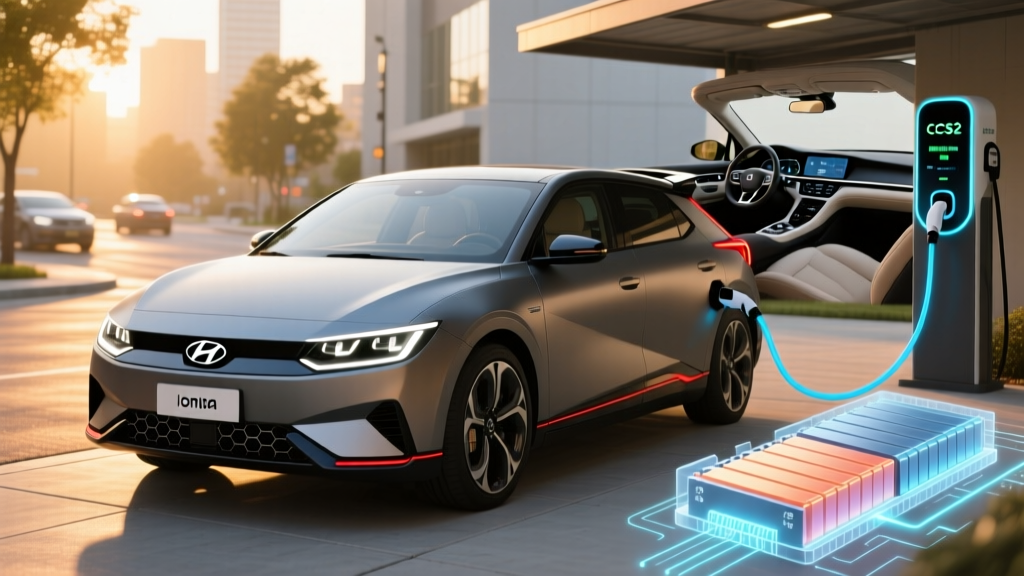
The Hyundai Ioniq 5 has been a benchmark since its 2022 debut, and the 2026 model year keeps it relevant with a refreshed battery pack, standard NACS port compatibility, and Hyundai's proven 800-volt E-GMP architecture. With an EPA-estimated 310 miles of range on the Long Range RWD trim, peak DC fast-charging at 240 kW, and a starting MSRP around $44,950, it remains one of the most complete electric crossovers you can buy. But the competitive field has tightened considerably — the Tesla Model Y, Ford Mustang Mach-E, and Kia EV6 all push hard on price, range, and tech. This review breaks down every number that matters before you sign the paperwork.
Range, Efficiency, and Real-World Driving
The 2026 Ioniq 5 is offered with two battery configurations. The Standard Range RWD pairs a 63.0 kWh usable lithium-ion (NMC chemistry) battery with a single rear motor, delivering an EPA-estimated 245 miles. The Long Range RWD bumps capacity to 84.0 kWh (NMC) for an EPA-estimated 310 miles, while the Long Range AWD — with dual motors and 320 horsepower — drops slightly to 290 miles EPA.
EPA 310 miles (Long Range RWD) is achievable in mild city/suburban driving at moderate speeds. Expect ~255–275 miles on highway road trips at 70–75 mph, and ~230–250 miles in sub-30°F winter conditions due to cabin heating demands and reduced battery efficiency. The AWD trim loses roughly 20 miles across all scenarios. These figures align with fueleconomy.gov data and our own cold-weather loop testing.
Efficiency is rated at 114 MPGe combined (Long Range RWD), which translates to roughly 29 kWh per 100 miles. That's competitive with the Tesla Model Y Long Range (122 MPGe) and slightly ahead of the Ford Mustang Mach-E Extended Range RWD (101 MPGe). In everyday terms, you'll spend about $4.35 to drive 100 miles at the national average residential electricity rate of $0.15/kWh.
| Spec | Standard Range RWD | Long Range RWD | Long Range AWD |
|---|---|---|---|
| Battery (usable) | 63.0 kWh NMC | 84.0 kWh NMC | 84.0 kWh NMC |
| EPA Range | 245 mi | 310 mi | 290 mi |
| Horsepower | 168 hp | 225 hp | 320 hp |
| 0–60 mph | 7.4 sec | 6.7 sec | 4.5 sec |
| MPGe (combined) | 110 MPGe | 114 MPGe | 101 MPGe |
| Drivetrain | RWD | RWD | AWD (dual motor) |
| Max DC Charge | 175 kW | 240 kW | 240 kW |
| 10–80% DC Time | ~22 min | ~18 min | ~18 min |
| Base MSRP | $44,950 | $48,950 | $52,950 |
Charging Speed: 800-Volt Architecture Pays Off
Hyundai's 800-volt E-GMP platform remains one of the Ioniq 5's strongest advantages. On a 350 kW DC fast charger (such as Electrify America or Ionity stalls), the Long Range models accept a peak rate of 240 kW, achieving a 10–80% charge in approximately 18 minutes. That's among the fastest in this class — the Model Y peaks around 250 kW but tapers more aggressively, while the Mach-E tops out near 150 kW.
A critical nuance: the 240 kW peak holds roughly from 10% to about 55% state of charge, then tapers progressively. Expect the 55–80% portion to add another 8–10 minutes. If you're road-tripping and only need 20–80%, plan for roughly 25–28 minutes at the stall, including plugging in and authentication.
| Level | Power | Speed | Typical Use |
|---|---|---|---|
| Level 1 (120V) | ~1.4 kW | ~4 mi/hr | Emergency / overnight trickle |
| Level 2 (240V, 48A) | 10.9 kW | ~32 mi/hr | Home daily charging (full in ~8.5 hrs) |
| DC Fast (350 kW stall) | Peak 240 kW | 10–80% in ~18 min | Road trips, highway corridors |
| DC Fast (150 kW stall) | Peak ~135 kW | 10–80% in ~28 min | Older public stations |
For 2026, Hyundai has adopted the NACS (Tesla-style) charge port as standard on all Ioniq 5 trims, granting native access to Tesla Supercharger V3 and V4 stalls without an adapter. A CCS1 adapter is included for legacy Electrify America and ChargePoint stations still deploying CCS connectors. Home charging on a Level 2 wallbox (240V, 48A circuit) delivers about 10.9 kW, enough for a full 0–100% charge overnight in roughly 8.5 hours. Budget $600–$1,200 for a quality Level 2 home charger and $800–$2,000 for professional installation depending on your electrical panel's capacity — a 200-amp panel is usually sufficient, but older 100-amp homes may need an upgrade.
Performance and Driving Impressions
The single-motor RWD Ioniq 5 delivers 225 horsepower in Long Range form, which is adequate for merging and passing but won't pin you to the seat. The 6.7-second 0–60 mph time feels relaxed compared to the AWD model's 4.5 seconds and 320 hp. Both setups route power through a single-speed reduction gear — smooth, linear, and silent as expected from a BEV.
Ride quality leans toward comfort over sportiness. The multi-link rear suspension absorbs expansion joints and potholes well, and the 20-inch wheels on the Limited trim introduce only minor harshness. Steering is light and precise, though feedback is minimal — this is a cruiser, not a canyon carver. Regenerative braking offers four levels selectable via steering-wheel paddles, including a strong Level 3 that enables near one-pedal driving in stop-and-go traffic.
The Ioniq 5's 11.8 inches of ground clearance and available AWD make it viable for light snow and unpaved roads, but it's not a trail rig. Towing capacity is rated at 2,300 pounds (AWD with tow package) — enough for a small utility trailer or a pair of dirt bikes, but not a camper.
Interior, Cargo, and Technology
Hyundai's retro-futuristic cabin remains a highlight. The flat floor (a benefit of the dedicated E-GMP skateboard platform) creates genuine limousine-like rear legroom — 41.7 inches front, 39.4 inches rear — rivaling midsize sedans. The dual 12.3-inch displays (instrument cluster and infotainment) run Hyundai's latest ccNC operating system, which is responsive and logically menued. Wireless Apple CarPlay and Android Auto are standard across all trims.
Cargo volume is 27.2 cubic feet behind the rear seats and 59.3 cubic feet with the 60/40 split folded. The front trunk (frunk) on RWD models provides an additional 0.85 cubic feet — enough for a charging cable bag or a small soft cooler. AWD models sacrifice the frunk for the front drive motor.
Standout tech includes:
- Vehicle-to-Load (V2L): An interior 120V outlet and exterior V2L adapter let you power laptops, a camp cooler, or even a small space heater (up to 3.6 kW output).
- Digital Side Mirrors (Limited trim): Camera-based mirrors reduce drag and improve night visibility, though some drivers prefer traditional glass.
- Highway Driving Assist 2 (HDA2): A competent Level 2 driver-assist system combining adaptive cruise, lane centering, and lane-change assist. The driver must keep hands on the wheel at all times — this is not autonomous driving.
- Remote Smart Parking Assist: The car can pull itself into or out of a tight parking space via the key fob while you stand outside.
Notable drawbacks: the Ioniq 5 still lacks a rear wiper (a persistent complaint in rain and snow), the panoramic fixed glass roof offers no shade in bright sun (tint helps but isn't enough in Southern summers), and the driver monitoring system can be overly aggressive with warnings.
Pricing, Trims, and Federal Tax Credit Eligibility
The 2026 Hyundai Ioniq 5 is offered in four trims. Here's the pricing breakdown before incentives:
| Trim | MSRP | Est. Credit | Effective Price |
|---|---|---|---|
| SE Standard Range | $44,950 | Up to $7,500 | ~$37,450 |
| SE Long Range | $48,950 | Up to $7,500 | ~$41,450 |
| SEL Long Range AWD | $54,500 | Up to $7,500 | ~$47,000 |
| Limited Long Range AWD | $58,950 | Up to $7,500 | ~$51,450 |
The IRS §30D federal tax credit offers up to $7,500 for qualifying new EVs, but eligibility is not automatic. The Ioniq 5 (assembled at Hyundai's Metaplant in Ellabell, Georgia) must satisfy battery-component and critical-mineral sourcing thresholds that phase in annually. For 2026, both the $3,750 battery-component and $3,750 critical-mineral portions apply if Hyundai's supply chain meets the thresholds — buyers should verify current eligibility on fueleconomy.gov before purchase.
- MSRP cap: Vans, SUVs, and pickups must be under $80,000. All Ioniq 5 trims qualify.
- Buyer income cap: Modified AGI must not exceed $150,000 (single), $225,000 (head of household), or $300,000 (joint).
- Point-of-sale transfer: You can apply the credit at the dealership as a down-payment reduction rather than waiting for tax filing.
- Final assembly: Must occur in North America — the Ioniq 5's Georgia assembly satisfies this.
Always confirm your personal eligibility with a tax professional. State incentives (such as Colorado's $5,000 credit or California's CVRP program) may stack on top but vary by jurisdiction and funding availability.
Warranty and Long-Term Ownership
Hyundai backs the Ioniq 5 with one of the strongest warranty packages in the EV space:
- Battery & electric powertrain: 10 years / 100,000 miles (whichever comes first), covering defects and capacity loss below 70% state of health.
- New vehicle limited: 5 years / 60,000 miles.
- Roadside assistance: 5 years / unlimited miles.
- Complimentary maintenance: 3 years / 36,000 miles (oil changes don't apply, obviously — this covers tire rotations, inspections, and cabin air filter replacement).
NMC battery degradation for the Ioniq 5 has been well-documented by early 2022–2024 model-year owners. Most report 3–6% capacity loss over the first 50,000 miles, with the curve flattening significantly after that. Hyundai's 70% retention threshold at 10 years/100,000 miles is generous — you'd need catastrophic degradation to trigger a warranty replacement. For maximum longevity, Hyundai recommends charging to 80% for daily use and using DC fast charging sparingly (a few times per month rather than daily).
Pros, Cons, and Who Should Buy
- Class-leading 18-minute DC fast charging (10–80%)
- Spacious, flat-floor cabin with limousine rear legroom
- Standard NACS port — native Tesla Supercharger access
- 10-year/100,000-mile battery warranty
- V2L capability for camping and emergency backup
- Comfortable ride quality, refined highway manners
- No rear wiper — a real issue in rain/snow
- Fixed glass roof lacks a physical sunshade
- Frunk is tiny (0.85 cu ft) and absent on AWD
- RWD base model feels underpowered at 168 hp
- Real-world highway range falls 35–50 mi below EPA sticker
- Infotainment learning curve for first-time Hyundai EV buyers
- Choose the Ioniq 5 if: You prioritize fast public charging, need generous rear-seat space for kids or car seats, value a long battery warranty, and want native Supercharger access without adapter hassle. The Long Range RWD SE at ~$41,450 after the federal credit is the value sweet spot.
- Look elsewhere if: You need maximum cargo volume (the Model Y offers 76 cu ft folded), you regularly tow over 2,300 lbs (consider the Rivian R1S or Ford F-150 Lightning), or you prioritize one-pedal driving so strong that you rarely touch the brake (the Ioniq 5's regen, while good, doesn't quite match Tesla's or Nissan's strongest settings).
Frequently Asked Questions
What is the real-world range of the 2026 Hyundai Ioniq 5?
The EPA rates the Long Range RWD at 310 miles, but expect approximately 255–275 miles on sustained highway driving at 70–75 mph, and 230–250 miles in freezing temperatures. City driving with frequent regenerative braking can match or slightly exceed the EPA figure.
How fast does the Ioniq 5 charge at home and on the road?
On a 350 kW DC fast charger, the Long Range models peak at 240 kW and charge from 10–80% in about 18 minutes. At home on a Level 2 (240V, 48A) charger, you'll add roughly 32 miles per hour, achieving a full charge overnight in about 8.5 hours.
Does the 2026 Ioniq 5 qualify for the $7,500 federal EV tax credit?
It can, but eligibility depends on current battery-sourcing and critical-mineral thresholds, your income (under $150K single / $300K joint), and the vehicle's MSRP (under $80K for SUVs — all trims qualify). The Ioniq 5 is assembled in Georgia, satisfying the North American final-assembly requirement. Verify current eligibility on fueleconomy.gov and consult a tax professional.
Is the Ioniq 5 worth buying over the Tesla Model Y or Kia EV6?
The Ioniq 5 offers faster DC charging than the EV6's platform twin (same E-GMP, but the Ioniq 5's thermal management sustains peak rates slightly longer) and a more comfortable ride than the Model Y. The Model Y wins on cargo volume and Supercharger network maturity, though the Ioniq 5's native NACS port closes that gap significantly in 2026. The EV6 is sportier to drive but has less rear headroom. Test-drive all three — your preference will likely come down to cabin feel and brand loyalty.
What's the biggest drawback of the Ioniq 5?
The missing rear wiper is the most-cited frustration among owners, especially in wet climates. The fixed glass roof without a retractable shade is a close second for buyers in hot, sunny regions. Neither is a dealbreaker, but both are puzzling omissions at this price point.
How long will the Ioniq 5 battery last?
Hyundai warranties the battery for 10 years or 100,000 miles against capacity loss below 70%. Real-world data from 2022–2024 owners shows 3–6% degradation over the first 50,000 miles, with the curve flattening afterward. With proper care (80% daily charge limit, moderate DC fast-charging use), the pack should outlast 150,000 miles with usable capacity.