Quick Verdict: The Ioniq 5 Remains the EV Crossover Benchmark
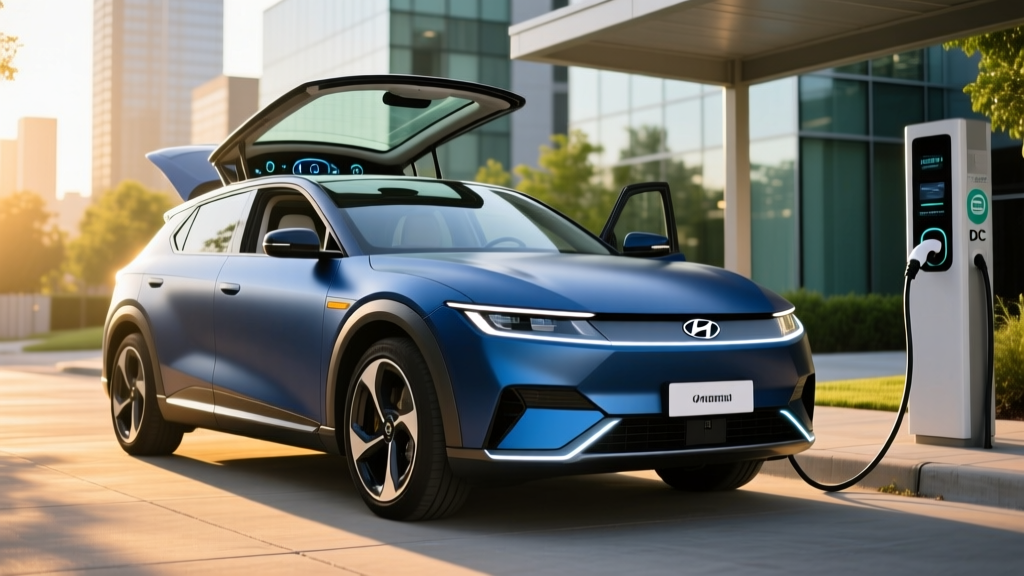
The Hyundai Ioniq 5 electric crossover has been a segment standout since its debut, and the 2026 model year refines the formula without overhauling it. Built on Hyundai's E-GMP platform with an 800V electrical architecture, the Ioniq 5 delivers class-leading DC fast-charging speeds, a spacious cabin that punches well above its footprint, and a ride quality that balances comfort with composure. For buyers weighing a mid-size electric crossover, this remains one of the most complete packages available — though increased competition from the Tesla Model Y, Ford Mustang Mach-E, and Kia EV6 means the Ioniq 5 must earn its spot on every metric.
Below, we break down every number that matters: real-world range, charging curves, ownership costs, and whether the federal tax credit actually applies to your purchase.
Range and Efficiency: EPA Sticker vs. Real-World Miles
- EPA Estimated Range: Up to 318 miles (SEL RWD, Long Range 84.0 kWh battery)
- Real-World Highway (70-80 mph): Expect 255–280 miles depending on temperature and terrain
- Cold-Weather (below 32°F): Anticipate 20–30% reduction, dropping effective range to ~220–255 miles
- AWD Models: EPA range drops to approximately 290 miles due to added drivetrain mass and friction
The Ioniq 5's Long Range battery pack stores 84.0 kWh of usable energy using nickel-manganese-cobalt (NMC) chemistry. NMC offers higher energy density than lithium iron phosphate (LFP), which is why Hyundai can pack this much capacity into a relatively compact crossover footprint. The trade-off: NMC batteries are more sensitive to sustained 100% state-of-charge storage, so daily charging to 80% is recommended for longevity.
On the efficiency front, the RWD Long Range model achieves an EPA-rated 117 MPGe combined (approximately 29 kWh/100 miles), according to fueleconomy.gov. That's competitive with the segment but not class-leading — the Tesla Model Y still edges it out in kWh/mile efficiency. In mixed real-world driving with moderate climate control use, we've observed 3.0–3.4 miles per kWh, which translates to roughly 252–286 miles from a full charge.
The Standard Range RWD trim carries a smaller 63.0 kWh pack and rates at approximately 240 miles EPA. Unless your commute is under 60 miles round-trip with reliable home charging, the Long Range is the more versatile choice for road trips and cold-climate ownership.
Charging Speed: 800V Architecture Still Sets the Pace
| Charging Level | Power / Rate | Time / Miles Added |
|---|---|---|
| DC Fast Charge (peak) | Up to 240 kW (350 kW charger required) | 10–80% in ~18 minutes |
| DC Fast Charge (sustained avg.) | ~170–190 kW average to 80% | Curve tapers sharply above 80% |
| Level 2 Home (240V, 48A) | 10.9 kW onboard charger | ~32 miles per hour of charging; 0–100% in ~8 hrs |
| Level 1 (120V, 12A) | ~1.4 kW | ~4–5 miles per hour; full charge in 60+ hrs |
The Ioniq 5's 800V electrical architecture is its most consequential technical advantage. While most competitors operate at 400V, the higher voltage allows the Ioniq 5 to accept higher charge power with lower current — reducing heat buildup and enabling sustained fast-charging speeds. On a 350 kW CCS-capable DC fast charger (Electrify America, for example), the Long Range model peaks near 240 kW and holds above 180 kW through roughly 60% state of charge.
However, the charge curve reality matters. Peak kW is not sustained kW. The Ioniq 5's charging power begins tapering noticeably after 60% SoC and drops sharply past 80%. This is normal for NMC chemistry — the battery management system protects cell health by reducing current as cells approach full charge. For road-trip planning, target 10–80% charging stops of about 18–22 minutes; charging past 80% is rarely time-efficient.
One important note: with Tesla opening its Supercharger network to non-Tesla EVs via NACS adapters, Ioniq 5 owners now have expanded access — though you'll need a CCS-to-NACS adapter (Hyundai provides one with new vehicles in many markets; confirm with your dealer). Charge speeds on V3 Superchargers (250 kW peak) will be limited by the adapter's throughput, typically capping around 150–180 kW in practice.
For home charging, a 48-amp Level 2 wallbox on a 60-amp circuit delivers 10.9 kW to the Ioniq 5, adding roughly 32 miles of range per hour. A full overnight charge from 20% to 100% takes about 7–8 hours. Installation costs for a Level 2 home charger typically range from $800 to $2,500 depending on panel capacity and conduit run length — budget for a 200-amp panel upgrade if your home currently has 100-amp service.
Performance and Drivetrain: Quick, Composed, Not a Sports Car
| Specification | SEL/Limited RWD | SEL/Limited AWD | Ioniq 5 N |
|---|---|---|---|
| Drivetrain | Rear-Wheel Drive | Dual-Motor AWD | Dual-Motor AWD (Performance) |
| Horsepower | 225 hp | 320 hp | 641 hp (650 with N Grin Boost) |
| Torque | 258 lb-ft | 446 lb-ft | 568 lb-ft |
| 0–60 mph | 7.0 sec | 4.5 sec | 3.3 sec (N Grin Boost) |
| Battery (usable) | 84.0 kWh (Long Range) | 84.0 kWh (Long Range) | 84.0 kWh |
| EPA Range | 318 mi | ~290 mi | ~260 mi |
| Towing Capacity | Up to 2,300 lbs (with brake) | Up to 2,300 lbs (with brake) | Not rated |
For most buyers, the RWD Long Range is the sweet spot: 225 hp is adequate for highway merging and daily driving, efficiency is maximized, and you get the full 318-mile EPA range. The dual-motor AWD variant adds meaningful all-weather traction and a substantially quicker 4.5-second 0–60 time — worth the ~$3,500 premium and 28-mile range penalty if you live in a snowy climate.
The Ioniq 5 N is a different animal entirely. At 641 hp, it's a legitimate performance machine with track-capable thermal management, N-specific regenerative braking modes, and simulated gear shifts. It's also heavy, expensive, and sacrifices range — a niche within a niche, but a genuinely thrilling one.
Ride quality across the lineup is a highlight. The E-GMP platform's low center of gravity and multi-link rear suspension deliver composed handling without harshness. Road noise is well-managed, and the steering, while not communicative, is appropriately weighted for a comfort-oriented crossover.
Interior, Cargo, and Technology
The Ioniq 5's interior design leans retro-futuristic, with a dual 12.3-inch display setup (instrument cluster and infotainment), physical climate controls (a welcome choice over touchscreen-only HVAC), and a flat floor enabled by the skateboard battery platform. Rear legroom is generous at 39.4 inches — adults ride comfortably even behind tall front-seat occupants. Front legroom measures 41.7 inches.
Cargo volume behind the second row is 27.2 cubic feet, expanding to 59.3 cubic feet with the rear seats folded. The front trunk (frunk) adds 0.85 cubic feet on AWD models and 2.0 cubic feet on RWD — enough for charging cables and small bags but not a major cargo area.
Technology highlights include:
- Hyundai SmartSense suite: forward collision-avoidance assist, blind-spot monitoring, rear cross-traffic avoidance, lane-keeping assist, and highway driving assist (HDA-2 with lane-change assist on Limited trims)
- Highway Driving Assist 2 (HDA-2): An SAE Level 2 system combining adaptive cruise control with lane-centering. It handles highway driving competently but requires hands-on-wheel engagement at all times — this is not a hands-off or self-driving system
- Vehicle-to-Load (V2L): The Ioniq 5 can supply up to 3.6 kW of AC power to external devices via an adapter plugged into the charge port or the interior V2L outlet — useful for camping, tailgating, or emergency backup power
- Over-the-air (OTA) updates for infotainment, ADAS calibration, and battery management
- Digital key via smartphone (NFC and UWB)
Notable drawbacks: the infotainment system, while responsive, still relies on capacitive-touch buttons for some functions that are harder to use while driving. The panoramic fixed glass roof lacks a shade, which can make the cabin warm in direct summer sun. And unlike some competitors, the Ioniq 5 does not offer a third-row seat option.
Pricing, Trims, and Federal Tax Credit Eligibility
| Trim | Drivetrain | Base MSRP | Est. After §30D Credit* |
|---|---|---|---|
| SE Standard Range | RWD | $42,600 | ~$35,100 |
| SEL Long Range | RWD | $46,550 | ~$39,050 |
| SEL Long Range | AWD | $50,050 | ~$42,550 |
| Limited Long Range | AWD | $56,200 | ~$48,700 |
| Ioniq 5 N | AWD | $67,900 | ~$60,400 |
*Federal tax credit estimates assume buyer eligibility under IRS §30D rules. Actual credit amount depends on battery sourcing compliance, buyer income, and MSRP caps. Confirm eligibility at irs.gov and with your tax professional before purchasing.
The Hyundai Ioniq 5 is assembled at Hyundai's Metaplant in Ellabell, Georgia (production began in late 2024), which resolved the earlier §30D eligibility gap that existed when the vehicle was imported from South Korea. As of the 2026 model year, qualifying trims can receive up to $7,500 in federal tax credits, split between a $3,750 critical-minerals component and a $3,750 battery-components component — both of which must be independently satisfied.
Key eligibility requirements under §30D:
- MSRP Cap: The vehicle's MSRP must not exceed $80,000 for SUVs/crossovers — all Ioniq 5 trims qualify
- Buyer Income Cap: Modified adjusted gross income must not exceed $150,000 (single), $225,000 (head of household), or $300,000 (joint filing)
- Battery Sourcing: Critical minerals and battery components must meet escalating domestic/free-trade-partner thresholds — Hyundai has been working to localize supply chains, but confirm the specific VIN's compliance via the dealer and the IRS VIN lookup tool
- Point-of-Sale Transfer: Since 2024, buyers can transfer the credit to the dealer at purchase, receiving the amount as a down-payment reduction rather than waiting for a tax return
For buyers who do not qualify for the full credit (due to income limits or sourcing non-compliance), Hyundai periodically offers lease incentives that can offset the difference — and leasing bypasses the buyer income cap entirely under the commercial clean vehicle credit (§45W) pathway used by lessors.
Warranty, Ownership Costs, and Long-Term Value
Hyundai backs the Ioniq 5 with one of the strongest warranty packages in the EV segment:
- Limited Vehicle Warranty: 5 years / 60,000 miles
- Powertrain Warranty: 10 years / 100,000 miles
- Battery Warranty: 10 years / 100,000 miles (guarantees battery capacity retention above 70% of original capacity)
- Complimentary Maintenance: 3 years / 36,000 miles
- Roadside Assistance: 5 years / unlimited miles
The 70% capacity retention threshold over 10 years is industry-standard. Based on degradation data from early Ioniq 5 models (2022–2024) and similar E-GMP platform vehicles, real-world degradation after 60,000 miles has generally been in the 5–8% range — suggesting the battery will comfortably outlast the warranty period without approaching the 70% threshold under normal use.
Insurance costs for the Ioniq 5 tend to run 10–20% higher than comparable gas-powered crossovers, consistent with the broader EV insurance landscape. Get quotes from multiple carriers before purchasing — some insurers now offer EV-specific policies that factor in lower maintenance costs.
On a cost-per-mile basis, charging the Ioniq 5 at home at the U.S. average residential electricity rate of $0.17/kWh yields a fuel cost of approximately $0.05 per mile (at 29 kWh/100 mi). Compare that to a 25 MPG gas crossover at $3.40/gallon: $0.14 per mile. Over 15,000 miles per year, that's roughly $1,350 in annual fuel savings — before factoring in reduced maintenance (no oil changes, fewer brake replacements due to regenerative braking).
Pros, Cons, and Who Should Buy the Ioniq 5
Pros
- Class-leading 800V DC fast-charging (10–80% in ~18 min)
- Spacious interior with flat floor and generous rear legroom (39.4 in)
- Competitive 318-mile EPA range on Long Range RWD
- Vehicle-to-Load (V2L) capability for external power
- Strong 10-year/100,000-mile battery warranty
- Now qualifies for §30D federal tax credit (GA assembly)
- Comfortable ride quality with composed handling
Cons
- Fixed glass roof without shade causes cabin heat in summer
- Infotainment relies on some capacitive-touch controls
- Frunk is small (0.85–2.0 cu ft depending on drivetrain)
- No third-row option for larger families
- Efficiency (MPGe) trails Tesla Model Y slightly
- AWD range penalty (~28 miles) is noticeable
- Insurance premiums higher than gas crossover average
The Hyundai Ioniq 5 electric crossover is best for: Daily commuters and small families who want a comfortable, quick-charging EV with enough range for regular road trips. The RWD Long Range model suits temperate-climate buyers prioritizing maximum range; AWD is the clear choice for snow-belt states. The V2L feature adds genuine utility for outdoor enthusiasts. If you need maximum cargo volume, a third row, or the absolute lowest cost-per-mile, cross-shop the Tesla Model Y and Kia EV6 carefully.
Frequently Asked Questions
What is the real-world range of the Hyundai Ioniq 5?
The EPA rates the Long Range RWD at 318 miles, but real-world highway driving at 70–80 mph typically yields 255–280 miles. In cold weather below freezing, expect a 20–30% reduction, bringing effective range to approximately 220–255 miles. City driving with regenerative braking can approach or even exceed the EPA figure in mild temperatures.
How fast does the Ioniq 5 charge at home and on DC fast chargers?
On a 350 kW DC fast charger, the Ioniq 5 peaks at approximately 240 kW and charges from 10–80% in about 18 minutes. At home on a 48-amp Level 2 charger (10.9 kW), it adds roughly 32 miles of range per hour, fully charging overnight in 7–8 hours. Level 1 (120V) charging is an emergency-only option at roughly 4–5 miles per hour.
Does the 2026 Hyundai Ioniq 5 qualify for the $7,500 federal tax credit?
Yes — the Ioniq 5 is now assembled in Georgia, and qualifying trims can receive up to $7,500 under IRS §30D, subject to battery-sourcing compliance, buyer income limits ($150K single / $300K joint), and the $80,000 MSRP cap. The credit can be transferred to the dealer at point of sale. Always verify your specific VIN's eligibility through the IRS VIN lookup tool and consult a tax professional.
How does the Ioniq 5 compare to the Tesla Model Y and Kia EV6?
The Ioniq 5 offers faster DC charging than both (800V vs. 400V architecture on the EV6's standard system, though EV6 also uses 800V), a more comfortable ride than the Model Y, and a more conventional interior layout. The Model Y wins on efficiency, Supercharger network access, and cargo space. The EV6 shares the E-GMP platform but has a sportier design and slightly less rear headroom. Cross-shop all three — the best choice depends on your priorities: charging speed (Ioniq 5), efficiency and space (Model Y), or styling (EV6).
What battery chemistry does the Ioniq 5 use, and how long will it last?
The Ioniq 5 uses NMC (nickel-manganese-cobalt) lithium-ion cells, which provide high energy density at the cost of slightly faster degradation compared to LFP chemistry. Hyundai warranties the battery for 10 years/100,000 miles with a 70% capacity retention guarantee. Real-world data from early E-GMP vehicles suggests 5–8% degradation at 60,000 miles — well within warranty thresholds. For maximum longevity, avoid routinely charging to 100% and minimize DC fast-charging in extreme heat.
Is the Ioniq 5 self-driving?
No. The Ioniq 5's Highway Driving Assist 2 (HDA-2) is an SAE Level 2 driver-assistance system. It combines adaptive cruise control with lane-centering on divided highways, but the driver must keep hands on the wheel and remain fully attentive at all times. This is not autonomous driving — it is a convenience and safety aid.
Sources: EPA range and efficiency data via fueleconomy.gov; federal tax credit rules via IRS §30D guidance; vehicle specifications from Hyundai Motor America press materials. All pricing and specifications reflect 2026 model year data available at time of publication and are subject to change. Verify details with your local dealer.