Quick Verdict: Who the Ioniq 5 Is For
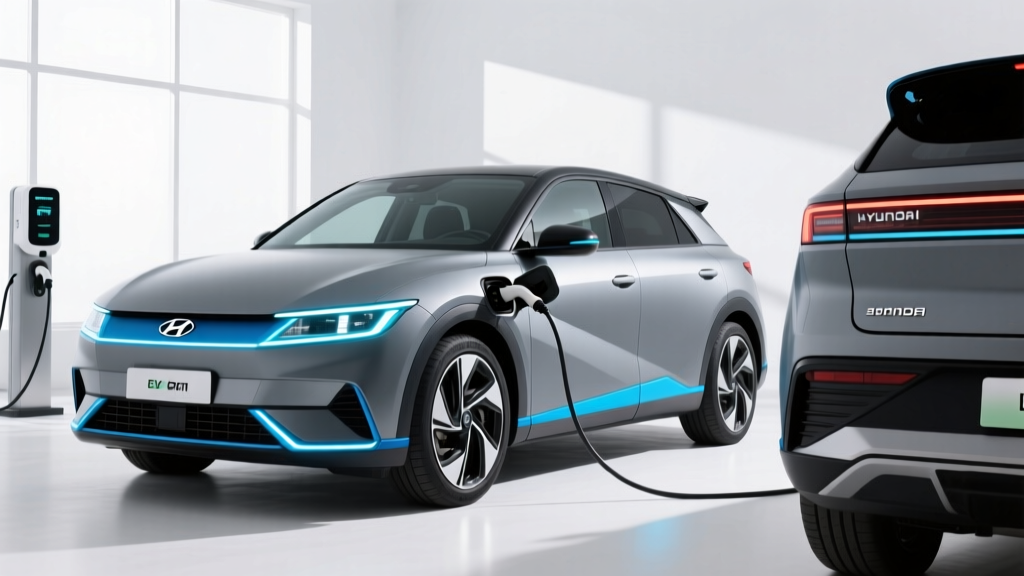
The Hyundai Ioniq 5 remains one of the most well-rounded electric crossovers on the market in 2026. Its 800-volt architecture delivers some of the fastest DC charging speeds in the segment, its retro-futuristic styling stands out in a crowded field, and its interior packaging leverages the flat-floor EV platform to maximize cabin space. If you need a practical daily driver that can also handle road trips without hour-long charging stops, the Ioniq 5 deserves a serious look. But its real-world highway range and soft suspension tuning mean it's better suited to commuters and families than to performance seekers or frequent long-haul drivers in cold climates.
The Long Range RWD earns an EPA-estimated 303 miles of range. In real-world mixed driving, expect roughly 260–280 miles. At sustained highway speeds of 75 mph, range drops to approximately 235–255 miles. In freezing temperatures (below 32°F), plan for a 20–30% reduction, bringing usable range to roughly 185–215 miles unless you precondition the battery while plugged in.
Hyundai Ioniq 5 Dimensions: Interior and Cargo Space
Buyers searching for Hyundai Ioniq 5 dimensions are typically trying to answer one question: will it fit my life? The answer, for most families and commuters, is yes. The Ioniq 5 rides on Hyundai's E-GMP (Electric Global Modular Platform), which pushes the wheels to the corners and creates a flat floor, yielding interior volume that punches above its class weight.
Exterior Dimensions
| Measurement | Specification |
|---|---|
| Wheelbase | 118.1 in (3,000 mm) |
| Overall Length | 182.7 in (4,635 mm) |
| Overall Width | 74.4 in (1,890 mm) |
| Overall Height | 63.0 in (1,600 mm) |
| Curb Weight (Long Range AWD) | ~4,600 lbs |
Interior Volume and Cargo
| Measurement | Specification |
|---|---|
| Front Headroom | 39.6 in |
| Front Legroom | 41.7 in |
| Rear Headroom | 38.7 in |
| Rear Legroom | 39.4 in |
| Cargo Volume (behind 2nd row) | 27.2 cu ft |
| Cargo Volume (seats folded) | 59.3 cu ft |
| Front Trunk (Frunk) | 0.85 cu ft (RWD) / 2.0 cu ft (AWD) — limited, fits charging cables |
The 118.1-inch wheelbase — longer than a Toyota RAV4 — is the secret to the Ioniq 5's generous rear legroom. Two adults over six feet can sit comfortably behind each other. Cargo space at 27.2 cu ft is competitive with the Ford Mustang Mach-E (29.7 cu ft) and slightly behind the Tesla Model Y (30.2 cu ft behind the second row), but the Ioniq 5's boxier shape makes loading bulky items like strollers or dog crates easier in practice.
One dimension-related note: the frunk is small. The RWD model offers less than 1 cu ft because the front motor area is packaged differently. Don't count on the frunk for meaningful storage — use it for your mobile connector and tire-inflator kit.
Battery, Range, and Efficiency
The 2026 Ioniq 5 is offered with two battery configurations depending on trim:
| Spec | Standard Range (SE) | Long Range (SE/SEL/Limited) |
|---|---|---|
| Usable Battery Capacity | 58.0 kWh | 77.4 kWh |
| Chemistry | NMC (Nickel Manganese Cobalt) | NMC |
| EPA Range (RWD) | ~220 mi | 303 mi |
| EPA Range (AWD) | N/A | 260 mi |
| Combined MPGe (RWD LR) | — | 114 MPGe |
| Efficiency (kWh/100 mi) | — | ~29 kWh/100 mi (RWD LR) |
The Long Range battery uses NMC (nickel manganese cobalt) chemistry, which offers higher energy density than LFP (lithium iron phosphate) but is more sensitive to sustained 100% state-of-charge storage. For daily driving, Hyundai recommends setting the charge limit to 80% to preserve long-term battery health — which gives you roughly 240 usable miles on a Long Range RWD for everyday commutes. Reserve 100% charges for road trips.
According to fueleconomy.gov, the Long Range RWD achieves 114 MPGe combined, translating to about 29 kWh per 100 miles. That's competitive with the Tesla Model Y Long Range (~28 kWh/100 mi) and slightly better than the Ford Mustang Mach-E Extended Range RWD (~31 kWh/100 mi). At the US average electricity rate of ~$0.17/kWh, you're paying roughly $4.93 per 100 miles — compared to $12–15 per 100 miles in a 28-MPG gas crossover at $3.50/gallon.
Charging Speed: 800V Architecture Makes a Real Difference
The Ioniq 5's standout technical feature is its 800-volt electrical architecture — still rare in this price class in 2026. Most competitors (Mach-E, Volkswagen ID.4, Subaru Solterra) use 400V systems. The higher voltage allows the Ioniq 5 to accept significantly more power at compatible DC fast chargers, cutting stop times on road trips.
| Charging Level | Power / Rate | Time / Speed |
|---|---|---|
| Level 1 (120V household outlet) | ~1.4 kW | ~3–4 miles of range per hour |
| Level 2 (240V home / public AC) | 10.9 kW (onboard charger max) | ~36 mi/hr; full charge in ~7.5 hours (Long Range) |
| DC Fast Charge (peak) | Up to 238 kW (at 350 kW charger) | 10–80% in approximately 18 minutes |
| DC Fast Charge (50 kW station) | ~50 kW sustained | 10–80% in approximately 65 minutes |
Charging curve reality: The 238 kW peak only holds between roughly 10% and 45% state of charge. After 55%, the rate tapers to ~150 kW, and above 80% it drops sharply to ~60 kW and below. This is why Hyundai quotes the 10–80% time — charging past 80% at a DC fast charger is rarely worth the wait unless you absolutely need those extra miles to reach your destination.
Home charging: With a Level 2 home charger (like a ChargePoint Home Flex or Emporia Level 2) wired to a 48-amp circuit, you'll get the full 10.9 kW, adding about 36 miles of range per hour. A full overnight charge from 10% to 80% takes roughly 5.5 hours — easily done while you sleep. Budget $500–$1,500 for a quality Level 2 unit plus electrician installation, with potential panel-upgrade costs of $1,500–$3,000 if your home has an older 100-amp service. Always consult a licensed electrician for a site assessment before purchasing equipment.
Performance and Drivetrain
| Spec | Long Range RWD | Long Range AWD |
|---|---|---|
| Horsepower | 225 hp | 320 hp |
| Torque | 258 lb-ft | 446 lb-ft |
| 0–60 mph | ~7.0 seconds | ~4.5 seconds |
| Drivetrain | Rear-Wheel Drive (single motor) | Dual-Motor All-Wheel Drive |
| Towing Capacity | — | Up to 2,300 lbs (with braked trailer) |
The RWD model is the efficiency champion and perfectly adequate for commuting and highway merging. The AWD dual-motor variant transforms the car into a genuinely quick crossover — 4.5 seconds to 60 mph is sports-sedan territory. Both versions feature one-pedal driving via steering-wheel-mounted regen paddles, letting you adjust regenerative braking intensity from Level 0 (coasting) to Level 3 (strong regen that can bring the car to a full stop without touching the brake pedal).
Ride quality leans comfort-oriented. The suspension absorbs bumps well around town but can feel floaty on undulating highways at speed. If you prefer a taut, sporty feel, the Tesla Model Y handles more sharply — but the Ioniq 5 wins on ride compliance over rough pavement.
Pricing, Trims, and Federal Tax Credit Eligibility
| Trim | Drivetrain | MSRP (2026 est.) | Est. After §30D Credit* |
|---|---|---|---|
| SE Standard Range | RWD | ~$42,600 | ~$35,100 |
| SE Long Range | RWD | ~$46,100 | ~$38,600 |
| SE Long Range | AWD | ~$49,600 | ~$42,100 |
| SEL Long Range | AWD | ~$52,200 | ~$44,700 |
| Limited Long Range | AWD | ~$58,200 | ~$50,700 |
*Federal tax credit estimates shown for illustration. Actual eligibility depends on your individual tax situation and current-year IRS rules. See details below.
The Hyundai Ioniq 5 is assembled in Ellabell, Georgia (Hyundai's Metaplant America facility), which is critical for federal tax credit qualification. Under current IRS §30D rules, the Ioniq 5 may qualify for up to $7,500 in federal clean vehicle credits, subject to these requirements:
- MSRP Cap: The vehicle must have an MSRP at or below $80,000 for SUVs/CUVs (all Ioniq 5 trims qualify).
- Buyer Income Cap: Modified adjusted gross income must not exceed $150,000 (single), $225,000 (head of household), or $300,000 (joint filing).
- Battery Component Sourcing: A percentage of battery components must be manufactured or assembled in North America, and critical minerals must meet sourcing thresholds. These thresholds increase annually. Hyundai's Georgia production and evolving supply chain have kept the Ioniq 5 eligible for the full credit for most trims, but verify current-year status at the IRS page linked above or with your tax professional.
- Point-of-Sale Transfer: You can elect to transfer the credit to the dealer at purchase, reducing your out-of-pocket cost immediately rather than waiting to claim it on your tax return.
State and local incentives may stack on top — check your state's EV rebate program for additional savings. These vary by jurisdiction and change frequently, so consult official state energy or DMV sources.
Tech, Safety, and Driver Assistance
The Ioniq 5 comes well-equipped with technology across all trims:
- Infotainment: Dual 12.3-inch displays (instrument cluster + touchscreen), wireless Apple CarPlay and Android Auto, navigation with EV-specific route planning that factors in charging stops.
- Hyundai SmartSense (standard): Forward collision-avoidance assist, blind-spot collision-avoidance, rear cross-traffic collision-avoidance, lane-keeping assist, highway driving assist (adaptive cruise + lane centering), and rear occupant alert.
- Available upgrades (SEL/Limited): Highway Driving Assist 2 (adds lane-change assist), remote smart parking assist, head-up display with augmented-reality navigation, Bose premium audio, vehicle-to-load (V2L) capability.
The V2L (vehicle-to-load) feature is a standout. Using an adapter plugged into the charge port or the interior V2L outlet, you can power devices up to 3.6 kW — enough to run a laptop workstation, a portable fridge on a camping trip, or even a small space heater during a power outage. It's a practical feature competitors like the Model Y don't offer.
Pros and Cons
- 800V architecture: 10–80% DC fast charge in ~18 minutes at compatible stations
- Class-leading rear legroom (39.4 in) thanks to long 118.1-in wheelbase
- Comfortable, compliant ride quality for daily commuting
- V2L capability for camping, tailgating, or backup power
- US-built (Georgia) — qualifies for full §30D federal tax credit (subject to eligibility)
- Strong battery warranty coverage
- Real-world highway range falls notably short of EPA sticker (235–255 mi at 75 mph)
- Cold-weather range loss of 20–30% without preconditioning
- Frunk is nearly useless (0.85–2.0 cu ft)
- No front trunk space for meaningful cargo
- Infotainment relies on touch controls — limited physical buttons for climate
- AWD range drops to 260 mi EPA — a significant hit for the performance upgrade
How It Compares: Ioniq 5 vs. Key Rivals
| Spec | Hyundai Ioniq 5 LR AWD | Tesla Model Y LR AWD | Ford Mustang Mach-E ER AWD |
|---|---|---|---|
| EPA Range | 260 mi | 311 mi | 290 mi |
| Battery (usable) | 77.4 kWh (NMC) | ~75 kWh (NMC) | 88 kWh (NMC) |
| Peak DC Charge | 238 kW (800V) | 250 kW | 150 kW |
| 10–80% DCFC Time | ~18 min | ~22 min | ~38 min |
| 0–60 mph | 4.5 sec | 4.8 sec | 5.1 sec |
| Cargo (rear seats up) | 27.2 cu ft | 30.2 cu ft | 29.7 cu ft |
| Rear Legroom | 39.4 in | 41.6 in | 38.1 in |
| Base MSRP (AWD) | ~$49,600 | ~$48,990 | ~$50,995 |
The Ioniq 5 wins on DC charging speed and ride comfort. The Model Y wins on range, cargo space, and Supercharger network access (though the Ioniq 5 now supports NACS and can access Superchargers with an adapter or native port on 2025+ models). The Mach-E offers more cargo room but charges significantly slower. For buyers prioritizing fast road-trip charging and interior comfort over maximum range, the Ioniq 5 holds a strong position.
Warranty and Long-Term Ownership
| Coverage | Term |
|---|---|
| New Vehicle Limited Warranty | 5 years / 60,000 miles |
| EV Battery Warranty | 10 years / 100,000 miles (capacity retention above 70%) |
| Powertrain Warranty | 10 years / 100,000 miles |
| Roadside Assistance | 5 years / unlimited miles |
Hyundai's 10-year/100,000-mile battery warranty is among the best in the industry and matches Kia's coverage. The warranty guarantees the battery will retain at least 70% of its original capacity — meaning a Long Range model should still hold at least ~54 kWh (and deliver ~210+ miles of range) at the 100,000-mile mark. Independent data from fleet operators and owner communities suggests NMC batteries in the E-GMP platform are averaging roughly 5–8% degradation at 50,000 miles under normal use, which is well within warranty thresholds.
For a detailed look at Hyundai's safety ratings, check the IIHS and NHTSA databases — the Ioniq 5 has historically earned top marks, including IIHS Top Safety Pick+ when equipped with specific headlights.
Who Should Buy the Hyundai Ioniq 5?
- You want one of the fastest-charging EVs in the $40K–$58K range for road trips.
- Rear-seat space is a priority (car seats, tall passengers, ride-share use).
- You value ride comfort over sporty handling.
- You can install a Level 2 home charger and do most charging overnight.
- V2L capability appeals to you for camping, worksite, or emergency power.
- Maximum range is your top priority (Tesla Model Y or Hyundai Ioniq 6 offer more miles).
- You regularly drive in extreme cold without garage parking — range loss is significant.
- You need substantial front cargo (frunk) space.
- You want a firmer, sportier driving feel (consider the BMW iX or Tesla Model Y Performance).
Frequently Asked Questions
What is the real-world range of the Hyundai Ioniq 5?
The Long Range RWD has an EPA estimate of 303 miles, but real-world mixed driving typically yields 260–280 miles. Highway driving at 75+ mph reduces that to roughly 235–255 miles. In sub-freezing temperatures, expect 185–215 miles unless you precondition the battery while plugged in. The AWD model's EPA range is 260 miles, with real-world expectations proportionally lower.
How fast does the Ioniq 5 charge at home and on the road?
At home on a Level 2 charger (240V, 48A), the Ioniq 5 accepts up to 10.9 kW, adding roughly 36 miles of range per hour — a full overnight charge. On a 350 kW DC fast charger, its 800-volt system peaks at 238 kW and charges from 10–80% in approximately 18 minutes. At a slower 50 kW DC charger, expect 10–80% in about 65 minutes.
How much does the Ioniq 5 cost after the federal tax credit?
If you qualify for the full $7,500 §30D credit, a Long Range RWD SE drops from ~$46,100 MSRP to roughly $38,600. AWD and higher trims similarly benefit. Eligibility depends on your income (≤$150K single / ≤$300K joint), the vehicle's MSRP (under $80K — all trims qualify), and battery sourcing requirements. You can transfer the credit to the dealer at point of sale for an immediate price reduction. Consult a tax professional and verify current rules at irs.gov.
Does the Hyundai Ioniq 5 qualify for the federal EV tax credit?
Yes — as of current rules, the US-built Ioniq 5 qualifies for up to $7,500 under §30D, provided you meet the income caps and the battery sourcing requirements are satisfied for the model year. Hyundai's Georgia assembly plant gives it a domestic-production advantage over some competitors. Always confirm eligibility for the specific model year and trim before purchasing, as critical-mineral and component-sourcing thresholds tighten annually.
Is the Ioniq 5 worth buying over the Tesla Model Y or Ford Mach-E?
It depends on your priorities. The Ioniq 5 charges faster than the Mach-E (18 min vs. 38 min, 10–80%) and offers a more comfortable ride than the Model Y. The Model Y delivers more range (311 vs. 260 mi AWD) and more cargo space. If fast DC charging and ride comfort matter most, the Ioniq 5 is the stronger pick. If range and cargo volume are paramount, the Model Y has the edge. Test-drive all three to feel the difference in suspension tuning and cabin layout.
What are the Hyundai Ioniq 5's biggest drawbacks?
The main compromises are real-world highway range falling 15–20% below EPA estimates, significant cold-weather range loss, a nearly useless frunk (under 2 cu ft), and an infotainment system that relies heavily on touch controls with limited physical buttons. The AWD model also sacrifices 43 miles of EPA range compared to the RWD — a meaningful trade-off if you don't need all-wheel traction.