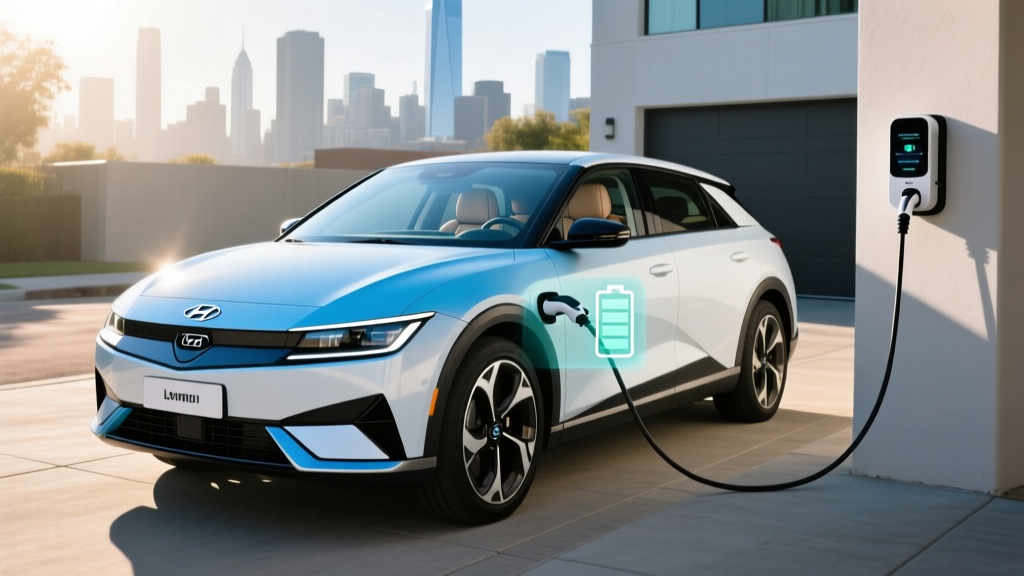
If you're searching for Ioniq 5 deals in 2026, you're not alone. The Hyundai Ioniq 5 remains one of the best-selling electric crossovers in the U.S., and for good reason: an 800V architecture that enables blistering DC fast-charge speeds, a spacious cabin, and aggressive pricing that undercuts many rivals. But the sticker price is only half the story. To evaluate whether an Ioniq 5 is the right deal for you, you need to understand real-world range, charging behavior, federal tax credit eligibility, and how Hyundai's warranty stack compares to the competition.
This guide breaks down every number that matters — from EPA range and battery chemistry to 10-80% charge times and out-the-door cost after incentives — so you can negotiate with confidence.
2026 Ioniq 5 at a Glance: Full Spec Table
| Spec | SE / SEL (RWD) | SE / SEL / Limited (AWD) | Ioniq 5 N |
|---|---|---|---|
| EPA Range | 318 mi | 290 mi | 260 mi |
| Battery (usable) | 84 kWh, NMC | 84 kWh, NMC | 84 kWh, NMC |
| Horsepower | 168 hp | 320 hp | 641 hp (650 w/N Grin Boost) |
| 0-60 mph | 7.0 sec | 4.5 sec | 3.25 sec |
| Drivetrain | RWD, single motor | AWD, dual motor | AWD, dual motor |
| Max DC Fast Charge | 240 kW (peak) | 240 kW (peak) | 240 kW (peak) |
| 10-80% DC Charge | ~18 min | ~18 min | ~18 min |
| Level 2 (240V) Rate | 10.9 kW | 10.9 kW | 10.9 kW |
| MPGe (combined) | 117 MPGe | 110 MPGe | 93 MPGe |
| Efficiency | 29 kWh/100 mi | 31 kWh/100 mi | 36 kWh/100 mi |
| Cargo (rear seats up) | 27.2 cu ft | 27.2 cu ft | 27.2 cu ft |
| Cargo (rear folded) | 59.3 cu ft | 59.3 cu ft | 59.3 cu ft |
| Rear Legroom | 39.4 in | 39.4 in | 39.4 in |
| Base MSRP | $42,600 | $46,100 | $66,200 |
| Battery Warranty | 8 yr / 100,000 mi | 8 yr / 100,000 mi | 8 yr / 100,000 mi |
Real-World Range: What the EPA Sticker Doesn't Tell You
EPA Estimate: 318 miles (RWD) / 290 miles (AWD)
Real-World Highway (70 mph): Expect ~265-285 miles (RWD) and ~245-260 miles (AWD)
Cold-Weather (below 32°F): Plan for 20-30% range reduction — roughly 220-255 miles for RWD
Best-Case City/Commuter: Up to ~310 miles with heavy regen and moderate speeds
The Ioniq 5's 84 kWh usable battery (NMC chemistry) delivers strong EPA numbers, but as with all EVs, your actual mileage depends heavily on driving style and conditions. In EPA testing at fueleconomy.gov, the RWD model achieves 117 MPGe combined, which is competitive with the Tesla Model Y and Ford Mustang Mach-E.
The NMC (nickel manganese cobalt) chemistry in the Ioniq 5 prioritizes energy density over the LFP (lithium iron phosphate) batteries found in some base Tesla Model Y variants. The trade-off: NMC offers more range per kilogram but has a slightly lower cycle life. Hyundai mitigates this with one of the industry's best battery warranties.
For road trippers, the 265-285 mile real-world highway range means you'll want to plan charging stops roughly every 220-240 miles to keep a comfortable 10-15% buffer. In winter, that shrinks to 180-200 miles between stops in sub-freezing conditions.
Charging Speed: The Ioniq 5's Biggest Advantage
This is where the Ioniq 5 separates itself from nearly every competitor under $60,000. Its 800V electrical architecture (shared with the Kia EV6 and Genesis GV60) enables DC fast-charge rates that rival vehicles costing twice as much.
| Charging Level | Power (kW) | Speed | Typical Use Case |
|---|---|---|---|
| Level 1 (120V) | ~1.4 kW | ~4 mi/hr added | Emergency/overnight trickle |
| Level 2 (240V, 48A) | 10.9 kW | ~36 mi/hr added | Home daily charging |
| DC Fast (50 kW) | 50 kW | ~160 mi/hr added | Older public stations |
| DC Fast (150 kW) | 150 kW | ~400 mi/hr added | Electrify America, EVgo |
| DC Fast (240 kW peak) | 240 kW | ~640 mi/hr added (peak) | 350 kW EA stalls, Tesla Supercharger (w/adapter) |
The 10-80% charge in ~18 minutes is the headline number, but understanding the charge curve matters more for trip planning. The Ioniq 5 sustains above 200 kW from roughly 10% to 55% SoC, then tapers progressively. From 80% to 100%, charging slows dramatically — that final 20% can take as long as the 10-80% portion. On road trips, the optimal strategy is to charge to 80% and go.
At home on a Level 2 charger (a 48-amp wallbox on a 60-amp circuit), the 10.9 kW onboard charger replenishes the full 84 kWh battery in roughly 8 hours — perfect for overnight charging. If you're installing a home charger, budget $800-$2,000 for the equipment and electrician, depending on your panel capacity and conduit run distance.
Hyundai now ships the Ioniq 5 with the NACS (North American Charging Standard) port natively in the U.S. market, meaning direct access to Tesla's Supercharger network — over 20,000 stalls nationwide — without an adapter. This is a significant practical advantage for road-trip charging reliability.
Pricing, Trims, and the Federal Tax Credit
The 2026 Ioniq 5 lineup spans from a value-packed RWD SE to the track-capable Ioniq 5 N. Here's what you'll actually pay:
| Trim | MSRP | Est. After §30D Credit* | Drivetrain |
|---|---|---|---|
| SE Standard Range | $42,600 | $35,100 | RWD |
| SE | $46,100 | $38,600 | RWD or AWD (+$3,500) |
| SEL | $49,600 | $42,100 | RWD or AWD (+$3,500) |
| Limited | $55,200 | $47,700 | AWD |
| Ioniq 5 N | $66,200 | $58,700 | AWD |
*Estimates assume full $7,500 federal tax credit eligibility. Verify your personal eligibility before relying on this figure.
The IRS §30D Clean Vehicle Credit offers up to $7,500, but eligibility hinges on several requirements that change periodically:
- MSRP Cap: SUVs/crossovers must have an MSRP at or below $80,000 (all Ioniq 5 trims qualify)
- Buyer Income Cap: AGI must not exceed $150,000 (single), $225,000 (head of household), or $300,000 (joint)
- Battery Sourcing: Critical minerals and battery components must meet phased-in percentage thresholds from U.S. free-trade-agreement partners — Hyundai has been working to shift supply chains to qualify, but verify current-year status at purchase
- Point-of-Sale Transfer: You can transfer the credit to the dealer at purchase for an immediate price reduction, rather than waiting to claim it on your tax return
Important: Battery-sourcing rules tighten each year under the Inflation Reduction Act. The Ioniq 5's eligibility can change mid-year. Always confirm with your dealer and cross-reference the DOE's qualifying vehicle list at fueleconomy.gov before signing.
Who Should Buy the Ioniq 5 — And Who Shouldn't
- Daily commuters who can charge at home and want minimal charging-stop time on occasional road trips
- Small families needing 39.4 inches of rear legroom and 27.2 cu ft of cargo (fits two strollers easily)
- Tech-forward buyers who value V2L (vehicle-to-load) capability — power a laptop, campsite, or emergency appliances from your car
- Deal-seekers targeting the $35K-$42K after-credit sweet spot with premium features
⚠️ Look Elsewhere If:
- You need 3-row seating — the Ioniq 5 is strictly a 2-row, 5-passenger crossover (consider the Kia EV9 or Hyundai Ioniq 9)
- You regularly tow heavy loads — the Ioniq 5 is rated for just 1,650 lbs (AWD), far below the Ford F-150 Lightning or Rivian R1S
- You want LFP battery longevity and plan to keep the car 15+ years — NMC degrades slightly faster over very high cycle counts
- You drive primarily in extreme cold climates without garage parking — expect significant range loss and precondition accordingly
Interior, Tech, and Daily Livability
The Ioniq 5's retro-futuristic cabin is one of its strongest selling points. The flat floor (a benefit of Hyundai's E-GMP dedicated EV platform) creates an airy, lounge-like feel. Key tech highlights:
- Dual 12.3-inch displays (instrument cluster + infotainment) with wireless Apple CarPlay and Android Auto
- V2L (Vehicle-to-Load) — both an interior 120V outlet and an exterior adapter that outputs up to 3.6 kW, enough to run power tools, a mini-fridge, or charge another EV in an emergency
- Highway Driving Assist 2 (HDA2) — Hyundai's Level 2 driver-assistance suite with lane-centering, adaptive cruise, and lane-change assist. This is not self-driving; you must keep hands on the wheel and eyes on the road at all times
- Relaxation seats (front) with powered leg rests for charging-station naps
- Heat pump standard on most trims — significantly improves cold-weather efficiency and range retention compared to resistive heating
The drawbacks? The center console storage is oddly shallow, the rear wiper is conspicuously absent (relying on an air-deflector design that works inconsistently), and the infotainment system, while functional, isn't as fluid as Tesla's or Rivian's interfaces. Road noise at highway speeds is also more pronounced than in the Genesis GV60, which shares the same platform.
Pros and Cons: The Honest Summary
- Class-leading 240 kW DC fast charging (10-80% in ~18 min)
- NACS port native — direct Tesla Supercharger access
- Spacious cabin with 39.4" rear legroom
- V2L capability (3.6 kW output)
- Strong warranty: 8 yr/100,000 mi battery + 10 yr/100,000 mi powertrain
- Competitive pricing after tax credit
- Heat pump standard on most trims
- No rear wiper — visibility issue in rain/snow
- 1,650-lb towing capacity limits utility
- Real-world highway range ~10-15% below EPA
- Infotainment UI lags behind Tesla/Rivian
- No front trunk (frunk) on AWD models; small frunk on RWD
- Road noise noticeable above 65 mph
- Tax credit eligibility subject to sourcing-rule changes
Ioniq 5 vs. Key Competitors
At this price point, the Ioniq 5 faces three primary rivals:
| Spec | Hyundai Ioniq 5 AWD | Tesla Model Y LR | Ford Mustang Mach-E ER AWD |
|---|---|---|---|
| EPA Range | 290 mi | 320 mi | 290 mi |
| Battery | 84 kWh, NMC | ~78 kWh, NMC | 91 kWh, NMC |
| Peak DC Charge | 240 kW | 250 kW | 150 kW |
| 10-80% Time | ~18 min | ~20 min | ~36 min |
| 0-60 mph | 4.5 sec | 4.8 sec | 4.8 sec |
| Cargo Volume | 27.2 cu ft | 30.2 cu ft | 29.7 cu ft |
| Base MSRP (AWD) | $46,100 | $48,990 | $48,995 |
| Battery Warranty | 8/100,000 mi | 8/120,000 mi | 8/100,000 mi |
The Ioniq 5 wins on charging speed and value after tax credits. The Model Y offers more cargo space and access to Tesla's Supercharger network (though the gap has closed now that the Ioniq 5 uses NACS natively). The Mach-E trails significantly on DC charging speed — its 150 kW peak means longer road-trip stops.
Warranty and Long-Term Ownership
Hyundai backs the Ioniq 5 with one of the most comprehensive warranty packages in the EV segment:
- Battery: 8 years / 100,000 miles (capacity retention guaranteed above 70%)
- Powertrain: 10 years / 100,000 miles
- New Vehicle: 5 years / 60,000 miles
- Roadside Assistance: 5 years / unlimited miles
The 70% capacity retention threshold is industry-standard. In practice, Hyundai-Kia's NMC batteries have shown degradation curves of roughly 5-8% loss over the first 100,000 miles based on fleet data — meaning most owners will never approach a warranty claim. The 800V system's sophisticated thermal management (active liquid cooling and heating) is a key factor in long-term battery health.
For total cost of ownership, the Ioniq 5's combination of low electricity cost (~$0.13/kWh national average = ~$3.77 per 100 miles at 29 kWh/100 mi), minimal maintenance (no oil changes, reduced brake wear from regen), and strong residual values makes it one of the more affordable EVs to own over five years — especially after the federal credit.
Frequently Asked Questions
What is the real-world range of the 2026 Hyundai Ioniq 5?
The EPA rates the RWD Ioniq 5 at 318 miles and the AWD at 290 miles. In real-world highway driving at 70 mph, expect 265-285 miles (RWD) or 245-260 miles (AWD). In freezing weather, subtract another 20-30%. For daily commuting with regenerative braking, you can approach the EPA numbers.
How fast does the Ioniq 5 charge at home and on the road?
On a Level 2 home charger (240V, 48 amps), the Ioniq 5 charges at 10.9 kW — adding roughly 36 miles of range per hour, or a full charge in about 8 hours. On a DC fast charger, it peaks at 240 kW and charges from 10-80% in approximately 18 minutes, though charging speed tapers significantly above 80%.
Does the 2026 Ioniq 5 qualify for the $7,500 federal EV tax credit?
The Ioniq 5 meets the MSRP cap (under $80,000 for SUVs) and Hyundai has been working to meet battery-sourcing requirements. However, eligibility depends on your income (AGI caps apply), the specific battery-sourcing compliance at time of purchase, and current IRS rules. Always verify at irs.gov and with your dealer before purchasing. The credit can be transferred at point of sale for an immediate price reduction.
Is the Ioniq 5 worth buying over the Tesla Model Y?
The Ioniq 5 offers faster DC charging, a more comfortable ride, and a lower effective price after tax credits. The Model Y has a slight edge in range, cargo space, and software polish. With the Ioniq 5's native NACS port, the Supercharger-access advantage Tesla once held is no longer exclusive. For buyers prioritizing road-trip charging speed and value, the Ioniq 5 is the stronger deal; for those wanting maximum range and tech ecosystem, the Model Y still leads.
What's the biggest drawback of the Ioniq 5?
The most common owner complaints are the lack of a rear wiper (an odd omission for a crossover), limited towing capacity (1,650 lbs), and a relatively small frunk (or none on AWD trims). For most daily-driving and road-trip use cases, these are manageable trade-offs given the charging speed, interior space, and pricing advantages.
Does the Ioniq 5 have self-driving capability?
No. Hyundai's Highway Driving Assist 2 (HDA2) is an SAE Level 2 driver-assistance system. It provides lane-centering, adaptive cruise control, and lane-change assist, but the driver must remain fully engaged — hands on the wheel, eyes on the road — at all times. It is not autonomous driving.
Sources: fueleconomy.gov (EPA range and efficiency data), irs.gov (§30D Clean Vehicle Credit rules), Hyundai USA official specifications. All pricing and specs reflect 2026 model year at time of publication; verify with your local dealer for current availability and incentive eligibility.