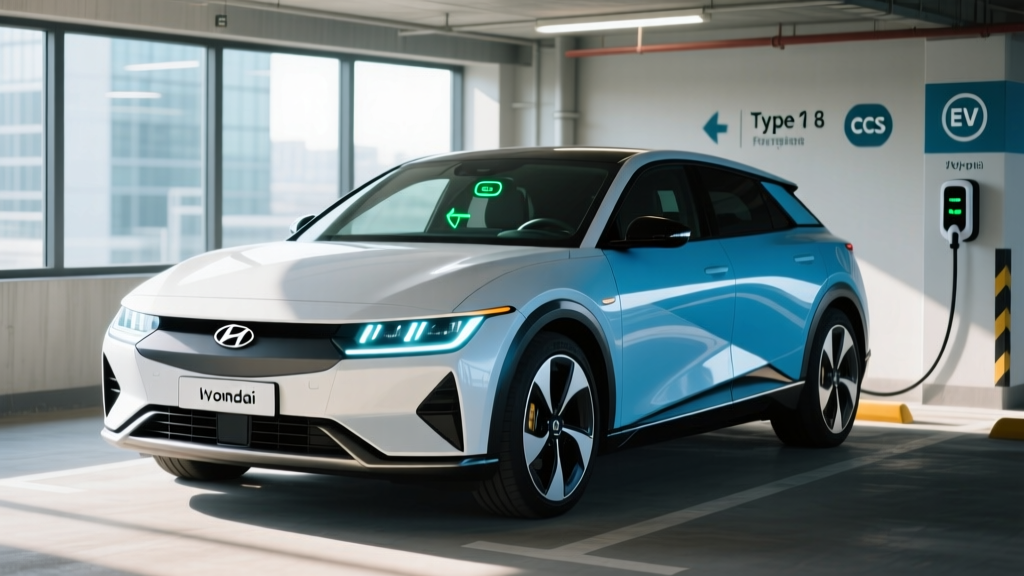
Hyundai's Ioniq 5 remains one of the most compelling electric crossovers on the market in 2026, and aggressive incentives plus dealer competition mean savvy buyers can find genuine Hyundai Ioniq 5 deals well below MSRP. Whether you're eyeing the newly expanded Standard Range model or the long-range AWD trims, understanding the real numbers — not just the sticker — is the key to negotiating with confidence.
This guide covers everything you need to evaluate an Ioniq 5 purchase today: EPA range versus what you'll actually see on the road, the 800V architecture that still outpaces most competitors at the charger, exact pricing by trim, and the federal tax credit math that can shave thousands off your out-of-pocket cost.
Hyundai Ioniq 5 at a Glance: 2026 Specs
| Spec | SE Standard Range (RWD) | SEL / Limited (RWD) | SEL / Limited (AWD) |
|---|---|---|---|
| EPA Range | 240 mi | 303 mi | 274 mi |
| Battery (usable) | 58 kWh (LFP) | 84 kWh (NMC) | 84 kWh (NMC) |
| Horsepower | 168 hp | 225 hp | 320 hp |
| 0–60 mph | ~7.5 sec | ~6.8 sec | ~4.5 sec |
| Max DC Fast Charge | ~150 kW | ~238 kW | ~238 kW |
| 10–80% DC Time | ~28 min | ~18 min | ~18 min |
| Level 2 Rate (11 kW) | ~19 mi/hr | ~27 mi/hr | ~27 mi/hr |
| EPA Efficiency | 120 MPGe | 117 MPGe | 110 MPGe |
| Drivetrain | RWD | RWD | Dual-motor AWD |
| Base MSRP (2026) | $42,600 | $47,150 | $51,150 |
Sources: fueleconomy.gov, Hyundai Motor America.
Real-World Range: What You'll Actually Drive
EPA sticker (Long Range RWD): 303 miles
Real-world highway (70 mph, 72°F): ~255–275 miles
Real-world cold weather (30°F, mixed driving): ~215–240 miles
AWD highway: ~235–255 miles (EPA 274 mi)
The Ioniq 5's EPA numbers are solid, but real-world results depend heavily on how and where you drive. On highway road trips at sustained 70–75 mph speeds, expect the Long Range RWD to deliver roughly 255–275 miles before you're hunting for a charger. The AWD variant, with its additional front motor drawing current, typically yields 235–255 miles in the same conditions.
Cold weather is the equalizer for all lithium-ion packs. In temperatures around 30°F, the NMC battery in the Long Range models loses roughly 15–25% of its effective capacity — partly due to cabin heating demands and partly due to the chemistry's reduced performance at low temperatures. The Ioniq 5 does include a battery preconditioning system and an available heat pump (standard on most trims for 2026), which mitigates some of this loss. Still, if you live in northern climates, plan for ~215–240 miles of usable range in winter on the Long Range RWD.
The Standard Range RWD model, with its 58 kWh LFP (lithium iron phosphate) battery, is better suited for city commuting and shorter daily drives. LFP chemistry degrades more slowly over time and tolerates regular 100% charging, but its lower energy density means the 240-mile EPA figure can shrink to around 190–210 miles on cold highway stretches.
Charging Speed: The 800V Advantage Still Pays Off
| Charging Level | Power / Voltage | Miles Added per Hour | Notes |
|---|---|---|---|
| Level 1 (120V) | ~1.4 kW | ~4–5 mi/hr | Emergency / trickle only |
| Level 2 (240V, 48A) | 11 kW | ~27 mi/hr (LR) / ~19 mi/hr (SR) | Full charge overnight (8–10 hrs) |
| DC Fast (350 kW station) | Peak 238 kW (LR) | — | 10–80% in ~18 min |
| DC Fast (150 kW station) | Capped at ~150 kW | — | 10–80% in ~28 min |
The Ioniq 5's 800V electrical architecture remains one of its strongest selling points in 2026. When connected to a 350 kW DC fast charger (like Electrify America's latest stalls), the Long Range models can accept up to 238 kW at peak — translating to a 10–80% charge in approximately 18 minutes under ideal conditions.
Here's where the charge curve matters: peak kW is not sustained kW. The Ioniq 5 holds strong charging speeds up to roughly 60–65% State of Charge (SoC), then begins a gradual taper. From 80–100%, charging slows dramatically to protect the battery, adding only a few miles per minute. For road-trip planning, plan your stops around the 10–80% window — charging past 80% at a DC fast station is rarely worth the time.
At home on a Level 2 charger (240V, 48-amp circuit), the onboard 11 kW charger replenishes the Long Range battery from empty in roughly 8–9 hours. Most owners who plug in nightly never visit a public charger except on road trips. Installation of a home Level 2 station typically runs $800–$2,000 depending on your electrical panel's capacity and the distance from panel to garage — factor this into your first-year budget.
Trim Pricing & Finding the Best Hyundai Ioniq 5 Deals
| Trim | Drivetrain | MSRP | Destination | Total Before Credits |
|---|---|---|---|---|
| SE Standard Range | RWD | $42,600 | $1,395 | $43,995 |
| SE | RWD | $46,850 | $1,395 | $48,245 |
| SEL | RWD | $49,150 | $1,395 | $50,545 |
| SEL | AWD | $53,150 | $1,395 | $54,545 |
| Limited | RWD | $54,600 | $1,395 | $55,995 |
| Limited | AWD | $58,600 | $1,395 | $59,995 |
The Ioniq 5's pricing places it squarely in the mainstream EV crossover segment, competing with the Tesla Model Y, Ford Mustang Mach-E, and Volkswagen ID.4. But the real story for deal-hunters is what happens after incentives and dealer competition.
Hyundai frequently offers its own manufacturer incentives — in recent quarters these have included lease cash (often $5,000–$7,500 on leases) and retail bonus cash. These stack with federal tax credits (detailed below) and can push effective pricing well below MSRP. Check Hyundai's national offers page and compare with local dealer inventory; in competitive metro areas, dealers often discount further to move units.
Pro tip for deal-seekers: The SE Standard Range RWD at ~$43,995 out-the-door is the value play if your daily commute is under 50 miles round-trip. You get the same 800V architecture (albeit at slightly lower peak charge rates), the same spacious interior, and Hyundai's full warranty — at a price point that undercuts most competitors after credits.
Federal Tax Credit: Does the Ioniq 5 Qualify?
- Vehicle MSRP cap: SUVs/crossovers must be ≤ $80,000 — all Ioniq 5 trims qualify
- Buyer income cap: AGI ≤ $150,000 (single) / $300,000 (joint) / $225,000 (head of household)
- Battery sourcing: Critical minerals + battery components must meet phased-in domestic/free-trade requirements — eligibility varies by build date; confirm with dealer
- Credit amount: Up to $7,500 (split between critical minerals and battery components)
- Point-of-sale transfer: You can transfer the credit to the dealer at purchase for an immediate price reduction (requires IRS registration)
- Lease loophole: Leased EVs may qualify for the $7,500 commercial credit (§45W) regardless of sourcing/income — Hyundai often passes this through as lease cash
Source: IRS.gov — Clean Vehicle Credits. Rules are subject to change; consult a tax professional.
The Ioniq 5's tax credit situation in 2026 requires attention to detail. Because Hyundai manufactures the Ioniq 5 at its Metaplant in Ellabell, Georgia (production began in late 2024), the vehicle now qualifies for the §30D credit for qualifying buyers — a significant shift from the pre-2025 era when Korean-built Ioniq 5s were excluded from the retail credit.
However, the battery component and critical mineral sourcing requirements phase in more strictly each year. The exact credit amount ($3,750 or the full $7,500) depends on the specific battery supply chain for your build month. Always ask the dealer for the vehicle's IRS credit eligibility code before signing.
Lease strategy: If your income exceeds the §30D caps or if sourcing requirements reduce the retail credit, leasing is worth serious consideration. Under the §45W commercial clean vehicle credit, the lessor (Hyundai's finance arm) claims the $7,500 and typically passes it through as a capitalized-cost reduction. Hyundai has consistently offered aggressive lease deals on the Ioniq 5, and in many markets, the effective monthly lease payment undercuts financing by a wide margin.
Interior, Cargo & Technology
The Ioniq 5's "Parametric Pixel" design language and flat-floor E-GMP platform create an interior that punches above its class in usable space:
- Cargo volume: 27.2 cu ft (rear seats up) / 59.3 cu ft (rear seats folded)
- Frunk (front trunk):strong> 0.85 cu ft (AWD) / 2.0 cu ft (RWD) — enough for charging cables
- Rear legroom: 39.4 inches — best-in-class, thanks to the long 118.1-inch wheelbase
- Front headroom: 40.2 inches (without panoramic roof)
The dual 12.3-inch displays (instrument cluster + infotainment) run Hyundai's latest infotainment OS with wireless Apple CarPlay and Android Auto, over-the-air updates, and Hyundai's Digital Key 2 (phone-as-key via NFC/UWB). The available augmented-reality head-up display projects navigation arrows onto the windshield in a way that genuinely aids navigation.
Driver assistance: Hyundai SmartSense is standard across all trims and includes adaptive cruise control with stop-and-go, lane-keeping assist, blind-spot collision avoidance, and rear cross-traffic alert. The available Highway Driving Assist 2 (HDA 2) adds lane-centering and semi-automatic lane changes. Note: HDA 2 is an SAE Level 2 system — you must keep your hands on the wheel and remain fully engaged at all times.
Unique feature — V2L (Vehicle-to-Load): The Ioniq 5 can output up to 3.6 kW of 120V AC power through an interior outlet and an exterior adapter, enough to run a laptop, small appliances, or even power a few home circuits during an outage. This is a genuinely useful feature that most competitors still don't offer.
Warranty & Long-Term Ownership
| Coverage | Term |
|---|---|
| New Vehicle (bumper-to-bumper) | 5 years / 60,000 miles |
| Powertrain | 10 years / 100,000 miles |
| EV Battery (capacity retention) | 10 years / 100,000 miles (≥70% SoH) |
| Corrosion Perforation | 7 years / unlimited miles |
| Roadside Assistance | 5 years / unlimited miles |
Hyundai's warranty remains one of the strongest in the EV segment. The 10-year/100,000-mile battery warranty guarantees that the high-voltage pack will retain at least 70% of its original capacity — if it drops below that threshold within the coverage period, Hyundai will repair or replace it. For context, most competitors offer 8 years/100,000 miles with a similar 70% retention floor.
Long-term battery degradation data on the E-GMP platform is encouraging. Real-world fleet data from Ioniq 5 owners at 60,000+ miles shows typical capacity loss of 5–8%, well within the warranty threshold. The LFP pack in the Standard Range model is expected to show even slower degradation, as LFP chemistry tolerates more charge cycles and regular 100% charging without the accelerated wear seen in NMC packs held at high SoC.
Insurance costs: Expect annual premiums 15–25% higher than a comparable gas-powered Tucson, driven by higher repair costs for the battery and specialized body structure. Get quotes before purchasing — rates vary dramatically by insurer and zip code.
How the Ioniq 5 Stacks Up Against Competitors
- 800V architecture: 18-min 10–80% charging still leads the segment
- Spacious, flat-floor interior with best-in-class rear legroom
- V2L capability (3.6 kW) for camping, outages, tailgating
- Strong warranty (10yr/100k battery + powertrain)
- Now US-built, unlocking federal tax credits
- Available NACS port for native Tesla Supercharger access
- No single-pedal driving mode (i-Pedal) — regen doesn't fully stop the car
- Rear wiper is absent (2026 may address this; confirm with dealer)
- Frunk is tiny compared to Tesla Model Y / Ford Mach-E
- Infotainment learning curve; some functions buried in menus
- AWD highway range drops below 250 mi real-world
- Insurance premiums run higher than ICE equivalents
Against the Tesla Model Y, the Ioniq 5 trades slightly longer EPA range and Supercharger network convenience for faster DC charging speeds, a more comfortable ride, and better build-quality consistency. The Model Y's cargo volume and frunk space are meaningfully larger.
Against the Ford Mustang Mach-E, the Ioniq 5 offers a more spacious rear seat and faster charging, while the Mach-E wins on driving dynamics and available extended-range battery size.
Against the Volkswagen ID.4, the Ioniq 5 is quicker, charges faster, and has a more premium interior — but the ID.4 is often cheaper after incentives and offers competitive cargo space.
Who Should Buy the Hyundai Ioniq 5?
Choose the Ioniq 5 if:
- You want the fastest DC charging in the segment for road trips
- Rear-seat space is a priority (family with kids/teens, rideshare)
- You value V2L for camping, job sites, or emergency backup power
- You prefer a car-like crossover ride over sporty handling
- You want a 10-year battery warranty for peace of mind
- Maximum cargo space is your top priority (Model Y, ID.4 are larger)
- You need 350+ miles of real-world range for long rural stretches
- You want one-pedal driving as standard (Nissan Ariya, Chevy Bolt offer this)
- Budget is the primary driver (ID.4 and Equinox EV start lower)
The Ioniq 5 is the best all-around pick for suburban families and commuters who take occasional road trips. The combination of fast charging, spacious interior, strong warranty, and now-competitive pricing after tax credits makes it a genuinely hard package to beat in the $40K–$55K EV crossover segment.
Frequently Asked Questions
What is the real-world range of the Hyundai Ioniq 5?
The Long Range RWD (EPA 303 mi) typically delivers 255–275 miles on highway trips in mild weather and 215–240 miles in freezing temperatures. The AWD model (EPA 274 mi) yields roughly 235–255 miles on the highway. The Standard Range RWD (EPA 240 mi) is best for city driving, where you'll see close to the EPA number.
How fast does the Ioniq 5 charge at home and on the road?
At home on a Level 2 (240V/48A) charger, the Long Range model adds about 27 miles of range per hour, reaching a full charge in 8–9 hours. On a 350 kW DC fast charger, it peaks at 238 kW and charges from 10–80% in approximately 18 minutes — one of the fastest times in its class thanks to the 800V platform.
How much does the Ioniq 5 cost after tax credits?
The SE Standard Range starts at $43,995 including destination. With the full $7,500 federal tax credit (if you meet income, sourcing, and MSRP requirements), the effective price drops to ~$36,495. Lease deals frequently apply the $7,500 as a cap-cost reduction, pushing monthly payments as low as $299–$399/month depending on market and incentives.
Does the 2026 Ioniq 5 qualify for the $7,500 federal EV tax credit?
Yes — because it's now built at Hyundai's Georgia Metaplant, the Ioniq 5 qualifies for the §30D credit for eligible buyers. However, the exact credit amount ($3,750 or $7,500) depends on battery-sourcing compliance for your specific build month. Income caps apply ($150K single / $300K joint AGI). Confirm eligibility with your dealer and a tax professional before purchase.
Is the Hyundai Ioniq 5 worth buying over the Tesla Model Y?
It depends on your priorities. The Ioniq 5 charges faster at DC stations, has a more comfortable ride, offers V2L, and comes with a longer warranty. The Model Y offers more cargo space, longer EPA range, native Supercharger access (though the Ioniq 5 now offers NACS), and a more mature software ecosystem. Both are excellent — test-drive both and compare pricing in your area.
What's the biggest drawback of the Ioniq 5?
The lack of true one-pedal driving (the car creeps at low speeds even in maximum regen) frustrates some EV veterans. The small frunk, absence of a rear wiper on earlier builds, and higher-than-average insurance costs are the other common complaints. None are deal-breakers, but they're worth testing during a demo drive.