The Hyundai Ioniq 5 remains one of the most compelling electric crossovers on the market, blending retro-futuristic styling with practical range and class-leading charging speeds. But beyond the specs, buyers are increasingly drawn to its distinctive palette. In this guide, we break down every 2026 Hyundai Ioniq 5 color option alongside the range, charging, performance, and ownership data you need to make a confident purchase decision.
2026 Hyundai Ioniq 5 Color Options by Trim
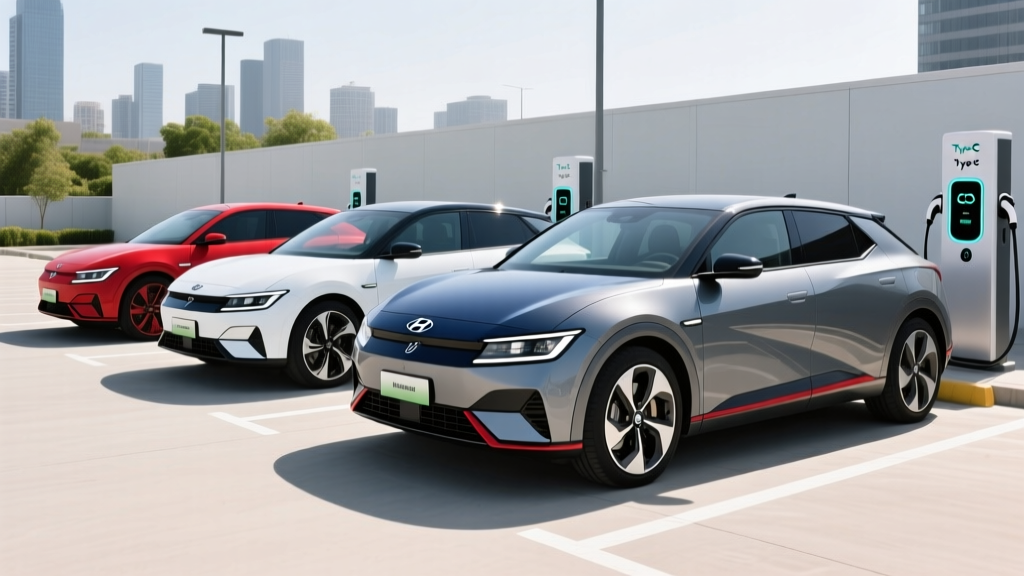
Hyundai offers the Ioniq 5 in a curated selection of exterior paints that shift slightly by trim level. The color lineup emphasizes sophisticated neutrals with a few bold accents, reflecting the crossover's pixel-art-meets-80s-hatchback design language.
| Color Name | Finish Type | Available Trims | Cost |
|---|---|---|---|
| Abyss Black Pearl | Pearl | SE, SEL, Limited | Included |
| Atlas White Matte | Matte (dealer-installed PPF recommended) | Limited, N | +$1,000 |
| Cyber Gray Metallic | Metallic | SE, SEL, Limited | Included |
| Ecotronic Gray Pearl | Pearl | SE, SEL, Limited | Included |
| Gravity Gold Matte | Matte | Limited, N | +$1,000 |
| Lucid Blue Pearl | Pearl | SE, SEL | Included |
| Digital Teal Green Pearl | Pearl | SEL, Limited | Included |
| Performance Blue (Ioniq 5 N) | Solid | N only | Included (N trim) |
Buyer tip: The matte finishes (Atlas White Matte, Gravity Gold Matte) look stunning but require hand-washing and paint protection film to prevent water-spot etching. If you park outdoors or use automatic car washes, stick with a pearl or metallic finish. The Digital Teal Green Pearl is exclusive to mid-and-upper trims and photographs exceptionally well—it's the color most associated with Ioniq 5 marketing materials.
Interior colorways are more limited: Black (all trims), Gray/Blue two-tone (SEL and above), and an N-specific Alcantara/suede with Performance Blue stitching. The Limited trim adds a premium Dove White leatherette option that brightens the cabin but shows denim transfer over time.
Range, Battery & Efficiency: Real Numbers
The 2026 Ioniq 5 continues with Hyundai's 84.0 kWh usable battery pack (NMC lithium-ion chemistry) for the extended-range variants, while the SE Standard Range uses a smaller 63.0 kWh LFP pack. Here's what the EPA says versus what you'll actually experience:
EPA Estimate: Up to 318 miles (RWD Long Range) / 260 miles (AWD Long Range) / 220 miles (Standard Range RWD)
Real-World Highway (70 mph, mild weather): ~250–275 miles (RWD LR) / ~210–230 miles (AWD LR)
Cold Weather (below 32°F, mixed driving): Expect 20–30% reduction — roughly 185–220 miles for the RWD Long Range. The Ioniq 5's heat pump (standard on all trims) helps mitigate cabin-heating losses, but battery chemistry still limits cold-weather performance.
| Spec | SE Std Range | SE/SEL/Limited RWD | SEL/Limited AWD | N |
|---|---|---|---|---|
| EPA Range | 220 mi | 318 mi | 260 mi | 221 mi |
| Battery (usable) | 63.0 kWh (LFP) | 84.0 kWh (NMC) | 84.0 kWh (NMC) | 84.0 kWh (NMC) |
| Horsepower | 168 hp | 225 hp | 320 hp | 641 hp (N Grin Boost) |
| 0–60 mph | 7.4 sec | 7.0 sec | 4.5 sec | 3.25 sec |
| Drivetrain | RWD | RWD | Dual-Motor AWD | Dual-Motor AWD |
| MPGe (combined) | 110 MPGe | 117 MPGe | 101 MPGe | 84 MPGe |
| kWh/100 mi | 30 | 29 | 33 | 40 |
| Base MSRP | $42,600 | $43,975 | $47,975 | $68,475 |
Efficiency on the Long Range RWD is excellent for the segment at 117 MPGe combined (29 kWh/100 mi), according to fueleconomy.gov. The AWD model sacrifices about 16 MPGe for the added traction and 95 additional horsepower. If you live in a mild climate and commute under 50 miles daily, the RWD Long Range is the efficiency sweet spot.
Charging Speed: DC Fast, Level 2 & Home Setup
The Ioniq 5's 800-volt E-GMP architecture remains its killer feature. While competitors like the Tesla Model Y and Ford Mustang Mach-E use 400V systems that peak and taper quickly, the Ioniq 5 sustains high charge rates longer, making road-trip stops genuinely brief.
| Charging Level | Power (kW) | Speed / Time | Connector |
|---|---|---|---|
| Level 1 (120V household) | ~1.4 kW | ~4 miles per hour | J1772 / NACS |
| Level 2 (240V home, 48A) | 10.9 kW | ~32 miles per hour; full charge in ~9 hrs (84 kWh) | J1772 / NACS |
| DC Fast Charge (peak) | 240 kW peak (sustains ~180 kW to 55%) | 10–80% in ~18 minutes (350 kW station) | CCS1 / NACS (adapter) |
Charging-curve reality check: The "240 kW peak" figure only applies at a 350 kW-capable DC fast charger (such as Electrify America's latest stalls) and only when the battery is preconditioned and between roughly 10–55% state of charge. Above 80%, the rate tapers significantly to protect cell longevity — expect 80–100% to take an additional 15–20 minutes. For road trips, plan your stops around 10–80% sessions and skip topping off unless you're ending for the day.
Starting with the 2025 refresh, Hyundai began equipping US-market Ioniq 5 models with the Tesla NACS charge port, replacing the previous CCS1 port. If you're looking at a 2024 or earlier model on the used market, it will have CCS1 and require a NACS-to-CCS adapter for Tesla Supercharger access. All 2026 models ship with NACS natively and have full Tesla Supercharger network access.
For home Level 2 charging, a 48-amp hardwired wall connector on a 60-amp circuit delivers the full 10.9 kW. Budget $600–$1,200 for a quality Level 2 unit (ChargePoint Home Flex, Emporia Vue, or Hyundai's branded wall charger) and $500–$2,000 for electrician installation depending on panel proximity and whether your home needs a 200-amp service upgrade. Always get a quote from a licensed electrician before purchasing equipment.
Performance & Driving Impressions
The Ioniq 5's driving character depends heavily on which powertrain you choose:
RWD Long Range (225 hp): Adequate for daily driving with smooth, linear torque delivery. The 7.0-second 0–60 time feels quicker in practice thanks to instant electric torque at low speeds. Ride quality is compliant, and the 117 MPGe efficiency makes this the rational choice.
AWD Dual-Motor (320 hp): Genuinely quick at 4.5 seconds to 60 mph, with confident all-weather traction. The extra 95 hp and front motor make highway merging effortless. You give up 58 miles of EPA range versus the RWD, a worthwhile trade for snow-belt buyers.
Ioniq 5 N (641 hp with N Grin Boost): A legitimate performance machine with track-capable thermal management, simulated gear shifts, and N-specific suspension tuning. At 3.25 seconds to 60 mph, it trades blows with the Tesla Model Y Performance and Porsche Macan Electric. However, the 221-mile EPA range and 84 MPGe make it a weekend toy, not a road-trip cruiser.
All models feature regenerative braking with adjustable levels via steering-wheel paddles, including an i-PEDAL mode for one-pedal driving that brings the car to a complete stop. The heat pump is standard across all trims — a feature some competitors still charge extra for.
Pricing, Trims & Federal Tax Credit Eligibility
| Trim | Drivetrain | MSRP | Est. After §30D Credit* |
|---|---|---|---|
| SE Standard Range | RWD | $42,600 | $35,100 |
| SE | RWD / AWD | $43,975 / $47,975 | $36,475 / $40,475 |
| SEL | RWD / AWD | $46,975 / $50,975 | $39,475 / $43,475 |
| Limited | RWD / AWD | $51,575 / $55,575 | $44,075 / $48,075 |
| N | AWD | $68,475 | $60,975 |
*Federal tax credit estimates assume full $7,500 eligibility under IRS §30D rules. Credit can now be transferred to the dealer at point of sale as an instant price reduction. Eligibility requires meeting ALL of the following:
- MSRP Cap: Vehicle base price must not exceed $80,000 for SUVs/crossovers (all Ioniq 5 trims qualify)
- Buyer Income Cap: Modified AGI must not exceed $150,000 (single), $225,000 (head of household), or $300,000 (joint filers)
- Battery Sourcing: Critical minerals and battery components must meet phased-in domestic/free-trade-agreement sourcing thresholds — Hyundai's Georgia plant and supply chain currently satisfy these requirements for most trims, but always verify at IRS.gov's qualified vehicle list before purchasing
- Assembly: Vehicle must undergo final assembly in North America (the Ioniq 5 is built in Ellabell, Georgia)
- Point-of-Sale Transfer: You can elect to transfer the credit to the dealer for an immediate price reduction rather than claiming it on your tax return
Consult a tax professional to confirm your personal eligibility. Rules are subject to change — verify current requirements on irs.gov.
Interior Space, Cargo & Technology
The Ioniq 5's flat-floor E-GMP platform creates a genuinely spacious cabin that punches above its compact-crossover class:
- Front legroom: 41.7 inches
- Rear legroom: 39.4 inches (more than the Model Y's 35.2 inches)
- Cargo volume (rear seats up): 27.2 cu ft
- Cargo volume (rear seats folded): 59.3 cu ft
- Front trunk (frunk): 0.85 cu ft (AWD) / 2.0 cu ft (RWD) — enough for a charging cable bag or small backpack, not a suitcase
The sliding center console ("Universal Island") is a standout feature, sliding rearward to create walk-through space in tight parking spots. The dual 12.3-inch curved display panel runs Hyundai's latest infotainment with wireless Apple CarPlay and Android Auto, over-the-air updates, and a digital key that works with your smartphone.
Driver assistance: Hyundai's Highway Driving Assist 2 (HDA2) is a solid SAE Level 2 system with lane-centering, adaptive cruise, and lane-change assist. It's competent for highway commuting but requires hands-on-wheel engagement at all times — this is not an eyes-off system. The Limited trim adds Remote Smart Parking Assist, which lets you move the car in and out of tight spots via the key fob while standing outside.
Warranty & Ownership Costs
Hyundai backs the Ioniq 5 with one of the strongest warranty packages in the EV segment:
- Battery warranty: 10 years / 100,000 miles (capacity retention above 70%)
- Powertrain warranty: 10 years / 100,000 miles
- New vehicle limited: 5 years / 60,000 miles
- Roadside assistance: 5 years / unlimited miles
- Complimentary maintenance: 3 years / 36,000 miles
The 10-year battery warranty is transferable to subsequent owners, which supports strong resale values. Based on current data from Hyundai's global fleet, Ioniq 5 battery degradation averages 3–5% over the first 100,000 miles — well within the 70% retention threshold. The NMC chemistry in the Long Range models offers higher energy density, while the LFP pack in the Standard Range trades range for a longer cycle life and better tolerance for frequent 100% charging.
Insurance costs run 10–20% higher than a comparable gas-powered Tucson, according to industry averages. Budget $1,800–$2,400 annually depending on your state, driving record, and coverage level. Get quotes before purchasing — EV insurance varies significantly by ZIP code.
Pros & Cons: The Honest Assessment
✅ Pros
- Class-leading 240 kW DC fast charging (18-min 10–80%)
- Spacious rear seat with 39.4" legroom
- Standard heat pump across all trims
- NACS port standard — full Supercharger access
- 10-year/100,000-mile battery warranty
- Distinctive, head-turning design with strong color options
- V2L (Vehicle-to-Load) powers devices up to 3.6 kW
❌ Cons
- AWD range drops to 260 miles (EPA)
- Frunk is tiny (0.85 cu ft AWD) — barely useful
- No front wiper on rear window (hatchback visibility issue in rain)
- HDA2 lane-centering can be overly cautious on curves
- Matte paint colors require high-maintenance care
- Insurance premiums above segment average
- Rear wiper was added for 2025 but earlier models lack it
Who Should Buy the Ioniq 5 (And Who Shouldn't)
Choose the Ioniq 5 if:
- You want the fastest-charging EV in the compact crossover segment for road trips
- Rear-seat passenger space is a priority (family hauling, rideshare)
- You value distinctive styling and want color options beyond black/white/silver
- You have access to home Level 2 charging and want 300+ mile range for daily driving
- You want NACS/Supercharger access without an adapter
Look elsewhere if:
- You need 3+ rows of seating (consider the Kia EV9 or Hyundai Ioniq 9)
- Maximum range is your only priority (the Chevy Equinox EV offers 319 miles at a lower price)
- You tow frequently — the Ioniq 5 is not rated for towing in the US market
- You want hands-free Level 2+ driving (GM's Super Cruise on the Cadillac Lyriq offers eyes-off highway driving on mapped routes)
Frequently Asked Questions
What is the real-world range of the 2026 Hyundai Ioniq 5?
The EPA rates the Long Range RWD at 318 miles, but expect 250–275 miles on highway road trips at 70 mph in mild weather. In cold weather (below freezing), plan for 185–220 miles. The AWD model delivers roughly 210–230 real-world highway miles. The Standard Range RWD yields about 175–190 miles in mixed real-world driving.
How fast does the Ioniq 5 charge at home and on the road?
At home on a 240V Level 2 charger (48 amps), the Ioniq 5 adds about 32 miles of range per hour, fully charging the 84 kWh battery in roughly 9 hours. On a 350 kW DC fast charger, it peaks at 240 kW and charges from 10–80% in approximately 18 minutes when the battery is preconditioned. On a standard 120V outlet (Level 1), expect about 4 miles per hour — suitable only for emergency trickle charging or very low-mileage drivers.
How much does the 2026 Ioniq 5 cost after the federal tax credit?
With full $7,500 §30D eligibility, the Ioniq 5 SE Long Range RWD drops from $43,975 to approximately $36,475 via the point-of-sale transfer. The Limited AWD comes in around $48,075 after credit. Eligibility depends on your income (under $300,000 joint AGI), the vehicle's MSRP (under $80,000 — all trims qualify), and battery sourcing compliance. Verify on the IRS qualified vehicles list before purchasing.
Does the 2026 Ioniq 5 qualify for the federal EV tax credit?
Yes — the Ioniq 5 is assembled in Ellabell, Georgia, and Hyundai's current battery supply chain meets the critical-mineral and component sourcing thresholds for the full $7,500 credit. However, buyer income caps apply ($150K single / $300K joint), and rules can change. Always confirm on IRS.gov and consult a tax professional.
Is the Ioniq 5 worth buying over the Tesla Model Y or Ford Mustang Mach-E?
The Ioniq 5 wins on charging speed (240 kW vs. ~250 kW peak for Model Y but on a proprietary network, and ~150 kW for the Mach-E), rear-seat space, and warranty coverage. The Model Y offers a more extensive proprietary Supercharger network (though Ioniq 5 now has NACS access) and a slightly larger frunk. The Mach-E offers sportier handling but slower charging. If road-trip charging speed and passenger comfort are priorities, the Ioniq 5 is the stronger pick.
Which Ioniq 5 color holds its value best?
Abyss Black Pearl and Atlas White (matte or standard) tend to have the broadest resale appeal. The Digital Teal Green Pearl is distinctive and popular among enthusiasts, which may help in private-party sales. Matte finishes can hurt resale if not impeccably maintained — buyers at auction often discount matte paint for the maintenance burden.
What's the difference between the LFP and NMC battery in the Ioniq 5?
The Standard Range model uses a 63.0 kWh LFP (lithium iron phosphate) battery, which offers longer cycle life, better thermal stability, and tolerance for regular 100% charging — but with lower energy density, hence the shorter 220-mile range. The Long Range models use an 84.0 kWh NMC (nickel manganese cobalt) pack with higher energy density for 318 miles of range, though Hyundai recommends charging to 80% for daily use to maximize longevity.