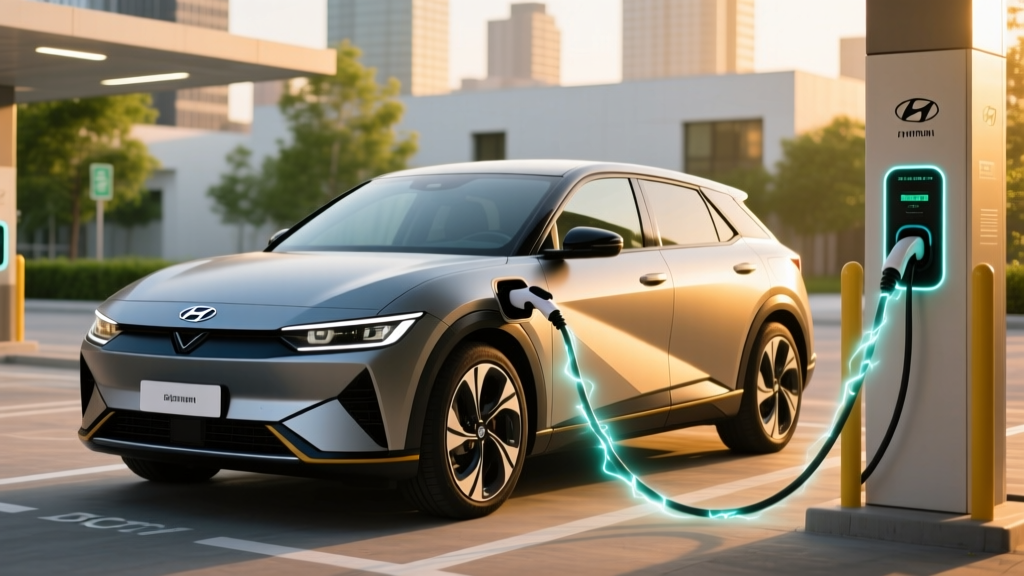
The Hyundai Ioniq 5 has been a benchmark midsize electric crossover since its launch, but for buyers in 2026, the question isn't just about its retro-futuristic styling or spacious cabin — it's about how quickly you can get back on the road. The Hyundai Ioniq 5 charge speed remains one of the strongest in its class thanks to its 800-volt architecture, but real-world charging involves more than a single peak number. This review breaks down every number that matters: EPA range versus what you'll actually see, DC fast-charge curves, home charging rates, efficiency, pricing after federal tax credits, and whether the Ioniq 5 still holds its edge against rivals like the Tesla Model Y, Ford Mustang Mach-E, and Kia EV6.
Quick Verdict: Who Should Buy the Ioniq 5?
The 2026 Hyundai Ioniq 5 is best suited for daily commuters and road-trip-capable families who want ultra-fast DC charging, a comfortable ride, and a practical crossover footprint without stepping into luxury-EV pricing. If you frequently drive 200+ mile highway stretches and rely on public DC fast chargers, the Ioniq 5's 800V platform gives it a tangible advantage over 400V competitors. If you exclusively charge at home overnight and rarely road-trip, the charging-speed advantage matters less, and you might weigh the Tesla Model Y's Supercharger network or the Ford Mach-E's lower starting price more heavily.
Choose the Ioniq 5 if: You want class-leading DC fast-charge speed, a roomy cabin, and strong value after tax credits.
Consider alternatives if: You need three-row seating (Kia EV9), want the Supercharger network without adapters (Tesla Model Y), or prioritize sporty handling over comfort (Ford Mach-E GT).
Range, Battery, and Efficiency: What the Numbers Actually Mean
| Spec | Standard Range (RWD) | Long Range (RWD) | Long Range (AWD) |
|---|---|---|---|
| EPA Range | 240 mi | 310 mi | 290 mi |
| Battery (usable) | 63.0 kWh | 84.0 kWh | 84.0 kWh |
| Chemistry | NMC | NMC | NMC |
| MPGe (combined) | 114 MPGe | 117 MPGe | 110 MPGe |
| kWh/100 mi | 29 | 29 | 31 |
| Drivetrain | RWD | RWD | Dual-motor AWD |
| Horsepower | 168 hp | 225 hp | 320 hp |
| 0-60 mph | 7.4 sec | 6.3 sec | 4.5 sec |
All Ioniq 5 trims use NMC (nickel manganese cobalt) lithium-ion cells. Hyundai has not switched the standard Ioniq 5 to LFP chemistry as of the 2026 model year — LFP remains reserved for certain global-market variants. NMC offers higher energy density, which is why the Long Range pack fits 84.0 kWh of usable capacity into the same physical footprint.
Real-World Range Expectations: The EPA rates the Long Range RWD at 310 miles, but expect 260–280 miles in sustained 70-mph highway driving in mild weather. In freezing temperatures (below 30°F), plan for 220–250 miles due to cabin heating load and increased battery resistance. City driving with frequent regenerative braking can push range closer to or slightly above the EPA figure. The AWD model's 290-mile EPA sticker translates to roughly 245–265 highway miles in practice.
The Ioniq 5's efficiency of 29 kWh/100 mi (Long Range RWD) is competitive but not class-leading — the Tesla Model Y Long Range achieves roughly 26 kWh/100 mi. Where the Hyundai loses in efficiency, it makes up in charging speed, which matters more on road trips than around town.
Hyundai Ioniq 5 Charge Speed: DC Fast Charging and Home Level 2
This is where the Ioniq 5 earns its reputation. The 800-volt electrical architecture enables DC fast-charge rates that 400V rivals simply cannot match. Here's the full charging picture:
| Charging Level | Power / Rate | Time / Miles Added |
|---|---|---|
| Level 1 (120V household) | ~1.4 kW | ~3–4 miles per hour |
| Level 2 (240V home, 48A) | 11.5 kW | ~35 miles per hour; full charge in ~8.5 hr |
| DC Fast (peak) | 240 kW (Long Range) / 180 kW (Standard Range) | Peak rate, not sustained |
| DC Fast 10–80% (Long Range) | 350 kW station required | ~18 minutes (ideal conditions) |
| DC Fast 10–80% (50 kW station) | 50 kW station | ~75–85 minutes |
Understanding the Charge Curve
The headline number — 240 kW peak — is only part of the story. The Ioniq 5's charge curve is aggressive between 10% and 55% state of charge (SoC), where it sustains roughly 200–235 kW on a 350 kW-capable charger. From 55% to 70%, the rate tapers to approximately 150–170 kW. Above 80%, charging slows significantly to protect the battery, dropping below 60 kW. This is why the 10–80% metric matters far more than peak kW: 18 minutes from 10% to 80% on a 350 kW station is achievable in warm weather with battery preconditioning active.
Preconditioning matters. If you navigate to a DC fast charger using the Ioniq 5's built-in navigation, the battery thermal management system begins warming the pack en route. Without preconditioning — for instance, pulling into a charger with a cold-soaked battery on a 40°F morning — your 10–80% time can stretch to 25–30 minutes as the battery limits charge rate until it reaches optimal temperature.
On a 150 kW Electrify America or EVgo station — more common than 350 kW units in many regions — expect 10–80% in roughly 24–28 minutes. The 800V system still outpaces 400V competitors at these mid-tier stations because it draws closer to the station's maximum output for a longer portion of the session.
Home Charging
The onboard charger accepts up to 11.5 kW on Level 2 (240V, 48 amps). That means a full charge from empty in about 8.5 hours for the Long Range — easily achievable overnight. For most owners, plugging in each evening and charging from 30–80% takes roughly 4–5 hours, which a standard 40-amp Level 2 home charger (9.6 kW) handles comfortably. Budget roughly $500–$1,500 for a quality Level 2 home charger and professional installation, depending on whether your electrical panel needs an upgrade. (Always consult a licensed electrician for final installation specs.)
Pricing, Trims, and Federal Tax Credit Eligibility
| Trim | MSRP | Est. After §30D Credit* |
|---|---|---|
| SE Standard Range (RWD) | $42,600 | ~$35,100 |
| SE Long Range (RWD) | $46,100 | ~$38,600 |
| SEL Long Range (AWD) | $50,600 | ~$43,100 |
| Limited Long Range (AWD) | $56,200 | ~$48,700 |
| Ioniq 5 N (Performance) | $67,500 | Not eligible (over MSRP cap) |
*Federal tax credit estimates assume buyer eligibility. Prices exclude destination charges and dealer fees.
The IRS §30D Clean Vehicle Credit offers up to $7,500 for qualifying new EVs, but eligibility is not automatic. Here's what determines whether you can claim it:
- MSRP cap: SUVs/crossovers must have an MSRP at or below $80,000. All Ioniq 5 trims except the Ioniq 5 N clear this threshold.
- Buyer income cap: Modified adjusted gross income (MAGI) must not exceed $150,000 (single), $225,000 (head of household), or $300,000 (joint filers).
- Battery sourcing: A percentage of critical minerals and battery components must be sourced from the U.S. or free-trade-agreement partners. These thresholds increase annually. Hyundai has worked to shift Ioniq 5 battery supply chains to the Georgia-based Hyundai Motor Group Metaplant America (HMGMA), improving credit eligibility for 2026 models.
- Point-of-sale transfer: As of 2024, buyers can transfer the credit to the dealer at purchase, effectively reducing the out-of-pocket price at signing rather than waiting for a tax refund.
Because sourcing requirements tighten each year, always verify current eligibility on IRS.gov's clean vehicle credit page before purchasing. Your tax professional can confirm whether your specific income and filing status qualify.
Interior Space, Tech, and Driver Assistance
The Ioniq 5's flat floor and long 118.1-inch wheelbase create cabin space that punches above its class:
- Rear legroom: 39.4 inches — more than the Model Y (~37 in) and comparable to midsize sedans
- Front legroom: 41.7 inches
- Cargo (rear seats up): 27.2 cu ft
- Cargo (rear seats folded): 59.3 cu ft
- Front trunk (frunk): 0.85 cu ft (AWD) / 2.0 cu ft (RWD) — enough for a charging cable bag, not a grocery run
The dual 12.3-inch displays (instrument cluster and infotainment) run Hyundai's latest software with wireless Apple CarPlay and Android Auto. Physical climate controls remain — a welcome choice over touchscreen-only HVAC. Available features include a panoramic sunroof, heated/ventilated front and rear seats, a head-up display with augmented-reality navigation, and Hyundai Digital Key (phone-as-key via NFC/UWB).
Driver Assistance: Hyundai SmartSense
Every Ioniq 5 includes Hyundai SmartSense, which bundles:
- Forward collision-avoidance assist with pedestrian/cyclist detection
- Blind-spot collision-avoidance assist
- Rear cross-traffic collision-avoidance assist
- Lane keeping assist and lane following assist
- Navigation-based smart cruise control with stop-and-go
SAE Automation Level: Hyundai SmartSense and the available Highway Driving Assist 2 (HDA2) are SAE Level 2 driver-assistance systems. They can manage steering, acceleration, and braking on highways, but the driver must remain fully engaged with hands on the wheel and eyes on the road. This is not autonomous driving. Only Level 4 services like Waymo operate without a human driver.
Warranty and Long-Term Ownership
| Coverage | Term |
|---|---|
| New vehicle (bumper-to-bumper) | 5 years / 60,000 miles |
| Powertrain | 10 years / 100,000 miles |
| EV battery (capacity retention) | 10 years / 100,000 miles (below 70% SoH triggers replacement) |
| Corrosion perforation | 7 years / unlimited miles |
| Roadside assistance | 5 years / unlimited miles |
Hyundai's 10-year/100,000-mile battery warranty is among the strongest in the industry. The threshold is 70% state of health (SoH) — if the battery's maximum capacity drops below 70% of its original capacity within the warranty period, Hyundai will repair or replace it. In practice, independent data from fleet operators and long-term testers suggests NMC packs in the Ioniq 5 degrade roughly 5–8% over the first 100,000 miles under normal use, meaning most owners will never approach the warranty threshold.
Out-of-warranty battery replacement, should it ever be needed, currently ranges from $12,000 to $18,000 including labor for the Long Range pack — a figure that will likely decrease as the battery supply chain matures.
How the Ioniq 5 Stacks Up Against Key Competitors
| Spec | 2026 Ioniq 5 LR AWD | 2026 Tesla Model Y LR AWD | 2026 Ford Mach-E ER AWD |
|---|---|---|---|
| EPA Range | 290 mi | 320 mi | 290 mi |
| Battery | 84.0 kWh (NMC) | ~78 kWh (NMC) | 91 kWh (NMC) |
| Peak DC Charge | 240 kW | 250 kW | 150 kW |
| 10–80% DCFC Time | ~18 min | ~22 min | ~38 min |
| 0–60 mph | 4.5 sec | 4.8 sec | 5.1 sec |
| Starting MSRP (AWD) | $50,600 | $48,990 | $48,995 |
| Charging Network | NACS (Tesla Supercharger access) | NACS (Supercharger native) | NACS adapter included |
For 2026, the Ioniq 5 now uses the NACS (North American Charging Standard) connector natively, giving it direct access to Tesla Superchargers without an adapter — a major shift from earlier CCS-equipped models. This closes one of the last remaining advantages Tesla held for road-trip charging convenience.
Fastest DC Charging: Ioniq 5 — Its 800V architecture sustains higher charge rates longer than the Model Y despite a slightly lower peak kW.
Longest Range: Model Y — Tesla's efficiency edge yields ~30 more EPA miles per charge.
Best Warranty: Ioniq 5 — 10-year/100,000-mile battery and powertrain coverage beats Tesla's 8-year/120,000-mile and Ford's 8-year/100,000-mile terms on duration.
Most Cargo Space: Model Y — ~76 cu ft with seats folded vs. the Ioniq 5's 59.3 cu ft.
Pros, Cons, and the Bottom Line
Pros
- 800V architecture delivers genuine 18-minute 10–80% DC fast charges on 350 kW stations
- Native NACS connector for 2026 enables adapter-free Supercharger access
- Spacious rear seat with 39.4 inches of legroom
- 10-year/100,000-mile battery and powertrain warranty
- Competitive pricing after $7,500 federal tax credit
- Physical climate controls and intuitive infotainment
- Ioniq 5 N variant for performance enthusiasts (650 hp, track-capable)
Cons
- Frunk is nearly useless (0.85–2.0 cu ft depending on drivetrain)
- Real-world highway range falls 30–50 miles below EPA sticker
- No LFP battery option for buyers who prefer daily 100% charging
- Rear wiper was omitted on early models (added for 2025+)
- Ride quality is comfortable but not sporty — body roll is noticeable in corners
- Efficiency trails Tesla Model Y by ~3 kWh/100 mi
The 2026 Hyundai Ioniq 5 remains one of the most well-rounded electric crossovers available, and its charge speed is the genuine differentiator. If you road-trip regularly and rely on DC fast charging, the 800V system saves you real time — not just on paper. Pair that with a spacious interior, strong warranty, and broad tax-credit eligibility, and the Ioniq 5 earns its place at the top of the midsize EV crossover segment.
Frequently Asked Questions
What is the real-world range of the Hyundai Ioniq 5?
The Long Range RWD is EPA-rated at 310 miles, but expect 260–280 miles in real-world highway driving at 70 mph in mild weather. In freezing temperatures, plan for 220–250 miles. The AWD model's 290-mile EPA rating translates to roughly 245–265 highway miles. City driving with regenerative braking can approach or slightly exceed the EPA figure.
How fast does the Hyundai Ioniq 5 charge?
On a 350 kW DC fast charger with battery preconditioning, the Long Range Ioniq 5 charges from 10% to 80% in approximately 18 minutes, peaking at 240 kW. On a 150 kW station, expect 24–28 minutes. At home on a Level 2 charger (11.5 kW), a full charge takes about 8.5 hours. The Standard Range model peaks at 180 kW DC.
Does the 2026 Hyundai Ioniq 5 qualify for the federal EV tax credit?
Most Ioniq 5 trims qualify for up to $7,500 under IRS §30D, provided the buyer meets income caps ($150K single / $300K joint) and the vehicle meets battery-sourcing requirements. All trims fall under the $80,000 SUV MSRP cap except the Ioniq 5 N ($67,500 MSRP but verify current sourcing compliance). The credit can be transferred to the dealer at point of sale. Always check IRS.gov for current eligibility.
Is the Ioniq 5 worth buying over the Tesla Model Y?
It depends on your priorities. The Ioniq 5 charges faster (18 vs. ~22 minutes 10–80%), offers a longer warranty (10 years vs. 8 years), and has a more comfortable ride and physical controls. The Model Y offers longer range (~320 mi EPA), more cargo space (76 cu ft), and native Supercharger integration. With the Ioniq 5's 2026 NACS connector, the charging-network gap has largely closed.
What connector does the 2026 Ioniq 5 use?
The 2026 Hyundai Ioniq 5 uses the NACS (North American Charging Standard) connector natively, providing direct access to Tesla Superchargers and other NACS-equipped networks without an adapter. Earlier model years (2022–2024) used CCS1 and may require a NACS adapter.
How long will the Ioniq 5 battery last?
Hyundai warranties the battery for 10 years or 100,000 miles against capacity loss below 70% state of health. Real-world data suggests NMC packs in the Ioniq 5 lose roughly 5–8% capacity over 100,000 miles with normal charging habits. Avoiding frequent DC fast charging to 100% and minimizing deep discharges below 10% will extend longevity.