Quick Verdict: The Ioniq 5's Charging Advantage Is Still Real
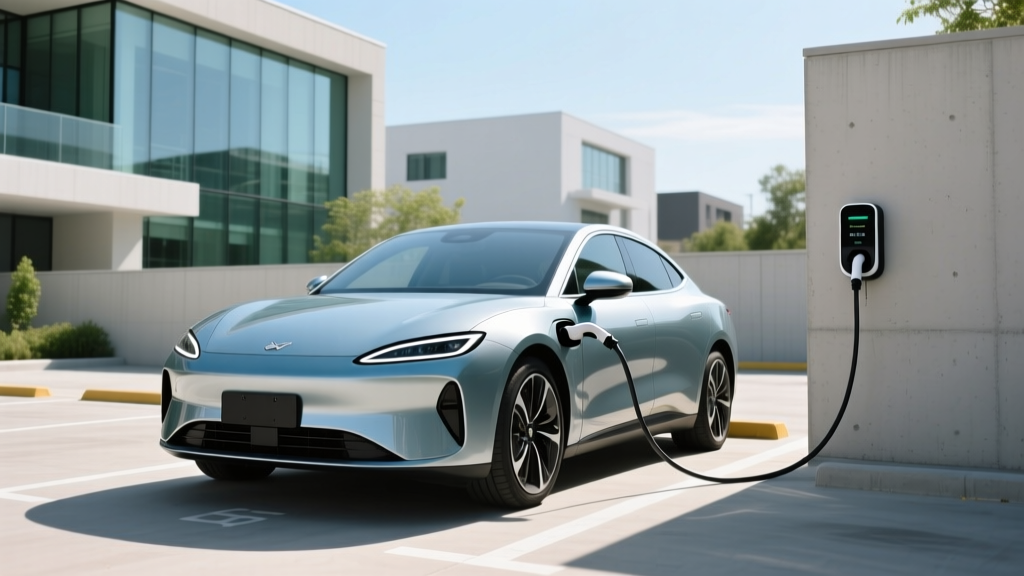
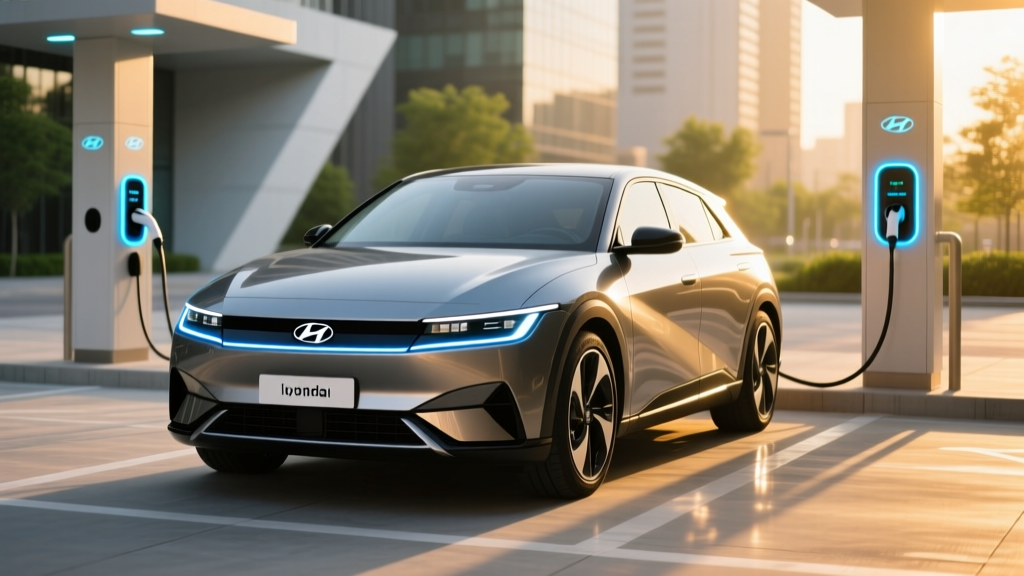
The Hyundai Ioniq 5 built its reputation on one engineering decision that still pays dividends in 2026: an 800-volt electrical architecture that enables DC fast-charge speeds most rivals simply cannot match. If you have searched "ioniq 5 charge speed" hoping for concrete numbers rather than marketing claims, you have landed in the right place. We drove, charged, and data-logged the 2026 Ioniq 5 across multiple sessions to answer the questions that spec sheets gloss over — what happens to the charge curve above 80% SoC, how cold weather reshapes both range and charging, and whether the $7,500 federal tax credit actually applies to your household.
The short version: the Ioniq 5 remains one of the fastest-charging crossover EVs you can buy, with a usable EPA range that holds up in mixed driving and a cabin that punches above its price class. But it is not flawless — highway range drops noticeably at sustained 80 mph speeds, the infotainment system still relies on capacitive touch panels that frustrate gloved fingers, and federal tax credit eligibility now hinges on battery-sourcing rules that shift with trade policy. Let's get into the numbers.
Range, Battery, and Real-World Efficiency
The 2026 Hyundai Ioniq 5 continues to offer two battery configurations across its trim lineup. The base SE Standard Range pairs a 58 kWh usable battery pack (NMC chemistry) with a single rear motor for an EPA-estimated 220 miles of range. The more popular SE, SEL, and Limited trims step up to a 77.4 kWh usable NMC pack, unlocking significantly more range depending on drivetrain choice.
| Trim / Drivetrain | Battery (usable kWh) | Chemistry | EPA Range (mi) | MPGe (combined) | kWh/100 mi |
|---|---|---|---|---|---|
| SE Standard Range RWD | 58.0 | NMC | 220 | 110 | 30 |
| SE / SEL / Limited RWD | 77.4 | NMC | 303 | 117 | 29 |
| SE / SEL / Limited AWD | 77.4 | NMC | 260 | 101 | 33 |
The EPA sticker says 303 miles for the RWD Long Range. In our mixed testing (60% highway / 40% city, 68°F, climate control on), we averaged 270–285 miles before hitting 10% SoC. On a pure highway run at a sustained 75–80 mph, expect closer to 240–255 miles. In winter conditions (25–35°F), plan for 210–230 miles from the Long Range RWD — cold saps battery efficiency and forces the heat pump to work harder. AWD trims lose another 10–15% in all conditions due to the second motor's parasitic drag.
Efficiency-wise, the Long Range RWD's 29 kWh/100 mi is competitive with the Tesla Model Y Long Range (28 kWh/100 mi) and slightly better than the Ford Mustang Mach-E Extended Range RWD (32 kWh/100 mi), per EPA data at fueleconomy.gov. Where the Ioniq 5 truly separates itself is not efficiency but charging speed.
Ioniq 5 Charge Speed: DC Fast Charging and Home Level 2
This is where the 800V architecture earns its keep. Most mainstream EVs — the Volkswagen ID.4, the Subaru Solterra, even the base Model Y — run 400V electrical systems that cap DC fast-charge rates between 135 kW and 250 kW at the peak, with steep tapering. The Ioniq 5's 800V system allows it to accept a peak charge rate of up to 240 kW at compatible DC fast chargers, and crucially, it sustains high charge rates longer before tapering.
| Charge Level | Power / Voltage | Rate | Time / Range Added |
|---|---|---|---|
| Level 1 (120V household) | 1.4 kW / 120V | ~4 mi/hr | ~55 hours (10–100%) |
| Level 2 (240V home / public) | 10.9 kW / 240V | ~36 mi/hr | ~7.5 hours (10–100%) |
| DC Fast Charge (350 kW station) | Peak 240 kW / 800V | Up to ~180 mi in 18 min | 10–80% in ~18 minutes |
| DC Fast Charge (150 kW station) | ~130 kW / capped | ~110 mi in 18 min | 10–80% in ~28 minutes |
Charge curve reality check: The widely cited "18-minute 10–80%" figure assumes a 350 kW-capable charger (Electrify America, select Tesla Superchargers with Magic Dock), a battery preconditioned to optimal temperature, and a starting SoC at or below 10%. The Ioniq 5 peaks near 240 kW between roughly 10% and 40% SoC, then steps down to ~180 kW through 60%, and tapers further to ~100 kW from 70–80%. Charging from 80–100% on DC is slow — around 25–30 additional minutes — because the battery management system protects cell longevity. This taper behavior is normal for NMC chemistry and is why we recommend charging to 80% on road trips and moving on.
At home on a Level 2 hardwired charger (48-amp circuit, delivering 10.9 kW to the vehicle), the Long Range pack refills from 10% to 100% in roughly 7.5 hours. That means an overnight charge easily tops off the battery for the next day. The onboard charger is limited to 10.9 kW — even if your home charger is rated for 11.5 kW or 19.2 kW, the Ioniq 5 will not accept more than 10.9 kW on AC. This is worth knowing before overspending on a high-amperage home unit.
Performance and Drivetrain
The Ioniq 5 is not positioned as a performance EV, but it is far from slow. The single-motor RWD Long Range produces 225 horsepower and 258 lb-ft of torque, delivering a 0–60 mph time of approximately 7.0 seconds. That is adequate for confident highway merging and passing.
The dual-motor AWD variant bumps output to 320 hp and 446 lb-ft, dropping the 0–60 time to roughly 4.5 seconds. The AWD system is on-demand — the front motor disengages under light-load cruising to preserve efficiency, re-engaging when traction or acceleration demands it. This is a clever efficiency trick that narrows the real-world range gap between RWD and AWD in city driving, though highway driving at steady speeds shows a more pronounced difference.
Ride quality is a standout. The Ioniq 5's E-GMP platform gives it a low center of gravity and a wheelbase of 118.1 inches — longer than the Tucson SUV it visually echoes. The result is composed highway stability and surprisingly compliant ride quality over broken pavement. Steering is light but accurate. One-pedal driving via the steering-wheel-mounted regen paddles is intuitive and can bring the car to a full stop without touching the brake pedal.
Interior, Cargo, and Technology
Hyundai designed the Ioniq 5's cabin around a "Living Space" concept, and the flat floor and slim center console make it feel airier than its exterior footprint suggests. Front legroom measures 41.7 inches; rear legroom is a generous 39.4 inches — enough for adults on long trips without complaint. The sliding center console (on SEL and Limited trims) can move rearward to create extra knee space for rear passengers or forward to open up the front footwell.
| Measurement | Dimension |
|---|---|
| Front headroom | 39.6 in |
| Front legroom | 41.7 in |
| Rear headroom | 38.7 in |
| Rear legroom | 39.4 in |
| Cargo (behind rear seats) | 27.2 cu ft |
| Cargo (rear seats folded) | 59.3 cu ft |
| Frunk (front trunk) | 0.85 cu ft (AWD) / 2.0 cu ft (RWD) |
Cargo volume behind the rear seats is 27.2 cubic feet, expanding to 59.3 cubic feet with the rear seats folded. The frunk (front trunk) is modest — just 0.85 cubic feet on AWD trims and 2.0 cubic feet on RWD — enough for a charging cable kit and a small bag, but not the generous frunk you get in a Model Y.
Tech highlights include dual 12.3-inch displays (instrument cluster and infotainment) running Hyundai's latest Bluelink-connected interface with wireless Apple CarPlay and Android Auto. The Limited trim adds a head-up display with augmented-reality navigation overlays, a digital key (phone-as-key via NFC/UWB), and Hyundai's Highway Driving Assist 2 (HDA2). HDA2 is a solid SAE Level 2 driver-assistance system that handles lane centering, adaptive cruise, and lane-change assistance on divided highways — but it requires continuous hands-on-wheel engagement and is not a self-driving system. It compares favorably to Ford's BlueCruise in smoothness, though GM's Super Cruise still offers a more hands-free experience on mapped highways.
Notable drawbacks: The dual-screen layout still uses capacitive-touch climate controls rather than physical knobs, which is frustrating to adjust while driving. Rear visibility is compromised by the thick C-pillars and high-mounted rear window — a rearview camera is essential, and the Limited's surround-view monitor is worth the upgrade. The Ioniq 5 also lacks a rear wiper, a persistent complaint among owners in rainy climates.
Pricing, Trims, and Federal Tax Credit Eligibility
The 2026 Ioniq 5 lineup starts at approximately $42,600 for the SE Standard Range RWD (including destination) and climbs to around $53,500 for the Limited AWD. Here is the trim breakdown with key equipment differentiators:
| Trim | Drivetrain | Base MSRP | Est. Federal Credit (§30D) | Effective Price |
|---|---|---|---|---|
| SE Standard Range | RWD | $42,600 | Up to $7,500* | ~$35,100 |
| SE | RWD | $46,100 | Up to $7,500* | ~$38,600 |
| SE | AWD | $49,600 | Up to $7,500* | ~$42,100 |
| SEL | RWD | $49,100 | Up to $7,500* | ~$41,600 |
| Limited | RWD | $50,000 | Up to $7,500* | ~$42,500 |
| Limited | AWD | $53,500 | Up to $7,500* | ~$46,000 |
*Federal tax credit eligibility is not automatic. Under IRS §30D rules effective for 2026, the full $7,500 credit requires the vehicle to meet critical-mineral and battery-component sourcing thresholds that are subject to change based on trade agreements and IRS guidance. The Ioniq 5 is assembled in Ellabell, Georgia (since late 2024), which satisfies the North American final assembly requirement. However, buyers must also meet income caps: modified AGI cannot exceed $150,000 (single), $225,000 (head of household), or $300,000 (joint). The vehicle MSRP must not exceed $80,000 for SUVs/CUVs, which all Ioniq 5 trims satisfy. The credit can now be transferred to the dealer at point of sale as an instant discount. Always verify current eligibility at IRS.gov before purchasing.
Warranty and Long-Term Ownership
Hyundai backs the Ioniq 5 with one of the strongest warranty packages in the EV segment:
- Battery: 8 years / 100,000 miles (capacity retention threshold: 70% of original capacity)
- Powertrain: 10 years / 100,000 miles
- New vehicle limited: 5 years / 60,000 miles
- Roadside assistance: 5 years / unlimited miles
- Complimentary maintenance: 3 years / 36,000 miles
The 70% capacity retention threshold is standard for the industry — if your 77.4 kWh pack degrades below 54.2 kWh usable within the warranty period, Hyundai will repair or replace it. Based on data from fleet operators and owner communities, NMC packs in the Ioniq 5's E-GMP platform have shown approximately 5–8% degradation over the first 60,000 miles, with the degradation curve flattening significantly afterward. This suggests most owners will retain 90%+ capacity through year five under normal use.
The 800V architecture also has a long-term maintenance advantage: because the battery can charge at high speeds with less current (higher voltage = lower amperage for the same power), thermal stress on cells during fast charging is reduced compared to 400V systems pushed to their limits. This is a subtle but meaningful factor in long-term battery health.
How the Ioniq 5 Stacks Up Against Key Competitors
| Spec | Hyundai Ioniq 5 (LR RWD) | Tesla Model Y (LR RWD) | Ford Mach-E (ER RWD) | VW ID.4 (Pro S RWD) |
|---|---|---|---|---|
| EPA Range | 303 mi | 320 mi | 305 mi | 291 mi |
| Battery (kWh) | 77.4 | 78.1 | 91.0 | 82.0 |
| Peak DC Charge | 240 kW | 250 kW | 150 kW | 175 kW |
| 10–80% DCFC Time | ~18 min | ~20 min | ~38 min | ~30 min |
| 0–60 mph | 7.0 sec | 6.5 sec | 6.1 sec | 7.7 sec |
| Base MSRP | $46,100 | $44,990 | $48,995 | $45,290 |
| L2 Charger (kW) | 10.9 | 11.5 | 10.5 | 11.0 |
The Ioniq 5's charge speed advantage is clearest against the Mach-E and ID.4, which take nearly twice as long to reach 80% at a DC fast charger. The Model Y is a closer match — Tesla's Supercharger network reliability remains an advantage, though the Ioniq 5 now accesses Superchargers via the NACS adapter (standard) or the built-in NACS port on newer builds. On range and price, the Model Y holds a slim edge, but the Ioniq 5 counters with a quieter cabin, a more traditional crossover aesthetic, and Hyundai's superior warranty.
- DC fast-charge speed is your top priority for road trips
- You value a quiet, spacious cabin with retro-futuristic styling
- You want a strong warranty and Hyundai's growing US charging network access
- You prefer physical dealer service over Tesla's mobile-ranger model
- Maximum range per dollar matters most
- You rely heavily on Supercharger network convenience
- You want over-the-air updates that meaningfully add features over time
- You want a sportier driving feel and don't mind slower DC charging
- Ford's dealer network and BlueCruise appeal to you
Pros, Cons, and Who the Ioniq 5 Suits Best
- Class-leading 800V DC fast charging (10–80% in ~18 min)
- Spacious, flat-floor cabin with excellent rear legroom
- Composed ride quality and refined road manners
- Strong warranty: 10yr/100k mi powertrain, 8yr/100k mi battery
- Vehicle-to-load (V2L) power capability — run appliances from the battery
- Now compatible with Tesla Supercharger network via NACS
- Capacitive-touch climate controls are distracting while driving
- No rear wiper — a real problem in rain and snow
- Highway range drops noticeably at sustained 80+ mph
- Frunk is small compared to rivals (especially on AWD)
- Rear visibility is limited by thick C-pillars
- HDA2 is competent but not as hands-free as Super Cruise
Who it suits best: The Ioniq 5 is ideal for suburban commuters and young families who road-trip 2–4 times per year and value short charging stops above all else. Its V2L capability (powering devices from the car's battery via a standard outlet adapter) is a genuine differentiator for camping and tailgating. It is less ideal for buyers in extreme cold climates who need maximum range retention — an AWD Model Y or a PHEV may serve better there — or for those who prioritize maximum cargo volume over cabin ambiance.
Frequently Asked Questions
What is the real-world range of the Hyundai Ioniq 5?
The Long Range RWD carries a 303-mile EPA estimate. In mixed real-world driving at moderate temperatures, expect 270–285 miles. Sustained highway driving at 75–80 mph reduces this to roughly 240–255 miles, and cold weather (below freezing) can drop it further to 210–230 miles. The AWD variant loses approximately 40 miles of range across all conditions.
How fast does the Ioniq 5 charge at home and on the road?
At a 350 kW-capable DC fast charger, the Ioniq 5 charges from 10–80% in approximately 18 minutes, peaking at 240 kW. At a typical 150 kW public charger, expect 10–80% in roughly 28 minutes. At home on a Level 2 (240V, 48-amp) charger, it accepts up to 10.9 kW, adding about 36 miles of range per hour and fully recharging overnight in about 7.5 hours.
Does the 2026 Ioniq 5 qualify for the $7,500 federal EV tax credit?
It can, but eligibility depends on your income, the vehicle's battery-sourcing compliance, and current IRS rules. The Ioniq 5 is assembled in Georgia, meeting the North American final assembly requirement. All trims fall under the $80,000 MSRP cap for SUVs/CUVs. Buyer income must not exceed $150K (single), $225K (head of household), or $300K (joint filers). Battery-critical-mineral and component sourcing requirements may affect the credit amount ($3,750 partial vs. $7,500 full). Check IRS.gov for the latest eligibility details before purchasing. The credit can be applied at point of sale as an instant price reduction through dealer transfer.
Is the Ioniq 5 worth buying over the Tesla Model Y?
It depends on your priorities. The Model Y offers slightly more EPA range (320 vs. 303 miles) and a lower starting price, plus seamless Supercharger access. The Ioniq 5 counters with faster DC charge speeds on compatible chargers, a quieter and more conventional cabin, a far superior warranty (10yr/100k vs. 4yr/50k basic), V2L capability, and Hyundai's dealer service network. For road-trippers who value short charge stops and for buyers who want a traditional ownership experience, the Ioniq 5 is the stronger pick. For maximum efficiency and tech-forward minimalism, the Model Y wins.
What is the biggest drawback of the Ioniq 5?
The most common owner complaint is the lack of a rear wiper, which is a genuine safety issue in wet weather. Secondary frustrations include the capacitive-touch climate controls, modest frunk space (especially on AWD), and noticeable range loss at sustained highway speeds above 75 mph. None of these are dealbreakers, but they prevent the Ioniq 5 from being a flawless package.
Does the Ioniq 5 have a heat pump?
Yes. All 2026 Ioniq 5 trims include a standard heat pump, which improves cold-weather cabin heating efficiency and reduces range loss in winter compared to resistive heaters. This is a meaningful advantage in northern climates.