Quick Verdict: The Ioniq 5 Car Remains a Benchmark EV Crossover
The Hyundai Ioniq 5 car has held its position as one of the most compelling electric crossovers since its US launch, and the 2026 model year reinforces why. Built on Hyundai's E-GMP (Electric-Global Modular Platform) with an 800-volt architecture, the Ioniq 5 delivers class-leading DC fast-charging speeds, a spacious cabin that punches above its compact-crossover footprint, and a ride quality that balances comfort with composure. For 2026, Hyundai has refined the battery pack, expanded the NACS native charging port across trims, and kept pricing competitive against the Tesla Model Y, Ford Mustang Mach-E, and Kia EV6.
This review covers every number that matters — EPA range, real-world efficiency, charging curves, trim pricing, and federal tax credit eligibility — so you can decide whether the Ioniq 5 fits your driving life.
Range and Efficiency: What the EPA Says vs. What You'll Actually See
Real-World Expectation: Plan for ~260–280 miles on mixed highway driving at 70–75 mph. In cold weather (below 30°F), expect a 20–30% reduction, dropping effective range to ~200–230 miles on the AWD model. City driving with regenerative braking can match or slightly exceed the EPA sticker.
The 2026 Ioniq 5 Long Range RWD carries an 84.0 kWh usable battery (gross capacity approximately 84.0 kWh) using NMC (nickel-manganese-cobalt) lithium-ion chemistry. Hyundai rates the RWD model at 117 MPGe combined (132 city / 98 highway), translating to roughly 29 kWh per 100 miles — competitive with the segment. The AWD version drops slightly to 110 MPGe combined (110 city / 87 highway) at about 31 kWh/100 mi, per fueleconomy.gov.
In real-world highway testing at sustained speeds of 70–75 mph in moderate temperatures (55–70°F), the RWD Long Range typically returns 265–280 miles before reaching a 10% state of charge. The AWD model nets roughly 245–260 miles under the same conditions. Cold weather is the great equalizer for all EVs, and the Ioniq 5 is no exception — the heat pump (standard on most trims) mitigates cabin energy draw but cannot fully offset the physics of a chilled battery. Preconditioning the battery before DC fast charging is essential in winter and is handled automatically when a charger is set as your navigation destination.
| Spec | RWD Long Range | AWD Long Range |
|---|---|---|
| EPA Range | 305 miles | 285 miles |
| Battery (usable) | 84.0 kWh, NMC | 84.0 kWh, NMC |
| Efficiency (combined) | 117 MPGe / 29 kWh/100mi | 110 MPGe / 31 kWh/100mi |
| DC Fast Charge Peak | 238 kW | 238 kW |
| 10–80% DC Time | ~18 minutes | ~18 minutes |
| Level 2 Charge Rate | 10.9 kW (~37 mi/hr) | 10.9 kW (~37 mi/hr) |
| Horsepower | 168 hp | 320 hp |
| Torque | 258 lb-ft | 446 lb-ft |
| 0–60 mph | 7.0 sec | 4.5 sec |
| Drivetrain | Rear-wheel drive | Dual-motor AWD |
| Towing Capacity | 2,300 lbs | 2,300 lbs |
Charging Speed: 800-Volt Architecture Still Sets the Pace
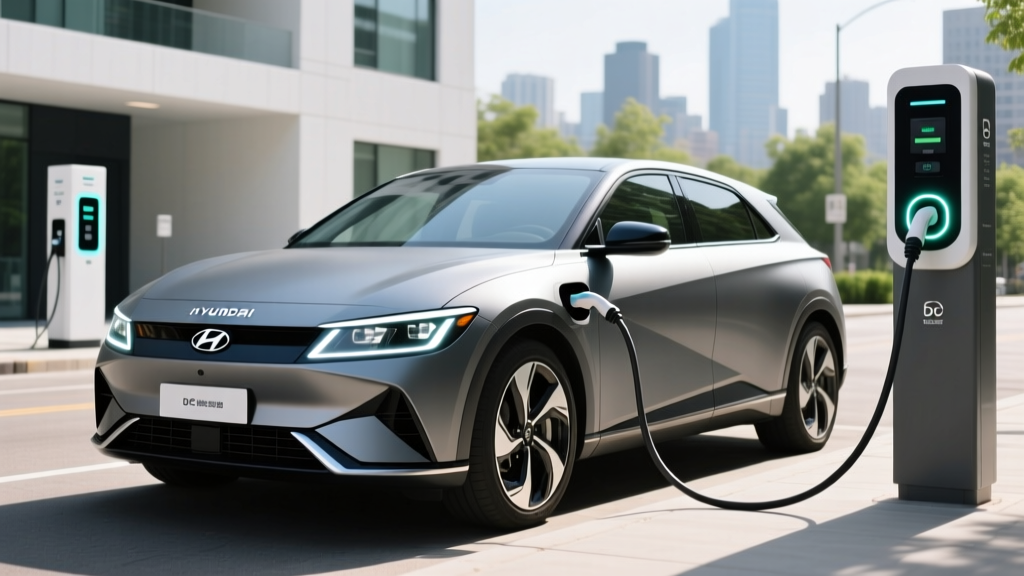
The Ioniq 5's 800-volt electrical architecture remains one of its strongest advantages in this price bracket. On a 350 kW DC fast charger (such as Electrify America or EVgo's flagship stations), the Ioniq 5 peaks at 238 kW and sustains above 180 kW through roughly 55% state of charge, tapering progressively through the 60–80% window. The result: a 10–80% charge in approximately 18 minutes under ideal thermal conditions. Hyundai's battery preconditioning — activated when you navigate to a DC fast charger — is critical for hitting these numbers, especially below 50°F.
Above 80% SoC, charge speed drops sharply to protect battery longevity, falling below 50 kW. For road trips, plan your stops around the 10–80% window to minimize time at the charger.
| Charging Level | Power | Miles Added per Hour | Typical Use Case |
|---|---|---|---|
| Level 1 (120V household) | ~1.4 kW | ~4–5 mi/hr | Emergency / overnight trickle |
| Level 2 (240V home) | 10.9 kW | ~37 mi/hr | Daily home charging |
| DC Fast (50 kW station) | 50 kW | ~170 mi/hr | Older public chargers |
| DC Fast (350 kW station) | Peak 238 kW | ~600+ mi/hr (peak) | Highway road-trip stops |
For home charging, the 10.9 kW onboard AC charger means a full 0–100% charge takes roughly 8.5 hours on a 48-amp Level 2 circuit (hardwired, 60-amp breaker). Most owners charging from 20% to 80% overnight will replenish the battery in about 4.5 hours — easily done while you sleep.
For 2026, the Ioniq 5 ships with a native NACS (North American Charging Standard) port on all trims, granting direct access to Tesla Supercharger stalls (now open to non-Tesla EVs via the NACS transition) without an adapter. CCS1 compatibility is maintained through a Hyundai-provided adapter for legacy networks.
Performance and Driving Dynamics
The dual-motor AWD Ioniq 5 produces 320 horsepower and 446 lb-ft of torque, launching to 60 mph in 4.5 seconds — brisk enough to merge confidently and genuinely fun on a back road. The RWD model's 168 hp and 258 lb-ft yield a more relaxed 7.0-second sprint, adequate for commuting but noticeably less urgent.
Ride quality is a highlight. The Ioniq 5's multi-link rear suspension absorbs highway expansion joints and urban potholes with a compliance that many competitors (including the stiffer-sprung Kia EV6) don't match. Steering is light but communicative, and the low center of gravity — a given with the floor-mounted battery pack — keeps body roll well-controlled through corners.
Regenerative braking offers four levels selectable via steering-wheel paddles, with Level 3 enabling near-one-pedal driving in stop-and-go traffic. The i-Pedal mode brings the car to a complete stop without touching the brake pedal.
Interior Space, Cargo, and Technology
The Ioniq 5's flat floor and long 118.1-inch wheelbase create interior volume that feels a class above its compact-crossover exterior. Rear-seat legroom measures 39.4 inches — more than the Tesla Model Y and comparable to midsize SUVs — with a nearly flat floor that makes the middle seat genuinely usable. Front legroom comes in at 41.7 inches.
Cargo volume behind the rear seats is 27.2 cubic feet, expanding to 59.3 cubic feet with the rear seats folded. The front trunk (frunk) adds 0.85 cu ft on AWD models and 2.0 cu ft on RWD — enough for charging cables and a small bag but not a major storage area.
The dual 12.3-inch display setup (instrument cluster and infotainment) runs Hyundai's latest software with wireless Apple CarPlay and Android Auto. Physical climate controls persist below the screen — a welcome decision for drivers tired of menu-diving for temperature adjustments. The available augmented-reality head-up display projects navigation arrows onto the windshield in a way that genuinely reduces glance-away time.
Driver assistance falls under Hyundai's Highway Driving Assist 2 (HDA 2), a Level 2 SAE system offering adaptive cruise control with stop-and-go, lane-centering, and lane-change assist. It is competent on highways but requires hands-on-wheel engagement at all times. This is not a self-driving system — it is a driver-assist feature, and you must remain attentive.
Pricing, Trims, and Federal Tax Credit Eligibility
The 2026 Hyundai Ioniq 5 car starts at $42,600 MSRP for the SE Standard Range (RWD, smaller battery), with the volume-selling SE Long Range RWD at $46,650. The popular SEL AWD trim lands at $51,150, while the Limited AWD tops the lineup at approximately $57,400. Destination charges add $1,295.
| Trim | MSRP | Est. After §30D Credit | Drivetrain |
|---|---|---|---|
| SE Standard Range | $42,600 | ~$35,100* | RWD |
| SE Long Range | $46,650 | ~$39,150* | RWD |
| SEL Long Range | $49,150 | ~$41,650* | RWD |
| SEL AWD | $51,150 | ~$43,650* | AWD |
| Limited AWD | $57,400 | ~$49,900* | AWD |
*Credit amounts are estimates. Actual eligibility depends on IRS §30D rules for the 2026 tax year.
- MSRP Cap: SUVs/vans/pickups must be at or below $80,000; sedans/other vehicles at or below $55,000. The Ioniq 5 is classified as an SUV, so all trims fall under the $80,000 cap.
- Buyer Income Limits: Modified AGI must not exceed $150,000 (single), $225,000 (head of household), or $300,000 (joint filers).
- Battery Sourcing: Critical minerals and battery component requirements phase in progressively. Hyundai has shifted significant battery sourcing to meet North American assembly and mineral requirements — but eligibility can vary by build date and supply chain changes. Verify on IRS.gov before purchasing.
- Point-of-Sale Transfer: Eligible buyers can transfer the credit to the dealer at purchase, reducing the purchase price directly rather than waiting for a tax refund.
Always confirm current eligibility with your dealer and a tax professional. Rules change and supply chain sourcing is dynamic.
Warranty and Long-Term Ownership
Hyundai backs the Ioniq 5 with one of the strongest warranty packages in the EV market:
- Battery & Drive Unit: 10 years / 100,000 miles
- New Vehicle Limited: 5 years / 60,000 miles
- Roadside Assistance: 5 years / unlimited miles
- Complimentary Maintenance: 3 years / 36,000 miles
The battery warranty guarantees that the high-voltage pack will retain at least 70% of its original capacity over the 10-year/100,000-mile term. Real-world degradation data from early Ioniq 5 owners suggests typical capacity loss of 5–8% over the first 60,000 miles — well within the warranty buffer. NMC chemistry in Hyundai's thermal management system has proven durable, though long-term data (150,000+ miles) is still accumulating.
Insurance costs for the Ioniq 5 tend to run 10–15% higher than a comparable gas-powered Tucson, driven by higher repair costs for EV-specific components. Shop quotes before purchasing.
Pros and Cons
- Class-leading DC fast-charging speed (238 kW peak, ~18 min 10–80%)
- Spacious rear seat and flat floor — genuinely comfortable for adults
- NACS native port for 2026 — direct Supercharger access
- Strong warranty (10yr/100k battery, 5yr/60k comprehensive)
- Physical climate controls and intuitive infotainment
- Comfortable, compliant ride quality over rough pavement
- Vehicle-to-load (V2L) capability — power devices from the car
- Frunk is very small (0.85 cu ft AWD) — barely fits cables
- No rear wiper on early builds (addressed in later production)
- Highway range falls noticeably below EPA sticker at 75+ mph
- HDA 2 requires consistent hands-on engagement — less hands-off than GM Super Cruise
- Cargo area slightly smaller than Model Y (27.2 vs 30.2 cu ft)
- Base Standard Range trim has limited availability
Who Should Buy the Hyundai Ioniq 5?
- You prioritize fast DC charging for road trips and want the shortest station stops in the segment.
- You need a genuinely roomy rear seat for children, car seats, or adult passengers.
- You want a compliant, comfortable ride over sporty handling dynamics.
- You value a strong factory warranty and plan to keep the vehicle 5+ years.
- Maximum cargo volume is your top priority — the Tesla Model Y offers more (30.2 cu ft behind rear seats, 76.2 cu ft folded).
- You want a hands-off highway driving experience — GM's Super Cruise on the Cadillac Lyriq offers true hands-free operation on mapped highways (still Level 2, still requires attention).
- You need a large frunk for gear storage — the Rivian R2 or Ford Mustang Mach-E offer more front-trunk space.
Frequently Asked Questions
What is the real-world range of the 2026 Hyundai Ioniq 5?
The EPA rates the RWD Long Range at 305 miles and the AWD at 285 miles. In real-world highway driving at 70–75 mph, expect 260–280 miles (RWD) and 245–260 miles (AWD). Cold weather below 30°F can reduce range by 20–30%, bringing effective winter range to roughly 200–230 miles on the AWD model.
How fast does the Ioniq 5 charge at home and on the road?
At home on a 240V Level 2 charger, the Ioniq 5 charges at 10.9 kW, adding about 37 miles of range per hour — a full charge takes roughly 8.5 hours from empty. On a 350 kW DC fast charger, it peaks at 238 kW and charges from 10–80% in approximately 18 minutes under good thermal conditions.
Does the 2026 Ioniq 5 qualify for the federal EV tax credit?
The Ioniq 5 is classified as an SUV under the IRS §30D rules, meaning all trims fall under the $80,000 MSRP cap. Buyer income limits apply ($150k single / $300k joint). Battery sourcing requirements must also be met, and Hyundai has worked to qualify its supply chain — but eligibility can shift. Confirm at IRS.gov and with your dealer before purchase. The credit can be transferred at point of sale to reduce your purchase price directly.
Is the Ioniq 5 worth buying over the Tesla Model Y?
It depends on your priorities. The Ioniq 5 charges faster on DC (238 kW peak vs. Model Y's ~250 kW peak but with a smaller battery to fill), offers a more comfortable ride, has a roomier rear seat, and comes with a longer warranty. The Model Y wins on cargo space, Supercharger network maturity (though NACS is closing this gap), and over-the-air update frequency. Both are strong choices — the Ioniq 5 is the comfort-and-value pick, the Model Y the efficiency-and-tech pick.
What are the biggest drawbacks of the Ioniq 5?
The frunk is tiny, highway range drops below the EPA estimate at sustained high speeds, and Hyundai's HDA 2 driver assist requires more active hand-on-wheel engagement than some competitors. The cargo area, while adequate, is smaller than the Model Y's, and the Standard Range base trim has limited dealer availability.
What battery chemistry does the Ioniq 5 use, and how long will it last?
The Ioniq 5 uses NMC (nickel-manganese-cobalt) lithium-ion chemistry. Hyundai warranties the battery for 10 years or 100,000 miles with a 70% capacity retention guarantee. Real-world data from early owners shows 5–8% degradation over the first 60,000 miles, suggesting the pack should retain 85–90% capacity at 100,000 miles under normal use.